Losing weight doesn’t have to feel like punishment. If you’ve been searching for a simple, structured way to cut calories without starving yourself, a 1000 calorie diet meal plan might be exactly what you need to get started. It’s one of the most searched approaches for quick, controlled weight loss , and when done right, it can be both effective and manageable.
That said, eating just 1,000 calories a day is a significant reduction for most people. It’s not meant to be a forever plan, but a short-term strategy to kick-start weight loss while keeping your meals nutritious, filling, and actually enjoyable. The key is making every calorie count.
In this guide, we’ll walk you through everything , from how a 1000 calorie diet works, to a full sample meal plan, smart food swaps, and tips to stay on track. Whether you’re just getting started or looking for a reset, this is your go-to resource.
1. What Is a 1000 Calorie Diet meal plan and Who Is It For?
A 1000 calorie diet is a low-calorie eating plan where you consume around 1,000 calories per day. For context, most adults need between 1,600 and 2,400 calories daily depending on age, gender, and activity level. So this plan creates a significant calorie deficit , which is exactly what triggers weight loss.
This type of plan is generally best suited for:
- Adults with a sedentary or lightly active lifestyle
- People looking for a short-term weight loss jumpstart (1–2 weeks)
- Those who want a structured, portion-controlled approach
Important: A 1000 calorie diet meal plan is not recommended for pregnant or breastfeeding women, athletes, growing teenagers, or anyone with certain medical conditions. Always check with your doctor before starting any very low-calorie plan.
2. How Much Weight Can You Lose on a 1000 Calorie Diet Meal Plan?
Here’s the honest truth: weight loss depends on your starting point, body composition, and how consistently you follow the plan.
On average, a 1,000-calorie deficit per day can lead to roughly 1–2 pounds of weight loss per week. Since most people need 1,800–2,200 calories to maintain their weight, a 1,000 calorie plan often creates a deficit of 800–1,200 calories daily.
That means you could realistically lose:
- 1–2 lbs per week on average
- 4–8 lbs per month with consistent effort
- Even more in the first week due to water weight loss
Keep in mind: the scale may move faster initially. Stick with it, stay hydrated, and focus on how you feel , not just the numbers.
3. Key Principles of a Healthy 1000 Calorie Diet Meal Plan
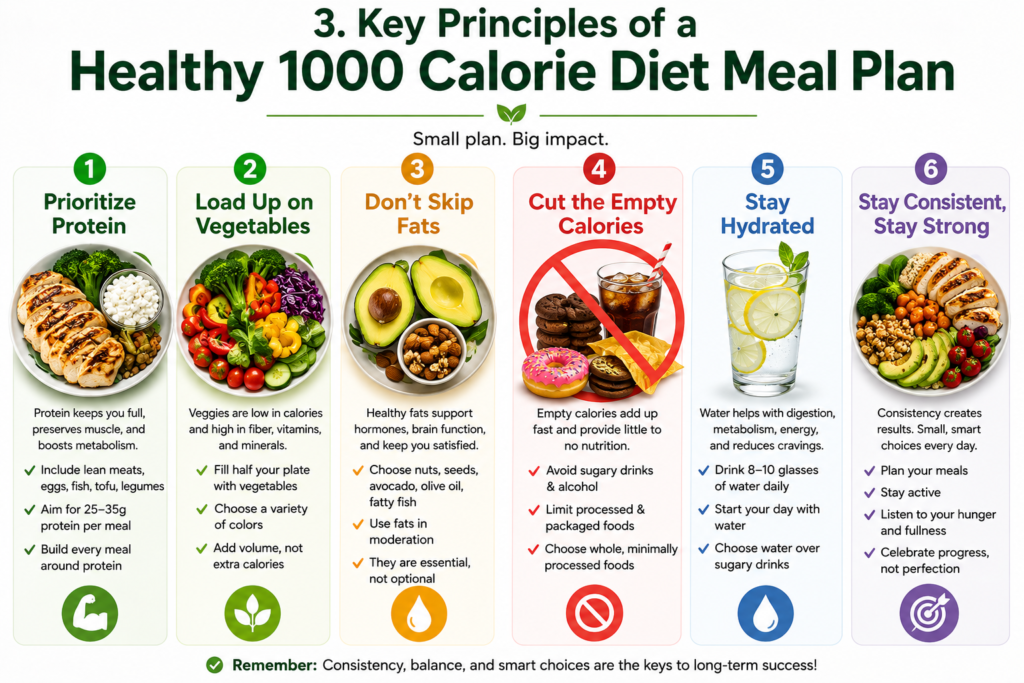
Before diving into the food, let’s talk about strategy. A good 1000 calorie meal plan isn’t just about eating less , it’s about eating smarter.
Prioritize Protein
Protein keeps you full, preserves muscle mass, and supports your metabolism. Aim for at least 60–80 grams of protein per day on this plan. Think eggs, chicken breast, Greek yogurt, legumes, and cottage cheese.
Load Up on Vegetables
Non-starchy vegetables are your best friend on a low-calorie diet. They’re high in fiber, low in calories, and incredibly filling. Fill half your plate with veggies at every meal.
Don’t Skip Fats
Healthy fats from avocado, olive oil, nuts, and seeds help your body absorb vitamins and keep hunger at bay. Even on a 1,000-calorie plan, include small amounts of healthy fat at each meal.
Cut the Empty Calories
Sugary drinks, white bread, chips, and processed snacks will eat up your calorie budget fast , leaving you hungry and undernourished. Replace them with whole foods every time.
Stay Hydrated
Drinking enough water (aim for 8+ glasses a day) can reduce hunger, support digestion, and boost energy. Sometimes what feels like hunger is actually thirst.
4. Sample 7-Day 1000 Calorie Diet and Meal Plan
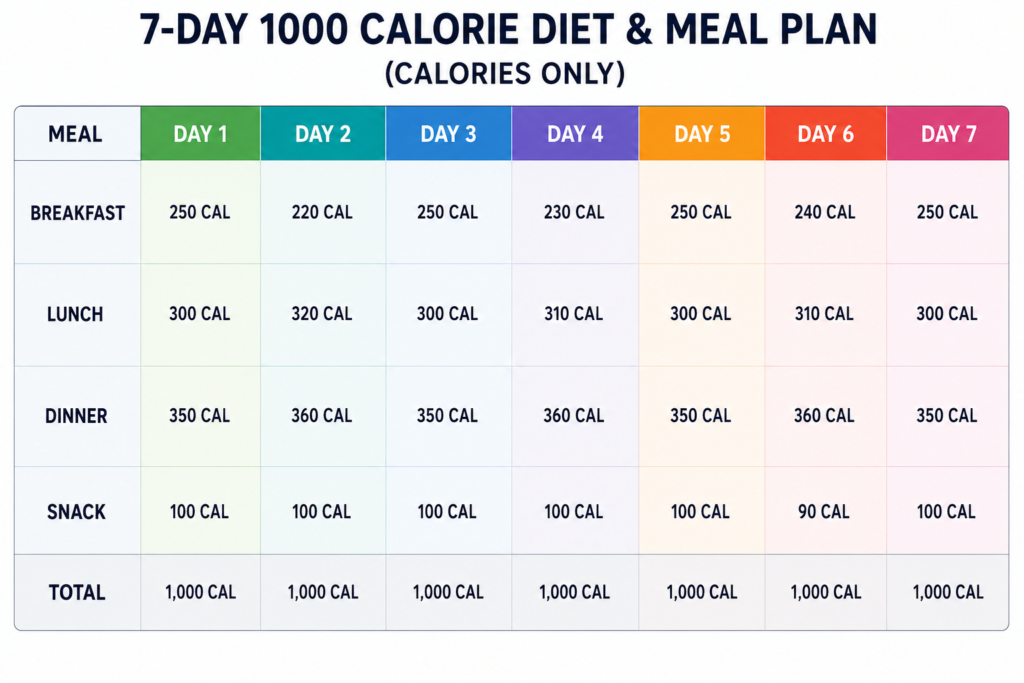
Here’s a full week of meals to give you a practical framework. Each day comes in at approximately 1,000 calories while hitting your key nutrients.
Day 1
Breakfast (250 cal): 2 scrambled eggs + 1 slice whole-grain toast + black coffee or green tea
Lunch (300 cal): Large mixed greens salad with 3 oz grilled chicken, cucumber, tomato, 1 tbsp olive oil, and lemon dressing
Dinner (350 cal): 3 oz baked salmon + 1 cup steamed broccoli + ½ cup brown rice
Snack (100 cal): 1 small apple + 1 tbsp almond butter
Day 2
Breakfast (220 cal): ½ cup oats cooked in water + ½ cup berries + cinnamon
Lunch (320 cal): 1 whole-grain wrap with turkey breast, lettuce, tomato, and mustard
Dinner (360 cal): Stir-fry with 3 oz tofu, mixed veggies (zucchini, bell pepper, onion), 1 tsp sesame oil, soy sauce, ½ cup cauliflower rice
Snack (100 cal): ½ cup low-fat Greek yogurt
Day 3
Breakfast (250 cal): 2-egg veggie omelette (spinach, mushroom, bell pepper) cooked in cooking spray
Lunch (300 cal): Lentil soup (1.5 cups) + side of cucumber slices
Dinner (350 cal): 3 oz grilled chicken breast + 1 cup roasted asparagus + ½ cup quinoa
Snack (100 cal): 10–12 almonds
Day 4
Breakfast (230 cal): 1 cup cottage cheese + ½ cup pineapple chunks + black coffee
Lunch (310 cal): Tuna salad (3 oz canned tuna + mustard + celery) served on romaine lettuce leaves
Dinner (360 cal): 3 oz lean ground turkey with taco seasoning, served in lettuce cups with salsa and a sprinkle of reduced-fat cheese
Snack (100 cal): 1 small orange + 5 walnuts
Day 5
Breakfast (250 cal): Smoothie: 1 cup unsweetened almond milk + 1 scoop protein powder + ½ banana + 1 cup spinach
Lunch (300 cal): Chickpea and veggie bowl: ½ cup chickpeas + roasted veggies + 1 tbsp tahini dressing
Dinner (350 cal): 3 oz shrimp sautéed in garlic and olive oil + 1 cup zucchini noodles + marinara sauce (low-sugar)
Snack (100 cal): 1 hard-boiled egg + a few cherry tomatoes
Day 6
Breakfast (240 cal): 2 rice cakes + 2 tbsp natural peanut butter + green tea
Lunch (310 cal): Black bean soup (1.5 cups) + 1 small side salad (no croutons, light dressing)
Dinner (360 cal): Baked cod (3 oz) + steamed green beans + ½ cup wild rice
Snack (90 cal): ½ cup edamame (lightly salted)
Day 7 , Rest Day Reset
Breakfast (250 cal): Veggie egg muffins (2 muffins made with eggs, spinach, tomato) baked ahead for meal prep
Lunch (300 cal): Bowl of vegetable broth soup + 2 Wasa crackers + 1 oz low-fat cheese
Dinner (350 cal): 3 oz grilled lean beef patty (no bun) + large side salad + 1 tsp olive oil dressing
Snack (100 cal): 1 cup plain air-popped popcorn
5. Foods to Eat on a 1000 Calorie Diet Meal Plan
When you’re working with a tight calorie budget, food quality matters more than ever. Here are the best foods to fill your plate:
Lean proteins:
Chicken breast, turkey, eggs, egg whites, canned tuna, salmon, shrimp, tofu, cottage cheese, Greek yogurt
Non-starchy vegetables:
Spinach, kale, broccoli, cauliflower, zucchini, cucumber, tomatoes, peppers, asparagus, mushrooms
Complex carbs (in small portions):
Oats, brown rice, quinoa, sweet potato, legumes, whole-grain bread
Healthy fats (in small amounts):
Avocado (¼ per serving), olive oil (1 tsp per meal), almonds, walnuts, natural nut butters
Low-calorie drinks:
Water, sparkling water, black coffee, green tea, herbal teas
6. Foods to Avoid on a 1000 Calorie Diet Meal Plan
Some foods will derail your progress quickly , not because they’re evil, but because they pack a lot of calories without keeping you full.
Avoid or strictly limit:
- Sugary drinks (juice, soda, energy drinks, sweetened coffee)
- Alcohol (empty calories that also lower your willpower)
- Fried foods and fast food
- White bread, pastries, and crackers
- High-fat dairy (full-fat cheese, cream, butter)
- Candy, chips, cookies, and processed snacks
- Condiments loaded with sugar (ketchup, sweet sauces)
Even small amounts of these foods can quickly eat up 200–400 calories with very little nutritional value.
7. Tips to Stick to Your 1000 Calorie Diet and Meal Plan
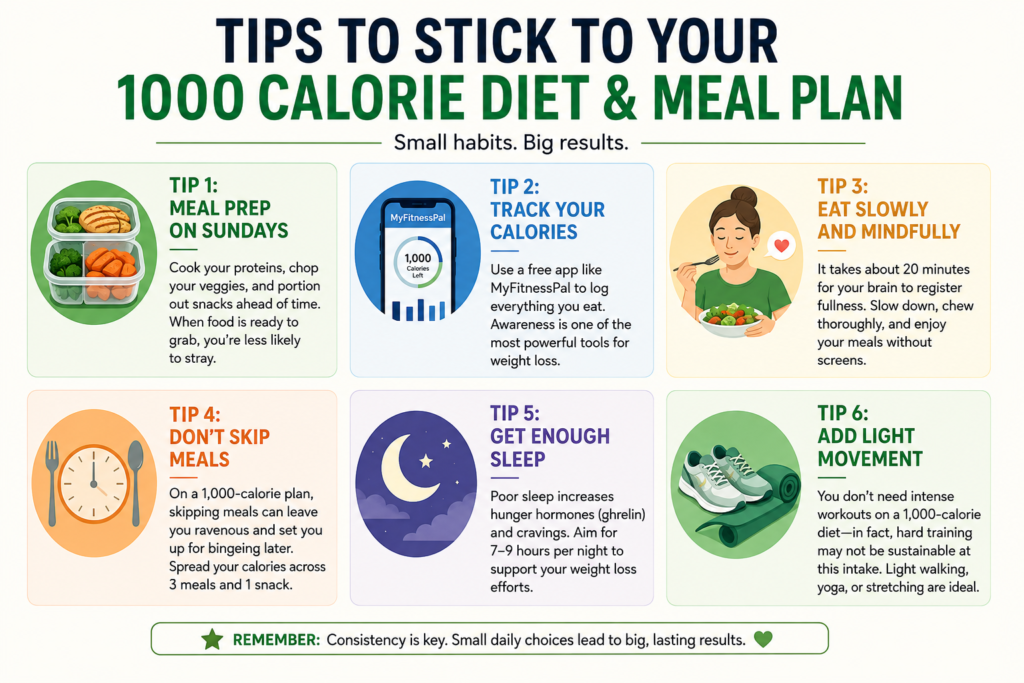
Even the best plan falls apart without the right habits behind it. Here are some practical tips to help you stay consistent about 1000 Calorie Diet Meal Plan:
Tip 1: Meal Prep on Sundays
Cook your proteins, chop your veggies, and portion out snacks ahead of time. When food is ready to grab, you’re less likely to stray.
Tip 2: Track Your Calories
Use a free app like MyFitnessPal to log everything you eat. Awareness is one of the most powerful tools for weight loss.
Tip 3: Eat Slowly and Mindfully
It takes about 20 minutes for your brain to register fullness. Slow down, chew thoroughly, and enjoy your meals without screens.
Tip 4: Don’t Skip Meals
On a 1000 calorie diet meal plan, skipping meals can leave you ravenous and set you up for bingeing later. Spread your calories across 3 meals and 1 snack.
Tip 5: Get Enough Sleep
Poor sleep increases hunger hormones (ghrelin) and cravings. Aim for 7–9 hours per night to support your weight loss efforts.
Tip 6: Add Light Movement
You don’t need intense workouts on a 1,000-calorie diet , in fact, hard training may not be sustainable at this intake. Light walking, yoga, or stretching are ideal.
8. Is a 1000 Calorie Diet Safe?
This is a fair and important question. For most healthy adults, a short-term 1,000-calorie diet (1–2 weeks) is generally considered safe. However, it’s classified as a Very Low Calorie Diet (VLCD) by many health organizations, and there are a few things to keep in mind:
- It may cause fatigue, dizziness, or irritability in some people, especially early on
- It’s not suitable for long-term use without medical supervision
- Nutrient deficiencies are possible without careful planning
- It may slow metabolism if followed for too long
The goal of a 1000 calorie diet meal plan like this one is to use it as a jump start , then gradually transition to a more sustainable calorie range (1,200–1,500 for women, 1,500–1,800 for men) as you build healthier habits.
If you have any health conditions, take medications, or feel unwell during the plan, consult your doctor immediately.
Key Takeaways
Here’s a quick summary of everything covered in this guide:
- A 1000 calorie diet meal plan creates a significant calorie deficit to support fast, short-term weight loss
- Focus on lean proteins, non-starchy vegetables, complex carbs, and healthy fats
- Spread meals across the day , don’t skip meals or snacks
- Avoid empty calories from sugary drinks, fried foods, and processed snacks
- Meal prep, calorie tracking, and good sleep are your best tools for success
- Use this plan as a jumpstart, not a long-term solution
- Always consult your doctor before starting a very low-calorie diet
Conclusion: Ready to Start Your 1000 Calorie Diet Meal Plan?
A well-structured 1000 calorie diet meal plan can be an effective, practical way to kick-start your weight loss journey , as long as you approach it with the right mindset and nourishing food choices. Focus on whole foods, stay hydrated, and be kind to yourself through the process.
Remember: sustainable weight loss isn’t about eating the least possible. It’s about building habits that stick. Use this plan to get momentum, then shift toward a longer-term healthy eating pattern that works for your lifestyle.
Looking for more meal plans, healthy recipes, and expert nutrition tips? Explore everything at thedailycrave.online , your daily companion for living and eating well.
Frequently Asked Questions (FAQ)
Q1: Can I exercise while on a 1000 calorie diet meal plan?
Yes, but keep it light. Intense workouts require more fuel than a 1,000-calorie plan provides. Stick to walking, yoga, stretching, or gentle cycling. If you’re very active, consider a slightly higher calorie intake (1,200–1,400 calories) and consult a nutritionist.
Q2: Will I lose muscle on a 1000 calorie diet?
Some muscle loss is possible on any very low-calorie diet, especially without adequate protein. Prioritizing 60–80g of protein per day and avoiding extreme exercise can help minimize this. Resistance training (light) may also help preserve muscle.
Q3: How long should I follow a 1000 calorie diet meal plan?
Most experts recommend following a 1,000-calorie plan for no longer than 1–2 weeks without medical supervision. After that, gradually increase calories to a more sustainable level to avoid metabolic slowdown and nutrient deficiencies.
Q4: Can I drink coffee or tea on this diet?
Absolutely! Black coffee and unsweetened tea are virtually calorie-free and can actually help suppress appetite and boost energy. Just avoid adding sugar, cream, or flavored syrups , those calories add up fast.
Q5: What’s the difference between a 1000 calorie diet meal plan and intermittent fasting?
A 1000 calorie diet focuses on how much you eat throughout the day, keeping total intake at 1,000 calories. Intermittent fasting focuses on when you eat, cycling between eating windows and fasting periods. Both can promote weight loss, and some people combine them , but that should only be done carefully and ideally with professional guidance.