Table of Contents
If you’ve tried a diet that felt so restrictive you gave up by Wednesday, a 1500 calorie meal plan might be exactly the reset you need. It’s low enough to create a real calorie deficit for most women, but high enough that you’re not white-knuckling your way through the day on lettuce and willpower. This guide, from the team at The Daily Crave (thedailycrave.online), walks you through a full 7-day 1500 calorie meal plan built around real food, real portions, and a protein-first approach that’s designed to keep you satisfied.
A lot of “1500 calorie diet” content online is either overly clinical or padded with filler. This one isn’t. You’ll get exact meals for all seven days, a grocery list, common mistakes to sidestep, and answers to the questions people actually ask before starting a low calorie diet plan.
Calorie needs vary by age, height, activity level, and health history , use this 1500 calorie meal plan as a flexible starting framework, not a rigid rule.
1. Who This 1500 Calorie Meal Plan Is For
A 1500 calorie meal plan is one of the most commonly recommended starting points for women pursuing moderate, sustainable weight loss. It creates a meaningful calorie deficit for most people without dropping into the kind of extreme restriction that tends to backfire within a week or two.
This calorie level tends to suit moderately active women reasonably well , think regular walking, light-to-moderate exercise, and a desk job or similarly non-strenuous work. If you’re very active, taller than average, or strength training frequently, you may find that 1500 calories leaves you hungrier than you’d like, and that’s useful information rather than a failure on your part. Everybody’s needs are different, and a low calorie diet plan should be adjusted to fit you, not the other way around.
The reason this particular 1500 calories meal plan works well for beginners is the structure: every meal leads with protein. That single decision does a lot of heavy lifting for hunger control, energy levels, and how sustainable the whole week feels.
2. Why High-Protein Matters in This 1500 Calorie Diet
Not all 1500-calorie days feel the same. A day built around refined carbs and low protein tends to leave you hungry by mid-morning. A day built as a high-protein low calorie diet plan tends to keep you fuller, longer, on the exact same number of calories.
There are a few reasons for this. Protein is more filling per calorie than carbohydrates or fat. It also requires more energy for your body to digest, and it plays a central role in preserving lean muscle while you’re eating in a deficit , which matters, because muscle loss (not just fat loss) is a common side effect of poorly structured low calorie diet plans.
This 1500 calorie meal plan targets roughly 25–35 grams of protein per meal, which is a reasonable range for most women at this calorie level. You’ll see chicken, eggs, Greek yogurt, fish, turkey, and cottage cheese repeated throughout the week , not for variety’s sake, but because they’re some of the most efficient ways to hit a protein target without overspending your calorie budget.
3. How This 1500 Calorie Meal Plan Is Structured
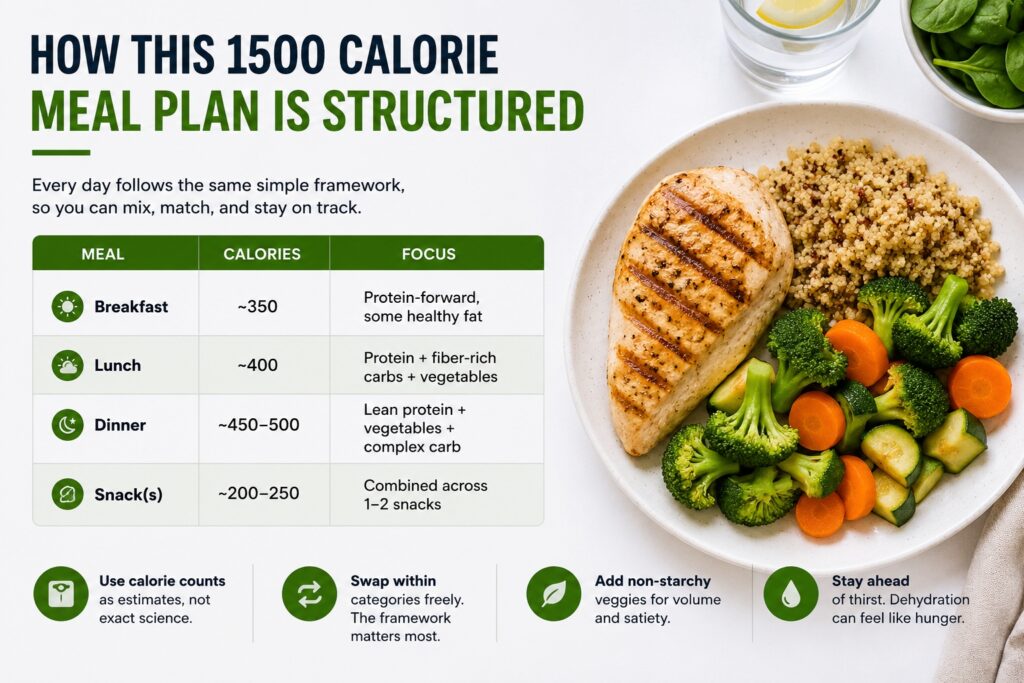
Every day this 1500 calorie meal plan follows the same basic framework, which makes it easy to swap meals around without throwing off your totals.
| Meal | Calories | Focus |
| Breakfast | ~350 | Protein-forward, some healthy fat |
| Lunch | ~400 | Protein + fiber-rich carbs + vegetables |
| Dinner | ~450–500 | Lean protein + vegetables + complex carb |
| Snack(s) | ~200–250 | Combined across 1–2 snacks |
A few ground rules that make this 1500 calorie diet easier to follow in real life:
- Use the calorie counts as estimates, not exact science. Portion sizes are standard household measures. A food scale helps if you want precision, but being off by 15–20 calories won’t matter.
- Swap within categories freely. No shrimp on hand? Use chicken. Don’t like quinoa? Use brown rice. The framework matters more than the specific ingredient.
- Lean on non-starchy vegetables for volume. Extra spinach, zucchini, or peppers add almost nothing to your calorie count but make meals feel more substantial.
- Stay ahead of thirst. Dehydration is often mistaken for hunger, especially a few hours after a meal.
4. The 7-Day 1500 Calorie Meal Plan
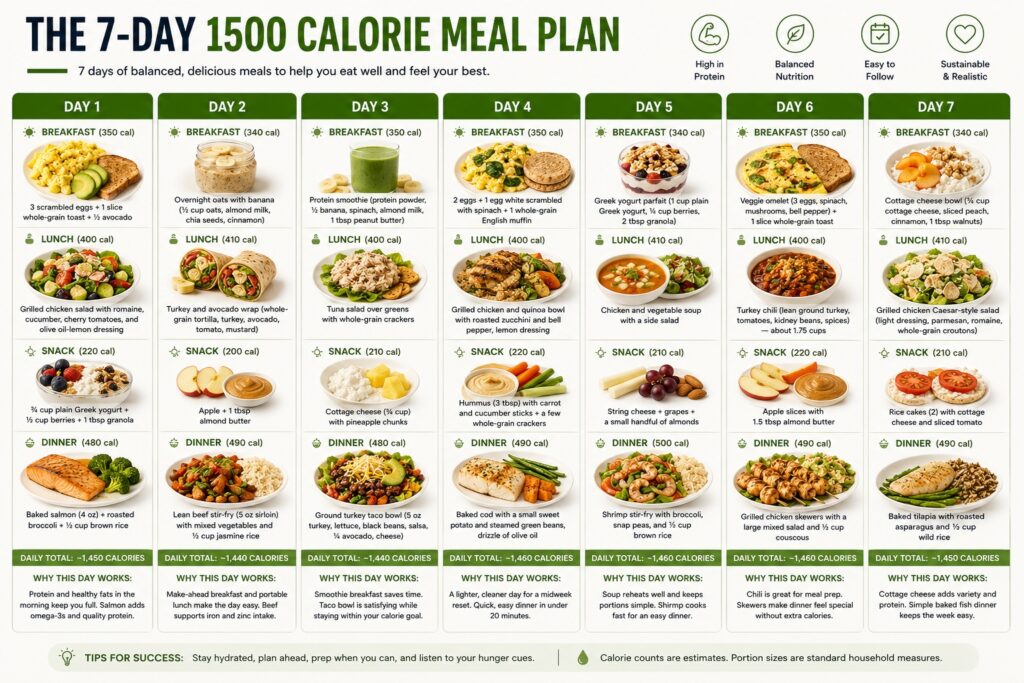
Here’s the full week of this 1500 calorie meal plan, meal by meal.
Day 1
- Breakfast (350 cal): 3 scrambled eggs + 1 slice whole-grain toast + ½ avocado
- Lunch (400 cal): Grilled chicken (4 oz) salad with romaine, cucumber, cherry tomatoes, and olive oil-lemon dressing
- Snack (220 cal): ¾ cup plain Greek yogurt + ½ cup berries + 1 tbsp granola
- Dinner (480 cal): Baked salmon (4 oz) + roasted broccoli + ½ cup brown rice
- Daily total: ~1,450 calories
Why this day works: Starting with eggs and avocado gives you protein and healthy fat right away, so you’re not hungry an hour later. Salmon at dinner adds omega-3s on top of the protein, which is a nice bonus most 1500 calorie meal plan days don’t bother including.
Day 2
- Breakfast (340 cal): Overnight oats (½ cup oats, unsweetened almond milk, chia seeds, cinnamon) with sliced banana
- Lunch (410 cal): Turkey and avocado wrap (whole-grain tortilla, 4 oz turkey, avocado, tomato, mustard)
- Snack (200 cal): Apple + 1 tbsp almond butter
- Dinner (490 cal): Lean beef stir-fry (5 oz sirloin) with mixed vegetables and ½ cup jasmine rice
- Daily total: ~1,440 calories
Why this day works: Overnight oats are a make-ahead breakfast, so there’s zero morning effort. The wrap at lunch travels well if you’re eating at a desk, and beef at dinner adds iron and zinc, which some women don’t get enough of on lower-calorie diets.
Day 3
- Breakfast (350 cal): Protein smoothie (1 scoop protein powder, ½ banana, spinach, almond milk, 1 tbsp peanut butter)
- Lunch (400 cal): Tuna salad (canned tuna, light mayo or Greek yogurt, celery) over greens with whole-grain crackers
- Snack (210 cal): Cottage cheese (¾ cup) with pineapple chunks
- Dinner (480 cal): Ground turkey taco bowl (5 oz turkey, lettuce, black beans, salsa, ¼ avocado, small amount of shredded cheese)
- Daily total: ~1,440 calories
Why this day works: A smoothie breakfast is perfect for busy mornings , blend it the night before if you’re really pressed for time. The taco bowl at dinner feels indulgent, even though it fits comfortably inside a 1500 calorie diet, which helps the week not feel like a punishment.
Day 4
- Breakfast (350 cal): 2 eggs + 1 egg white scrambled with spinach + 1 whole-grain English muffin
- Lunch (400 cal): Grilled chicken and quinoa bowl with roasted zucchini and bell pepper, lemon dressing
- Snack (220 cal): Hummus (3 tbsp) with carrot and cucumber sticks + a few whole-grain crackers
- Dinner (490 cal): Baked cod with a small sweet potato and steamed green beans, drizzle of olive oil
- Daily total: ~1,460 calories
Why this day works: This is a lighter, cleaner-tasting day , good for a midweek reset if the first few days felt heavy. Cod is mild and easy to prep in under 20 minutes, so dinner doesn’t eat into your evening.
Day 5
- Breakfast (340 cal): Greek yogurt parfait (1 cup plain Greek yogurt, ¼ cup berries, 2 tbsp granola)
- Lunch (410 cal): Chicken and vegetable soup (broth-based, shredded chicken, carrots, celery, onion) with a side salad
- Snack (210 cal): String cheese + grapes + a small handful of almonds
- Dinner (500 cal): Shrimp stir-fry with broccoli, snap peas, and ⅔ cup brown rice
- Daily total: ~1,460 calories
Why this day works: The soup at lunch is a great option if you tend to eat at your desk , it reheats well and keeps portion control simple. Shrimp cooks fast, so dinner comes together in about 15 minutes.
Day 6
- Breakfast (350 cal): Veggie omelet (3 eggs, spinach, mushrooms, bell pepper) + 1 slice whole-grain toast
- Lunch (400 cal): Turkey chili (lean ground turkey, tomatoes, kidney beans, spices) , about 1.75 cups
- Snack (220 cal): Apple slices with 1.5 tbsp almond butter
- Dinner (490 cal): Grilled chicken skewers with a large mixed salad and ½ cup couscous
- Daily total: ~1,460 calories
Why this day works: Chili is easy to batch-cook and freeze in portions, so this is a good day to double the recipe for next week. Skewers at dinner make grilled chicken feel a little more like a meal out, without the extra calories.
Day 7
- Breakfast (340 cal): Cottage cheese bowl (¾ cup cottage cheese, sliced peach, cinnamon, 1 tbsp chopped walnuts)
- Lunch (410 cal): Grilled chicken Caesar-style salad (light dressing, shaved parmesan, romaine, whole-grain croutons)
- Snack (210 cal): Rice cakes (2) with cottage cheese and sliced tomato
- Dinner (490 cal): Baked tilapia with roasted asparagus and ⅔ cup wild rice
- Daily total: ~1,450 calories
Why this day works: Cottage cheese at breakfast is an underrated protein source that a lot of people overlook , it’s a nice change of pace from eggs or yogurt. Ending the week with a simple baked fish dinner keeps things easy after six days of cooking.
5. Sample Grocery List for the Week
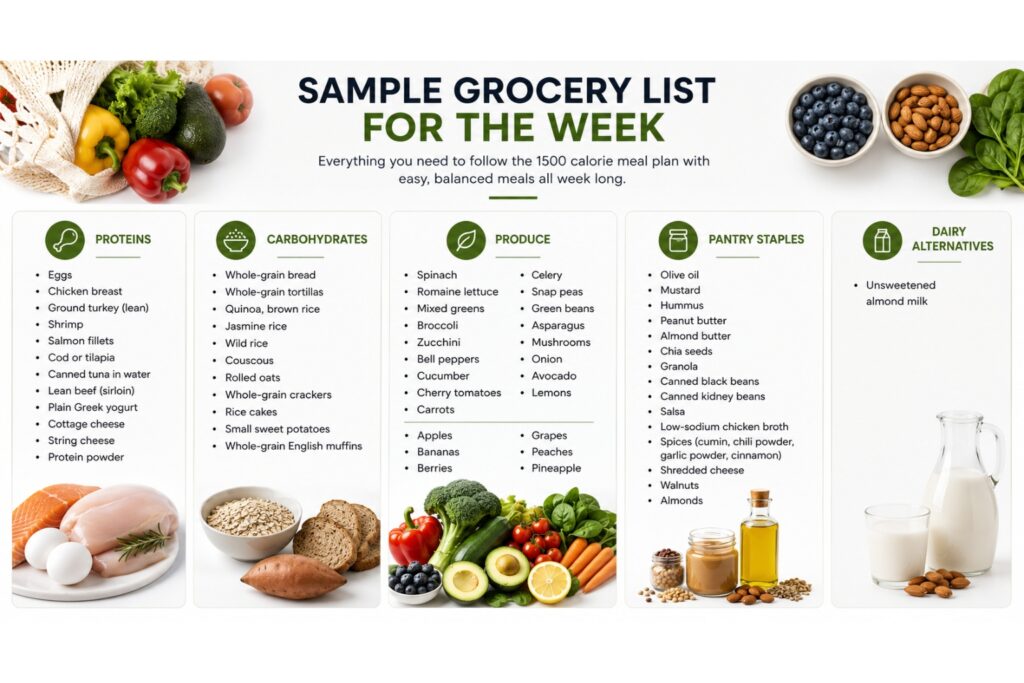
A shopping list makes it far easier to actually follow this 1500 calorie meal plan instead of improvising mid-week. The idea is simple: buy everything in one trip on the weekend, so you’re never standing in the kitchen on a Tuesday night wondering what to make. Here’s what covers the full seven days , adjust quantities to your household, and don’t worry about buying the exact brand or cut listed; the categories matter more than the specifics.
Proteins:
- Eggs
- Chicken breast,
- Ground turkey (lean),
- Shrimp
- Salmon fillets
- Cod or tilapia
- Canned tuna in water
- Lean beef (sirloin)
- Plain Greek yogurt
- Cottage cheese
- String cheese
- Protein powder
Carbohydrates:
- Whole-grain bread
- Whole-grain tortillas
- Quinoa, brown rice
- Jasmine rice
- Wild rice
- Couscous
- Rolled oats
- Whole-grain crackers
- Rice cakes
- Small sweet potatoes
- Whole-grain English muffins
Produce:
- Spinach
- Romaine lettuce
- Mixed greens
- Broccoli
- Zucchini
- Bell peppers
- Cucumber
- Cherry tomatoes
- Carrots
- Celery
- Nap peas
- Green beans
- Asparagus
- Mushrooms
- Onion
- Avocado
- Lemons
- Apples
- Bananas
- Berries
- Grapes
- Peaches
- Pineapple
Pantry staples:
- Olive oil
- Mustard
- Hummus
- Peanut butter
- Almond butter
- chia seeds
- Granola
- Canned black beans
- Canned kidney beans
- Salsa
- low-sodium chicken broth
- Spices (cumin, chili powder, garlic powder, cinnamon)
- Shredded cheese
- Walnuts
- Almonds
Dairy alternatives: unsweetened almond milk
6. Common Mistakes to Avoid on a Low Calorie Diet Plan
Even a well-built 1500 calorie diet can fall apart if a few habits creep in.
Mistake 1: Under-portioning proteins to “save” calories.
Cutting protein portions too small defeats the purpose of a high-protein low calorie diet plan and tends to leave you hungrier, not more successful.
Mistake 2: Forgetting drink calories.
Sweetened coffee, juice, and soda add up fast and can quietly eat into your 1500 calorie meal plan without you realizing it.
Mistake 3: Treating snacks as an afterthought.
The snack in this plan is doing real work , roughly 200 calories of protein or fiber to bridge the gap between meals. Skipping it often leads to overeating later.
Mistake 4: Copying someone else’s exact plan without adjusting.
A 1500 calorie meal plan that works well for one person may leave another person hungry or over-full. Use this as a template and adjust portions based on how you feel.
Mistake 5: Giving up after one “off” day.
One meal or one day that doesn’t go as planned doesn’t undo a week of consistency. A low calorie diet plan is a pattern over time, not a perfect streak.
7. Tips to Stick With a 1500 Calories Meal Plan Long-Term
- Batch-cook proteins on Sunday. Grilling or baking several proteins at once turns weekday lunches and dinners into a 5-minute assembly job.
- Pre-chop vegetables for the week. Having washed, cut produce ready to go removes the biggest barrier to actually eating them.
- Keep grab-and-go snacks stocked. Boiled eggs, string cheese, and pre-portioned nuts make it easy to stay on track between meals.
- Rotate flavors, not structure. Changing up a sauce or spice blend keeps a 1500 calorie diet from feeling repetitive, even when the underlying meals stay similar.
- Check in weekly, not daily. Energy, sleep, and workout performance tend to be better signals of whether this calorie level is right for you than daily fluctuations on a scale.
8. Making This 1500 Calorie Meal Plan Work for You
The most sustainable version of any 1500 calorie meal plan is the one that flexes around your actual life. Swap Day 2’s dinner for Day 5’s if that’s what your schedule allows. If a snack isn’t cutting it, shift a few calories from dinner into your afternoon snack. None of this breaks the plan , it’s exactly how a low calorie diet plan is supposed to be used.
If you consistently feel drained, foggy, or unable to concentrate on 1500 calories, that’s worth paying attention to. It may simply mean your body needs a bit more fuel, and adjusting upward with a healthcare provider’s input is a reasonable next step , not a sign that you’ve done something wrong.
9. Adjusting This 1500 Calorie Meal Plan for Different Goals
Not everyone following a 1500 calorie meal plan has the exact same goal, so it helps to know how to shift things slightly depending on what you’re after.
If your main goal is faster fat loss:
Keep the 1500 calorie meal plan as written, but prioritize non-starchy vegetables at dinner over starchier options like rice or couscous a few nights a week. This keeps the meal filling while trimming a modest amount of extra calories without feeling like a separate diet.
If your main goal is muscle preservation while losing fat:
Keep every gram of protein in this 1500 calories meal plan intact, and consider adding a short strength-training session on most days. The protein structure here is already built to support this goal , the training is what makes the biggest difference.
If you find 1500 calories too low:
That’s common, especially for taller or more active women. You can scale this 1500 calorie diet up by roughly 200–300 calories by increasing portion sizes slightly across meals , a bit more rice, an extra egg, a slightly bigger portion of protein , while keeping the same overall structure.
If you find 1500 calories too high:
Some smaller-framed or less active women may do better with a slightly lower target. In that case, a 1200 calorie meal plan with a similar high-protein structure may be a better fit , though it’s a bigger reduction and worth discussing with a healthcare provider first.
The point of any low calorie diet plan is that it should bend to fit you, not the reverse. A 1500 calorie meal plan is a strong, well-tested starting point , but the version that actually gets results is the one you adjust until it fits your life.
10. How This 1500 Calorie Meal Plan Compares to Other Diet Approaches
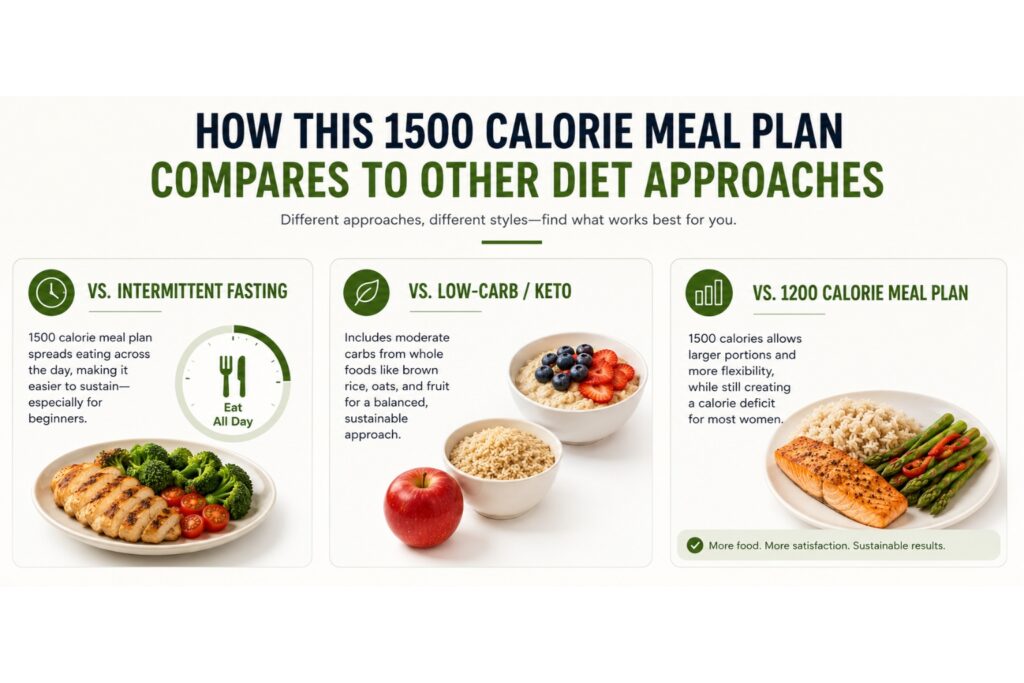
It’s worth understanding where a 1500 calorie meal plan fits relative to other common approaches, since the “right” plan really depends on your starting point and preferences.
Compared to intermittent fasting:
The 1500 calorie meal plan spreads eating across the whole day rather than restricting it to a window , which some people find easier to sustain, especially beginners who aren’t used to going long stretches without food.
Compared to low-carb or keto approaches:
This 1500 calorie diet keeps moderate amounts of whole-food carbohydrates like brown rice, oats, and fruit, rather than cutting them out almost entirely. That tends to make it easier to follow long-term for people who don’t want to eliminate entire food groups.
Compared to a 1200 calorie meal plan:
This 1500 calorie meal plan allows noticeably larger portions and more room for flexibility, while still creating a real calorie deficit for most women , which is a big part of why it’s such a commonly recommended starting point.
Key Takeaways
- This 1500 calorie meal plan is built around a high-protein low calorie diet plan structure to support fullness and preserve muscle during weight loss.
- All seven days use everyday ingredients , no special products required to follow this 1500 calorie diet.
- Snacks aren’t optional extras here; they’re built into the plan to prevent overeating later in the day.
- Batch-cooking proteins and prepping vegetables ahead of time makes this low calorie diet plan realistic for a busy week.
- Adjust portions based on how you feel , persistent hunger or fatigue is a sign to reassess, not push through.
Frequently Asked Questions (FAQ)
Q1: Is a 1500 calorie meal plan enough for weight loss?
For many women, yes , a 1500 calorie meal plan typically creates a moderate calorie deficit that supports gradual, sustainable weight loss. Actual results depend on starting weight, activity level, and metabolism, so results vary from person to person.
Q2: Will a 1500 calorie diet leave me hungry?
It shouldn’t, if it’s structured well. This plan prioritizes protein and fiber-rich vegetables at every meal specifically to reduce hunger. If you’re still frequently hungry, it may be worth discussing a slightly higher calorie target with a healthcare provider.
Q3: Can I follow this low calorie diet plan if I’m vegetarian?
Yes, with some swaps. Replace animal proteins with eggs, Greek yogurt, cottage cheese, tofu, tempeh, or legumes, and adjust portion sizes to hit similar protein totals per meal.
Q4: How is a 1500 calorie meal plan different from a 1200 calorie plan?
A 1500 calorie meal plan allows for larger portions and more flexibility while still creating a meaningful deficit for most women. A 1200 calorie plan is a steeper reduction, generally better suited to shorter-term use and closer monitoring.
Q5: Do I need to exercise while following this 1500 calorie diet?
Exercise isn’t required, but pairing this plan with regular movement , especially strength training , may help preserve muscle mass and support steadier results over time.
Q6: Can I repeat this 7-day 1500 calorie meal plan indefinitely?
You can repeat it, or rotate meals between days for variety. Many people eventually shift toward a higher, more sustainable calorie target once they’re closer to their goal, rather than staying at a deficit indefinitely.
Conclusion: Start Your 1500 Calorie Meal Plan This Week
A 1500 calorie meal plan works best when it’s treated as a flexible framework, not a rigid script. Lead with protein at every meal, build in real snacks, prep ahead where you can, and adjust the plan based on how your body actually responds , not just on the calorie total.
For more free resources like this, visit The Daily Crave at thedailycrave.online. You can also check out our free diet calculators to find a calorie target personalized to you, browse more meal prep guides, or explore our complete guide to weekly meal plans for the bigger-picture approach to planning meals long-term.