Table of Contents
Starting vegetarian meal prep for the first time can feel like a lot at once. Between figuring out what to cook, how much protein you actually need without meat, and how to keep a week’s worth of food from getting boring, it’s easy to give up before day three. Vegetarian meal prep gets much easier once you have a repeatable system, and that’s exactly what this guide gives you.
This is a full 7-day starter plan built for beginners, with a breakfast, lunch, dinner, and snack for every day of the week, plus answers to the questions most people run into during their first week of vegetarian meal prep.
1. Why Vegetarian Meal Prep Works So Well for Beginners
1. Fewer Food-Safety Deadlines
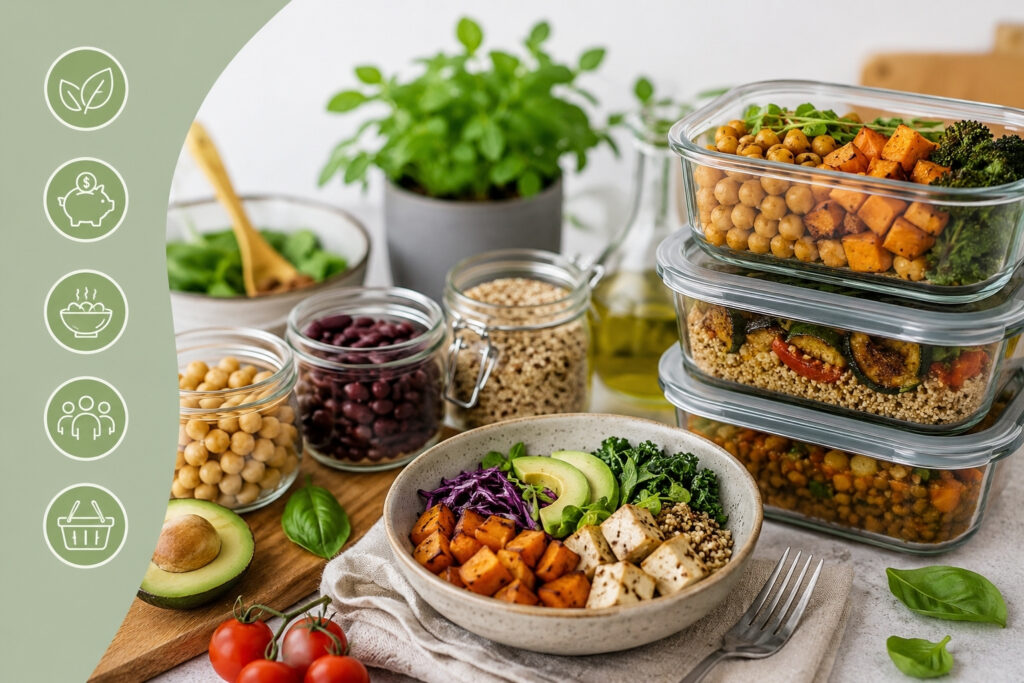
Cooked grains, beans, and roasted vegetables generally stay good for 4–5 days refrigerated, more breathing room than ground meat, which is often best used within 2–3 days.
2. Lower Grocery Cost
Beans, lentils, tofu, and seasonal vegetables tend to cost less per serving than meat, so a week of vegetarian meal prep can meaningfully reduce a grocery bill.
3. Naturally Batch-Friendly Ingredients
Rice, quinoa, roasted vegetables, and bean-based dishes often taste better after a day in the fridge as flavors settle.
4. Easy to Scale Up or Down
A pot of lentils or a tray of roasted vegetables scales from one serving to eight, which makes vegetarian meal prep practical for one person or a full household.
5. Fewer Special Ingredients Needed
Most vegetarian meal prep staples — rice, beans, canned tomatoes, frozen vegetables — are already pantry basics, so a first week rarely requires an unusual grocery trip.
2. Building Your Vegetarian Meal Prep Kit
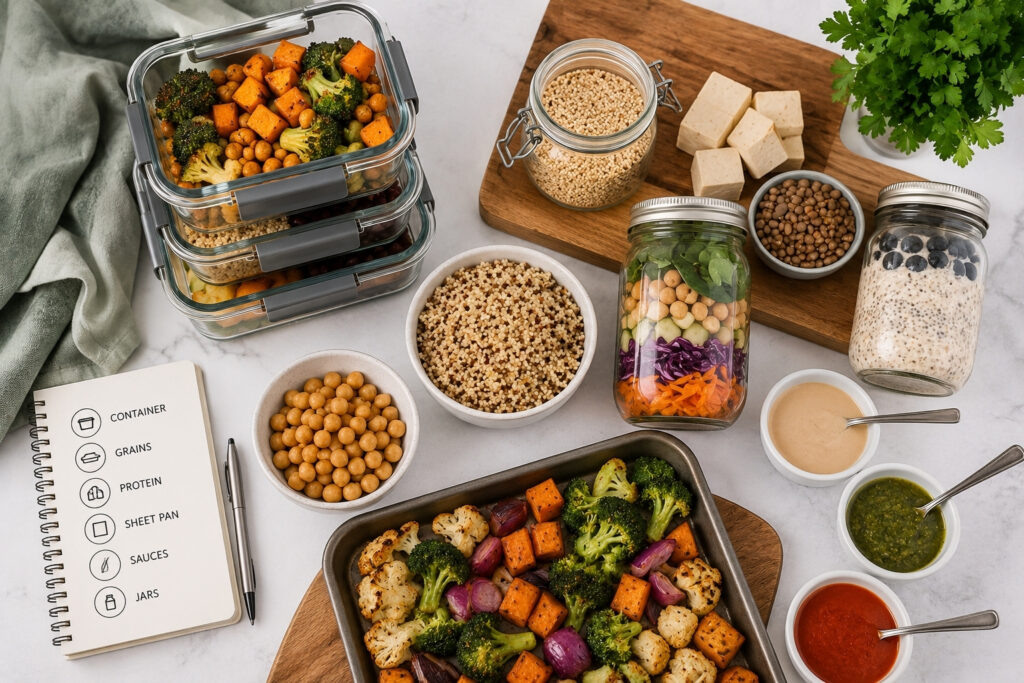
1. Containers Sized to the Meal
Breakfast, lunch, dinner, and snacks all need different container sizes. Our best meal prep containers guide breaks this down by oz for every meal type.
2. A Reliable Grain
Rice, quinoa, or farro cooked in one large batch becomes the base for several meals across the week.
3. Two or Three Protein Sources
Beans, lentils, chickpeas, tofu, tempeh, and eggs rotate well across a week of vegetarian meal prep recipes, so you’re not eating the same protein at every meal.
4. A Sheet Pan or Two
Roasting a full tray of vegetables while grains and protein cook on the stove is the fastest way to get a week’s dinners done in one session.
5. Basic Sauces and Dressings
A vinaigrette, a tahini sauce, and a chili-garlic sauce can turn the same grains and vegetables into three different-tasting meals, the easiest way to avoid boring vegetarian meal prep.
6. A Few Spare Jars
Wide-mouth jars are useful for overnight oats and mason jar salads, and they double as sauce storage between prep sessions.
3. Vegetarian Meal Prep Ideas by Meal Type
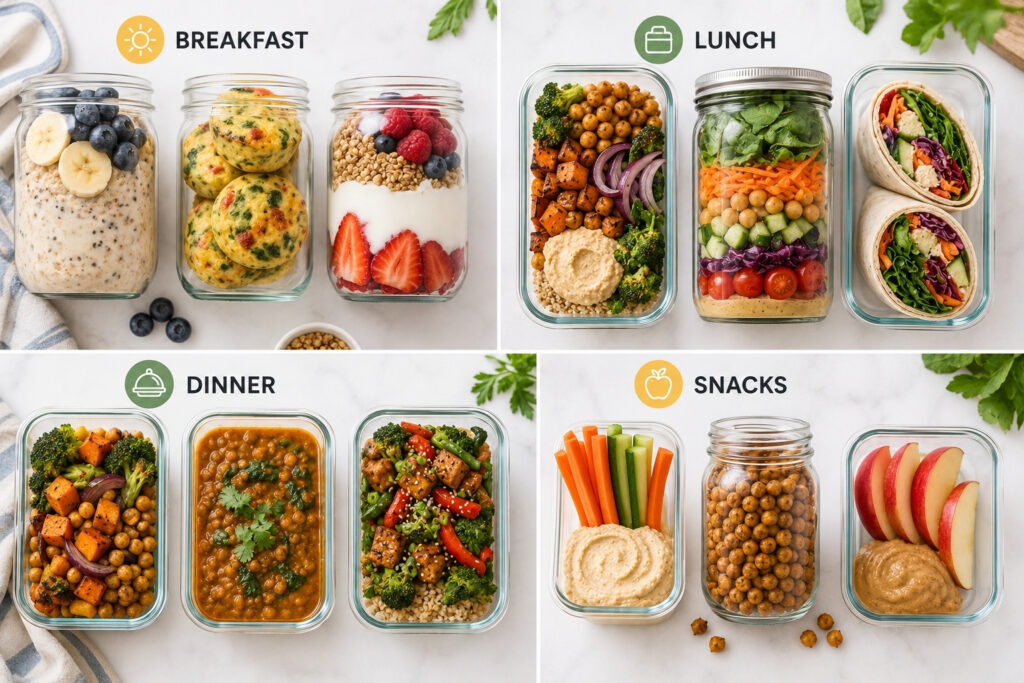
3.1 Breakfast
1. Overnight Oats
Rolled oats, milk or a plant-based alternative, and a spoonful of nut butter, prepped in jars the night before.
2. Egg Muffins or Tofu Scramble Cups
Baked in a muffin tin with vegetables, these reheat in under two minutes.
3. Greek Yogurt Parfait Jars
Layered yogurt, granola, and fruit, with granola added the morning of to avoid sogginess.
3.2 Lunch
1. Grain Bowls
A base grain, a roasted vegetable, a protein, and a sauce, packed in a 24–32 oz container — the backbone of most vegetarian meal prep lunch ideas.
2. Mason Jar Salads
Dressing on the bottom, sturdy vegetables next, greens on top, keeping salads crisp for up to five days. Our mason jar salad meal prep guide has seven layering combinations.
3. Stuffed Wraps or Pitas
Hummus, roasted vegetables, and a grain rolled into a wrap the morning of.
4. Soup Jars
A thermos-style container keeps a hearty bean or lentil soup hot until lunchtime, a good option on colder days.
3.3 Dinner
1. Sheet Pan Vegetable and Chickpea Bakes
One pan, minimal cleanup, enough volume for 3–4 dinners when doubled.
2. Lentil or Bean-Based Curries
These freeze well. Our 15 healthy freezer meals roundup has several vegetarian options.
3. Stir-Fries With Tofu or Tempeh
Fast to cook fresh but also reheats well.
4. Stuffed Vegetables
Bell peppers or zucchini stuffed with a grain-and-bean filling bake in one tray and reheat cleanly for several days.
3.4 Snacks
1. Hummus and Vegetable Cups
Pre-portioned into 8 oz containers.
2. Roasted Chickpeas
A crunchy, protein-forward snack that keeps for about a week at room temperature.
3. Fruit and Nut Butter Packs
Simple, minimal prep, useful for busier days.
4. Grocery List for the Week
A focused list keeps vegetarian meal prep from turning into an overwhelming shopping trip.
1. Grains
Rolled oats, rice, quinoa, or farro — pick two rather than buying all four for your first week.
2. Proteins
Canned or dried chickpeas, black beans, red lentils, extra-firm tofu, and eggs if you eat them.
3. Produce
Sweet potatoes, broccoli, bell peppers, spinach, mixed greens, cucumber, tomato, carrots, and one or two fruits.
4. Pantry Staples
Olive oil, tahini, soy sauce, lime and lemon, garlic, and your preferred spice blend.
5. The 7-Day Vegetarian Meal Prep Plan
Most of this plan fits into a single two-hour prep session. Start your grains first since they need the least hands-on attention, roast your vegetables while they cook, simmer or bake your protein alongside, then portion everything into containers at the end. A short 20-minute top-up around Day 4 keeps the second half of the week fresh.
Quick Reference: The Week at a Glance
| Day | Breakfast | Lunch | Dinner | Snack |
| 1 | Overnight oats, banana, peanut butter | Quinoa bowl, sweet potato, black beans, lime-cilantro dressing | Sheet pan chickpeas and vegetables over rice, tahini | Hummus, carrot, cucumber |
| 2 | Tofu scramble cups, spinach, bell pepper | Mason jar salad, chickpeas, feta, lemon vinaigrette | Red lentil curry over basmati rice, sautéed greens | Roasted chickpeas |
| 3 | Greek yogurt parfait, granola, berries | Leftover lentil curry in a wrap | Tofu and vegetable stir-fry, brown rice, garlic-soy | Apple, almond butter |
| 4 | Overnight oats, cinnamon, walnuts | Farro bowl, roasted broccoli, white beans, tahini | Black bean and sweet potato tacos, cabbage slaw | Hummus and vegetable cup |
| 5 | Egg muffins or tofu scramble, spinach, mushroom | Mason jar salad, black beans, corn, avocado, lime | Chickpea and vegetable curry (doubled from Day 2) | Roasted chickpeas |
| 6 | Greek yogurt parfait, different fruit | Stuffed pita, hummus, roasted vegetables, quinoa | Sheet pan tofu and vegetables, peanut sauce, rice | Fruit and nut butter pack |
| 7 | Overnight oats, favorite variation | Clean-out-the-fridge grain bowl | Simple bean chili (freeze extras) | Hummus and vegetable cup |
Day-by-Day Details of Vegetarian Meal Prep
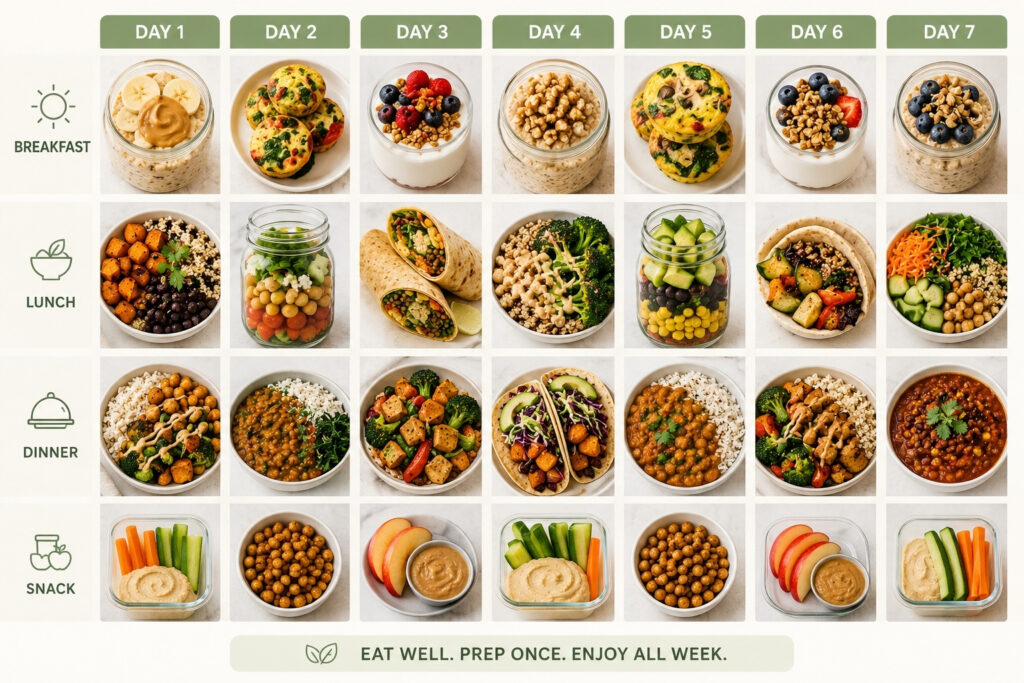
Day 1
Breakfast: Overnight oats with banana and peanut butter.
Lunch: Quinoa bowl with roasted sweet potato, black beans, and lime-cilantro dressing.
Dinner: Sheet pan chickpeas and mixed vegetables over rice, with tahini drizzle.
Snack: Hummus with carrot and cucumber sticks.
Day 2
Breakfast: Tofu scramble cups with spinach and bell pepper.
Lunch: Mason jar salad with chickpeas, cucumber, tomato, feta, and lemon vinaigrette.
Dinner: Red lentil curry over basmati rice, with sautéed greens.
Snack: Roasted chickpeas.
Day 3
Breakfast: Greek yogurt parfait with granola and mixed berries.
Lunch: Leftover red lentil curry in a wrap with extra vegetables.
Dinner: Tofu and vegetable stir-fry with brown rice and garlic-soy sauce.
Snack: Apple slices with almond butter.
Day 4
Breakfast: Overnight oats with cinnamon and chopped walnuts.
Lunch: Grain bowl with farro, roasted broccoli, white beans, and tahini sauce.
Dinner: Black bean and sweet potato tacos with cabbage slaw.
Snack: Hummus and vegetable cup.
Day 5
Breakfast: Egg muffins with spinach and mushroom (or a tofu-based version for a vegan meal prep day).
Lunch: Mason jar salad with black beans, corn, avocado, and lime dressing.
Dinner: Chickpea and vegetable curry, doubled from Day 2.
Snack: Roasted chickpeas.
Day 6
Breakfast: Greek yogurt parfait, repeated with a different fruit.
Lunch: Stuffed pita with hummus, roasted vegetables, and quinoa.
Dinner: Sheet pan tofu and vegetables with peanut sauce over rice.
Snack: Fruit and nut butter pack.
Day 7
Breakfast: Overnight oats, whichever variation you enjoyed most.
Lunch: Clean-out-the-fridge grain bowl using whatever’s left.
Dinner: A simple bean chili, freezing extra using tips from our 15 healthy freezer meals guide.
Snack: Hummus and vegetable cup.
Why This Week Is Structured This Way
Repeating a handful of bases (rice, quinoa, chickpeas, lentils) keeps the shopping list short, while rotating sauces and formats keeps eating from feeling repetitive. The trick behind sustainable vegetarian meal prep: repeat the cooking, vary the assembly.
6. Easy Vegetarian Meal Prep Ideas for Busy Weeks
Some weeks won’t allow for a full prep session. These easy vegetarian meal prep ideas are built for exactly that.
1. No-Cook Lunches
Mason jar salads and hummus wraps need almost no cooking. Our no-cook meal prep ideas for hot weather roundup has 22 options.
2. Frozen Vegetable Shortcuts
Frozen mixed vegetables skip the chopping step and hold their nutrition well.
3. Canned Beans Over Dried
Canned beans save a full soak-and-cook cycle, which matters more on a tight week than the modest cost difference.
4. One-Pot Meals
A single pot of lentil soup or bean chili covers several dinners with one cleanup, often the difference between prepping and skipping the week entirely.
5. Pre-Cut Produce
Buying pre-washed greens and pre-cut vegetables costs slightly more per pound, but removes the biggest time barrier in most easy vegetarian meal prep ideas: the chopping.
7. Vegetarian Meal Prep Ideas and Recipes
1. Swap Dairy for Plant-Based Alternatives
Replace Greek yogurt with a coconut or almond-based yogurt, and swap cheese for a plant-based version or skip it.
2. Swap Eggs for Tofu
The egg muffins convert directly into tofu scramble cups, one of the more popular vegan meal prep ideas recipes.
3. Double-Check Sauces and Dressings
Some store-bought dressings contain honey or dairy, so a quick label check keeps a vegan meal prep week fully plant-based.
4. Lean on Legumes for Protein
Vegan meal prep recipes typically lean more heavily on beans, lentils, tofu, and tempeh to hit similar protein totals. Our high-protein meal prep on a budget guide has ideas that adapt well to a vegan meal prep week.
5. Check Your Grains and Bread
Most grains used in this plan (rice, quinoa, oats) are naturally vegan, but some store-bought granola or bread contains honey or dairy, so a quick label check keeps a fully vegan meal prep week consistent.
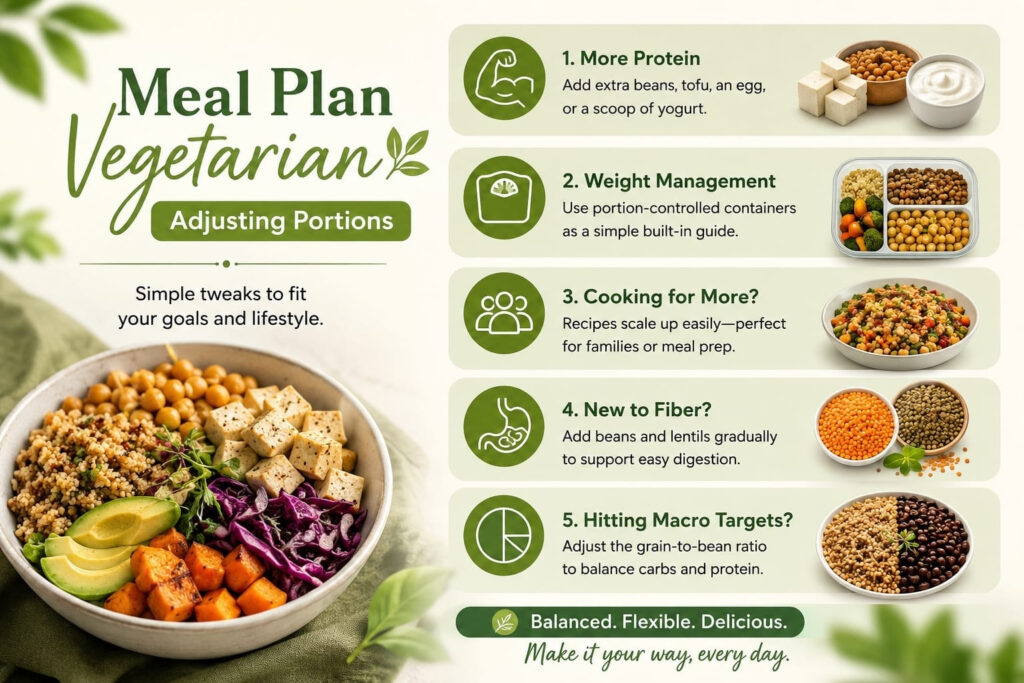
8. Meal Plan Vegetarian: Adjusting Portions
1. If You Want More Protein
Add an extra half-cup of beans or a few ounces of tofu to lunch and dinner, or a second egg or scoop of yogurt to breakfast.
2. If You’re Prepping for Weight Management
Sticking to the container sizes in our meal prep containers guide can act as a built-in portion check.
3. If You’re Cooking for More Than One Person
Every recipe in this meal plans vegetarian doubles or triples cleanly, since grains, beans, and vegetables scale in a way ground meat generally doesn’t.
4. If You’re New to Higher-Fiber Eating
Beans and lentils are high in fiber, and increasing fiber intake quickly may cause temporary digestive discomfort for some people. Adding plant proteins gradually over the first week or two tends to make this smoother.
5. If You Follow a Specific Macro Target
Swapping the grain-to-bean ratio in the base grain bowl formula (Section 5’s building blocks) up or down lets you shift carbs and protein without changing the overall meal plan vegetarian structure.
9. Common Mistakes Beginners Make
1. Underestimating Protein
The most common reason people feel unsatisfied on a vegetarian meal prep plan is too little protein per meal, not the lack of meat. Aim for beans, lentils, tofu, or eggs at every meal, not just dinner.
2. Prepping Too Much Variety at Once
Trying six different recipes in one session means more dishes and more chance of giving up. Two or three bases repeated across the week is more sustainable.
3. Skipping the Sauce Step
A grain bowl without a sauce gets boring fast. Batch-making one or two sauces solves this in under ten minutes.
4. Not Accounting for Fresh-Add Ingredients
Avocado, fresh herbs, and delicate greens don’t hold up well prepped for five days. Add them the morning of instead.
5. Using One Container Size for Every Meal
As covered in our container sizing guide, breakfast, lunch, dinner, and snacks work better in different sizes.
6. Mixing Metal Utensils With Coated Plastic
Scraping a metal spoon or fork against certain plastics scratches the surface, which traps bacteria and stains over time even with regular washing.
10. Storage and Reheating Tips
1. Refrigerate Within Two Hours
Cooling cooked grains, beans, and roasted vegetables quickly helps them last the full 4–5 days rather than spoiling early.
2. Keep Dressed Salads Separate Until You Eat
Adding dressing at the last minute is the biggest factor in whether a mason jar salad stays crisp or turns soggy by Day 4.
3. Reheat Grain Bowls With a Splash of Water or Broth
A tablespoon of water or broth before microwaving keeps rice and quinoa from drying out.
4. Freeze What You Won’t Eat Within Five Days
Curries, chilis, and soups freeze well for up to three months, so doubling a recipe and freezing half is often more efficient than cooking fresh the following week.
11. Key Takeaways
1. Repeat the Cooking, Vary the Assembly
A handful of grains, beans, and roasted vegetables can become a full week of different-feeling meals with a few sauces.
2. Protein Is the Make-or-Break Factor
Most beginners abandon vegetarian meal prep because meals feel unsatisfying, usually from too little protein.
3. Container Sizing Matters More Than It Seems
Matching container size to meal type keeps portions consistent and food fresher for longer.
4. Vegan Swaps Are Simple
Most of this plan converts to a fully vegan meal prep week with a handful of small ingredient swaps.
5. Start With Two or Three Recipes, Not Seven
A smaller, repeatable rotation is easier to sustain than a different recipe every day.
12. FAQ
1. Is vegetarian meal prep hard for beginners?
Not especially, and it’s often easier than meat-based meal prep since plant-based staples generally last longer in the fridge with less food-safety risk.
2. How much protein do I need on a vegetarian meal prep plan?
Needs vary by person, but including a protein source at every meal is a reasonable starting guideline. A registered dietitian can help personalize this to your activity level and goals.
3. Can I follow this plan if I’m vegan, not just vegetarian?
Yes. Section 6 above covers the specific swaps — plant-based yogurt instead of dairy, tofu instead of eggs, and checking sauces for hidden dairy or honey.
4. How long does prepped vegetarian food actually last in the fridge?
Most cooked grains, beans, and roasted vegetables hold up well for 4–5 days. Dressed salads are the exception and are best eaten within 2–3 days for texture.
5. What if I don’t have time to prep all seven days at once?
Start with three or four days instead of seven. The easy vegetarian meal prep ideas in Section 6, plus a couple of no-cook lunches, can fill in the rest.
6. Do I need special equipment to start vegetarian meal prep?
Not really. A few containers in the right sizes, one sheet pan, and a pot for grains or lentils cover most of what this plan needs. Nothing here requires specialty kitchen gear.
Conclusion: Start Small and Build the Habit
Vegetarian meal prep doesn’t have to be perfect in week one. Pick two or three recipes from this plan, prep enough for three or four days, and build from there once the rhythm feels manageable.
For more ideas, check out our complete meal prep guide, browse our meal prep category and healthy recipes category on The Daily Crave, or see our meal prep for one person weekly plan and 5-ingredient meal prep lunch ideas for more inspiration.
More meal prep guides and recipes are available on The Daily Crave.