Table of Contents
Most meal prep advice is written for families of four. The recipes make eight servings, the grocery lists assume you’ll use a whole head of cauliflower in one sitting, and the container sets come in packs of twelve. None of that translates well when you’re the only one shopping, cooking, and eating. Meal prep for one person runs on different math, and this guide walks through exactly what that looks like, from scaling recipes down to a full beginner’s weekly plan you can actually follow without ending up with a fridge full of food you can’t finish.
1. What Meal Prep for One Person Actually Involves
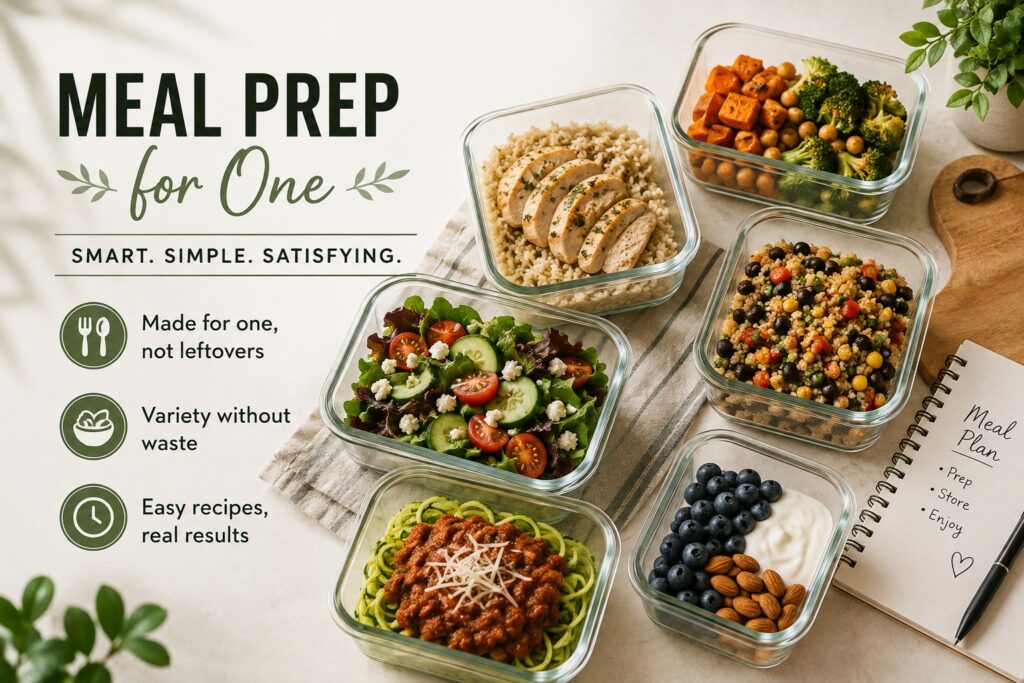
Meal prep for one person isn’t a smaller version of family meal prep. It’s a different approach entirely, built around avoiding waste and decision fatigue rather than feeding multiple people at once. Most meal prep recipes you’ll find online were never tested at single-serving scale, which is part of why so many people who live alone give up on meal prep for one person after a frustrating first attempt.
1.1 Why Family-Sized Recipes Don’t Work for Solo Meal Prep
A recipe built to serve six doesn’t just need dividing by six. Cooking times, pan sizes, and even seasoning ratios shift when you scale a dish down, and a lot of easy healthy meal prep recipes assume a full stovetop of activity that doesn’t make sense for one plate. This is the honest starting point: most meal prep content available right now genuinely is written for a different situation than yours, so it’s worth adjusting your expectations before adjusting your grocery list for meal prep for one person.
1.2 The Real Goal Is Variety Without Waste
The point of meal prep for one person isn’t eating the exact same dish five nights in a row out of a giant batch. It’s having a small, rotating set of ready components, proteins, grains, and vegetables, that you can recombine so dinner doesn’t feel repetitive by Wednesday. That distinction matters more for someone prepping solo than it does for a family splitting one big pot of chili across four plates. Most of the easy healthy meal prep recipes worth repeating are the ones built this way, as components rather than one fixed dish, since they flex around whatever you have left in the fridge.
1.3 What “Easy” Actually Means for Solo Meal Prep
When people search for easy healthy meal prep recipes, they usually mean something with few steps and forgiving timing, not something bland. For one person, easy also means a recipe that scales down cleanly and doesn’t leave you with odd fractions of ingredients. A dish built around a whole can of beans or a full block of tofu is often more genuinely easy for solo cooking than one that calls for a third of a bell pepper.
2. How to Plan a Week of Meal Prep for One Person
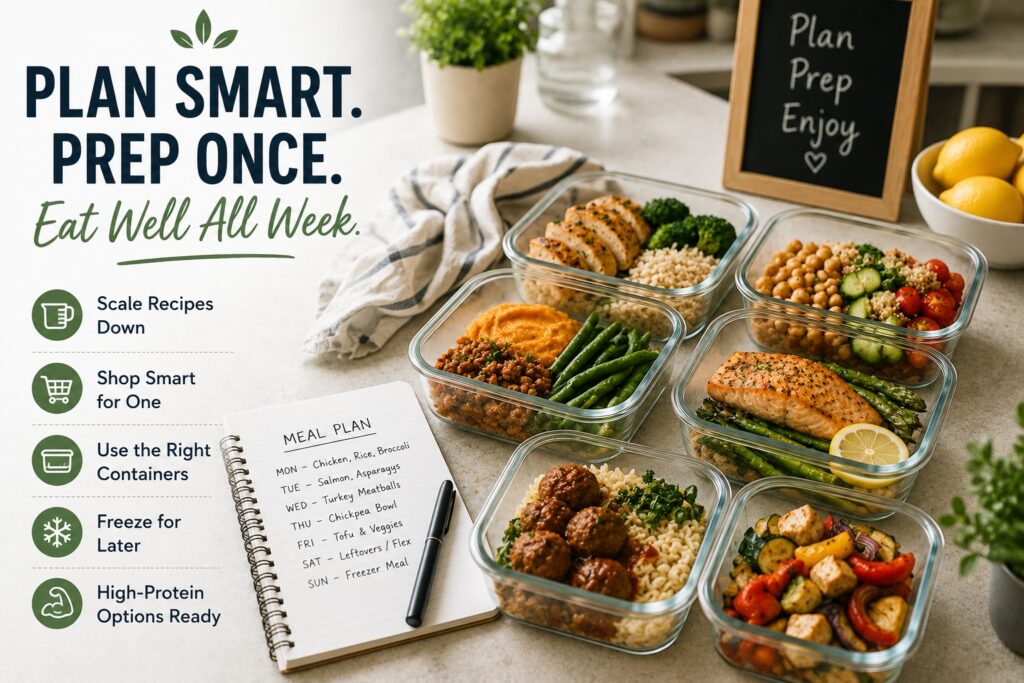
Planning is where most solo meal prep attempts either take hold or fall apart. These four habits are the foundation of meal prep for one person that actually lasts past the first week.
2.1 Scale Recipes Down Instead of Guessing
Rather than eyeballing portions, halve or quarter a normal recipe using its exact ingredient ratios, then round up slightly for pantry staples like rice or dried beans, since those keep well if you end up with a bit extra. Meal prep recipes that use whole cans, like beans or diced tomatoes, are often easier to scale than ones built around fractions of a fresh vegetable, since you’re not left with half an onion going soft in the crisper drawer.
2.2 Build a Grocery List Sized for One
Buying smaller quantities more often tends to work better for meal prep for one person than a single massive weekly haul, especially for fresh produce that doesn’t hold up for seven days. A useful habit is picking two or three proteins and one or two vegetables that show up in multiple meals that week, so nothing sits unused in the fridge until it spoils.
2.3 Choose Containers That Match Real Portions
Most container sets are sold in bulk for family meal prep, but for one person, four to six containers is usually plenty. Smaller, single-serving containers also help with portion awareness, since a family-sized container can make one meal look smaller than it actually is once it’s spread across that much surface area.
2.4 Let the Freezer Carry the Back Half of the Week
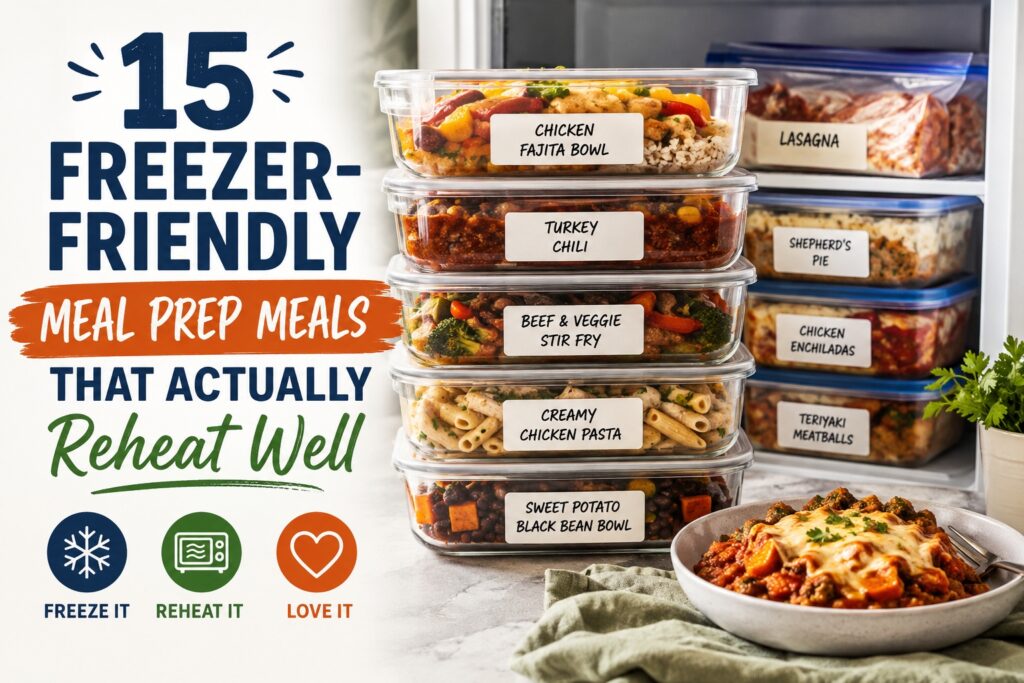
Eating everything fresh within five to seven days isn’t always realistic when you’re cooking solo, so freezing two or three portions from a batch is one of the more practical meal prep ideas for one person. If you want a deeper dive into which dishes actually hold their texture after freezing, the 15 healthy freezer meals guide covers that in more detail.
2.5 Keep a Short List of High-Protein Options on Hand
Protein is usually the part of a meal that takes the most planning, since it’s often the most expensive ingredient and the one most likely to go to waste if you buy too much. Keeping a rotating shortlist of three or four high protein meal prep recipes, something like baked chicken thighs, a lentil stew, egg muffins, and a sheet-pan salmon, makes weekly planning faster because you’re choosing from a known set instead of starting from scratch. These high protein meal prep recipes also tend to reheat and freeze well, which matters more for solo cooking than it does when a family is finishing a dish within a day or two.
3. Common Meal Prep for One Mistakes to Avoid
A few habits show up again and again when people are new to meal prep for one person, and most of them are easy to fix once you know what to look for.
3.1 Cooking a Full Family Recipe “Just in Case”
It’s tempting to make the full recipe out of habit, telling yourself you’ll eat the leftovers. In practice, this is one of the fastest ways to end up with food waste, since eating the same full-batch dish five or six times in a row usually leads to it getting pushed to the back of the fridge by day four.
3.2 Buying Ingredients That Only Work in One Recipe
Specialty sauces or single-use spices can make a recipe taste great once, then sit in the pantry for months. Sticking to a smaller rotation of versatile ingredients tends to keep meal prep for one person more affordable and less wasteful over time.
3.3 Skipping the Freezer Entirely
Some people avoid freezing altogether because they assume everything turns out worse, but that’s only true for certain dishes. Soups, stews, and cooked grains generally freeze and reheat well, and building the freezer into your plan from the start makes solo meal prep far more forgiving.
3.4 Not Repeating Any Meals
Trying to make something completely different every single day sounds appealing, but for Meal Prep for One it usually means more shopping, more dishes, and more decision fatigue. A short rotation of two or three go-to meals you genuinely enjoy tends to hold up better long-term than reinventing dinner daily.
3.5 Overcomplicating the Recipes You Choose
It’s easy to assume meal prep for one person needs to look elaborate to count as real cooking, but the opposite tends to be true. Sticking to easy healthy meal prep recipes with fewer steps and shorter ingredient lists makes it far more likely you’ll actually follow through on a Sunday prep session instead of skipping it because it feels like too much effort after a long week.
4. A Beginner’s 7-Day Meal Prep for One Person Plan
This is a starting framework, not a strict script. It’s meant to show how a realistic week of meal prep for one person can be built from a small set of prepped components rather than seven separate recipes.
Weekly Overview
| Day | Breakfast | Lunch | Dinner | Daily Total |
| Monday | Overnight oats with berries (~350 kcal) | Grain bowl with roasted vegetables and chickpeas (~450 kcal) | Sheet pan chicken thighs with roasted broccoli (~480 kcal) | ~1,280 kcal |
| Tuesday | Greek yogurt with granola (~300 kcal) | Leftover roasted chicken over greens (~400 kcal) | Lentil soup, batch cooked, freeze half (~380 kcal) | ~1,080 kcal |
| Wednesday | Egg and vegetable scramble (~320 kcal) | Grain bowl, swap in different vegetable (~450 kcal) | Stir-fry using remaining chicken and rice (~500 kcal) | ~1,270 kcal |
| Thursday | Overnight oats, repeat batch (~350 kcal) | Lentil soup from the freezer or fridge (~380 kcal) | Baked salmon with roasted sweet potato (~460 kcal) | ~1,190 kcal |
| Friday | Greek yogurt with fruit (~280 kcal) | Leftover salmon and sweet potato (~420 kcal) | Simple pasta with pantry staples (~430 kcal) | ~1,130 kcal |
| Saturday | Weekend cook session, prep for next week (~300 kcal) | Whatever’s left in the fridge (~400 kcal) | Something fresh, no prep required (~450 kcal) | ~1,150 kcal |
| Sunday | Eggs or a light breakfast (~250 kcal) | Batch cook proteins and grains for the week (~400 kcal) | Freezer meal from a previous week (~420 kcal) | ~1,070 kcal |
Calorie counts are rough estimates meant as a general reference, not exact figures. They’ll shift depending on your exact portions and ingredients.
4.1 Monday: Batch Cook Your Anchor Protein
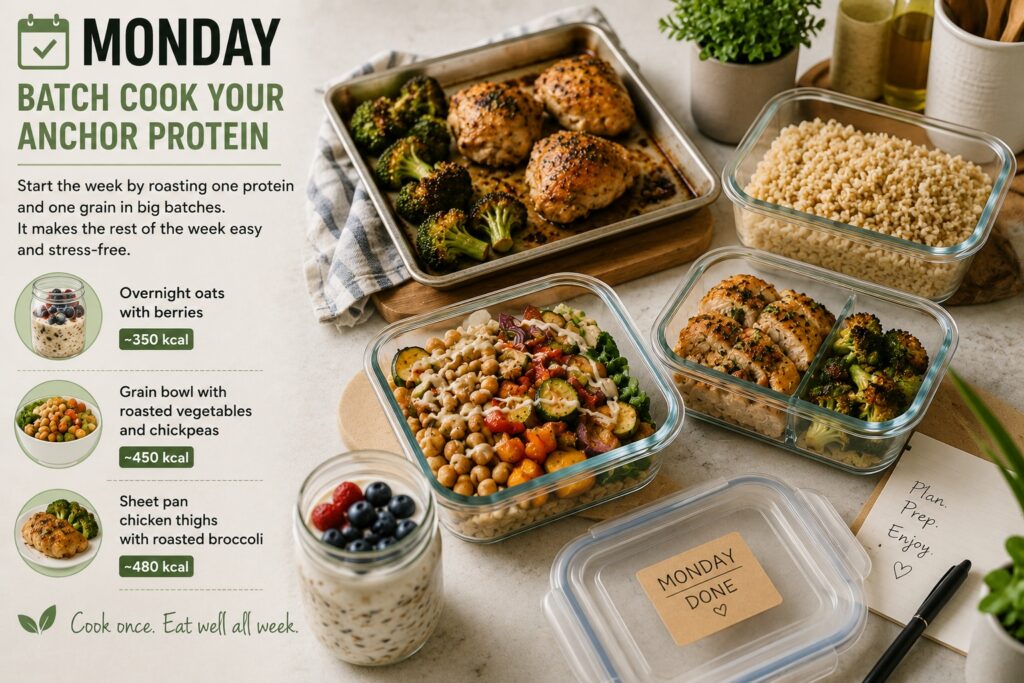
Start the week by roasting one protein, like chicken thighs, and one grain, like rice or farro, in bigger batches than a single meal needs. This single session is what makes the rest of the week’s meal prep for one person move quickly, since Tuesday and Wednesday’s meals lean on what you cook today.
| Meal | Calories |
| Overnight oats with berries | ~350 kcal |
| Grain bowl with roasted vegetables and chickpeas | ~450 kcal |
| Sheet pan chicken thighs with roasted broccoli | ~480 kcal |
4.2 Tuesday: Let Leftovers Do the Work
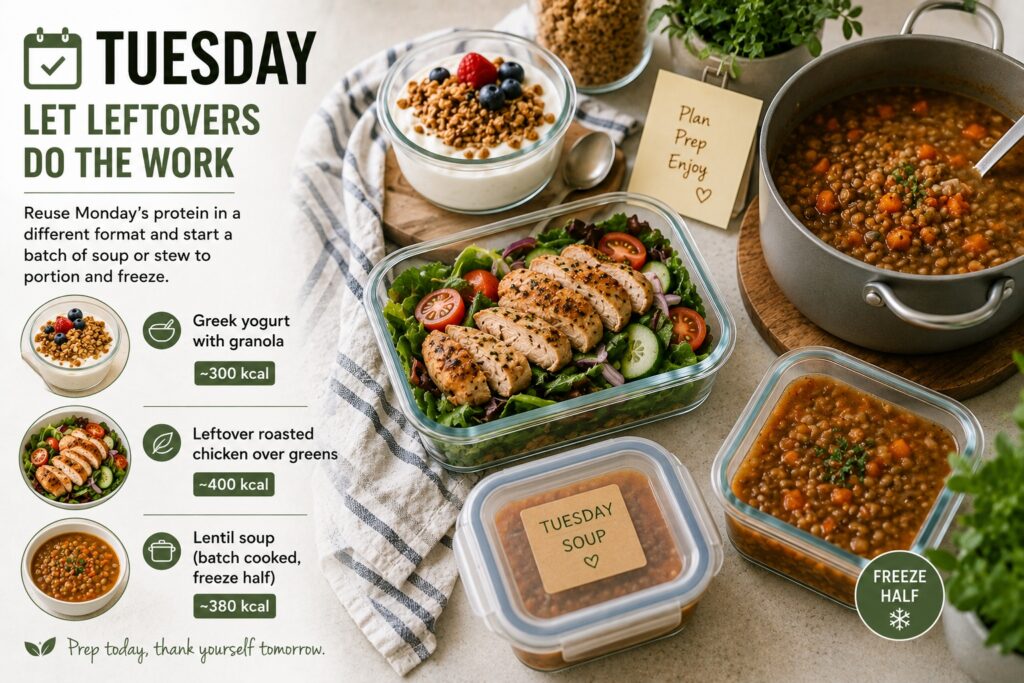
Reuse Monday’s protein in a different format, over greens instead of in a bowl, so it doesn’t feel like the same meal twice. This is also a good day to start a pot of soup or a stew you can portion and freeze, since those are some of the best high protein meal prep recipes for stretching one cooking session across several days.
| Meal | Calories |
| Greek yogurt with granola | ~300 kcal |
| Leftover roasted chicken over greens | ~400 kcal |
| Lentil soup (batch cooked, freeze half) | ~380 kcal |
4.3 Wednesday: Rotate the Vegetable, Not the Whole Recipe
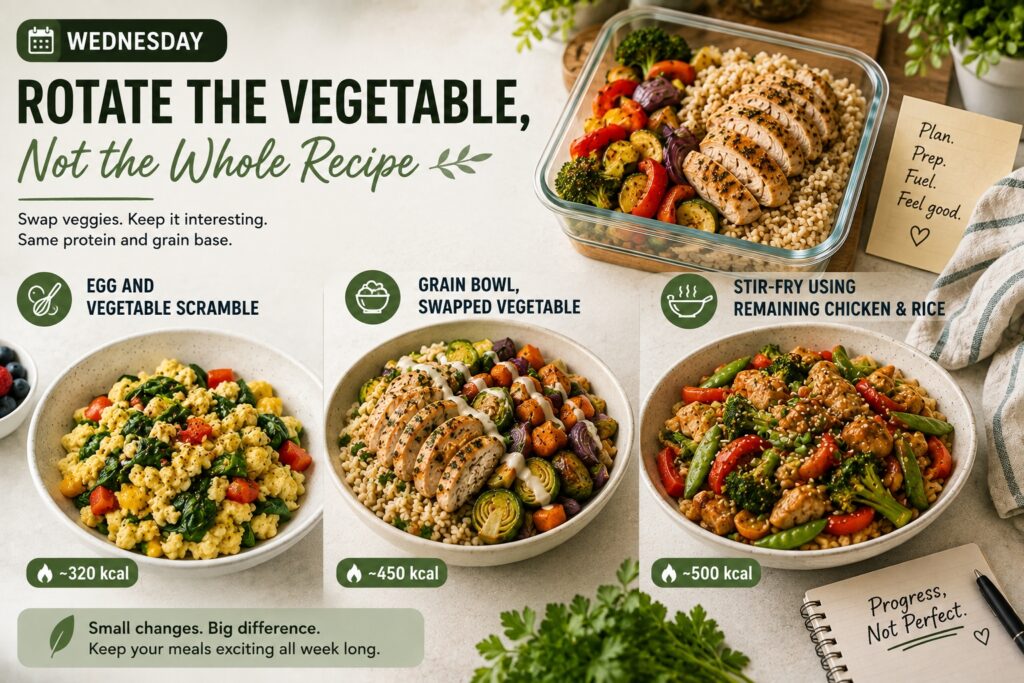
Swap in a different roasted or sautéed vegetable while keeping the same protein and grain base. Small changes like this are often enough to keep meal prep for one person from feeling monotonous without requiring a whole new shopping list.
| Meal | Calories |
| Egg and vegetable scramble | ~320 kcal |
| Grain bowl, swapped vegetable | ~450 kcal |
| Stir-fry using remaining chicken and rice | ~500 kcal |
4.4 Thursday: Lean on What’s Already Prepped
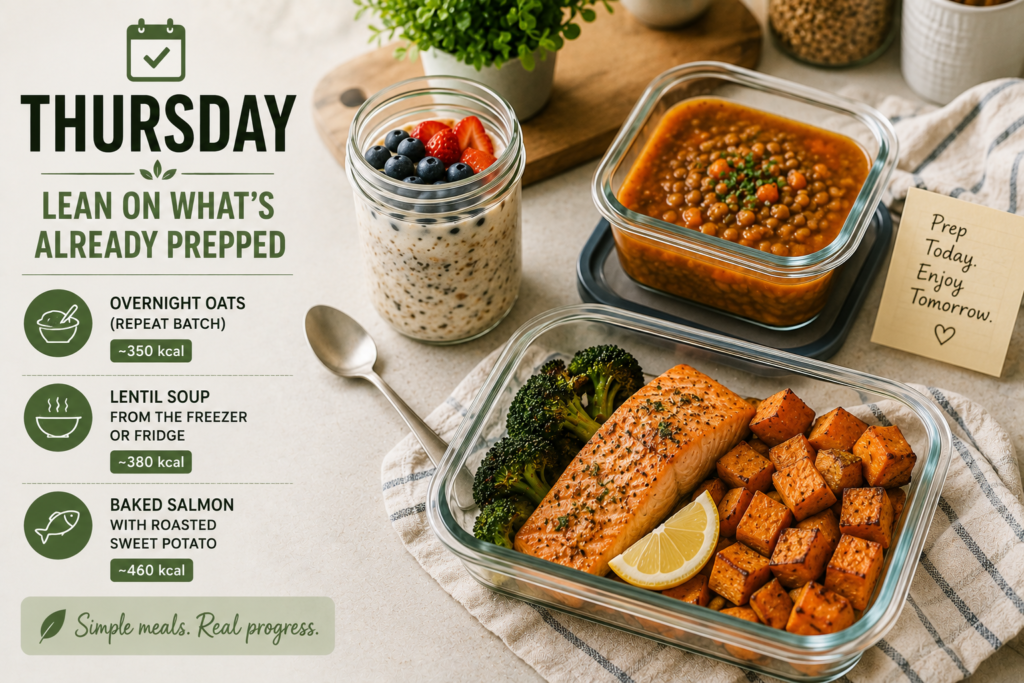
By Thursday, the goal is mostly assembly rather than cooking. Pull from the freezer or fridge, and if you’re introducing something new, keep it simple, like a piece of baked fish with a vegetable that roasts in the same amount of time.
| Meal | Calories |
| Overnight oats (repeat batch) | ~350 kcal |
| Lentil soup from the freezer or fridge | ~380 kcal |
| Baked salmon with roasted sweet potato | ~460 kcal |
4.5 Friday: Use Up What’s Left
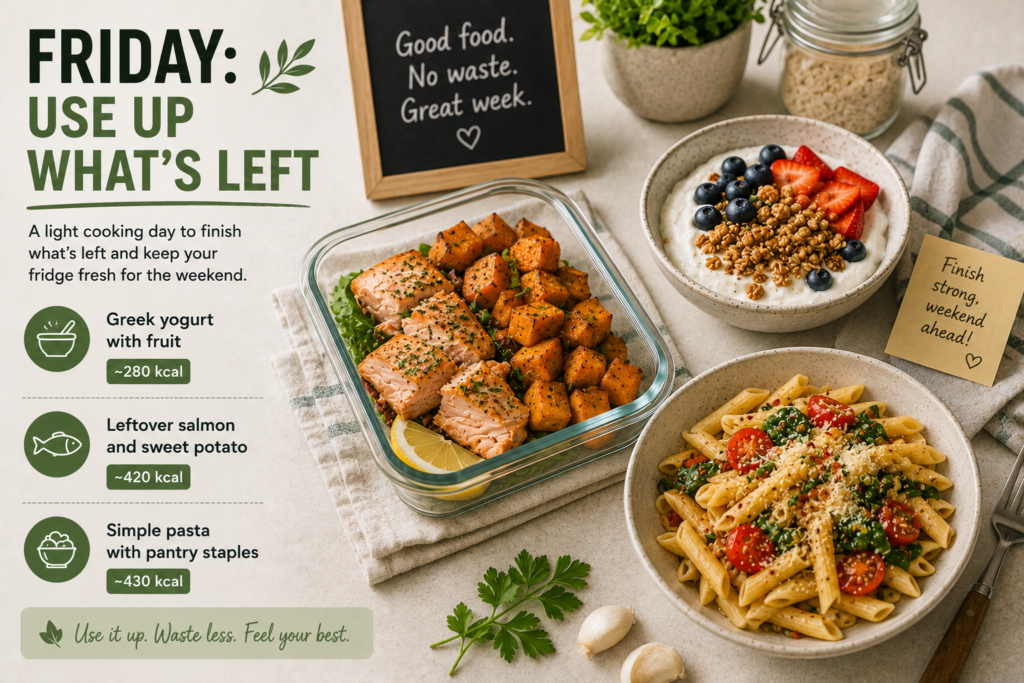
Friday works well as a light cooking day built around finishing whatever’s left from earlier in the week. This keeps the fridge from accumulating half-used ingredients heading into the weekend.
| Meal | Calories |
| Greek yogurt with fruit | ~280 kcal |
| Leftover salmon and sweet potato | ~420 kcal |
| Simple pasta with pantry staples | ~430 kcal |
4.6 Saturday: Reset and Prep for Next Week
Saturday is a natural day to restock, plan next week’s meal prep for one person, and do any prep that needs more time, like a slow-cooked dish or a larger batch of grains.
| Meal | Calories |
| Weekend cook session, prep for next week | ~300 kcal |
| Whatever’s left in the fridge | ~400 kcal |
| Something fresh, no prep required | ~450 kcal |
4.7 Sunday: Batch Cook and Freeze
Sunday is typically the main cooking session for the week ahead. This is also the best day to cook extra portions specifically for the freezer, so future weeks start with a head start instead of an empty fridge.
| Meal | Calories |
| Eggs or a light breakfast | ~250 kcal |
| Batch cook proteins and grains for the week | ~400 kcal |
| Freezer meal from a previous week | ~420 kcal |
4.8 Adjusting the Plan to Fit Your Own Week
This seven-day layout is a starting point, not a fixed schedule. If Sundays don’t work for your routine, shifting the main cooking session to whichever day you naturally have more time still gives you the same benefit. The core idea behind any meal prep for one person plan is having a repeatable rhythm, not following a specific calendar, so feel free to move pieces around once you’ve got a sense of what a realistic week actually looks like for you.
Some people find that splitting the cooking into two shorter sessions, one early in the week and one midweek, fits better than a single long Sunday block, and that version of meal prep for one person works just as well as long as the freezer and fridge stay stocked with something ready to go.
5. Key Takeaways
- Meal prep for one person works differently than family meal prep, since the goal is avoiding waste and decision fatigue, not stretching one dish across many plates.
- Scaling recipes down using exact ratios, rather than guessing, tends to produce more usable portions and less food waste.
- A rotating set of two or three proteins and grains, recombined with different vegetables, keeps a week of meals from feeling repetitive.
- The freezer is one of the most useful tools for solo meal prep, especially for soups, stews, and cooked grains that hold their texture well.
- A short weekly rhythm, batch cook, reuse, rotation, restock, tends to hold up better long-term than trying to cook something entirely new every day.
6. Frequently Asked Questions
Q1. How many meals should I Meal Prep for One each week?
Most people meal prepping for one person finds five to seven main meals is manageable, often built from two or three batch-cooked components rather than seven separate recipes. Starting with fewer meals and adding more once the routine feels manageable tends to work better than prepping a full week right away, and leaning on a familiar set of meal prep recipes makes that first week feel less overwhelming.
Q2. Is meal prep for one person actually cheaper than eating out?
Generally yes, since a week of groceries scaled for one person typically costs less than the equivalent number of takeout meals, though the savings depend heavily on how much food ends up going to waste. Buying smaller quantities more frequently tends to protect those savings better than one large weekly grocery haul.
Q3. What are the best containers for meal prep for one person?
Four to six single-serving containers are usually enough for one person, compared to the ten or twelve often recommended for family meal prep. Glass containers with snap-lock lids tend to hold up well over repeated use and don’t absorb odors the way some plastics can, and they work equally well for high protein meal prep recipes and simpler grain-and-vegetable bowls alike.
Q4. Can I still meal prep if I don’t like eating leftovers?
Yes, though the approach usually shifts toward prepping components, proteins, grains, and vegetables cooked separately, rather than fully assembled dishes. This way, each meal can be put together fresh at mealtime even though most of the cooking happened earlier in the week.
Q5. How do I stop Meal Prep for One from getting boring?
Rotating the vegetable or sauce while keeping the same protein and grain base is usually enough to keep meals from feeling repetitive. Repeating a small set of meals you genuinely enjoy, rather than trying to eat something new every night, also tends to be more sustainable than it sounds, and it’s part of why simple, easy healthy meal prep recipes tend to outlast more elaborate ones.
Q6. Do I need to cook every day when Meal Prep for One?
No, and trying to is usually what makes solo meal prep feel unsustainable. Most of the actual cooking happens in one or two longer sessions each week, with the remaining days built around assembly and reheating rather than starting from scratch.
Q7. What’s a good starting point if I’ve never prepared a meal before?
Picking just one protein, one grain, and one or two vegetables for your first week is usually more sustainable than trying to build a full seven-day plan right away. Once that smaller routine feels manageable, it’s easier to expand into a fuller meal prep for one person rotation, and browsing a few meal prep ideas for one person online can help you find combinations that fit your own taste before committing to a full week.
Conclusion
Meal prep for one person doesn’t need to look like a scaled-down version of what works for a family of four. Once the goal shifts from stretching one big batch across a week to building a small, flexible set of components you can recombine, the whole process tends to get easier and a lot less wasteful. If you want the broader framework this plan is built on, the Meal Prep 101 complete guide covers the full system in more depth.
For more meal prep ideas on The Daily Crave for one person to round out your rotation, the 5-ingredient meal prep lunch ideas, high-protein meal prep on a budget, mason jar salad meal prep combos, and 15 healthy freezer meals are all good places to keep building your own meal prep for one person routine.