Table of Contents
A 2000 calorie meal plan is one of the most useful templates out there, because it works for so many different goals. It’s a reasonable maintenance level for a lot of moderately active adults, a workable target for people building muscle, and a sensible deficit for many men trying to lose weight steadily. This guide, from The Daily Crave (thedailycrave.online), gives you a full 7-day 2000 calorie meal plan with real meals, real portions, and enough food that nothing about it feels like deprivation.
Unlike lower-calorie plans, a 2000 calorie diet meal plan has room to breathe. You get bigger portions, more variety, and snacks that actually feel like snacks instead of an afterthought. Below, you’ll find the full week broken down day by day, plus a grocery list, common mistakes to avoid, and answers to the questions people ask most before starting a diet plan for 2000 calories.
Medical disclaimer: This article is for informational purposes only and isn’t medical advice. Talk to a doctor or registered dietitian before starting any new diet plan, especially if you’re pregnant or breastfeeding, have a history of disordered eating, take medication, or manage a health condition. Calorie needs vary widely by age, height, activity level, and goals , use this 2000 calorie meal plan as a flexible starting framework rather than a fixed rule.
1. Who This 2000 Calorie Meal Plan Is For
A 2000 calorie meal plan tends to suit a fairly wide range of people, which is part of why it’s such a commonly searched target. It’s often close to a maintenance level for moderately active women, a weight-loss level for less active men, and a reasonable starting point for anyone building muscle who isn’t in an aggressive bulk.
Because “2000 calories” can mean different things depending on the person, it helps to think about where you land. If you’re a smaller or less active woman, this plan might support slow, steady weight loss. If you’re a moderately active man or an active woman, it might sit closer to maintenance. And if you’re strength training regularly with a focus on building muscle, this 2000 calorie diet can serve as a solid baseline to build from, with small calorie increases layered on top as needed.
The meals in this plan are built to work across all of those situations, because the structure , protein at every meal, real portions, whole-food carbohydrates , is what actually matters. The exact number on the label is just a starting point you can adjust once you see how your body responds.
2. Why Protein Still Matters at a Higher Calorie Level
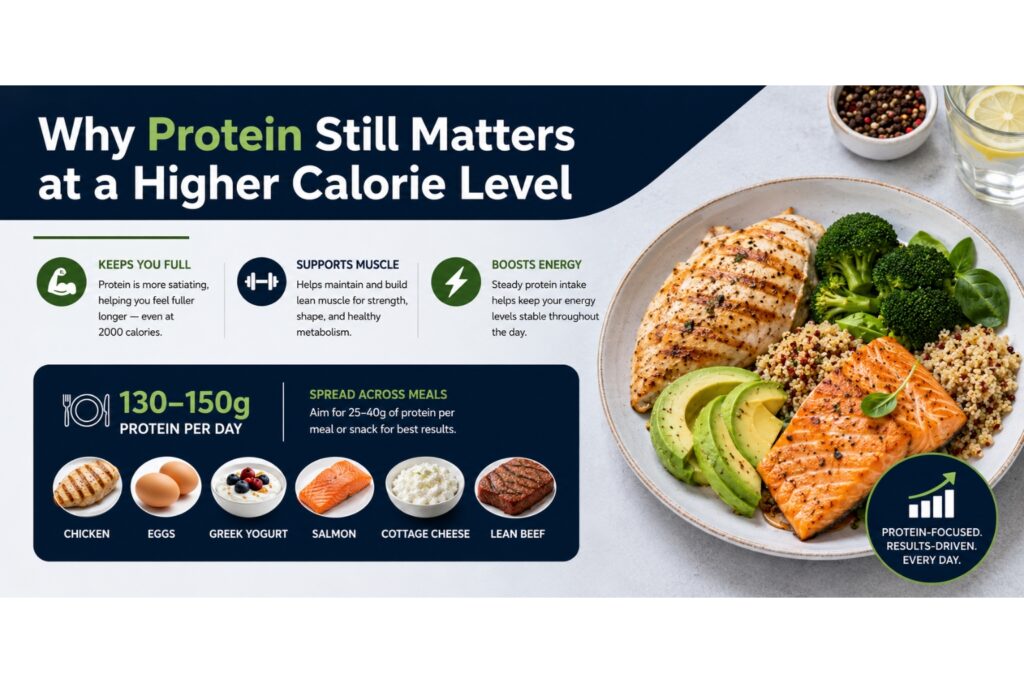
It’s tempting to think protein only matters when you’re cutting calories, but a well-built 2000 calorie meal plan for weight loss or maintenance still benefits enormously from a protein-forward structure.
Protein is more satiating than carbohydrates or fat, meaning a 2000 calorie diet with adequate protein tends to feel more filling than one built mostly around refined carbs, even at the exact same calorie total. It also supports muscle maintenance and growth, which matters whether you’re losing fat, maintaining your current weight, or actively trying to build strength.
This 2000 calorie meal plan targets roughly 130–150 grams of protein per day, spread across meals and snacks in the 25–40 gram range each. That’s a comfortable target for most adults at this calorie level, and it’s high enough to noticeably affect how full and energized you feel through the day. You’ll see chicken, eggs, Greek yogurt, salmon, lean beef, and cottage cheese show up repeatedly , not because variety doesn’t matter, but because these foods make hitting that protein target realistic without requiring a nutrition degree.
3. How This 2000 Calorie Meal Plan Is Structured
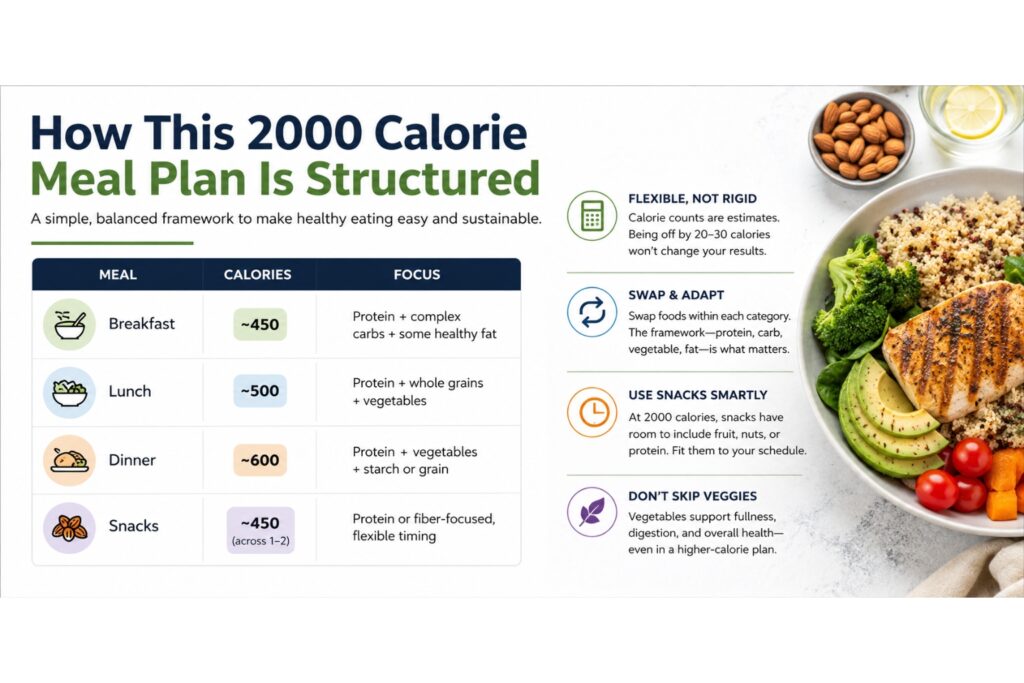
Every day in this 2000 calorie meal plan follows a consistent framework, which makes the whole week easier to plan around and easier to adjust if your schedule changes.
| Meal | Calories | Focus |
| Breakfast | ~450 | Protein + complex carbs + some healthy fat |
| Lunch | ~500 | Protein + whole grains + vegetables |
| Dinner | ~600 | Protein + vegetables + starch or grain |
| Snacks | ~450 (across 1–2) | Protein or fiber-focused, flexible timing |
A few things that make this diet plan for 2000 calories easier to actually live with:
- Treat the calorie counts as reasonable estimates, not exact math. Portion sizes here reflect standard household measures. Being off by 20–30 calories on any given meal won’t meaningfully change your results.
- Swap within food categories as needed. Not a fan of salmon? Use another fatty fish or chicken thighs. Don’t have quinoa? Brown rice works just as well. The framework , protein, carb, vegetable, fat , is what matters.
- Use snacks strategically. At 2000 calories, snacks have real room to include fruit, nuts, or a full protein shake , use that flexibility to fit your schedule, whether that means one bigger snack or two smaller ones.
- Don’t skip vegetables just because there’s more room for other foods. Vegetables still do a lot of work for fullness, fiber, and micronutrients, even in a higher-calorie plan.
4. The 7-Day 2000 Calorie Meal Plan
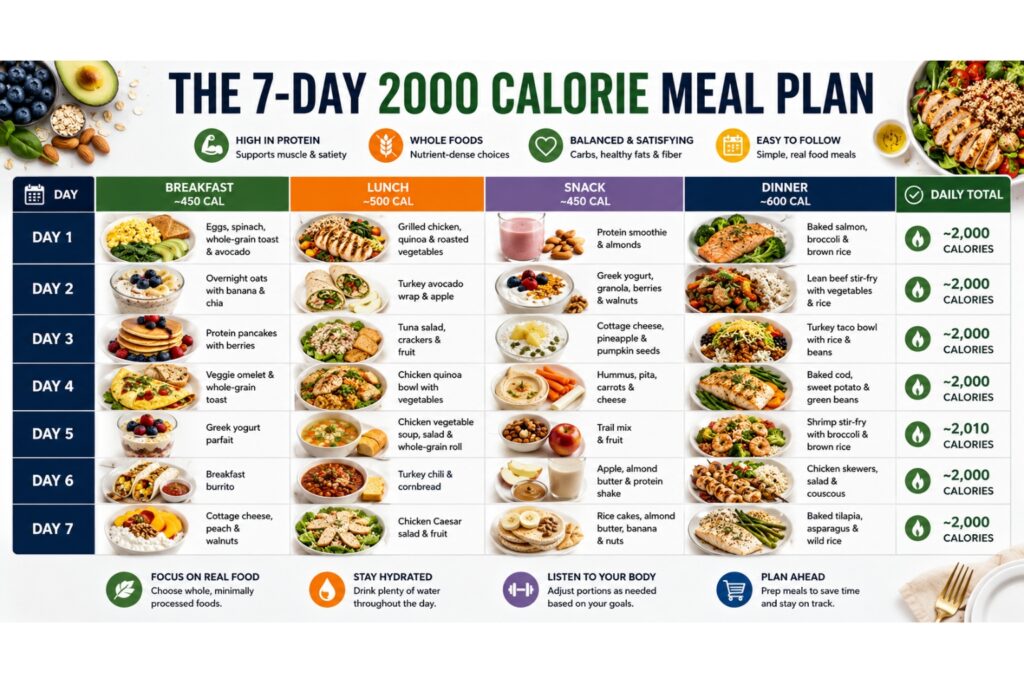
Here’s the complete 2000 calorie meal plan, day by day.
Day 1
- Breakfast (450 cal): 3 eggs + 1 egg white scrambled with spinach, 1 slice whole-grain toast, ½ avocado
- Lunch (500 cal): Grilled chicken breast (5 oz) with quinoa (¾ cup), roasted vegetables, olive oil drizzle
- Snack (450 cal): Protein smoothie (protein powder, banana, peanut butter, almond milk) + a small handful of almonds
- Dinner (600 cal): Baked salmon (5 oz) with roasted broccoli, ¾ cup brown rice, and a drizzle of sesame oil
- Daily total: ~2,000 calories
Why this day works: This is a good “template” day , it hits every food group cleanly and is easy to repeat if you’re short on planning time later in the week. The smoothie snack is portable if you’re eating on the go.
Day 2
- Breakfast (440 cal): Overnight oats (¾ cup oats, almond milk, chia seeds, peanut butter, sliced banana)
- Lunch (490 cal): Turkey and avocado wrap (whole-grain tortilla, 5 oz turkey, avocado, tomato, mustard) + apple
- Snack (460 cal): Greek yogurt (1 cup) with granola and berries + a handful of walnuts
- Dinner (610 cal): Lean beef stir-fry (6 oz sirloin) with mixed vegetables and 1 cup jasmine rice
- Daily total: ~2,000 calories
Why this day works: Overnight oats mean zero morning prep, and the wrap travels well for a workday lunch. The beef stir-fry at dinner is a good post-workout option if you train in the evening, since it’s higher in both protein and carbs.
Day 3
- Breakfast (450 cal): Protein pancakes (protein powder, oats, egg, banana) topped with berries and 1 tbsp maple syrup
- Lunch (500 cal): Tuna salad (canned tuna, light mayo or Greek yogurt, celery) over greens with whole-grain crackers and a piece of fruit
- Snack (440 cal): Cottage cheese (1 cup) with pineapple + a small handful of pumpkin seeds
- Dinner (610 cal): Ground turkey taco bowl (6 oz turkey, rice, black beans, salsa, avocado, shredded cheese)
- Daily total: ~2,000 calories
Why this day works: Protein pancakes make breakfast feel a bit more like a treat while still supporting your 2000 calorie meal plan for weight loss or maintenance. The taco bowl at dinner is filling and easy to batch for leftovers the next day.
Day 4
- Breakfast (450 cal): Veggie omelet (3 eggs, spinach, mushrooms, bell pepper) with 2 slices whole-grain toast and butter
- Lunch (500 cal): Grilled chicken and quinoa bowl with roasted zucchini, bell pepper, and lemon-tahini dressing
- Snack (450 cal): Hummus (¼ cup) with pita and carrot sticks + a piece of string cheese
- Dinner (600 cal): Baked cod with a medium sweet potato, steamed green beans, and olive oil
- Daily total: ~2,000 calories
Why this day works: This is a lighter-tasting day if the earlier meals felt heavier , good for a midweek reset while staying inside your 2000 calorie diet target. Cod cooks quickly, so dinner doesn’t take long even on a busy evening.
Day 5
- Breakfast (440 cal): Greek yogurt parfait (1¼ cup Greek yogurt, granola, berries, honey)
- Lunch (500 cal): Chicken and vegetable soup (broth-based, shredded chicken, carrots, celery, onion) with a side salad and whole-grain roll
- Snack (460 cal): Trail mix (nuts, seeds, dried fruit) + a piece of fruit
- Dinner (610 cal): Shrimp stir-fry with broccoli, snap peas, and 1 cup brown rice
- Daily total: ~2,010 calories
Why this day works: Soup at lunch is easy to prep ahead and reheat, which is handy midweek when motivation to cook dips. Shrimp cooks in minutes, so this whole day stays low-effort without sacrificing your protein target.
Day 6
- Breakfast (450 cal): Breakfast burrito (2 eggs, black beans, cheese, salsa, whole-grain tortilla)
- Lunch (500 cal): Turkey chili (lean ground turkey, tomatoes, kidney beans, spices) , about 2 cups, with a small piece of cornbread
- Snack (450 cal): Apple with 2 tbsp almond butter + a protein shake
- Dinner (600 cal): Grilled chicken skewers with a large mixed salad, feta, and ¾ cup couscous
- Daily total: ~2,000 calories
Why this day works: Chili batches well, so this is a good day to double the recipe and freeze portions for a future week. The breakfast burrito is filling enough to carry you comfortably to lunch.
Day 7
- Breakfast (440 cal): Cottage cheese bowl (1 cup cottage cheese, sliced peach, cinnamon, chopped walnuts, drizzle of honey)
- Lunch (500 cal): Grilled chicken Caesar-style salad (light dressing, shaved parmesan, whole-grain croutons) with a piece of fruit
- Snack (460 cal): Rice cakes with almond butter and banana + a handful of nuts
- Dinner (600 cal): Baked tilapia with roasted asparagus and 1 cup wild rice
- Daily total: ~2,000 calories
Why this day works: Cottage cheese at breakfast is an easy way to get 25+ grams of protein without much effort. Ending the week with a simple baked fish dinner keeps prep light after six days of cooking.
5. Sample Grocery List for the Week
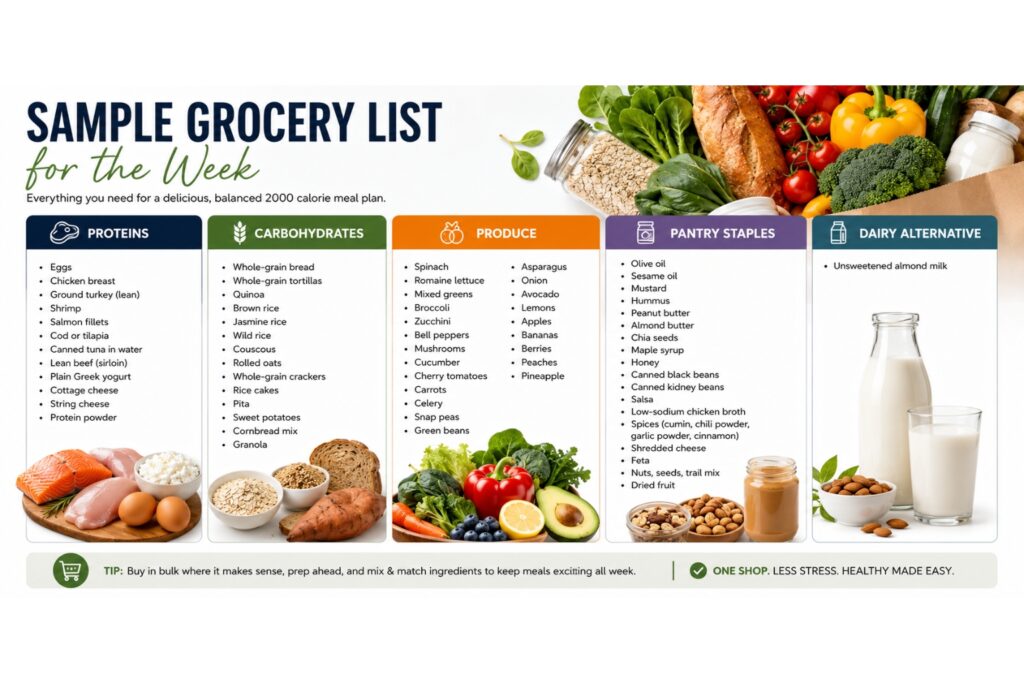
A shopping list makes this 2000 calorie meal plan far easier to actually follow , the goal is one trip, minimal decisions during the week, and no scrambling on a Wednesday night. Here’s what covers the full seven days; adjust quantities based on your household and don’t stress over the exact cut or brand.
Proteins:
eggs, chicken breast, ground turkey (lean), shrimp, salmon fillets, cod or tilapia, canned tuna in water, lean beef (sirloin), plain Greek yogurt, cottage cheese, string cheese, protein powder
Carbohydrates:
whole-grain bread, whole-grain tortillas, quinoa, brown rice, jasmine rice, wild rice, couscous, rolled oats, whole-grain crackers, rice cakes, pita, sweet potatoes, cornbread mix, granola
Produce:
spinach, romaine lettuce, mixed greens, broccoli, zucchini, bell peppers, mushrooms, cucumber, cherry tomatoes, carrots, celery, snap peas, green beans, asparagus, onion, avocado, lemons, apples, bananas, berries, peaches, pineapple
Pantry staples:
olive oil, sesame oil, mustard, hummus, peanut butter, almond butter, chia seeds, maple syrup, honey, canned black beans, canned kidney beans, salsa, low-sodium chicken broth, spices (cumin, chili powder, garlic powder, cinnamon), shredded cheese, feta, nuts, seeds, trail mix, dried fruit
Dairy alternatives: unsweetened almond milk
6. Common Mistakes to Avoid on a 2000 Calorie Meal Plan
Even with more room to work with than a lower-calorie plan, a 2000 Calorie Meal Plan can still go sideways in a few predictable ways.
Mistake 1: Filling up on low-protein snacks. With more calories to spend, it’s easy to reach for chips or crackers instead of a protein-forward option. That extra room is better spent on food that supports your goals, whether that’s fullness, muscle, or energy.
Mistake 2: Assuming “2000 calories” means the same thing for everyone. A 2000 calorie meal plan for weight loss might be too low for a very active person and too high for someone sedentary. Pay attention to how your body responds and adjust rather than assuming the number is automatically right for you.
Mistake 3: Skipping meals and trying to “catch up” later. Spreading your 2000 calories evenly across the day, as this plan does, tends to support steadier energy and appetite than front-loading or back-loading your eating.
Mistake 4: Not adjusting for activity level. On heavier training days, this plan may leave you hungrier than usual , that’s normal, and a slightly bigger snack or portion is a reasonable response rather than something to fight against.
Mistake 5: Treating this 2000 Calorie Meal Plan as permanent and unchangeable. Your needs will shift over time with activity level, age, and goals. Revisit your calorie target every few months rather than assuming today’s number is right forever.
7. Tips to Make This 2000 Calorie Meal Plan Sustainable
- Batch-cook two or three proteins on the weekend. Grilling or baking chicken, turkey, and fish in bulk turns most lunches and dinners into a quick assembly job rather than a full cooking session.
- Pre-portion snacks. Nuts, trail mix, and protein shakes are easy to over- or under-portion if you’re grabbing them straight from the container , pre-bagging them in advance removes the guesswork.
- Adjust portions based on training days. A slightly bigger dinner on a heavy workout day, and a slightly smaller one on a rest day, is a normal and sustainable way to use this 2000 Calorie Meal Plan.
- Rotate sauces and seasonings, not the whole meal. Changing a dressing or spice blend keeps a 2000 calorie diet from feeling repetitive even when the base ingredients stay similar week to week.
- Reassess monthly, not daily. Energy levels, workout performance, and how your clothes fit are better long-term signals than daily fluctuations.
8. Adjusting This 2000 Calorie Meal Plan for Your Goal
This 2000 calorie meal plan works differently depending on what you’re trying to achieve, so it’s worth knowing how to shift it slightly.
For weight loss: Keep the structure as written , this 2000 calorie meal plan for weight loss works well for many moderately active men and active women. If progress stalls after a few weeks, a modest reduction of 100–200 calories, mostly from snacks, is a reasonable next step.
For maintenance: This plan works well as-is for a lot of moderately active adults. The goal here isn’t to change anything unless your weight is trending in a direction you don’t want.
For muscle building: Add roughly 200–300 calories, primarily from carbohydrates around your training sessions, and keep protein where it already is. This 2000 calorie diet is a solid floor to build a muscle-gain plan on top of.
If 2000 calories feels like too much: Some smaller or less active people may do better with a 1500 calorie meal plan using a similar protein-forward structure. If it feels like too little, particularly for very active people, scaling portions up by 15–20% across the board is a simple adjustment.
Key Takeaways
- This 2000 calorie meal plan is built around consistent protein at every meal to support fullness, energy, and muscle maintenance.
- The same plan can support weight loss, maintenance, or muscle building depending on your activity level and how you adjust portions.
- All seven days use everyday grocery-store ingredients , no specialty products required for this 2000 calorie low diet meal plan.
- Batch-cooking proteins and pre-portioning snacks makes this diet plan for 2000 calories realistic for a busy week.
- Reassess your calorie needs periodically , a 2000 calorie meal plan that’s right for you today may need adjusting as your activity level or goals change.
Frequently Asked Questions (FAQ)
Q1: Is a 2000 calorie meal plan good for weight loss?
It can be, depending on your body size and activity level. For many moderately active men and active women, a 2000 calorie meal plan for weight loss creates a modest calorie deficit. For less active people, it may be closer to maintenance, so results vary by person.
Q2: Is 2000 calories a day too much or too little?
Neither, necessarily , it depends entirely on your size, activity level, and goals. A 2000 calorie diet is a reasonable maintenance level for many adults and a deficit for others. Tracking how your weight and energy respond over a few weeks is the most reliable way to know if it’s right for you.
Q3: Can I follow this diet plan for 2000 calories if I’m vegetarian?
Yes. Swap animal proteins for eggs, Greek yogurt, cottage cheese, tofu, tempeh, and legumes, adjusting portions to keep your protein total similar across meals.
Q4: How is a 2000 calorie diet meal plan different from a 1500 calorie one?
A 2000 calorie meal plan allows for noticeably larger portions, bigger snacks, and more flexibility, while a 1500 calorie plan creates a steeper deficit. Which one fits depends on your activity level, size, and goals.
Q5: Do I need to work out while following this 2000 calorie meal plan?
It’s not required, but pairing this plan with regular activity , especially strength training , tends to support better body composition results and may help you feel more energized throughout the day.
Q6: Can I use this plan long-term?
Yes, especially at maintenance or muscle-building calorie levels. If you’re using it for weight loss, many people eventually adjust their target once they’re closer to their goal, since ongoing needs change as weight changes.
Conclusion: Start Your 2000 Calorie Meal Plan Today
A 2000 calorie meal plan is flexible enough to work for weight loss, maintenance, or muscle building, depending on how you use it. Lead with protein at every meal, don’t skip vegetables just because there’s more room in your day, and adjust portions based on how active you are and how your body responds , not just the number on the label.
For more free resources like this, visit The Daily Crave at thedailycrave.online. You can also check out our free diet calculators to find a calorie target personalized to you, browse more meal prep guides, or explore our complete guide to weekly meal plans for the bigger-picture approach to planning meals long-term.