Table of Contents
A gluten free meal plan built specifically for inflammation looks a bit different from a standard gluten-free diet. It’s not just about swapping wheat bread for a gluten-free version , it’s about building meals around whole, anti-inflammatory foods while removing two of the most common inflammatory triggers: gluten and dairy. This guide from The Daily Crave (thedailycrave.online) gives you a full 7-day gluten free meal plan, also free of dairy, built around real food that doesn’t feel like a restriction diet.
Unlike a lot of inflammation free diet content online, this one skips the vague “eat clean” advice and gets specific: exact meals, a full grocery list, and practical tips for reading labels so hidden gluten and dairy don’t sneak into your week.
Medical disclaimer: Talk to a doctor or registered dietitian before starting any new diet plan, especially if you have celiac disease, a diagnosed food allergy, are pregnant or breastfeeding, take medication, or manage a health condition. If you suspect gluten or dairy is causing symptoms, a doctor can help confirm this properly rather than relying on diet alone.
1. What Is an Anti-Inflammatory Gluten Free Meal Plan?
1. It removes two common inflammatory triggers
A gluten and dairy free meal plan eliminates wheat, barley, rye, and dairy products, which some people find contribute to bloating, joint discomfort, or skin issues.
2. It’s built around anti-inflammatory whole foods
Rather than just removing foods, this gluten free meal plan adds in vegetables, fatty fish, and spices that research suggests may support a lower inflammatory response.
3. It’s not the same as a weight-loss plan
While some people lose weight on a dairy free and gluten free meal plan, particularly if they were eating a lot of processed food before, that’s a secondary effect rather than the main goal here.
4. It’s most useful as a temporary trial or ongoing lifestyle
Some people follow a gluten free diet for inflammation for a few weeks to see how they feel, while others continue long-term if it clearly helps their symptoms.
5. It works best with support from a professional
If you’re removing food groups to investigate symptoms, tracking how you feel with a doctor or dietitian gives you more reliable answers than guessing on your own.
2. Who This Gluten and Dairy Free Meal Plan Is For
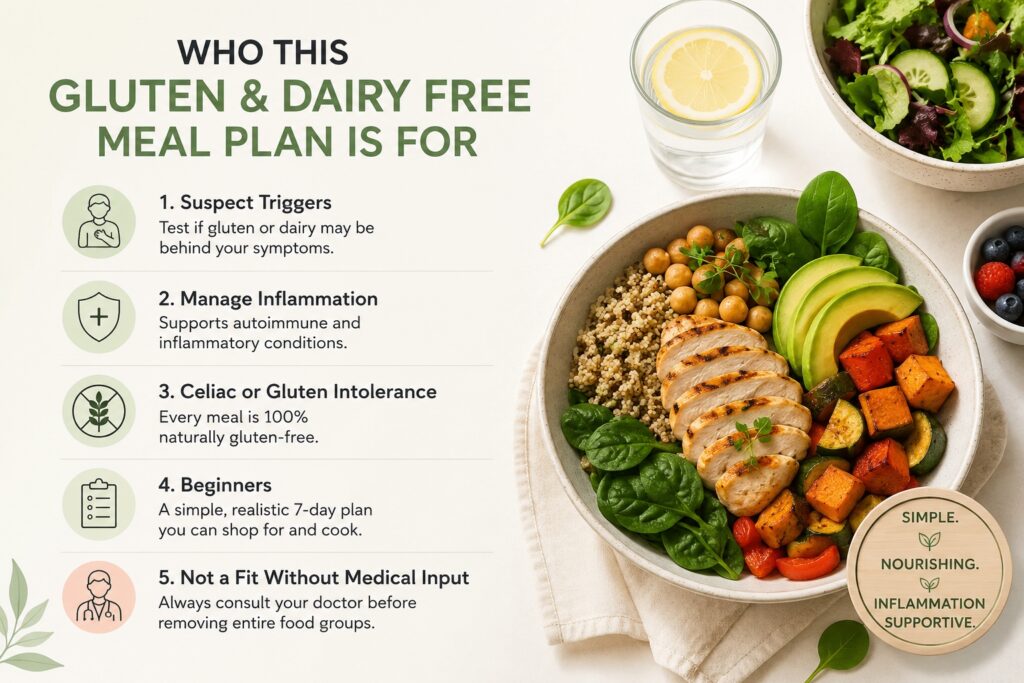
1. People who suspect gluten or dairy triggers their symptoms
This gluten free meal plan is a practical way to test an elimination approach with real meals rather than starting from scratch.
2. Anyone managing a diagnosed condition involving inflammation
Some autoimmune and inflammatory conditions are commonly managed with a gluten free diet for inflammation, always alongside medical guidance.
3. People with celiac disease or a diagnosed gluten intolerance
For this group, this isn’t optional , every meal here is naturally gluten-free, which makes planning simpler.
4. Beginners who find “anti-inflammatory eating” too vague
This guide replaces general advice with an actual 7-day gluten free meal plan you can shop for and cook.
5. Not a fit if you haven’t discussed symptoms with a doctor yet
Removing entire food groups without medical input can sometimes mask symptoms that deserve proper evaluation first.
3. Foods to Avoid on This Gluten Free Meal Plan
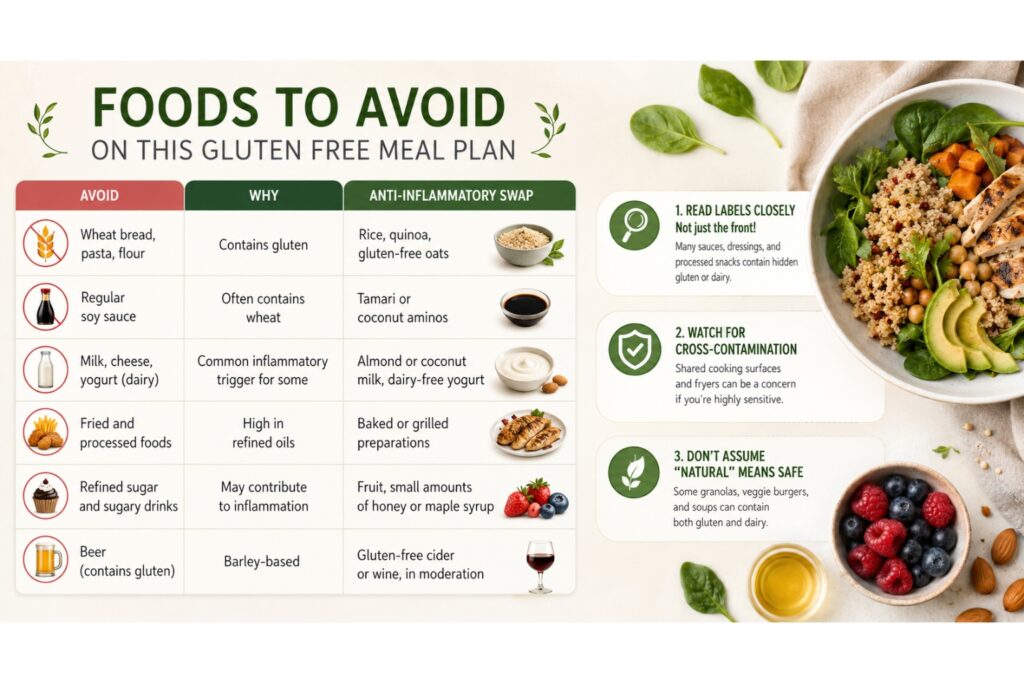
| Avoid | Why | Anti-Inflammatory Swap |
| Wheat bread, pasta, flour | Contains gluten | Rice, quinoa, gluten-free oats |
| Regular soy sauce | Often contains wheat | Tamari or coconut aminos |
| Milk, cheese, yogurt (dairy) | Common inflammatory trigger for some | Almond or coconut milk, dairy-free yogurt |
| Fried and processed foods | High in refined oils | Baked or grilled preparations |
| Refined sugar and sugary drinks | May contribute to inflammation | Fruit, small amounts of honey or maple syrup |
| Beer (contains gluten) | Barley-based | Gluten-free cider or wine, in moderation |
1. Read labels closely, not just the front of the package
Many sauces, dressings, and processed snacks contain hidden gluten or dairy that aren’t obvious from the product name.
2. Watch for cross-contamination if you’re highly sensitive
Shared cooking surfaces and fryers can be a concern for some people following a strict gluten free meal plan.
3. Don’t assume “natural” or “healthy-sounding” means gluten and dairy free
Some granolas, veggie burgers, and soups quietly contain both.
4. Anti-Inflammatory Foods to Build Your Meals Around
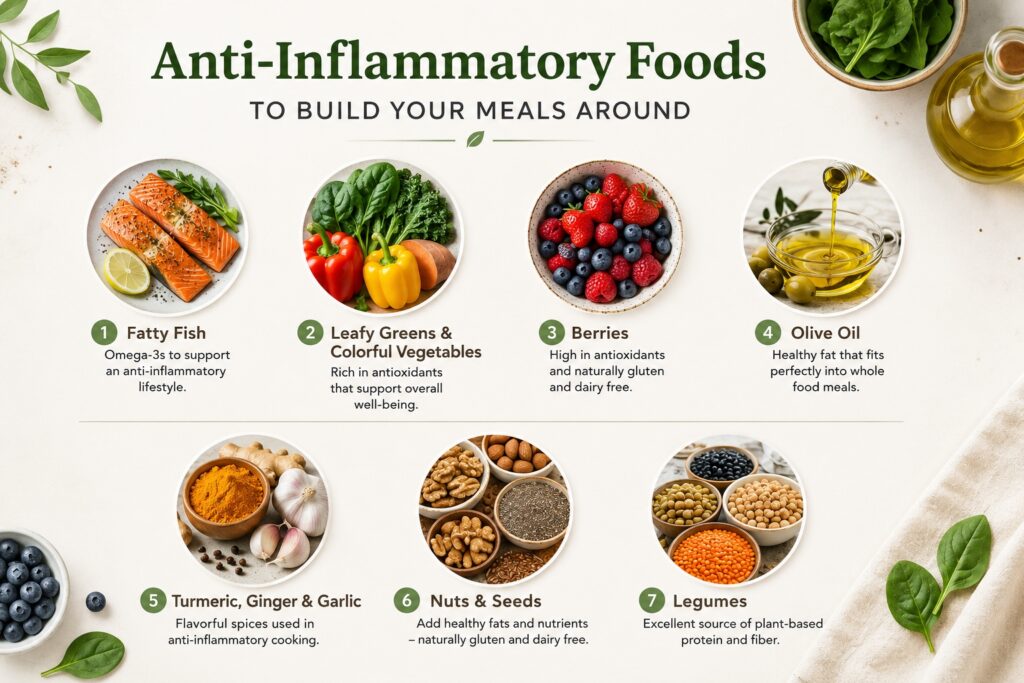
1. Fatty fish
(salmon, sardines, mackerel) , a strong source of omega-3 fatty acids, which are commonly associated with anti-inflammatory eating patterns.
2. Leafy greens and colorful vegetables
(spinach, kale, bell peppers, sweet potatoes) , rich in antioxidants that support this inflammation free diet approach.
3. Berries
High in antioxidants and naturally gluten and dairy free.
4. Olive oil
A good source of healthy fat that fits easily into a gluten free meal plan built around whole foods.
5. Turmeric, ginger, and garlic
Spices frequently used in anti-inflammatory cooking for both flavor and their potential supportive properties.
6. Nuts and seeds
walnuts, chia seeds, and flaxseeds all add healthy fats without any gluten or dairy.
7. Legumes
Lentils, chickpeas, and beans provide plant-based protein and fiber, both naturally free of gluten and dairy.
5. How This Gluten Free Meal Plan Is Structured
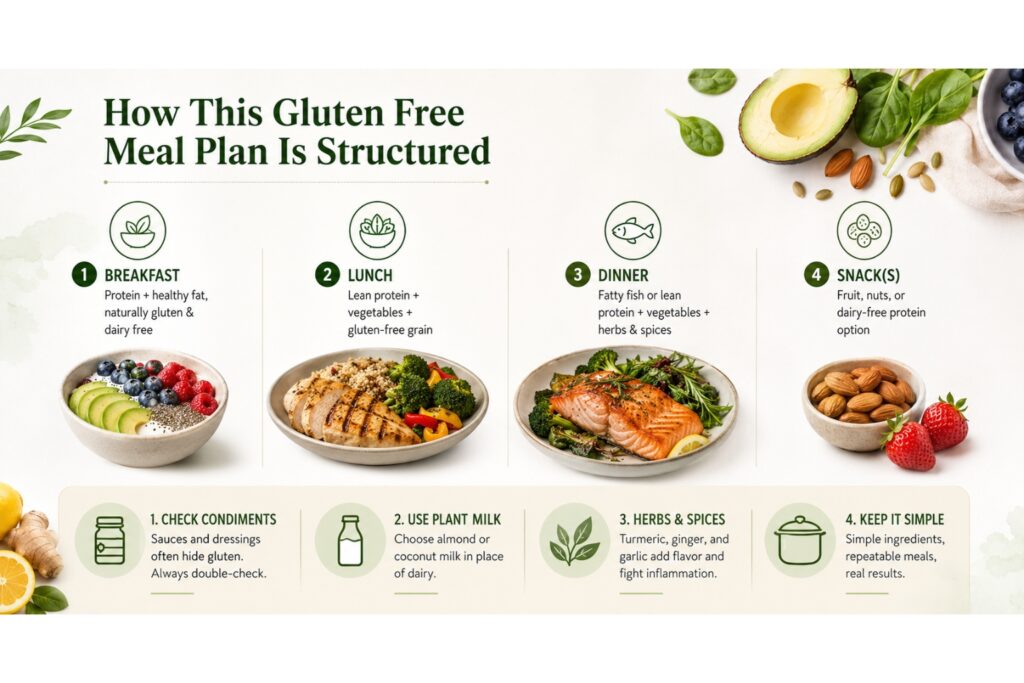
Every day in this dairy free and gluten free meal plan follows a similar pattern, designed to keep meals simple and repeatable.
1. Breakfast
Protein + anti-inflammatory fat, naturally gluten and dairy free
2. Lunch
Lean protein + vegetables + gluten-free whole grain
3. Dinner
Fatty fish or lean protein + vegetables + anti-inflammatory herbs and spices
4. Snack(s)
Fruit, nuts, or a dairy-free protein option
A few things that make this gluten free meal plan for inflammation easier to actually follow:
1. Double-check condiments and sauces
Salad dressings, marinades, and soy sauce are common hidden sources of gluten in an otherwise gluten free meal plan.
2. Use coconut or almond milk in place of dairy
These work in most recipes that call for milk, without disrupting the anti-inflammatory focus of this plan.
3. Lean on herbs and spices for flavor
Turmeric, ginger, and garlic do a lot of work in this gluten free diet for inflammation, especially once dairy-based sauces are off the table.
4. Keep meals simple
You don’t need complicated recipes , the meals below repeat a small set of anti-inflammatory ingredients across the week.
6. The 7-Day Gluten Free Meal Plan
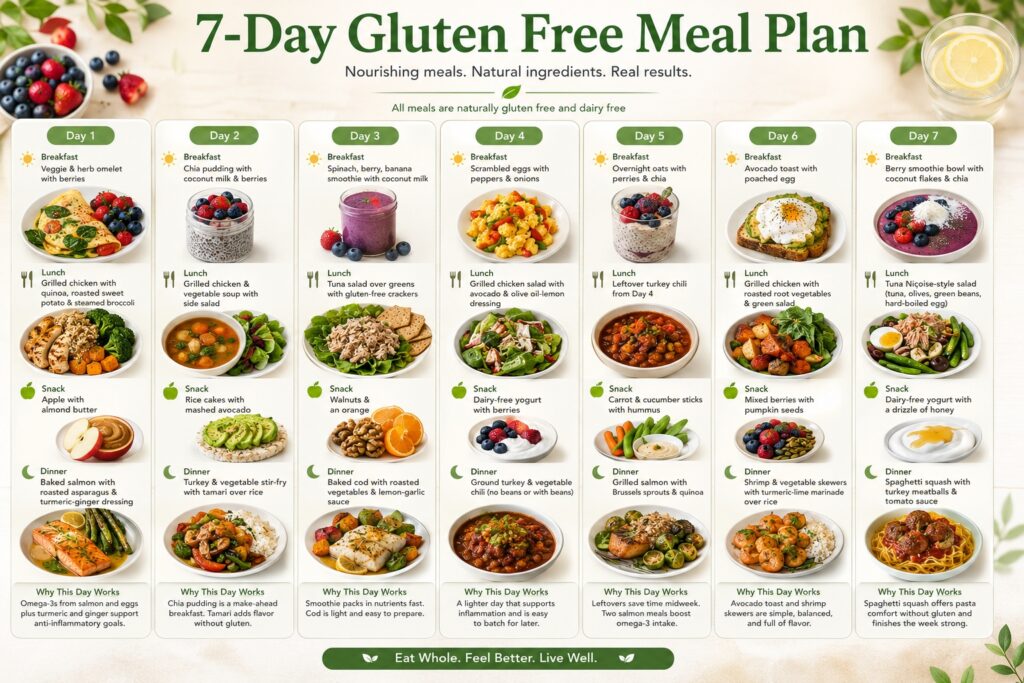
Here’s the complete gluten free meal plan, day by day , all meals are naturally dairy free as well.
Day 1
- Breakfast: Veggie and herb omelet (eggs, spinach, tomato) with a side of berries
- Lunch: Grilled chicken with quinoa, roasted sweet potato, and steamed broccoli
- Snack: Apple with almond butter
- Dinner: Baked salmon with roasted asparagus and a turmeric-ginger dressing
Why This Day Works
- Salmon and eggs both bring omega-3s into the day, supporting the anti-inflammatory focus of this gluten free meal plan.
- Turmeric and ginger in the dressing add both flavor and a well-known anti-inflammatory pairing.
Day 2
- Breakfast: Chia pudding made with coconut milk, topped with fresh berries
- Lunch: Grilled chicken and vegetable soup (gluten-free broth) with a side salad
- Snack: Rice cakes with mashed avocado
- Dinner: Turkey and vegetable stir-fry with tamari (gluten-free soy sauce) over rice
Why This Day Works
- Chia pudding is a make-ahead breakfast, useful for busy mornings on this gluten and dairy free meal plan.
- Tamari lets you keep the flavor of soy sauce without the wheat that regular soy sauce usually contains.
Day 3
- Breakfast: Smoothie with spinach, frozen berries, banana, and coconut milk
- Lunch: Tuna salad (olive oil-based, no mayo) over greens with gluten-free crackers
- Snack: Handful of walnuts and a small orange
- Dinner: Baked cod with roasted vegetables and a lemon-garlic sauce
Why This Day Works
- The smoothie is one of the fastest ways to pack anti-inflammatory produce into breakfast.
- Cod is mild and easy to prepare, keeping dinner low-effort on this gluten free meal plan.
Day 4
- Breakfast: Scrambled eggs with sautéed peppers and onions
- Lunch: Grilled chicken salad with mixed greens, avocado, and olive oil-lemon dressing
- Snack: Dairy-free yogurt with berries
- Dinner: Ground turkey and vegetable chili (no beans if avoiding legumes, or with beans if tolerated)
Why This Day Works
- This is a lighter day overall, good for a midweek reset within your gluten free diet for inflammation.
- Chili batches well and freezes easily for a future week.
Day 5
- Breakfast: Overnight oats (certified gluten-free oats, coconut milk, chia seeds, berries)
- Lunch: Leftover turkey chili from Day 4
- Snack: Carrot and cucumber sticks with hummus
- Dinner: Grilled salmon with roasted Brussels sprouts and quinoa
Why This Day Works
- Reusing the chili as leftovers cuts down on midweek cooking time.
- Two salmon dinners in one week means a strong, consistent omega-3 intake across this inflammation free diet.
Day 6
- Breakfast: Avocado toast on gluten-free bread with a poached egg
- Lunch: Grilled chicken with roasted root vegetables and a green salad
- Snack: Mixed berries with a small handful of pumpkin seeds
- Dinner: Shrimp and vegetable skewers with a turmeric-lime marinade over rice
Why This Day Works
- Gluten-free bread makes avocado toast possible without straying from this gluten free meal plan.
- Shrimp skewers are quick to prepare, keeping dinner simple after a full week of cooking.
Day 7
- Breakfast: Berry smoothie bowl topped with coconut flakes and chia seeds
- Lunch: Tuna Niçoise-style salad (tuna, olives, green beans, hard-boiled egg)
- Snack: Dairy-free yogurt with a drizzle of honey
- Dinner: Spaghetti squash with turkey meatballs and tomato sauce
Why This Day Works
- Spaghetti squash gives a pasta-like dinner without any gluten, a nice way to close out the week.
- This day is naturally lower-effort, which helps after six days of cooking on this gluten free meal plan.
7. Sample Grocery List for the Week
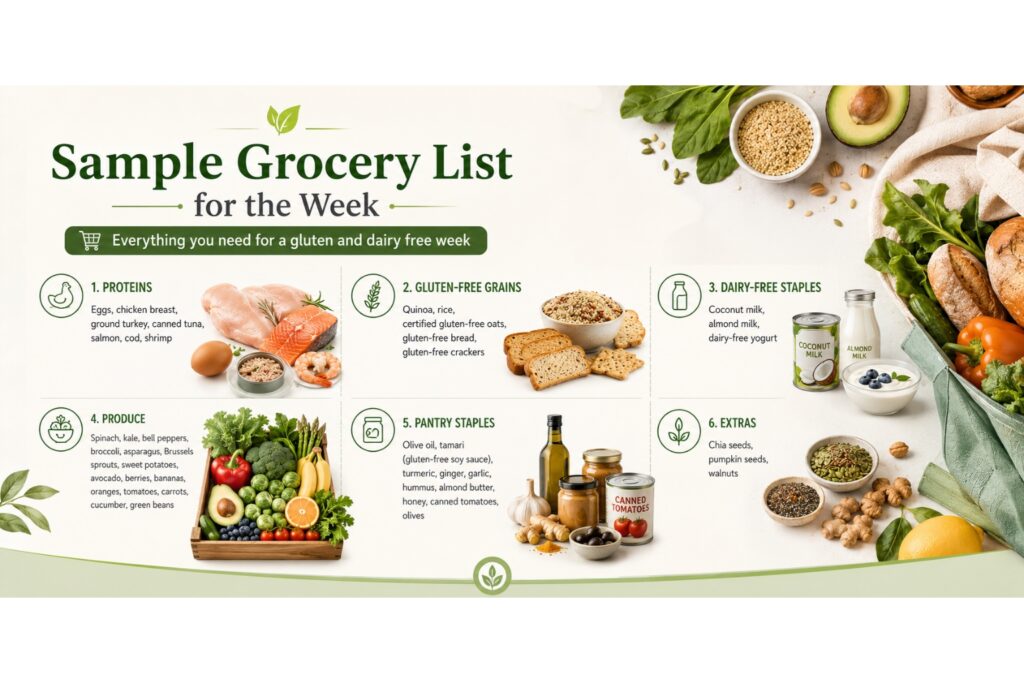
A shopping list makes this gluten and dairy free meal plan far easier to follow without accidentally grabbing the wrong product. Here’s what covers the full seven days.
1. Proteins
eggs, chicken breast, ground turkey, canned tuna, salmon, cod, shrimp
2. Gluten-free grains
quinoa, rice, certified gluten-free oats, gluten-free bread, gluten-free crackers
3. Dairy-free staples
coconut milk, almond milk, dairy-free yogurt
4. Produce
spinach, kale, bell peppers, broccoli, asparagus, Brussels sprouts, sweet potatoes, avocado, berries, bananas, oranges, tomatoes, carrots, cucumber, green beans
5. Pantry staples
olive oil, tamari (gluten-free soy sauce), turmeric, ginger, garlic, hummus, almond butter, honey, canned tomatoes, olives
6. Extras
chia seeds, pumpkin seeds, walnuts
8. Common Mistakes to Avoid on a Dairy Free and Gluten Free Meal Plan
1. Assuming “gluten-free” packaged foods are automatically healthy
Many gluten-free snacks are heavily processed and don’t necessarily support the anti-inflammatory goal of this gluten free meal plan.
2. Missing hidden gluten in sauces and dressings
Soy sauce, some salad dressings, and gravies are common overlooked sources.
3. Replacing dairy with equally processed substitutes
Some dairy-free cheeses and creamers are highly processed , whole-food swaps like coconut milk tend to fit this inflammation free diet better.
4. Going into it without tracking symptoms
If the goal is figuring out whether gluten or dairy affects you, not noting how you feel each week makes it hard to draw conclusions.
5. Being too rigid to sustain it
A gluten free diet for inflammation that feels impossible to maintain long-term isn’t serving its purpose , build in realistic flexibility where you can.
9. Tips to Stick With This Gluten Free Meal Plan
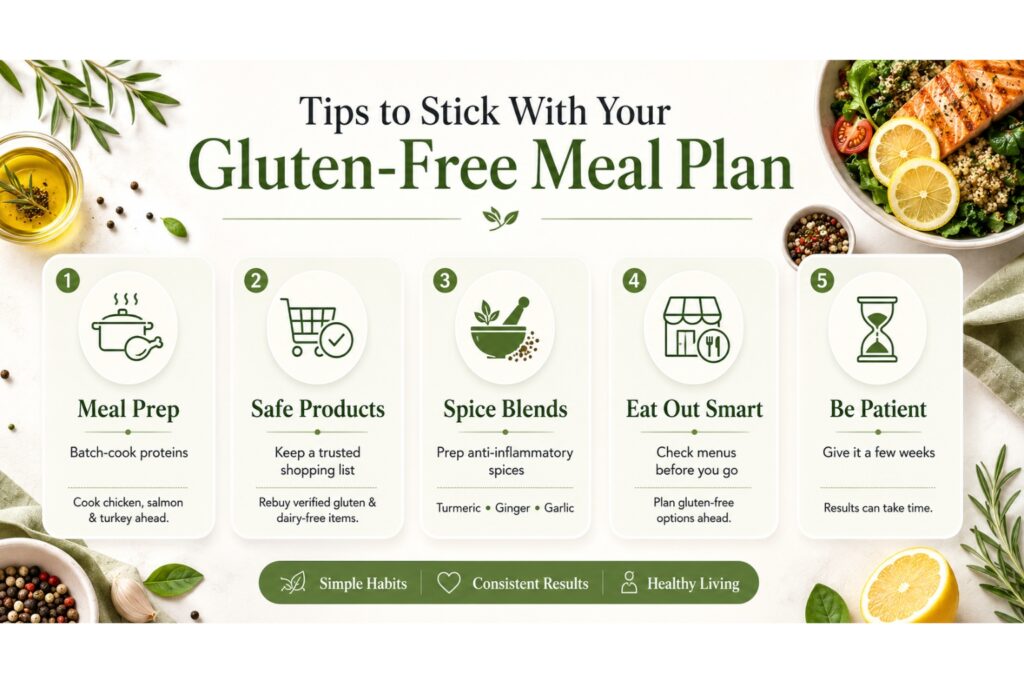
1. Batch-cook proteins on the weekend
Grilling chicken, baking salmon, and browning turkey in bulk makes weekday meals in this gluten free meal plan much faster to assemble.
2. Keep a running list of “safe” packaged products
Once you’ve confirmed a sauce, cracker, or snack is gluten and dairy free, keep buying it rather than re-checking labels every time.
3. Batch a few anti-inflammatory spice blends
Mixing turmeric, ginger, and garlic powder ahead of time makes it easy to season meals quickly.
4. Plan for eating out in advance
Looking up a restaurant’s gluten-free options before you go reduces stress and slip-ups.
5. Give it a few weeks before judging results
Symptom changes from a gluten free diet for inflammation often take time to become noticeable.
10. Adjusting This Gluten Free Meal Plan for Your Needs
1. If you’re highly sensitive to gluten
Be extra cautious with cross-contamination, shared cooking surfaces, and processed products , this gluten free meal plan can be adjusted toward whole, unprocessed ingredients only.
2. If dairy is tolerated in small amounts
Some people only need to reduce dairy rather than eliminate it fully , a dietitian can help determine what’s appropriate for you.
3. If you want a stricter anti-inflammatory approach
Removing nightshades (tomatoes, peppers, eggplant) is a common next step for some people, though it goes beyond what this gluten free meal plan covers.
4. If cooking every meal from scratch feels like too much
Lean more heavily on the leftover and batch-cooking days built into this plan, like Day 5’s reused chili.
5. If you’re vegetarian
Swap fish and poultry for legumes, tofu, and eggs, keeping the same gluten and dairy free meal plan structure around them.
Key Takeaways
- A gluten free meal plan built for inflammation removes gluten and dairy while emphasizing whole, anti-inflammatory foods like fatty fish, vegetables, and healthy fats.
- This is a dairy free and gluten free meal plan by design , every meal in the 7-day breakdown avoids both.
- Reading labels carefully matters more than it seems, since gluten and dairy often hide in sauces, dressings, and processed snacks.
- This gluten free diet for inflammation works best alongside guidance from a doctor or dietitian, especially if you’re investigating specific symptoms.
- Batch-cooking and reusing meals as leftovers make this gluten free meal plan realistic for a full week.
Frequently Asked Questions (FAQ)
Q1: Will a gluten free meal plan reduce inflammation for everyone?
Not necessarily , inflammation has many causes, and gluten or dairy may only be a factor for some people.Research suggests removing these triggers may help those with a sensitivity, but results vary by individual.
Q2: How is a gluten free diet for inflammation different from a regular gluten-free diet?
A regular gluten-free diet simply removes gluten, often replacing it with gluten-free versions of the same processed foods.This gluten free meal plan goes further by also emphasizing anti-inflammatory whole foods and removing dairy.
Q3: Do I need to be tested for gluten or dairy sensitivity first?
It’s a good idea , testing with a doctor can rule out celiac disease or confirm a sensitivity before you commit to a long-term dairy free and gluten free meal plan.Removing foods without any testing makes it harder to know what’s actually causing your symptoms.
Q4: Can I follow this gluten and dairy free meal plan if I’m vegetarian?
Yes , swap the fish and poultry for legumes, tofu, and eggs while keeping the same structure.Protein totals may need slight adjustment, since plant proteins are generally less protein-dense per serving.
Q5: How long should I follow a gluten free meal plan to notice a difference?
Many people try a few weeks to a month before assessing whether symptoms have changed. Tracking symptoms alongside your gluten free diet for inflammation gives more reliable insight than judging after just a few days.
Q6: Is this gluten free meal plan also dairy free?
Yes , every meal in this 7-day plan is naturally free of both gluten and dairy. Dairy is replaced with coconut milk, almond milk, and dairy-free yogurt throughout.
Conclusion: Start Your Gluten Free Meal Plan This Week
A gluten free meal plan built around anti-inflammatory whole foods gives you a practical way to test how gluten and dairy affect you, without resorting to vague advice or bland “approved foods” lists. Lean on fatty fish, colorful vegetables, and anti-inflammatory spices, batch-cook where you can, and track how you feel along the way.
For more free resources like this, visit The Daily Crave at thedailycrave.online. Browse more ideas in our Diet Plans, Meal Plan, and Weight Loss categories, or check out our complete guide to weekly meal plans for the bigger-picture approach to planning meals long-term.