Table of Contents
Most people don’t fail at eating healthy because they lack willpower , they fail because every meal becomes a decision made under pressure. Breakfast meal prep fixes the part of the day where that pressure hits hardest, and once that habit sticks, the same principles carry easily into lunch and dinner. This guide covers how calories and macros actually work, a simple clean-eating framework, and a full 7-day plan built around breakfast meal prep as the foundation.
1. What Is Meal Prep, and Why Start With Breakfast?
Meal prep simply means preparing food in advance so future meals take less time and less thought. Breakfast meal prep is usually the easiest entry point, and it’s worth understanding why before moving into calories and macros.
- Breakfast is the most rushed meal of the day. Mornings leave the least room for cooking, which makes breakfast meal prep the highest-return place to start.
- Breakfast meal prep ideas tend to be simpler than lunch or dinner prep. Most only involve one or two components , oats in a jar, eggs in a muffin tin , rather than a full multi-part plate.
- It builds the habit before scaling up. Someone comfortable with breakfast meal prep after a few weeks usually finds prepping lunches and dinners far less intimidating.
- Easy breakfast options reduce reliance on convenience food. A ready-made breakfast in the fridge is almost always faster than a coffee-shop stop.
- It supports whatever goal comes next. Weight loss, maintenance, or muscle gain all benefit from starting the day with a planned, balanced meal instead of skipping it or grabbing something processed.
Beyond the morning itself, breakfast meal prep tends to set the tone for the rest of the day. Someone who starts with a protein-rich, planned breakfast is often less likely to reach for a mid-morning pastry or oversized coffee-shop drink, simply because the early hunger and decision fatigue that usually drive those choices have already been handled. That ripple effect is one reason breakfast meal prep is worth treating as its own habit, rather than an afterthought squeezed in alongside lunch and dinner planning.
2. Setting Your Calorie and Macro Foundation
Before building out a full breakfast meal prep routine , or any meal prep plan , it helps to understand the two numbers everything else is built on: calories and macros.
Calories: The Starting Point
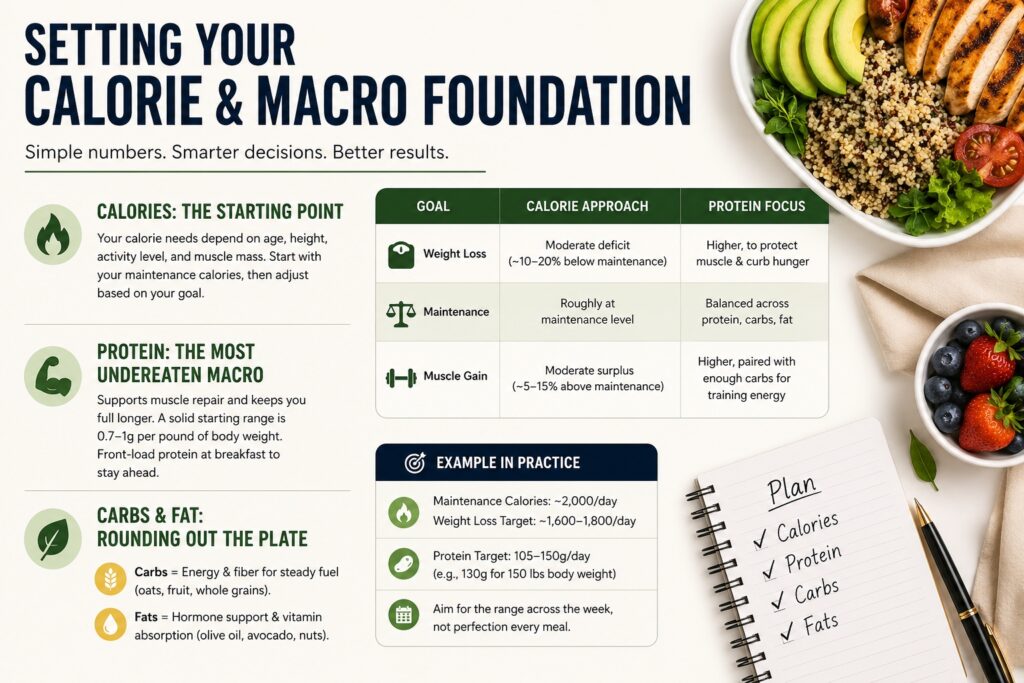
A calorie is a unit of energy, and how many a person needs depends on age, height, activity level, and muscle mass. There’s no single number that fits everyone , an online calculator can estimate maintenance calories, and that number becomes the baseline to adjust from.
| Goal | Calorie Approach | Protein Focus |
| Weight Loss | Moderate deficit (~10-20% below maintenance) | Higher, to protect muscle and curb hunger |
| Maintenance | Roughly at maintenance level | Balanced across protein, carbs, fat |
| Muscle Gain | Moderate surplus (~5-15% above maintenance) | Higher, paired with enough carbs for training energy |
Protein: The Macro Most Meal Preppers Undereat
Protein supports muscle repair and tends to keep people full longer than carbs or fat alone. A common starting range is roughly 0.7-1 gram per pound of body weight, adjusted based on activity level. Breakfast meal prep ideas built around eggs, Greek yogurt, or protein smoothies make it easier to front-load protein early in the day rather than trying to catch up at dinner.
Here’s what these numbers look like in practice. If an online calculator estimates maintenance calories at roughly 2,000 per day, a weight-loss target might land around 1,600-1,800 calories. At 150 pounds, the 0.7-1 gram protein range works out to roughly 105-150 grams daily , a reasonable starting target is 130 grams, split across breakfast, lunch, and dinner. None of these numbers need to be hit exactly every day; they’re a range to aim for across the week, not a rule enforced at every single meal.
Carbohydrates and Fat: Rounding Out the Plate
Carbohydrates , found in oats, fruit, and whole grains , are the body’s main energy source, and their fiber content slows digestion for steadier energy. Fat, from sources like olive oil, avocado, and nuts, supports hormone function and helps absorb certain vitamins. Research suggests a fairly wide range of macro splits can work well, as long as calories and food quality stay reasonably consistent.
3. The Plate Method: Clean Eating Without Tracking
Clean eating doesn’t require weighing food or logging every gram. This simple plate method applies the same principles to every meal, from breakfast meal prep to dinner.
- Half the plate: vegetables or fruit. The easiest way to add fiber and volume with minimal effort.
- A quarter: protein. Eggs, poultry, fish, legumes, or tofu , a natural fit for almost any breakfast meal prep idea as well as lunch and dinner.
- A quarter: whole-grain or starchy carbs. Oats, brown rice, quinoa, or sweet potato for steady energy.
- A small amount of healthy fat. A drizzle of olive oil, a few avocado slices, or a small handful of nuts.
- Room for flexibility. Most meals, most of the time , not a rigid rule enforced at every single sitting.
This same framework applies whether the meal in question is a prepped breakfast, a packed lunch, or a dinner cooked fresh that night. The proportions stay consistent even as the specific foods change, which is part of why the plate method tends to be easier to sustain than counting and logging every ingredient. Over time, most people find they can eyeball these proportions without much conscious effort, which is really the end goal , a plan that eventually stops feeling like a plan at all.
4. Breakfast Meal Prep 101: Easy Ideas to Start With
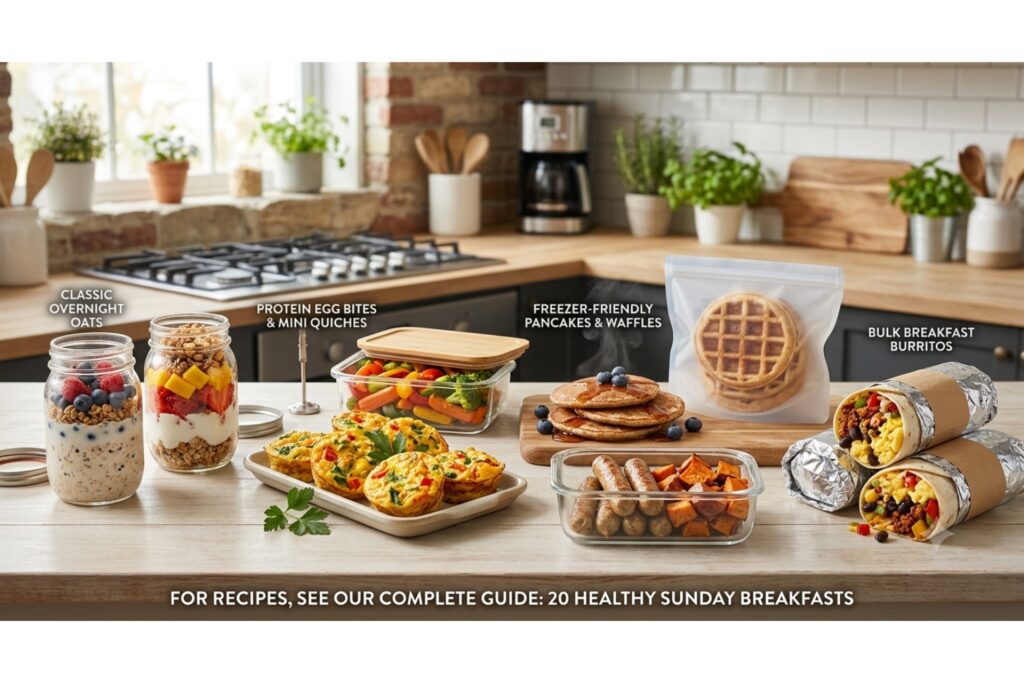
This is where breakfast meal prep pays off the most , a wide range of easy breakfast meal prep ideas exist for almost any schedule, and most take under 30 minutes of hands-on time for a full week’s worth of breakfasts.
No-Cook Breakfast Meal Prep Ideas
Overnight oats, chia pudding, and Greek yogurt parfaits require no oven or stovetop at all. Portioned into jars the night before or in a single Sunday session, these are some of the easiest breakfast meal prep ideas for anyone short on time.
Egg-Based Breakfast Meal Prep
Egg muffins, mini quiches, and sheet-pan omelet squares all bake in one batch and reheat well through the week. This category tends to deliver the highest protein per easy breakfast option on this list.
Freezer-Friendly Breakfast Meal Prep
Pancakes, waffles, and breakfast sandwiches freeze exceptionally well and reheat straight from frozen in a toaster, making them some of the fastest easy breakfast ideas for a rushed morning.
Meal Prep Breakfast Burritos: A Freezer Staple
Meal prep breakfast burritos deserve their own mention , scrambled eggs, beans, cheese, and vegetables rolled into a tortilla and frozen individually turn into a five-minute microwave breakfast. Wrapping each of the meal prep breakfast burritos in foil or parchment before freezing keeps them from sticking together, and a single batch typically covers most of a week.
For a full breakdown of breakfast meal prep ideas by category, see our complete guide: 20 Healthy Meal Prep Breakfasts You Can Make on Sunday.
5. Your 7-Day Healthy Meal Prep Plan
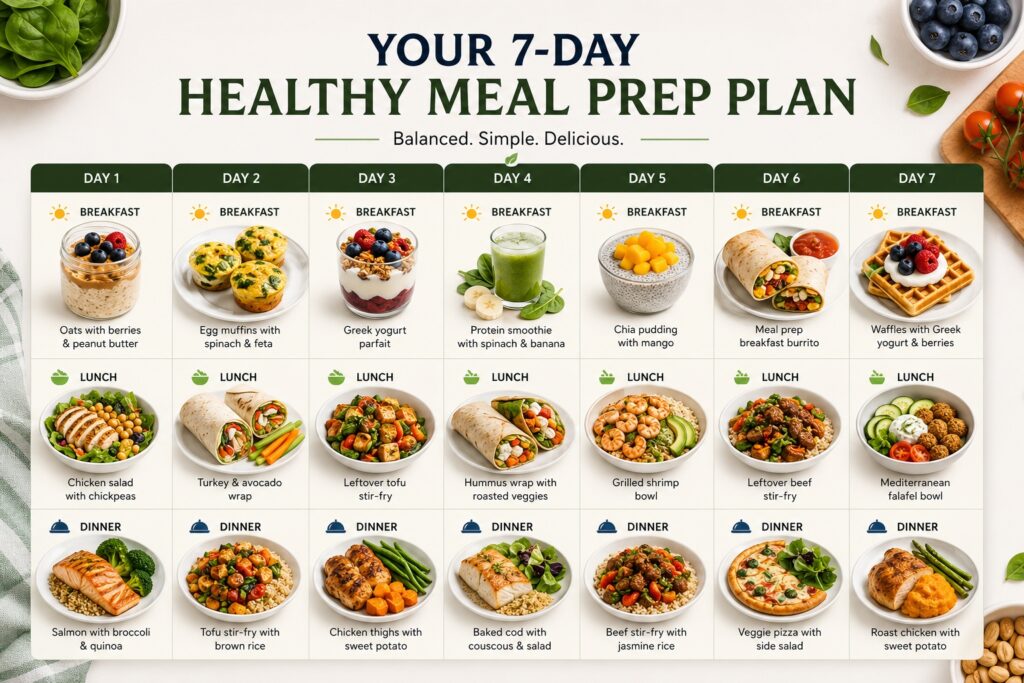
This sample week applies the plate method from Section 3, with breakfast meal prep covering every morning so the only daily decisions left are lunch and dinner.
Day 1
Breakfast
Overnight oats with berries and a spoonful of peanut butter.
Lunch
Grilled chicken salad with mixed greens and chickpeas.
Dinner
Baked salmon with roasted broccoli and quinoa.
Day 2
Breakfast
Egg muffins with spinach and feta, plus a piece of fruit.
Lunch
Turkey and avocado wrap with carrot sticks.
Dinner
Tofu stir-fry with mixed vegetables over brown rice.
Day 3
Breakfast
Greek yogurt parfait with granola and berries.
Lunch
Leftover tofu stir-fry from Day 2.
Dinner
Grilled chicken thighs with roasted sweet potato and green beans.
Day 4
Breakfast
Protein smoothie with spinach, banana, and Greek yogurt.
Lunch
Hummus wrap with roasted vegetables and feta.
Dinner
Baked cod with a side salad and a small portion of couscous.
Day 5
Breakfast
Chia pudding with almond milk and sliced mango.
Lunch
Grilled shrimp bowl with brown rice and avocado.
Dinner
Lean beef stir-fry with peppers, onions, and jasmine rice.
Day 6
Breakfast
One of the meal prep breakfast burritos from Section 4, with salsa.
Lunch
Leftover beef stir-fry from Day 5.
Dinner
Veggie pizza on a whole-wheat crust with a side salad.
Day 7
Breakfast
Whole-grain waffles topped with Greek yogurt and berries.
Lunch
Mediterranean bowl with falafel, cucumber, and tzatziki.
Dinner
Roast chicken with mashed sweet potato and steamed asparagus.
6. Grocery List and Prep-Day Workflow
A full week of meal prep, breakfast included, only works if the shopping trip and prep session behind it stay realistic.
- Proteins: eggs, chicken breast or thighs, salmon, cod, shrimp, tofu, lean beef, Greek yogurt.
- Carbs: rolled oats, brown rice, quinoa, whole-grain wraps and tortillas, sweet potatoes, whole-wheat pizza crust.
- Produce: spinach, mixed greens, broccoli, bell peppers, berries, banana, mango, avocado, tomatoes, cucumber.
- Pantry staples: olive oil, peanut butter, chia seeds, granola, hummus, salsa, black beans, chickpeas.
A practical order: handle breakfast meal prep first since it’s the fastest (usually 20-30 minutes for a full batch), then move to grains, proteins, and finally chop produce last so it stays fresh. A single 90-minute to 2-hour session on a weekend typically covers the entire week, breakfast meal prep included.
It also helps to think of the grocery list as a direct translation of the 7-day plan in Section 5, rather than a separate task. Working down the days and noting each unique ingredient , rather than shopping from memory , tends to prevent both the frustration of a missing ingredient mid-week and the waste of buying something that never actually gets used. For anyone new to this process, starting with just the breakfast meal prep ingredients in the first week, then adding lunch and dinner shopping in week two, is a reasonable way to ease into a full weekly routine without it feeling overwhelming.
7. Adapting Meal Prep for Different Goals and Diets
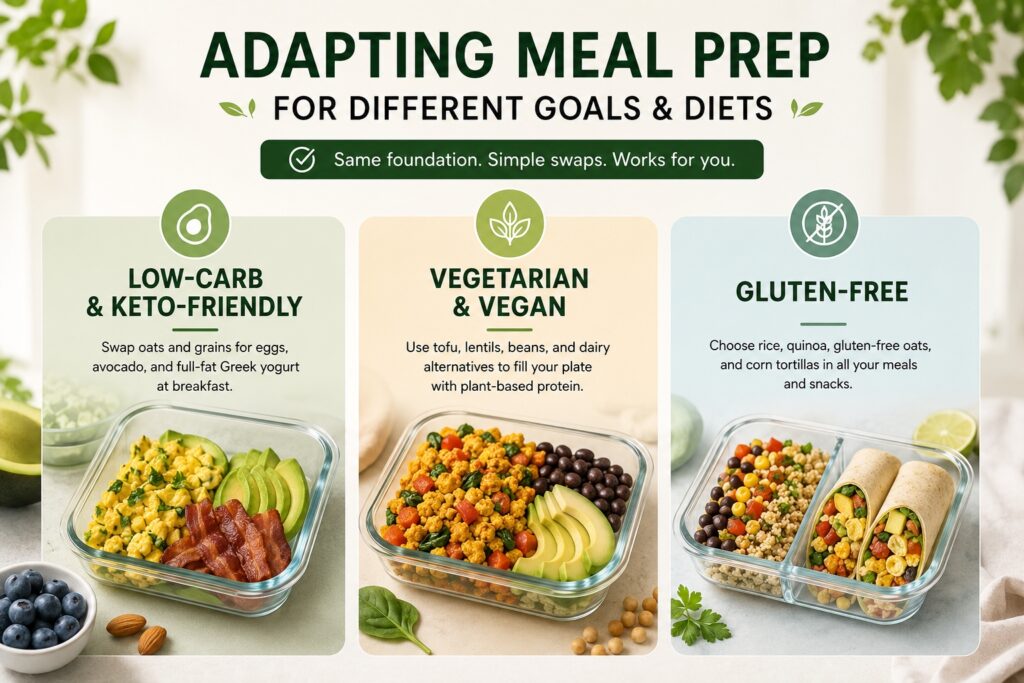
The same framework flexes to fit different eating patterns without changing the underlying calorie and macro principles from Section 2. This matters because the biggest obstacle to sticking with any meal prep plan is usually the sense that it doesn’t fit an existing way of eating , in most cases, a few ingredient swaps solve that without requiring an entirely separate plan.
Low-Carb and Keto-Friendly
Swap oats and grains for eggs, avocado, and full-fat Greek yogurt at breakfast. Most easy breakfast meal prep ideas can be adjusted this way with a simple ingredient swap rather than a completely different recipe.
Vegetarian and Vegan
Eggs, dairy, tofu, lentils, and beans fill the protein quarter of the plate. Vegan meal prep breakfast burritos work well with scrambled tofu in place of eggs.
Gluten-Free
Rice, quinoa, gluten-free oats, and corn tortillas replace wheat-based carbs, including in the meal prep breakfast burritos from Section 4.
8. Common Meal Prep Mistakes to Avoid
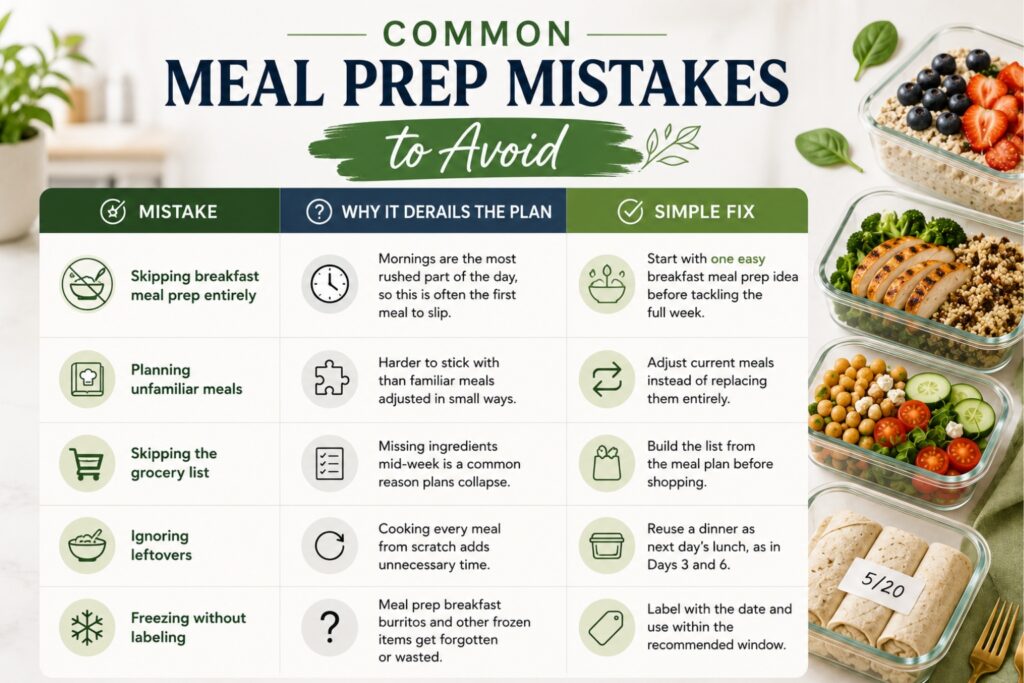
| Mistake | Why It Derails the Plan | Simple Fix |
| Skipping breakfast meal prep entirely | Mornings are the most rushed part of the day, so this is often the first meal to slip | Start with one easy breakfast meal prep idea before tackling the full week |
| Planning unfamiliar meals | Harder to stick with than familiar meals adjusted in small ways | Adjust current meals instead of replacing them entirely |
| Skipping the grocery list | Missing ingredients mid-week is a common reason plans collapse | Build the list from the meal plan before shopping |
| Ignoring leftovers | Cooking every meal from scratch adds unnecessary time | Reuse a dinner as next day’s lunch, as in Days 3 and 6 |
| Freezing without labeling | Meal prep breakfast burritos and other frozen items get forgotten or wasted | Label with the date and use within the recommended window |
9. Keeping Meal Prep Sustainable Long-Term
A meal prep habit that lasts is usually the one that leaves room to adapt, not the one followed perfectly for two weeks and then abandoned.
- Rotate easy breakfast ideas every few weeks.
Repeating the same breakfast meal prep recipe for months tends to lead to burnout , swapping in a new recipe from Section 4 keeps it interesting.
- Keep one “anchor” meal prep breakfast.
Having one reliable, fast recipe to fall back on during busy weeks reduces the pressure to prep everything perfectly.
- Treat a missed prep day as a minor setback, not a failure.
One skipped Sunday doesn’t undo weeks of consistent breakfast meal prep.
- Scale the amount prepped to actual appetite.
Over-prepping leads to waste; under-prepping leads to gaps that get filled with less healthy options.
- Revisit calorie and macro targets periodically.
As activity levels or goals shift, the numbers from Section 2 may need small adjustments.
None of this needs to happen perfectly to be worthwhile. A meal prep routine that runs at 80% consistency for months tends to produce better long-term results than one followed with 100% precision for two weeks before burning out entirely. The goal is a system flexible enough to survive a busy week, not a rigid checklist that falls apart the first time real life gets in the way.
10. Snacks and Hydration Alongside Meal Prep
Breakfast meal prep covers mornings, but the gaps between meals matter just as much for staying consistent through the rest of the day.
- Plan one or two snacks, not zero. An unplanned gap between lunch and dinner is one of the most common places a meal prep routine quietly falls apart.
- Pair protein with fiber in snacks. An apple with peanut butter or Greek yogurt with berries tends to be more satisfying than fruit or crackers alone.
- Keep grab-and-go options on hand. Nuts, hard-boiled eggs from the same batch used for egg-based breakfast meal prep, and pre-cut vegetables all require zero prep in the moment.
- Water often gets confused with hunger. Starting the day with a full glass of water, alongside whichever easy breakfast option is on the schedule, is a simple habit that supports the rest of the plan.
- Limit liquid calories, but don’t eliminate them. Coffee, tea, and the occasional soda don’t need to disappear entirely , awareness of how they add up matters more than a strict ban.
11. Meal Prep Containers and Storage Basics
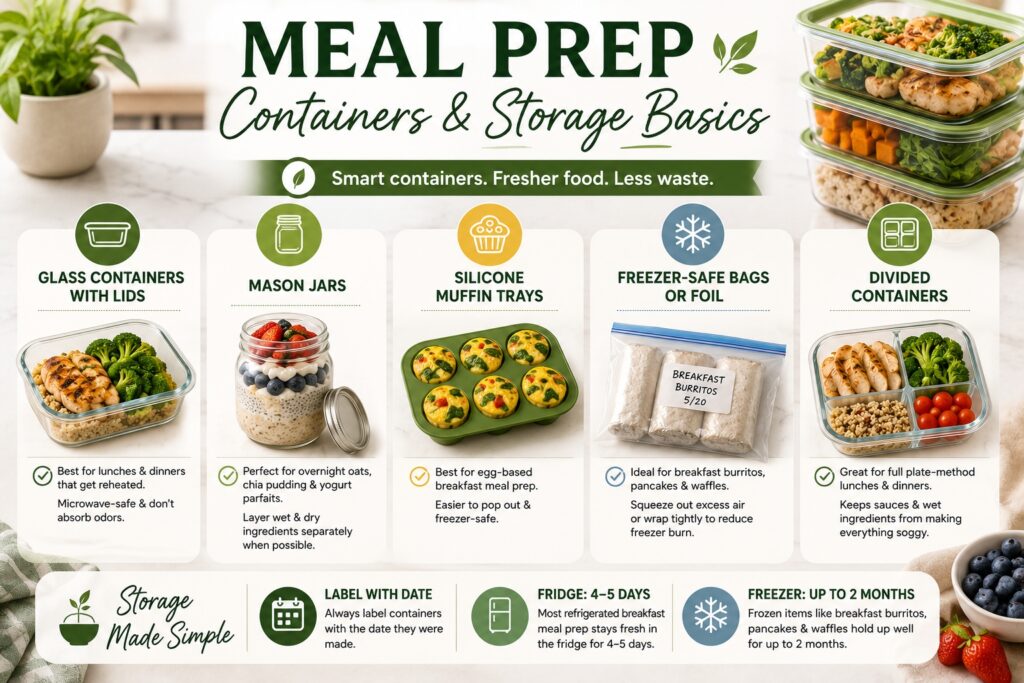
The right containers make the difference between breakfast meal prep that survives five days in the fridge and one that turns into a science experiment by Thursday.
| Container Type | Best For | Notes |
| Glass containers with lids | Lunches and dinners that get reheated | Microwave-safe, don’t absorb odors like plastic can over time |
| Mason jars | Overnight oats, chia pudding, yogurt parfaits | Layer wet and dry ingredients separately when possible |
| Silicone muffin trays | Egg-based breakfast meal prep | Easier to pop food out than metal tins, and freezer-safe |
| Freezer-safe bags or foil | Meal prep breakfast burritos, pancakes, waffles | Squeeze out excess air or wrap tightly to reduce freezer burn |
| Divided containers | Full plate-method lunches and dinners | Keeps sauces and wet ingredients from making everything soggy |
Labeling containers with the date they were made prevents a lot of guesswork. Most refrigerated breakfast meal prep is best within four to five days, while frozen items like meal prep breakfast burritos or pancakes hold up well for up to two months.
12. Meal Timing and Eating Out While Meal Prepping
A meal prep plan that can’t survive a dinner out or a shifted schedule usually doesn’t survive long at all.
- Meal timing matters less than total intake.
Research suggests that when total daily calories and protein are similar, the exact clock time of meals has a relatively small effect for most people.
- Treat eating out as a swap, not an exception.
If dinner is at a restaurant, swapping it in place of one of the planned dinners keeps the week roughly on track, even with breakfast meal prep already covering the morning.
- Look for the same plate-method building blocks on a menu.
A protein, a vegetable side, and a modest portion of starch translate to almost any restaurant.
- One meal doesn’t undo a week.
A single higher-calorie dinner has a far smaller impact than the belief that it “ruins” everything, which often leads people to abandon breakfast meal prep and the rest of the plan altogether rather than just continuing the next day.
- Build in a buffer day.
Leaving one day less structured reduces the temptation to break the plan entirely on a day that wasn’t accounted for.
13. Signs It’s Time to Adjust Your Meal Prep Plan
A meal prep routine isn’t meant to stay identical forever. A few signals suggest it’s time to revisit the calorie or macro targets from Section 2, not abandon the plan altogether.
- Weight isn’t moving after three to four weeks.
The calorie target likely needs a small adjustment rather than a complete overhaul.
- Energy is consistently low.
This can be a sign the calorie or carbohydrate range is too low for current activity levels.
- Hunger feels unmanageable.
Being hungry occasionally is normal; constant hunger often means protein or fiber intake needs to increase , worth revisiting even in easy breakfast ideas that feel too light.
- The plan feels impossible to sustain.
If sticking to it requires white-knuckling through every meal, the structure , not willpower , usually needs to change.
- Life circumstances shift.
A new job, a change in activity level, or a different schedule are all reasonable reasons to revisit a plan that was working fine before.
14. A Second Week: Keeping Meal Prep From Getting Repetitive
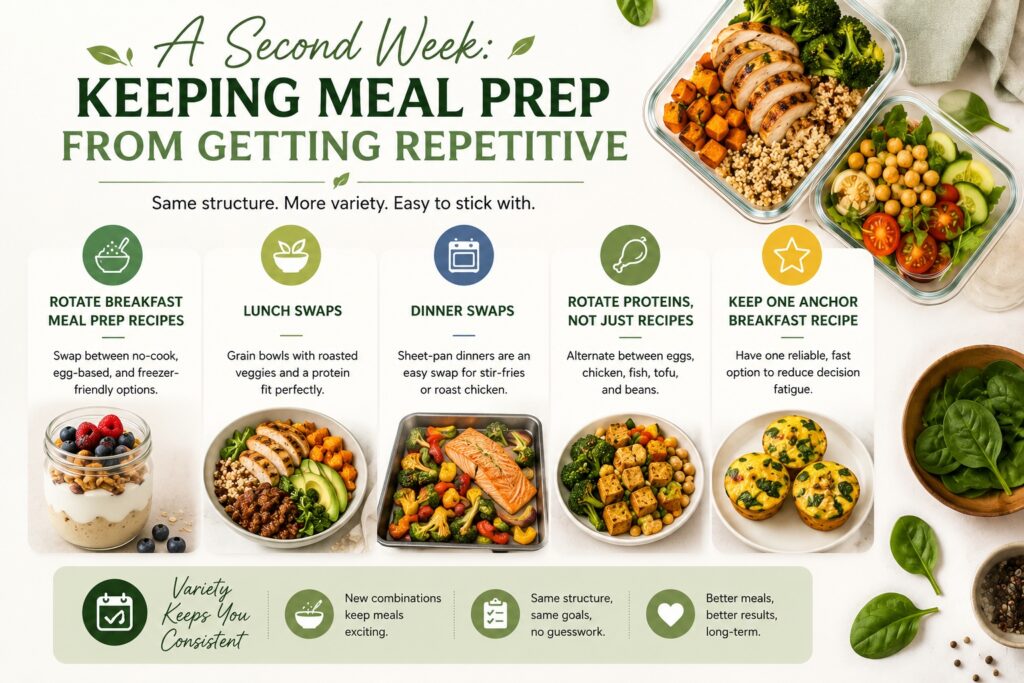
Repeating the exact same meals every week is one of the fastest ways a meal prep routine starts to feel like a chore. Rotating in a second set of options keeps the same structure while adding enough variety to stay interesting long-term.
- Rotate breakfast meal prep recipes every few weeks.
Swap between the no-cook, egg-based, and freezer-friendly categories from Section 4 so the same easy breakfast doesn’t repeat for months at a time.
- Lunch swaps:
A grain bowl with roasted vegetables and a protein of choice can replace any of the wraps or salads above without changing the underlying calorie or macro targets.
- Dinner swaps:
A sheet-pan dinner , one protein and two vegetables roasted together , is an easy low-effort substitute for any of the stir-fry or roast-chicken dinners in the 7-day plan.
- Rotate proteins, not just recipes.
Alternating between eggs, chicken, fish, tofu, and beans across the week keeps meals from tasting the same even when the format repeats.
- Keep one anchor breakfast meal prep recipe.
Having one reliable, fast option , often the meal prep breakfast burritos or egg muffins , reduces decision fatigue while still leaving room to vary the rest of the week.
Key Takeaways
- Breakfast meal prep is the easiest starting point for anyone new to meal prep, since it takes less time than prepping lunch or dinner.
- Calories set the overall target; protein, carbs, and fat shape what fills that target.
- The plate method applies clean eating principles to every meal without tracking every gram.
- Meal prep breakfast burritos and other freezer-friendly options extend easy breakfast ideas well beyond a single week.
- The same framework adapts to low-carb, vegetarian, vegan, and gluten-free eating with simple swaps.
- A sustainable meal prep habit leaves room for rotation and the occasional missed week, rather than demanding perfection.
FAQ
Q1: What’s the easiest way to start meal prepping?
Start with breakfast. Breakfast meal prep ideas like overnight oats or egg muffins take less hands-on time than prepping lunch or dinner, which makes breakfast the most realistic starting point for beginners.
Q2: How many calories should a healthy meal prep plan include?
It depends on age, activity level, and goal. A common starting point is estimating maintenance calories, then adjusting by roughly 10-20% based on whether the goal is weight loss or muscle gain. A doctor or dietitian can help personalize this.
Q3: How long do meal prep breakfast burritos last in the freezer?
Properly wrapped and frozen, meal prep breakfast burritos typically last up to two months. Refrigerated breakfast meal prep, like egg muffins or overnight oats, is best within four to five days.
Q4: Can this meal prep plan work for vegetarian or low-carb diets?
Yes , Section 7 covers ingredient swaps for low-carb, vegetarian, vegan, and gluten-free eating that keep the same calorie and macro structure intact.
Q5: What if I don’t have time to prep every meal?
Start with just breakfast meal prep, since it’s the fastest category to prepare. Even partial prep , one or two easy breakfast meal prep ideas for the week , reduces reliance on convenience food during busy mornings.
Q6: How do I keep meal prep from getting boring?
Rotate in a second set of recipes every few weeks, as covered in Section 14. Alternating proteins and swapping in a different breakfast meal prep idea keeps the routine from feeling repetitive without changing the overall structure.
Q7: What if I eat out or miss a day of meal prep?
Treat it as a swap rather than a failure , Section 12 covers how to fit eating out into the plan without derailing the rest of the week. One meal or one day off-plan has a much smaller effect than abandoning the routine entirely afterward.
Conclusion
Healthy meal prep doesn’t need to start with a complicated overhaul of every meal. Breakfast meal prep is the easiest place to begin, the plate method makes clean eating simple without tracking, and a realistic 7-day plan turns all of it into something that actually fits a normal week.
For a deeper dive into specific breakfast meal prep ideas, explore 20 Healthy Meal Prep Breakfasts You Can Make on Sunday and Overnight Oats: 10 Recipes for the Whole Week. For more guidance, browse the Meal Prep and Healthy Recipes categories on The Daily Crave (thedailycrave.online).