Table of Contents
A clean eating meal plan isn’t about a strict rulebook or cutting out entire food groups , it’s about building meals from whole, minimally processed foods and letting the rest fall into place. This guide from The Daily Crave (thedailycrave.online) gives you a full 7-day clean eating meal plan with real meals, real portions, and no calorie counting required.
Most clean eating diet content online is either too vague (“just eat whole foods!”) or too rigid to actually follow. This clean eating meal plan sits in between: specific enough that you know exactly what to cook, flexible enough that you can swap meals around your week.
Medical disclaimer: This article is for informational purposes only and isn’t medical advice. Talk to a doctor or registered dietitian before starting any new diet plan, especially if you’re pregnant or breastfeeding, have a history of disordered eating, take medication, or manage a health condition. Everyone’s nutritional needs are different , use this weekly plan as a flexible starting point rather than a fixed rule.
1. What “Clean Eating” Actually Means
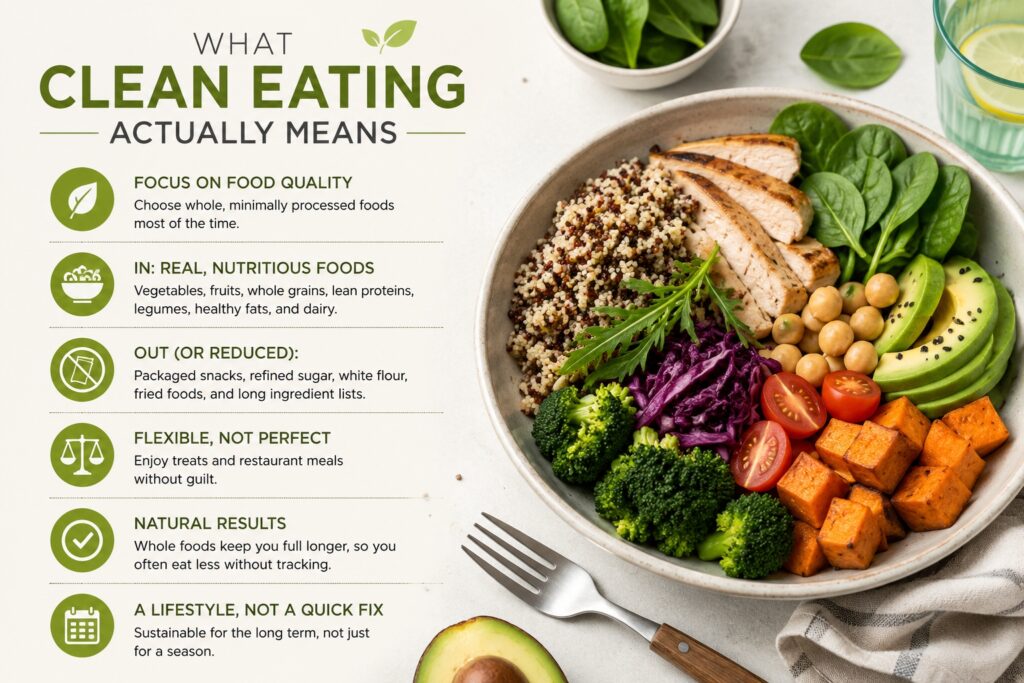
- It’s about food quality, not a specific calorie number. A clean eating meal plan isn’t a calorie meal plan in the traditional sense , the focus is on what you’re eating rather than exactly how much.
- In: vegetables, fruits, whole grains, lean proteins, legumes, healthy fats, and minimally processed dairy.
- Out (or reduced): packaged snacks, refined sugar, white flour, fried foods, and foods with long ingredient lists full of things you don’t recognize.
- It’s flexible by design. A clean eating diet isn’t about perfection , an occasional treat or restaurant meal doesn’t undo the rest of your week.
- It often produces weight loss without tracking. Because whole foods tend to be more filling per calorie than processed alternatives, many people following a clean eating meal plan naturally eat less without counting anything.
- It’s a long-term way of eating, not a short-term fix. Unlike a strict 1200 or 1500 calorie meal plan meant for a defined stretch of time, a clean eating diet is generally meant to be sustainable indefinitely, which is part of why it tends to stick for people who’ve struggled with more rigid plans.
2. Who This Clean Eating Meal Plan Is For
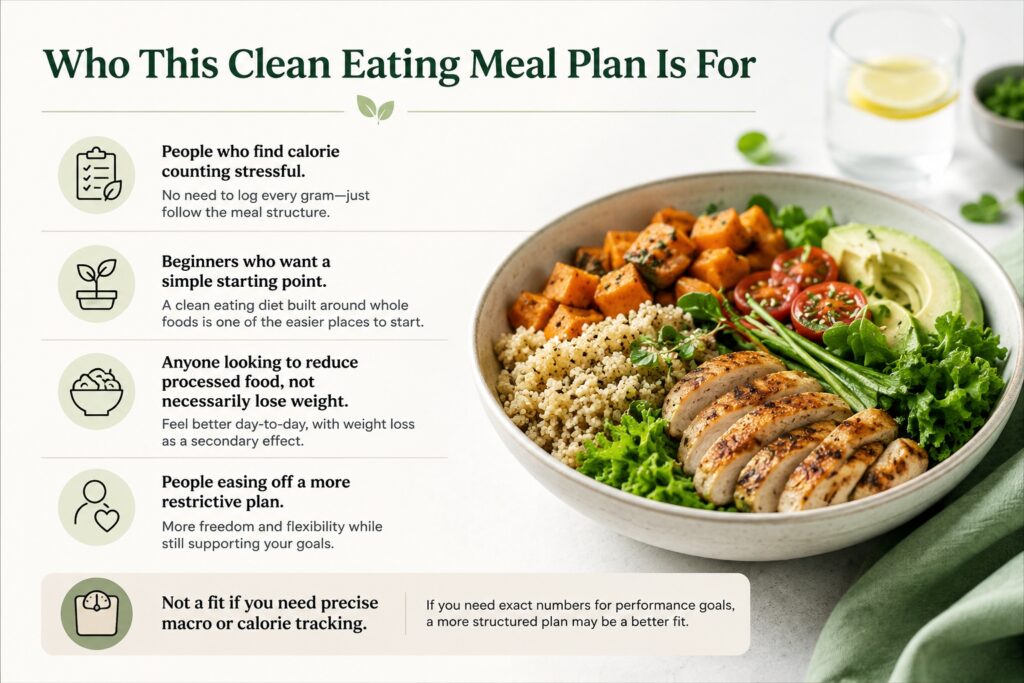
- People who find calorie counting stressful.
This clean eating meal plan doesn’t require logging every gram , just following the meal structure.
- Beginners who want a simple starting point.
If diet plans have felt overly complicated in the past, a clean eating diet built around whole foods is one of the easier places to start.
- Anyone looking to reduce processed food, not necessarily lose weight.
Some people follow a clean eating meal plan purely to feel better day-to-day, with weight loss as a secondary effect rather than the main goal.
- People easing off a more restrictive plan.
If a strict calorie meal plan felt too rigid, this weekly plan offers more freedom while still supporting your goals.
- Not a fit if you need precise macro or calorie tracking.
If you’re training for a specific performance goal that requires exact numbers, a more structured calorie meal plan may serve you better than this approach alone.
3. How This Clean Eating Meal Plan Is Structured
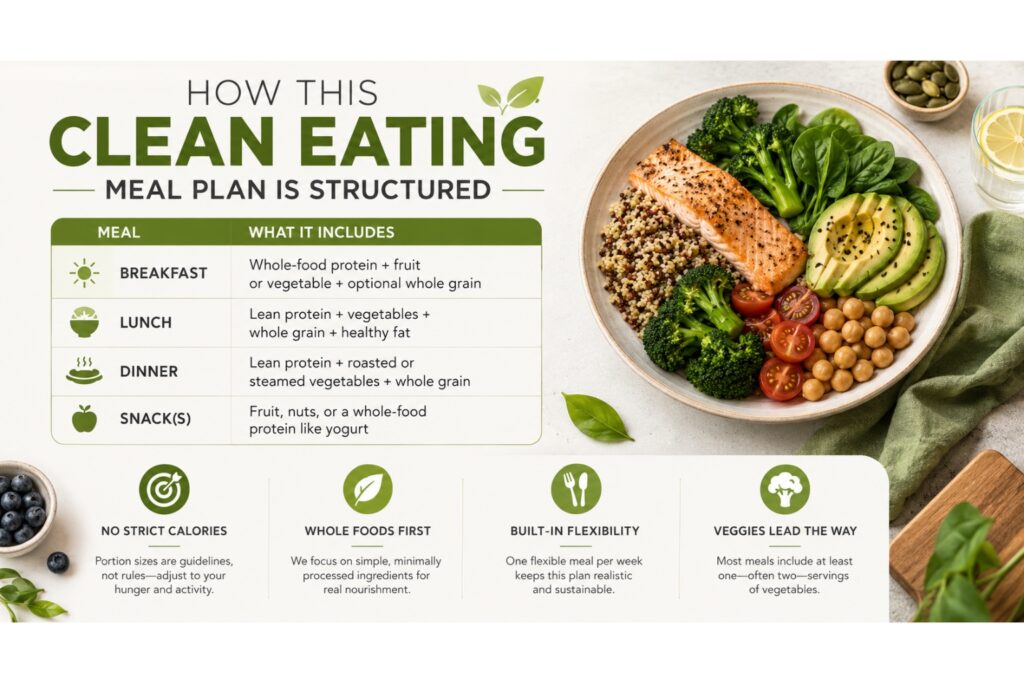
Every day this clean eating meal plan follows the same simple pattern , protein, vegetables, a whole grain, and a healthy fat at most meals.
| Meal | What It Includes |
| Breakfast | Whole-food protein + fruit or vegetable + optional whole grain |
| Lunch | Lean protein + vegetables + whole grain + healthy fat |
| Dinner | Lean protein + roasted or steamed vegetables + whole grain |
| Snack(s) | Fruit, nuts, or a whole-food protein like yogurt |
A few things that make this weekly meal plan easier to actually follow:
- There’s no strict calorie target here. Unlike a typical calorie meal plan, portion sizes below are guidelines, not rules , adjust based on your hunger and activity level.
- Whole foods first, always. If a recipe calls for a packaged sauce or dressing, this clean eating meal plan leans toward a simple homemade version instead.
- One flexible meal per week is built in. A clean eating diet that allows zero flexibility tends to feel more like a punishment than a lifestyle , build in room for a meal out or a treat.
- Vegetables are the backbone, not an afterthought. Most meals in this plan include at least one, often two, vegetable servings.
4. The 7-Day Clean Eating Meal Plan
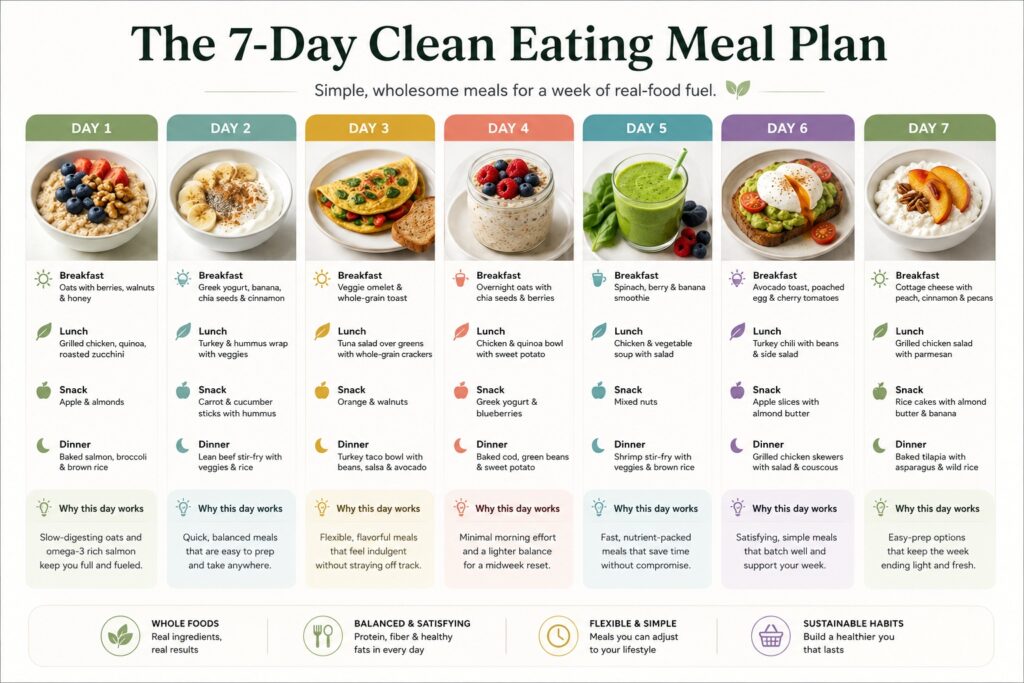
Here’s the complete clean eating meal plan, day by day.
Day 1
- Breakfast: Steel-cut oats with berries, chopped walnuts, and a drizzle of honey
- Lunch: Grilled chicken breast with quinoa, roasted zucchini, and a lemon-olive oil dressing
- Snack: Apple with a small handful of almonds
- Dinner: Baked salmon with roasted broccoli and brown rice
Why this day works:
- Steel-cut oats digest more slowly than instant oats, keeping you fuller through the morning.
- Salmon adds omega-3s on top of protein, which many clean eating meal plan days skip by relying only on chicken.
Day 2
- Breakfast: Greek yogurt with sliced banana, a spoonful of chia seeds, and cinnamon
- Lunch: Turkey and hummus wrap with whole-grain tortilla, spinach, and shredded carrot
- Snack: Carrot and cucumber sticks with hummus
- Dinner: Lean beef stir-fry with mixed vegetables and jasmine rice
Why this day works:
- Greek yogurt is a quick, whole-food breakfast that needs almost no prep.
- The wrap at lunch travels well, which is useful for anyone following this clean eating diet at a desk job.
Day 3
- Breakfast: Veggie omelet with spinach, mushrooms, and bell pepper, plus a slice of whole-grain toast
- Lunch: Tuna salad (canned tuna, olive oil, lemon, celery) over mixed greens with whole-grain crackers
- Snack: Orange and a few walnuts
- Dinner: Ground turkey taco bowl with lettuce, black beans, salsa, and avocado
Why this day works:
- The omelet is endlessly adjustable based on whatever vegetables you have on hand.
- The taco bowl at dinner feels indulgent while staying firmly within a clean eating meal plan.
Day 4
- Breakfast: Overnight oats with almond milk, chia seeds, and fresh berries
- Lunch: Grilled chicken and quinoa bowl with roasted sweet potato and a large green salad
- Snack: Plain Greek yogurt with a few blueberries
- Dinner: Baked cod with steamed green beans and a small sweet potato
Why this day works:
- Overnight oats mean zero morning effort, which helps this clean eating meal plan stay realistic on busy days.
- This is a lighter day overall , good for a midweek reset.
Day 5
- Breakfast: Smoothie with spinach, frozen berries, banana, and almond milk
- Lunch: Chicken and vegetable soup with a side salad
- Snack: A handful of mixed nuts
- Dinner: Shrimp stir-fry with broccoli, snap peas, and brown rice
Why this day works:
- A smoothie is one of the fastest ways to pack vegetables and fruit into breakfast on a rushed morning.
- Shrimp cooks quickly, keeping dinner low-effort without sacrificing whole-food quality.
Day 6
- Breakfast: Whole-grain toast with mashed avocado, a poached egg, and cherry tomatoes
- Lunch: Turkey chili with tomatoes, kidney beans, and spices, served with a side salad
- Snack: Apple slices with almond butter
- Dinner: Grilled chicken skewers with a large mixed salad and couscous
Why this day works:
- Avocado toast is a satisfying, simple weekend-style breakfast that still fits a clean eating diet.
- Chili batches well, so it’s worth doubling for leftovers later in the week.
Day 7
- Breakfast: Cottage cheese with sliced peach, cinnamon, and a few chopped pecans
- Lunch: Grilled chicken salad with romaine, shaved parmesan, and a light homemade dressing
- Snack: Rice cakes with almond butter and banana
- Dinner: Baked tilapia with roasted asparagus and wild rice
Why this day works:
- Cottage cheese at breakfast is an underrated whole-food protein option that’s easy to prep ahead.
- Ending the week with a simple baked fish dinner keeps prep light after six days of cooking.
5. Sample Grocery List for the Week
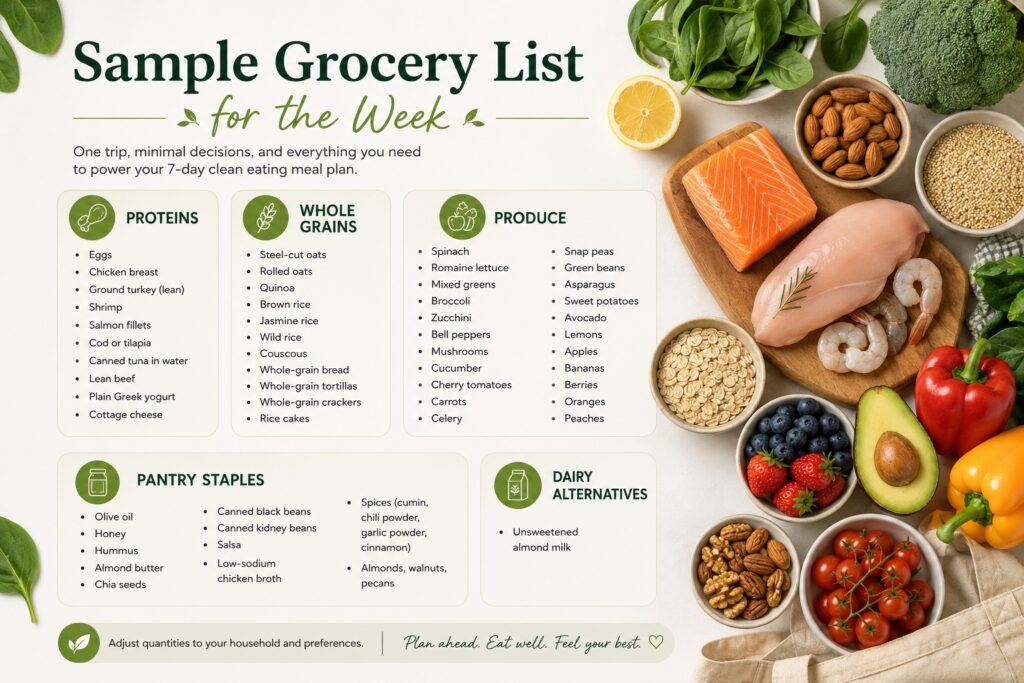
Having a shopping list ready makes this clean eating meal plan far easier to follow , one trip, minimal decisions during the week. Here’s what covers the full seven days; adjust quantities to your household.
- Proteins:
- Eggs
- Chicken breast
- Ground turkey (lean)
- Shrimp
- Salmon fillets
- Cod or tilapia
- Canned tuna in water
- Lean beef
- Plain Greek yogurt
- Cottage cheese
- Whole grains:
- Steel-cut oats
- Rolled oats
- Quinoa
- Brown rice
- Jasmine rice
- Wild rice
- Couscous
- Whole-grain bread
- Whole-grain tortillas
- Whole-grain crackers
- Rice cakes
- Produce:
- Spinach
- Romaine lettuce
- Mixed greens
- Broccoli
- Zucchini
- Bell peppers
- Mushrooms
- Cucumber
- Cherry tomatoes
- Carrots
- Celery
- Snap peas
- Green beans
- Asparagus
- Sweet potatoes
- Avocado
- Lemons
- Apples
- Bananas
- Berries
- Oranges
- Peaches
- Pantry staples:
- Olive oil
- Honey
- Hummus
- Almond butter
- Chia seeds
- Canned black beans
- Canned kidney beans
- Salsa
- Low-sodium chicken broth
- Spices (cumin, chili powder, garlic powder, cinnamon)
- Almonds
- Walnuts
- Pecans
- Dairy alternatives: unsweetened almond milk
6. Common Mistakes to Avoid on a Clean Eating Diet
- Treating “clean” as an excuse for unlimited portions.
Whole foods are more filling per calorie, but a clean eating meal plan can still lead to weight gain if portions are consistently oversized.
- Overcomplicating meals.
A clean eating diet doesn’t require elaborate recipes , the meals in this plan reuse a small set of proteins, grains, and vegetables throughout the week.
- Avoiding all packaged foods entirely.
Some packaged staples, like canned beans or plain oats, are perfectly compatible with a clean eating meal plan , the goal is minimally processed, not zero packaging.
- Skipping meal prep.
A written weekly meal plan that never gets shopped for or cooked doesn’t do much good. The prep step is what actually makes this clean eating meal plan work.
- Being too rigid about “cheat” meals.
Occasional flexibility supports long-term consistency more than an all-or-nothing mindset does.
7. Tips to Make This Weekly Meal Plan Sustainable
- Batch-cook two or three proteins on the weekend.
This turns most lunches and dinners in this clean eating meal plan into a quick assembly job.
- Roast a big tray of vegetables at once.
One sheet pan of roasted vegetables can cover several meals across the week.
- Make one sauce or dressing in bulk.
A simple olive oil-lemon or tahini dressing transforms the same base ingredients into different-tasting meals.
- Keep whole-food snacks visible and accessible.
Pre-cut fruit and portioned nuts make it easier to reach for clean options when hunger hits.
- Reassess weekly, not daily.
Energy levels and how your clothes fit are better indicators of progress than obsessing over any single meal.
8. Adjusting This Clean Eating Meal Plan for Your Goal
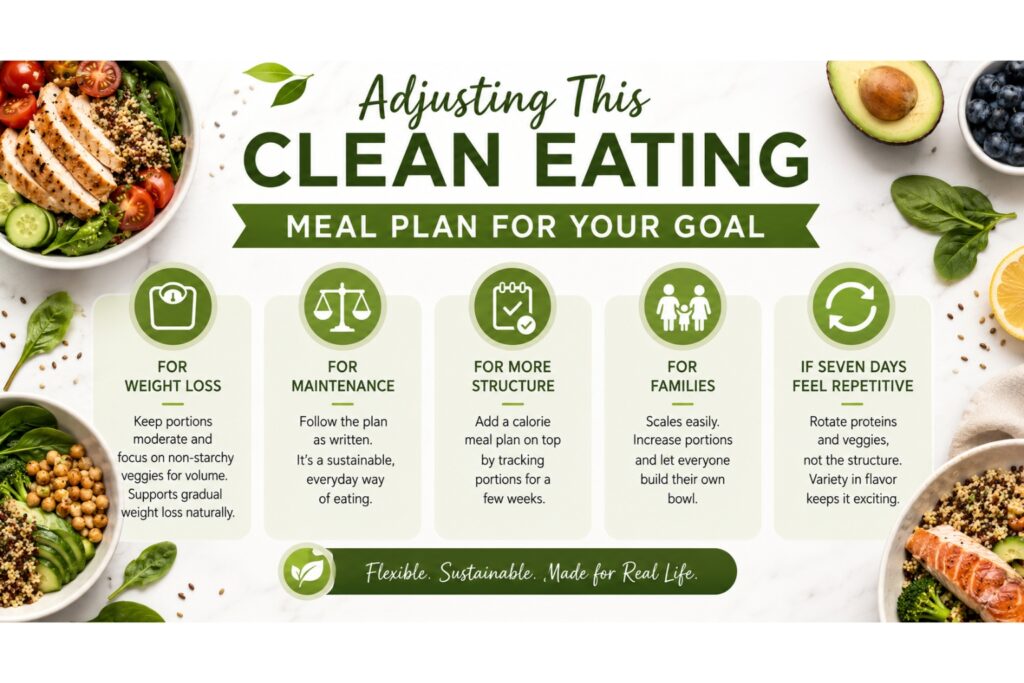
- For weight loss:
Keep portions moderate and lean on non-starchy vegetables for volume. This clean eating meal plan often supports gradual weight loss without any formal calorie meal plan attached.
- For maintenance:
Follow the plan largely as written , it’s designed to be a sustainable, everyday way of eating rather than a short-term fix.
- For more structure:
If you want tighter control over results, you can layer a calorie meal plan on top of this clean eating diet by tracking portions for a few weeks.
- For families:
This weekly plan scales easily , simply increasing portion sizes and letting everyone build their own bowl from the same base ingredients.
- If seven days feels repetitive:
Rotating proteins and vegetables between days rather than changing the whole structure , variety in flavor, not in method, is what keeps a clean eating meal plan interesting long-term.
9. How This Clean Eating Meal Plan Compares to Other Approaches
- Compared to a strict calorie meal plan: This clean eating meal plan doesn’t require tracking every gram, which makes it easier for people who find calorie counting stressful or hard to sustain long-term.
- Compared to keto or low-carb diets: This clean eating diet keeps whole-food carbohydrates like oats, rice, and fruit in the picture, rather than cutting them out , which tends to make it easier to follow without feeling restrictive.
- Compared to intermittent fasting: This weekly meal plan spreads eating across the whole day instead of limiting it to a window, which some beginners find more comfortable when they’re just starting to build better habits.
- Compared to a 1500 or 2000 calorie meal plan: Those plans focus on hitting a specific calorie meal plan target, while this clean eating meal plan focuses on food quality first and lets calorie intake follow naturally from that.
- The common thread: Almost every effective eating pattern, including this one, comes back to protein, vegetables, whole grains, and consistency. The labels differ more than the substance.
Key Takeaways
- A clean eating meal plan is defined by food quality , whole, minimally processed ingredients , rather than a specific calorie target.
- This 7-day clean eating meal plan uses a repeatable structure: protein, vegetables, whole grain, and healthy fat at most meals.
- No calorie counting is required, though this weekly plan can support gradual, sustainable weight loss for many people.
- Meal prep , batch-cooking proteins, roasting vegetables, and making one sauce ahead , is what makes this clean eating diet realistic for a busy week.
- Flexibility matters: one relaxed meal per week doesn’t undo the rest of your clean eating meal plan.
Frequently Asked Questions (FAQ)
Q1: Do I need to count calories on a clean eating meal plan?
No , this clean eating meal plan focuses on food quality rather than exact calorie counts.Many people naturally eat fewer calories on a clean eating diet simply because whole foods are more filling.
Q2: Will a clean eating meal plan help me lose weight?
It can, for many people, since whole foods tend to be lower in calories per volume than processed alternatives.Results vary based on portion sizes, activity level, and consistency over time.
Q3: Can I follow this weekly meal plan if I’m vegetarian?
Yes , replace animal proteins with eggs, Greek yogurt, cottage cheese, tofu, tempeh, and legumes.The rest of the clean eating meal plan structure stays the same.
Q4: Is clean eating the same as a low-calorie diet?
Not exactly , a clean eating meal plan is about food quality, while a calorie meal plan is specifically about a calorie target.The two can overlap, since whole foods often naturally result in a lower calorie intake, but they’re not the same concept.
Q5: How strict does a clean eating diet need to be?
It doesn’t need to be perfect. Most people do well building in one flexible meal per week rather than following a clean eating meal plan with zero exceptions.Long-term consistency tends to matter more than short-term perfection.
Q6: Can I meal prep this entire clean eating meal plan on Sunday?
Yes , batch-cooking proteins, roasting a large tray of vegetables, and cooking grains in bulk on Sunday covers most of the week.A few meals, like the smoothie or omelet, are quick enough to make fresh each morning instead.
Conclusion: Start Your Clean Eating Meal Plan This Week
A clean eating meal plan works because it keeps things simple: whole foods, a repeatable structure, and enough flexibility that it actually fits into your life. Lead with protein and vegetables at most meals, batch-cook where you can, and don’t worry about being perfect every single day.
For more free resources like this, visit The Daily Crave at thedailycrave.online. Browse more ideas in our Diet Plans, Meal Plan, and Weight Loss categories, or check out our complete guide to weekly meal plans for the bigger-picture approach to planning meals long-term.