Table of Contents
With so many diet plans competing for attention online, picking one can feel more confusing than it should be. Some diet plans focus on cutting carbs, others on timing your meals, and others on simply eating more whole foods. The right choice usually comes down to your specific goal, not whichever plan is trending this month.
This guide walks through diet plans organized by goal , weight loss, heart health, gut health, a quick reset, athletic performance, and general sustainable eating , so you can find the approach that actually fits what you’re trying to accomplish. You’ll also get a full 7-day low carb diet meal plan you can follow directly, along with the common mistakes that derail most diet meal plans in the first two weeks, and a section on pairing whichever plan you choose with a simple batch-cooking routine.
1. How to Choose Diet Plans Based on Your Goal
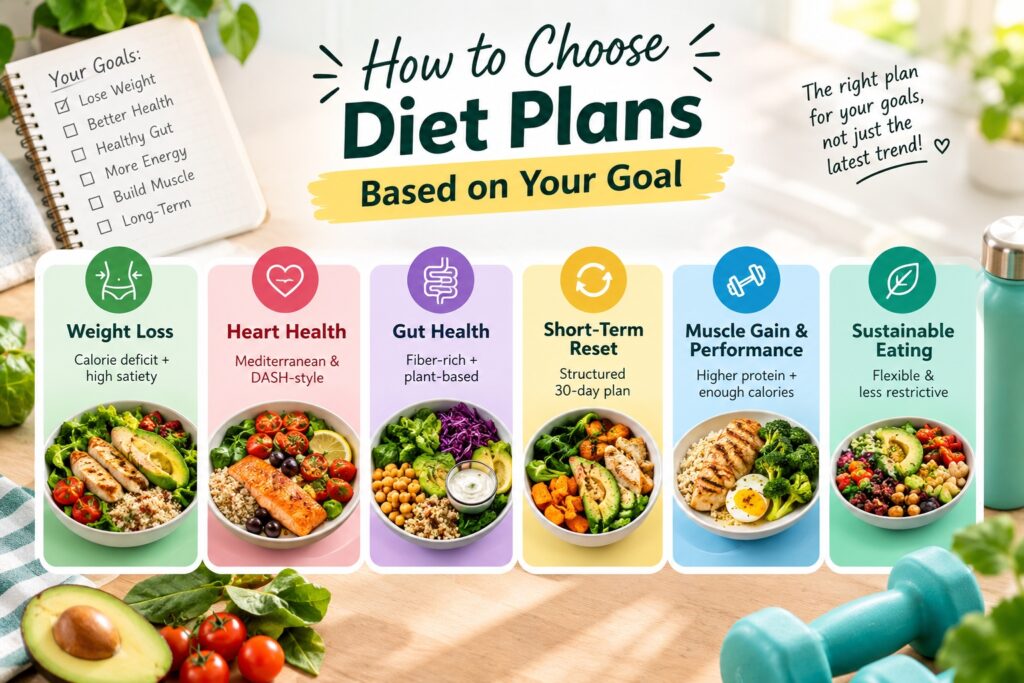
Most diet plans are built around one primary goal, even when they overlap in practice. Matching the plan to your actual goal, rather than picking whatever’s popular, is the single biggest factor in whether a plan sticks.
1. If Your Goal Is Weight Loss
Look at eating approaches built around a calorie deficit with high satiety, like low-carb approaches or the Volumetrics diet, which emphasizes high-volume, lower-calorie foods.
2. If Your Goal Is Heart Health
Mediterranean and DASH-style eating patterns have the strongest research behind them for cardiovascular markers like blood pressure and cholesterol.
3. If Your Goal Is Gut Health
Fiber-forward, plant-heavy eating patterns that include fermented foods tend to support digestive health better than restrictive, low-fiber approaches.
4. If Your Goal Is a Short-Term Reset
A structured 30-day Diet Plans like Whole30 can help identify food sensitivities and reset eating habits, though it isn’t meant as a long-term diet.
5. If Your Goal Is Muscle Gain or Athletic Performance
Higher-protein eating approaches with enough total calories to support training tend to outperform very low-calorie plans for this goal specifically.
6. If Your Goal Is General, Sustainable Eating
A flexible, less restrictive approach , like a flexitarian or Mediterranean-style pattern , tends to be easier to maintain for years rather than weeks.
2. Diet Plans for Weight Loss

1. The Core Principle: A Calorie Deficit
Nearly every effective weight-loss diet works by creating a calorie deficit, whether through lower-carb eating, portion control, or high-volume, high-fiber foods that naturally reduce intake.
2. Low-Carb and Ketogenic Approaches
Reducing carbohydrates, particularly refined carbs, tends to reduce hunger for many people, which can make a calorie deficit easier to sustain. The next section covers this in more depth.
3. The Volumetrics Approach
Built around low-calorie-density foods like vegetables, fruit, and broth-based soups, this approach lets you eat larger portions while still maintaining a deficit.
4. Intermittent Fasting as a Timing Tool
Rather than changing what you eat, intermittent fasting changes when you eat, which some people find easier than tracking every meal. The 16:8 method (eating within an 8-hour window) is the most commonly used version.
5. Why “Fastest” Isn’t Always “Best”
Diet plans promising rapid weight loss are often the hardest to sustain. A more gradual approach that fits your lifestyle tends to produce results that actually last.
6. Building Your Own Diet Plans Around a Deficit
Rather than following a rigid template, many people do better building diet meal plans around foods they already enjoy, adjusted for portion size and preparation method, than switching to an entirely unfamiliar way of eating overnight.
3. Low Carb Diet Meal Plan: A Closer Look
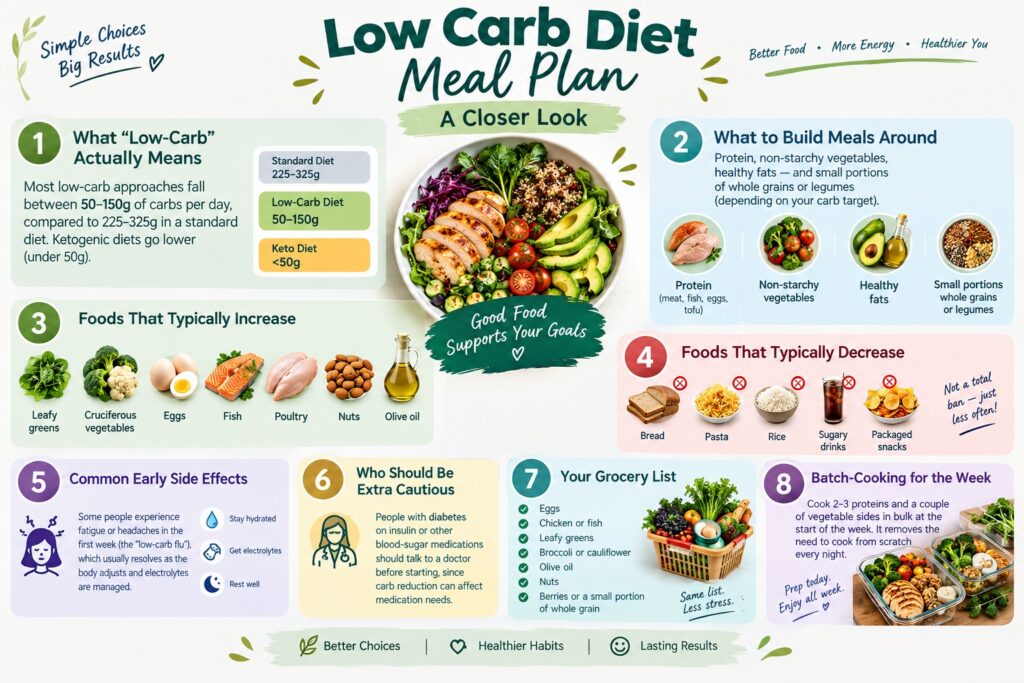
A Diet Plans is one of the more researched approaches for weight loss, and it’s flexible enough to adjust based on how strict you want to be.
1. What “Low-Carb” Actually Means
Most low-carb approaches fall between 50–150 grams of carbohydrates per day, compared to the 225–325 grams typical in a standard diet. Ketogenic diets go lower still, usually under 50 grams.
2. What to Build Meals Around
A typical low-carb approach centers on protein (meat, fish, eggs, tofu), non-starchy vegetables, and healthy fats, with smaller portions of whole grains or legumes depending on your specific carb target.
3. Foods That Typically Increase
Leafy greens, cruciferous vegetables, eggs, fish, poultry, nuts, and olive oil all feature heavily in most low carb diet meal planning approaches.
4. Foods That Typically Decrease
Bread, pasta, rice, sugary drinks, and most packaged snacks are the main targets for reduction, though a well-planned meal plan low carb diet approach doesn’t need to eliminate carbs entirely.
5. Common Early Side Effects
Some people experience fatigue or headaches in the first week, sometimes called the “low-carb flu,” which usually resolves as the body adjusts and electrolyte intake is managed.
6. Who Should Be Extra Cautious
People with diabetes on insulin or other blood-sugar medications should talk to a doctor before starting this style of eating, since carb reduction can significantly affect medication needs.
7. Building a Grocery List for Low Carb Diet Meal Planning
A short recurring list makes low carb diet meal planning easier to sustain week to week: eggs, chicken or fish, leafy greens, broccoli or cauliflower, olive oil, nuts, and a moderate-carb staple like berries or a small portion of whole grain. Keeping this list consistent means fewer decisions at the grocery store and a diet meal plan that’s easier to repeat.
8. Batch-Cooking for the Week
Cooking two or three proteins and a couple of vegetable sides in bulk at the start of the week is one of the more practical low carb diet meal planning strategies, since it removes the need to cook from scratch every night.
4. Diet Plans for Heart Health
1. The Mediterranean Diet Plans Pattern
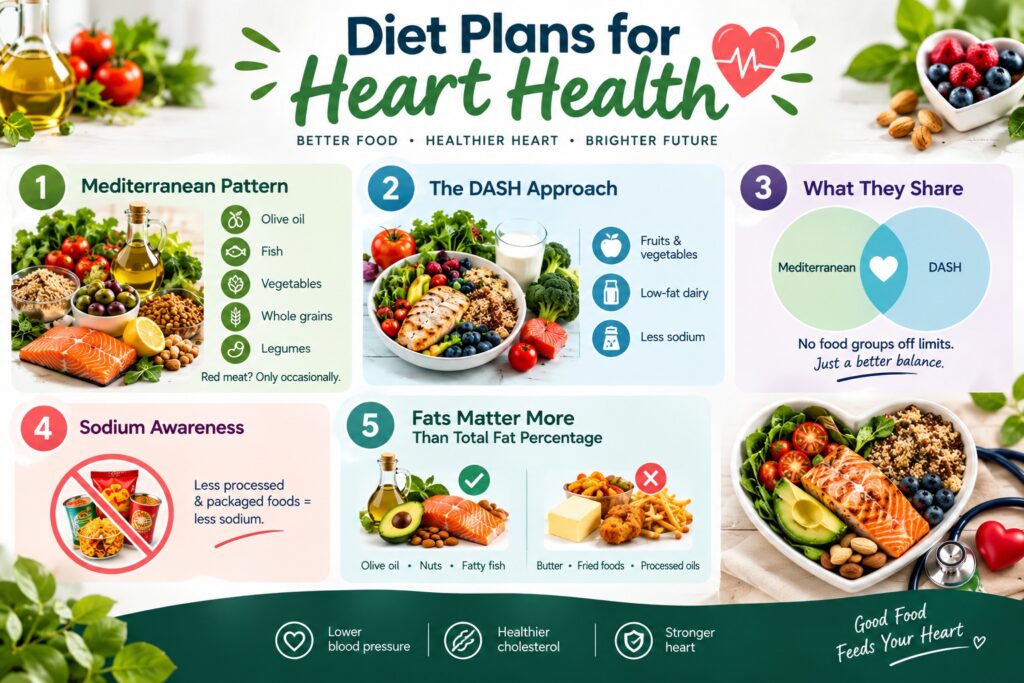
Built around olive oil, fish, vegetables, whole grains, and legumes, with red meat eaten only occasionally, this is one of the most researched eating patterns for cardiovascular health.
2. The DASH Approach
Originally designed to lower blood pressure, DASH emphasizes fruits, vegetables, low-fat dairy, and reduced sodium, and it overlaps heavily with Mediterranean-style eating.
3. What Both Approaches Share
Neither diet plan eliminates entire food groups. Both focus on shifting the overall balance of what you eat rather than strict restriction.
4. Sodium Awareness
Regardless of which heart-focused diet plan you follow, keeping processed and packaged foods to a minimum is usually the single biggest lever for reducing sodium intake.
5. Fats Matter More Than Total Fat Percentage
Both Mediterranean and DASH-style eating patterns emphasize the type of fat over the total amount , favoring olive oil, nuts, and fatty fish over butter, fried foods, and processed oils.
5. Diet Plans for Gut Health
1. Prioritize Fiber Diversity
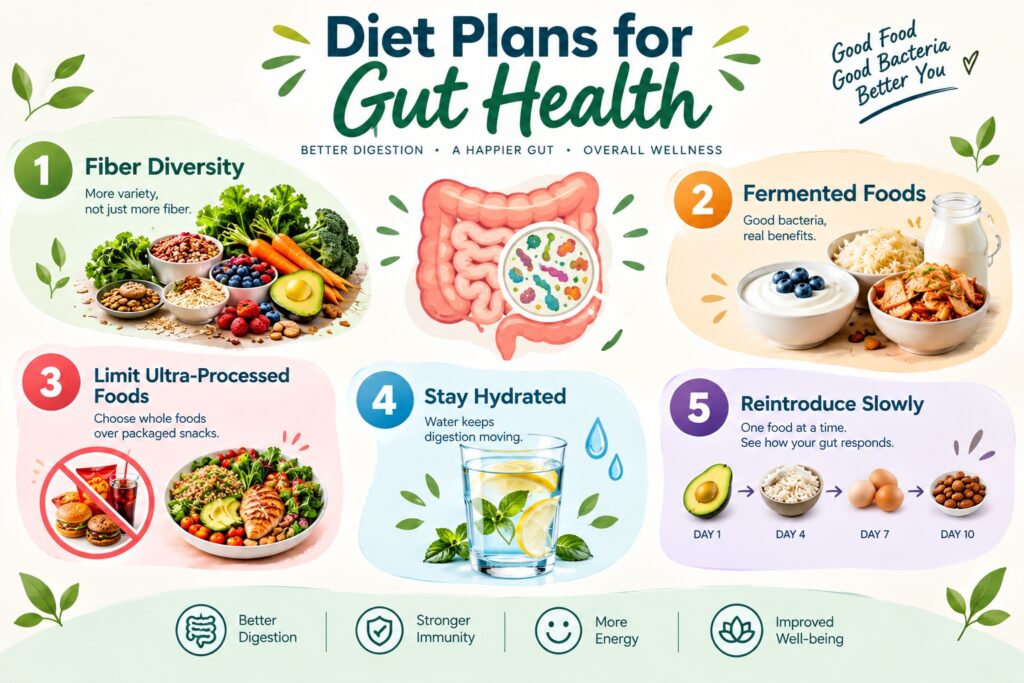
Eating a wide variety of plant foods , not just more fiber, but more different sources of it , tends to support a more diverse gut microbiome than a narrow, repetitive diet.
2. Include Fermented Foods
Yogurt, kefir, sauerkraut, and kimchi introduce beneficial bacteria that may support digestive health, though research on exact effects is still developing.
3. Limit Ultra-Processed Foods
Diets heavy in ultra-processed foods have been associated with less favorable gut bacteria diversity in observational research, making whole-food-focused eating patterns a reasonable default for gut health specifically.
4. Stay Hydrated
Adequate water intake supports digestion and helps fiber do its job, an easy factor to overlook when focusing mainly on food choices.
5. Reintroduce Slowly After Any Elimination Phase
If you’ve followed a restrictive plan like Whole30, reintroducing food groups one at a time, a few days apart, makes it easier to notice how your gut actually responds to each one.
6. Meal Plan for Whole30 Diet: A 30-Day Reset
1. What Whole30 Actually Restricts
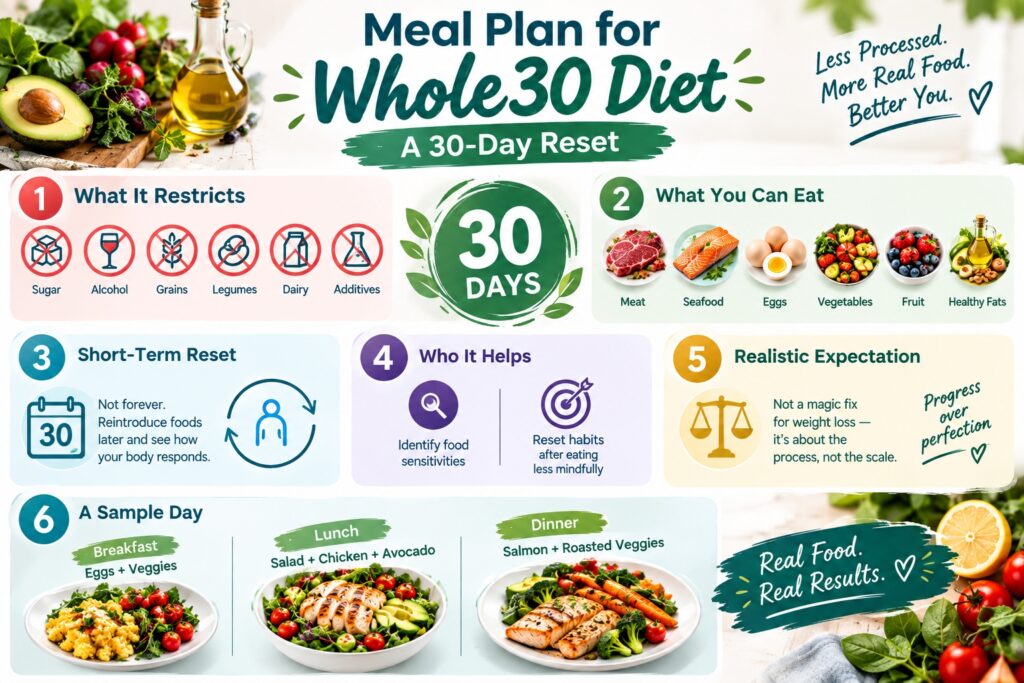
A meal plan for Whole30 diet excludes added sugar, alcohol, grains, legumes, dairy, and processed food additives for a strict 30-day period.
2. What You Can Eat
Meat, seafood, eggs, vegetables, fruit, and most fats are allowed, which gives more flexibility than it might initially sound like.
3. The Point Isn’t Permanent Restriction
A meal plan for Whole30 diet is designed as a short-term reset and elimination process, not a long-term eating pattern , most people reintroduce food groups methodically afterward to see how their body responds.
4. Who Tends to Benefit Most
People trying to identify a food sensitivity, or looking to reset habits after a period of less structured eating, tend to get the most out of this specific approach compared to other eating plans.
5. A Realistic Expectation
Whole30 isn’t inherently more effective for long-term weight management than other structured plans , its main value is the structured elimination-and-reintroduction process itself.
6. What a Sample Day Looks Like
A meal plan for Whole30 diet day might include eggs with vegetables for breakfast, a large salad with grilled chicken and avocado for lunch, and baked salmon with roasted vegetables for dinner , no dairy, grains, legumes, or added sugar anywhere in the day.
7. Diet Plans for Muscle Gain and Performance
1. Protein Comes First
Most performance-focused eating plans prioritize adequate protein , commonly cited ranges are around 0.7 — 1 gram per pound of body weight for people strength training regularly, though individual needs vary.
2. Enough Total Calories Matters
Unlike weight-loss approaches, muscle-focused plans usually require eating at maintenance or a slight surplus, since a large calorie deficit works against muscle growth.
3. Carbs as Fuel, Not the Enemy
Athletes and people training frequently often benefit from more carbohydrates than a general weight-loss plan would include, since carbs directly fuel training performance.
4. Timing Around Training
Eating protein and carbohydrates within a couple of hours of training is a common practice, though total daily intake matters more than precise timing for most people.
5. Recovery Nutrition Matters Too
Diet plans built for performance often underweight recovery days, but muscle repair happens on rest days too, so calorie and protein intake shouldn’t drop dramatically just because you didn’t train that day.
8. Plant-Based and Flexitarian Diet Plans
1. Vegetarian and Vegan Approaches
These eating patterns exclude some or all animal products, and when well-planned, research generally supports their nutritional adequacy for most adults.
2. The Flexitarian Middle Ground
A flexitarian approach is mostly plant-based with occasional meat, which some people find easier to sustain long-term than a fully restrictive plan.
3. Watching for Nutrient Gaps
Vitamin B12, iron, and omega-3s need more deliberate planning on a fully plant-based diet, since the main food sources are animal-based.
4. Where This Overlaps With Weight and Heart Goals
Plant-forward eating patterns often naturally overlap with the heart-health and gut-health goals covered above, since they tend to be higher in fiber and lower in saturated fat by default.
5. Protein Sources on a Plant-Based Plan
Legumes, tofu, tempeh, edamame, and a wider variety of grains together tend to cover protein needs on a well-planned vegetarian or vegan diet, though it usually takes more deliberate planning than an omnivorous diet meal plan built around meat as the default protein.
9. 7-Day Low Carb Diet Meal Plan
This sample meal plan low carb diet approach keeps carbs in a moderate 75–100 gram range, which is a reasonable starting point for most beginners rather than a stricter ketogenic target.
| Day | Breakfast | Lunch | Dinner |
| 1 | Scrambled eggs with spinach | Grilled chicken salad, olive oil dressing | Baked salmon, roasted broccoli |
| 2 | Greek yogurt with berries and nuts | Turkey lettuce wraps | Stir-fried tofu and vegetables |
| 3 | Vegetable omelet | Tuna salad over greens | Grilled steak, sautéed green beans |
| 4 | Cottage cheese with cucumber | Chicken and avocado bowl | Baked cod, roasted zucchini |
| 5 | Chia pudding with a few berries | Leftover grilled steak salad | Shrimp stir-fry, cauliflower rice |
| 6 | Egg muffins with vegetables | Turkey and cheese roll-ups with vegetables | Baked chicken thighs, roasted asparagus |
| 7 | Greek yogurt parfait | Salmon salad over greens | Grilled vegetables and a lean protein of choice |
Why This Structure Works
Repeating a handful of proteins and vegetables across the week keeps this style of eating simple to shop for, while rotating cooking methods (grilled, baked, stir-fried) keeps meals from feeling repetitive.
Adjusting the Plan
If 75–100 grams of carbs feels too high or too low for your specific goal, add or remove a small serving of fruit, starchy vegetable, or whole grain per day rather than overhauling the whole diet plans at once.
10. Personalizing Diet Meal Plans for Long-Term Use
1. Start From a Template, Then Adjust
Most diet plans, including the 7-day plan above, work best as a starting template rather than a rigid script , swap proteins and vegetables you don’t enjoy for ones you do, as long as the overall structure stays similar.
2. Track How You Feel, Not Just the Scale
Energy levels, sleep quality, and digestion often shift before weight does. Paying attention to these signals helps you judge whether a set of diet meal plans is actually working for you.
3. Build in Flexibility for Real Life
Diet meal plans that account for the occasional restaurant meal or social event are more sustainable than ones that assume perfect adherence every single day.
4. Revisit Your Goal Every Few Months
The eating approach that fits your goal at the start of a weight-loss phase might not be the right fit once you’re in a maintenance phase , revisiting Section 1 periodically helps you adjust as your goal shifts.
5. Don’t Be Afraid to Blend Approaches
Many people end up combining pieces of different diet plans , Mediterranean-style food choices with a moderate low carb diet meal plan, for example , rather than following one plan exactly as written.
11. Diet Plans and Meal Prep: A Practical Pairing
1. Why Batch-Cooking Makes Any Eating Plan Easier
Regardless of which approach you’re following, having proteins, grains, and vegetables prepped ahead of time removes the biggest daily obstacle: deciding what to cook when you’re already hungry and short on time.
2. Cook Once, Adjust Per Meal
A batch of grilled chicken, roasted vegetables, and a cooked grain can support several different goals at once in the same household , one person adds rice for a higher-carb meal while another skips it for a lower-carb one.
3. Prepping for a Diet Plans Specifically
Since a low carb diet meal plan relies heavily on protein and non-starchy vegetables, batch-roasting a large tray of vegetables and grilling several portions of protein at once covers most of a week’s meals in under an hour.
4. Prepping Around a Meal Plan for Whole30 Diet
Because a meal plan for Whole30 diet excludes so many convenience foods, batch-cooking becomes even more valuable , pre-chopped vegetables and pre-cooked proteins mean fewer moments where a quick, off-plan option looks more appealing.
5. Storage Basics That Apply Broadly
Cooked proteins and roasted vegetables generally last 4–5 days refrigerated regardless of which specific approach you’re following, which means one prep session can realistically cover most of a workweek.
6. Freezing for a Longer-Term Meal Plan Low Carb Diet Approach
Soups, stews, and cooked grains freeze well for up to three months, which is useful if you’re committed to a longer-term meal plan low carb diet approach and want to batch-cook less often overall.
12. Common Mistakes When Starting Diet Plans
1. Choosing Based on Trends, Not Goals
The most popular diet plans online aren’t always the best match for your specific goal , Section 1 above is designed to help you match plan to purpose instead.
2. Cutting Too Much, Too Fast
Dramatic restriction across multiple food groups at once is harder to sustain and more likely to lead to a rebound than a gradual approach.
3. Ignoring Protein
Many eating plans, especially lower-calorie ones, don’t include enough protein, which can affect satiety and muscle preservation during weight loss.
4. Not Planning for Social Situations
Diet plans that don’t account for eating out, travel, or social events are harder to sustain, since real life doesn’t pause for a meal plan.
5. Expecting Permanent Results From a Temporary Plan
A 30-day reset like Whole30 or a short-term low-carb phase can be useful, but the habits you build during it matter more long-term than the plan itself.
6. Not Adjusting Portions for Activity Level
The same low carb diet meal planning template that works for a sedentary day often falls short on a heavy training day. Adding a bit more food on higher-activity days, rather than sticking to identical portions every day, keeps energy levels more stable.
7. Treating One Bad Day as a Failed Plan
Missing a day or eating off-plan at a social event doesn’t undo weeks of progress. Getting back to your regular meal plan low carb diet routine (or whichever approach you’re following) at the next meal matters more than dwelling on one slip.
13. Key Takeaways
1. Match the Plan to the Goal
Weight loss, heart health, gut health, and performance each point toward somewhat different diet plans, even though there’s overlap between them.
2. Low-Carb Isn’t All-or-Nothing
A low carb diet meal plan can range from moderate (75–100g carbs) to strict (under 50g), and starting moderate is usually more sustainable.
3. Whole30 Is a Reset, Not a Lifestyle
A meal plan for Whole30 diet is designed to be temporary, with the real value in what you learn during reintroduction afterward.
4. Protein Matters Across Nearly Every Goal
Whether the goal is weight loss, muscle gain, or general health, most diet plans benefit from adequate protein.
5. Sustainability Beats Speed
The diet plans people stick with for years tend to outperform the ones that promise the fastest results but are hardest to maintain.
14. FAQ
1. Which diet plans are best for beginners?
Moderate, less restrictive approaches , like a Mediterranean-style pattern or a moderate low carb diet meal planning approach , tend to be easier for beginners than very strict plans, since there’s more room to adjust as you learn what works.
2. How long should I follow a low carb diet meal plan?
There’s no universal answer. Some people follow this approach indefinitely with adjustments, while others use it for a few months to reach a specific goal before shifting to a more moderate style of eating. A registered dietitian can help you decide what fits your situation.
3. Is a meal plan for Whole30 diet safe for everyone?
Not necessarily. Because it eliminates several food groups at once, a meal plan for Whole30 diet isn’t recommended for pregnant or breastfeeding people, or without medical guidance for anyone with a history of disordered eating.
4. Can I combine elements from different diet plans?
Yes. Many people build a personalized approach that borrows from a few diet plans , for example, Mediterranean-style food choices with a moderate carb target , rather than following one plan exactly as written.
5. Do I need to count calories on every diet plans?
Not always. Some diet plans, like Volumetrics or a well-structured low-carb approach, work indirectly through food choices that naturally support a calorie deficit rather than requiring manual tracking.
6. What’s the difference between diet meal plans and just “eating healthy”?
Diet meal plans provide a specific structure , target macros, food lists, or a day-by-day layout , while “eating healthy” is more of a general direction without that structure. Some people do better with the specificity of a plan; others do fine with general guidelines alone.
7. Can I follow a meal plan low carb diet approach and still eat out?
Yes. Most restaurants offer protein and vegetable-forward options that fit this style of eating reasonably well , grilled protein with a side salad or non-starchy vegetables instead of fries or rice is usually an easy swap.
8. How much weight can I expect to lose on a Diet Plans?
This varies widely by person, starting weight, and adherence, so there’s no reliable universal number. Early water-weight loss is common in the first one to two weeks and shouldn’t be mistaken for the ongoing rate of fat loss. A registered dietitian can give you a more realistic, personalized expectation based on your specific situation.
Conclusion: Find the Diet Plan That Fits Your Goal
There’s no single best diet plan for everyone. The right one depends on whether you’re prioritizing weight loss, heart health, gut health, athletic performance, or simply a more sustainable way of eating day to day. Start with the goal-matching framework in Section 1, try the 7-day plan in Section 9 if a low-carb approach fits your target, and adjust from there based on how your body responds.
For more structured meal planning ideas, browse our meal plan category and diet plans category on The Daily Crave.