Table of Contents
A 1500 calorie meal plan is one of the most commonly used starting points for weight loss, and you don’t need to know how to cook to follow one. This plan is built almost entirely around assembly rather than actual cooking , rotisserie chicken, pre-cooked grain pouches, canned salmon, and microwave vegetables , so a lack of kitchen skills isn’t a barrier.
Below is a full 7-day 1500 calorie meal plan with breakfast, lunch, dinner, and a snack for every day, plus adjustments if you want more protein or fewer carbs. Every meal keeps active cooking time under 10 minutes, most of it just reheating.
1. Why a 1500 Calorie Meal Plan Works for Weight Loss
1. A Moderate, Sustainable Deficit
For many sedentary to lightly active adults, 1500 calories creates a moderate deficit below maintenance, which tends to be easier to sustain than a more extreme calorie cut.
2. Enough Volume to Feel Satisfied
This low calorie diet plan isn’t about eating tiny portions , it’s built around high-volume, protein-rich foods that fill you up on fewer calories than processed alternatives.
3. A Realistic Expectation
Most people following a 1500 calorie meal plan see roughly 1–2 pounds of weight loss per week, though this varies by starting weight, activity level, and individual metabolism.
4. No Cooking Skills Required
Every meal in this plan uses pre-cooked, canned, or microwave-ready components, which removes the biggest barrier that stops most people from sticking with a new eating plan past week one.
2. How This No-Cook 1500 Calorie Meal Plan Is Structured
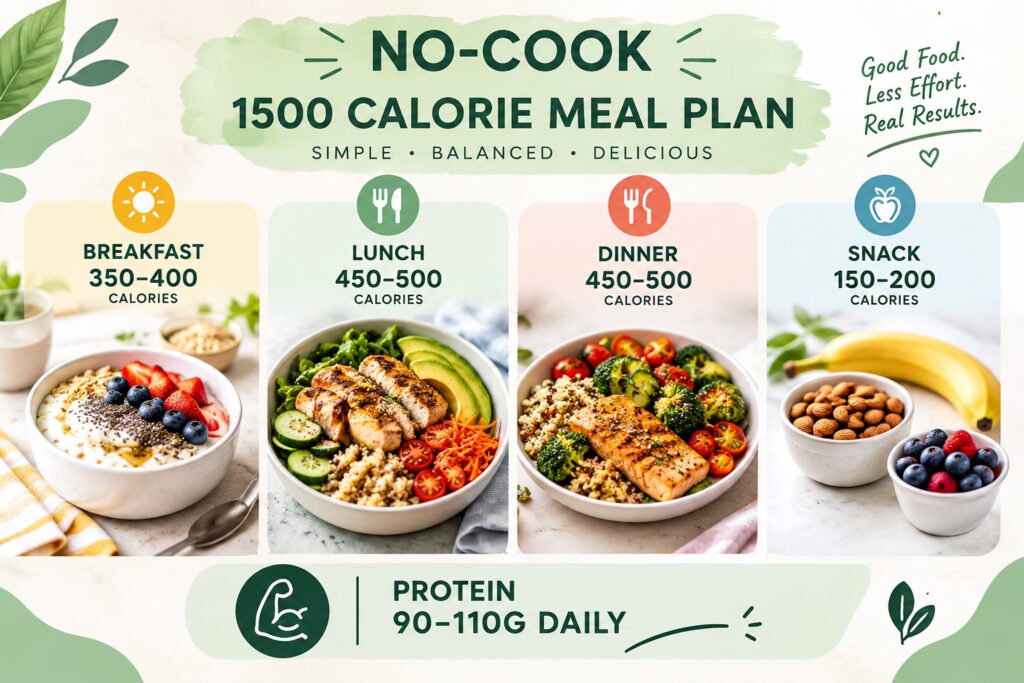
1. Roughly 350–400 Calories for Breakfast
Greek yogurt, oats, or eggs (microwaved, not stovetop) anchor most mornings on this simple 1500 calorie meal plan.
2. Roughly 450–500 Calories for Lunch and Dinner
Each main meal centers on a pre-cooked protein, a grain, and vegetables, assembled rather than cooked from scratch.
3. Roughly 150–200 Calories for a Snack
A single snack, placed wherever it fits your day, rounds out the daily total.
4. A Protein Target Around 90–110 Grams a Day
Keeping protein consistent across meals is one of the main reasons a 1500 calorie diet meal plan feels more satisfying than an equivalent number of calories from carbs or fat alone.
3. Grocery List for a No-Cook Week
1. Proteins
Rotisserie chicken, canned salmon or tuna, pre-cooked shrimp, Greek yogurt, eggs, string cheese, and a tub of hummus.
2. Grains
Microwave-ready brown rice or quinoa pouches, whole wheat wraps, and a box of instant oats.
3. Produce
Pre-washed salad greens, cherry tomatoes, cucumber, baby carrots, frozen broccoli or mixed vegetables, berries, and apples or bananas.
4. Pantry Staples
Olive oil, a bottled vinaigrette or two, canned chickpeas or black beans, almond butter, and a bag of granola.
4. The 7-Day 1500 Calorie Meal Plan
| Day | Breakfast (~350–400 cal) | Lunch (~450 cal) | Dinner (~450–500 cal) | Snack (~150–200 cal) |
| 1 | Greek yogurt, granola, berries | Rotisserie chicken, greens, chickpeas, vinaigrette | Canned salmon, microwave brown rice, steamed broccoli | Apple and string cheese |
| 2 | Overnight oats with almond butter | Turkey and hummus wrap with vegetables | Rotisserie chicken, microwave quinoa, roasted (frozen) vegetables | Greek yogurt with a drizzle of honey |
| 3 | Scrambled eggs (microwaved), toast | Tuna salad over greens with chickpeas | Pre-cooked shrimp, microwave rice, steamed green beans | Baby carrots and hummus |
| 4 | Cottage cheese with pineapple | Leftover rotisserie chicken salad | Canned salmon cakes (pre-made, reheated), mixed greens | Banana and almond butter |
| 5 | Greek yogurt parfait | Turkey and cheese roll-ups with vegetables | Rotisserie chicken, microwave brown rice, frozen stir-fry vegetables | Apple slices and string cheese |
| 6 | Overnight oats with berries | Tuna and white bean salad | Pre-cooked shrimp, microwave quinoa, steamed broccoli | Greek yogurt with granola |
| 7 | Egg and cheese microwave mug | Leftover turkey wrap | Clean-out-the-fridge bowl: whatever protein, grain, and vegetables remain | Baby carrots and hummus |
Why This Structure Works
Rotating between just three or four proteins (rotisserie chicken, canned salmon or tuna, shrimp, turkey) across the week keeps this 1500 calorie meal plan simple to shop for, while switching grains and vegetables keeps the meals from tasting repetitive.
Adjusting Portions
If 1500 calories leaves you hungry or feels like too much, adjust the grain and snack portions up or down by 100–150 calories rather than skipping a meal entirely.
5. A Full Day Breakdown: What 1500 Calories a Day Meal Plan Actually Looks Like
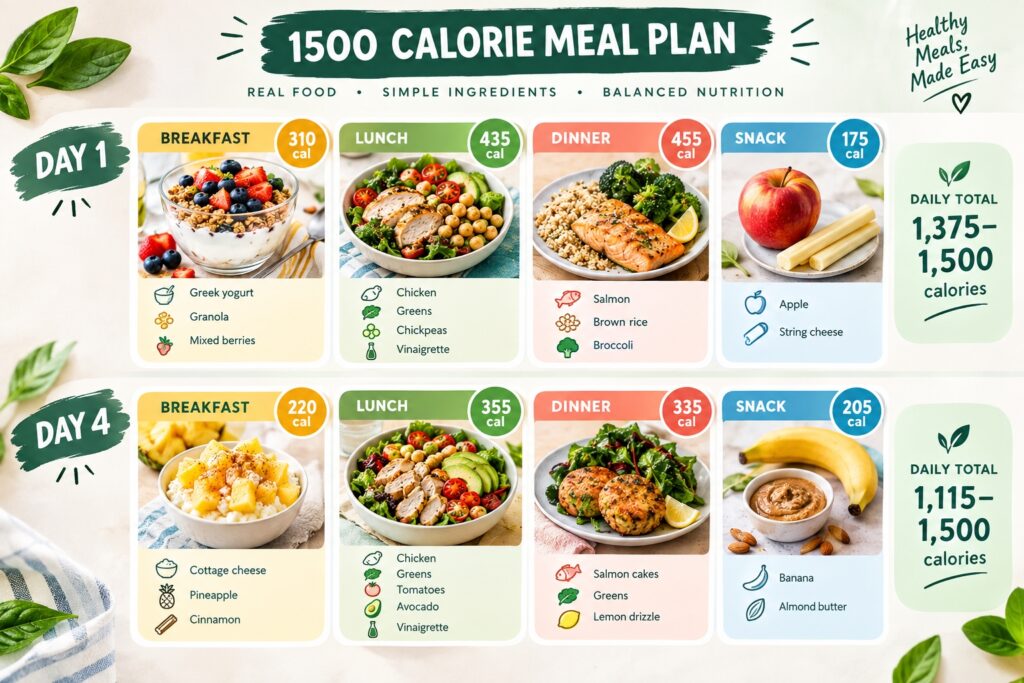
To show exactly how the numbers add up, here’s Day 1 broken down ingredient by ingredient.
Day 1, In Detail
Breakfast , Greek Yogurt Parfait
- Greek yogurt, plain, 1 cup , 150 calories
- Granola, ¼ cup , 120 calories
- Mixed berries, ½ cup , 40 calories
Total: approximately 310 calories
Lunch , Rotisserie Chicken and Chickpea Bowl
- Rotisserie chicken breast, 4 oz , 165 calories
- Mixed greens, 2 cups , 15 calories
- Chickpeas, canned, ½ cup , 135 calories
- Olive oil vinaigrette, 1 tbsp , 120 calories
Total: approximately 435 calories
Dinner , Salmon, Rice, and Broccoli
- Canned salmon, 4 oz , 180 calories
- Microwave brown rice pouch, 1 cup , 220 calories
- Steamed (frozen) broccoli, 1 cup , 55 calories
Total: approximately 455 calories
Snack , Apple and String Cheese
- Apple, medium , 95 calories
- String cheese, 1 piece , 80 calories
Total: approximately 175 calories
Daily Total: approximately 1,375–1,500 calories, depending on portion sizes and specific brands used.
This same ingredient-by-ingredient approach applies to every day in the table above , swap the protein, grain, and vegetables while keeping the portion sizes and rough calorie ranges consistent.
Day 4, In Detail
Breakfast , Cottage Cheese and Pineapple
- Cottage cheese, 1 cup , 180 calories
- Pineapple, fresh or canned in juice, ½ cup , 40 calories
- Cinnamon, a pinch , 0 calories
Total: approximately 220 calories
Lunch , Leftover Rotisserie Chicken Salad
- Rotisserie chicken breast, 4 oz , 165 calories
- Mixed greens, 2 cups , 15 calories
- Cherry tomatoes, ½ cup , 15 calories
- Avocado, ¼ , 60 calories
- Balsamic vinaigrette, 1 tbsp , 100 calories
Total: approximately 355 calories
Dinner , Pre-Made Salmon Cakes and Greens
- Pre-made salmon cakes (store-bought, reheated), 2 pieces , 280 calories
- Mixed greens, 2 cups , 15 calories
- Lemon-olive oil drizzle, 1 tsp , 40 calories
Total: approximately 335 calories
Snack , Banana and Almond Butter
- Banana, medium , 105 calories
- Almond butter, 1 tbsp , 100 calories
Total: approximately 205 calories
Daily Total: approximately 1,115–1,500 calories, with room to add a second snack or larger portions if the total runs on the lower end for your needs.
6. No-Cook Meal Prep Tips for This Plan
1. Buy Rotisserie Chicken Twice a Week
A single rotisserie chicken covers 3–4 servings, so buying two across the week keeps you from running out mid-week without needing to cook anything yourself.
2. Keep Microwave Grain Pouches on Hand
Pre-cooked rice and quinoa pouches take 90 seconds in the microwave, which is the closest this plan gets to “cooking” on most days.
3. Portion Snacks in Advance
Pre-portioning nuts, cheese, and cut vegetables into small containers when you get home from the grocery store saves time during the week and keeps portions consistent.
4. Keep a Backup Frozen Vegetable Bag
Frozen mixed vegetables microwave in under 5 minutes and don’t require any chopping, which is useful on days you’re short on fresh produce.
5. Batch-Portion Canned Proteins
Draining and portioning canned salmon or tuna into small containers at the start of the week means lunch or dinner assembly takes under two minutes.
7. Making This a High-Protein 1500 Calorie Meal Plan
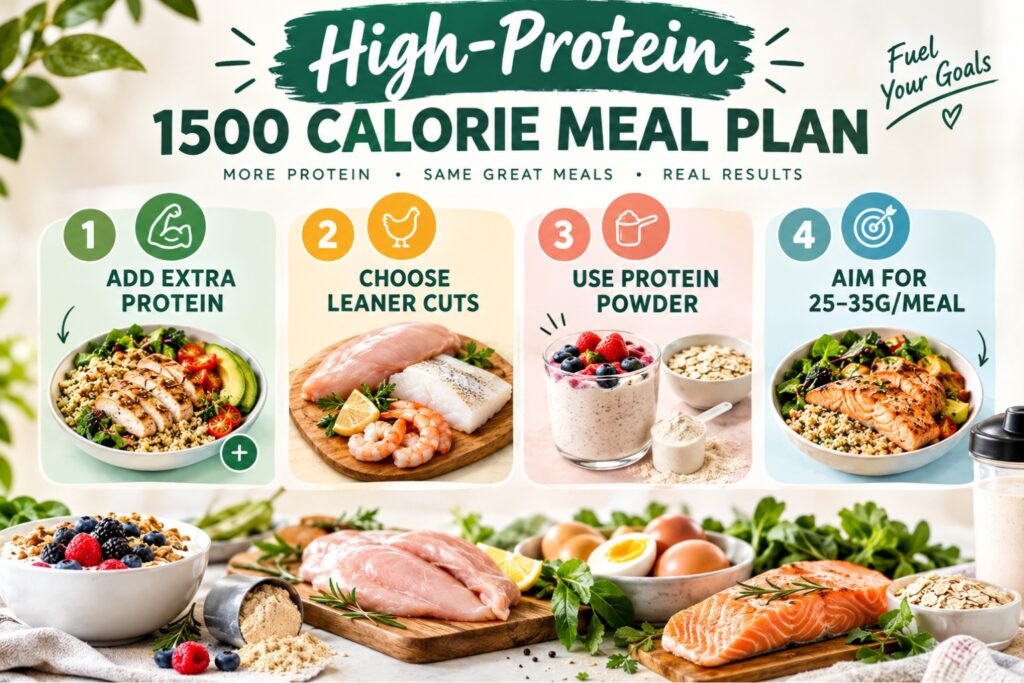
Turning this into a 1500 calorie meal plan high protein version doesn’t require a different set of recipes, just small adjustments to what’s already here.
1. Add an Extra 3–4 Ounces of Protein Per Meal
Building a 1500 calorie meal plan high protein version usually means adding another serving of chicken, fish, or Greek yogurt while trimming an equivalent amount of grain to keep the calorie total similar.
2. Choose Leaner Cuts
Chicken breast, white fish, shrimp, and egg whites let you add protein without adding as many calories as fattier cuts would, which matters most if you’re aiming for a 1500 calorie meal plan high protein target above 120 grams daily.
3. Use Protein Powder Strategically
A scoop of protein powder blended into Greek yogurt or oats is one of the easiest ways to boost the protein total of a 1500 calorie diet meal plan without adding much bulk or prep time.
4. Aim for 25–35 Grams Per Meal
Spreading protein evenly across breakfast, lunch, and dinner tends to support satiety better than loading most of it into one meal, and it’s the easiest way to hit a 1500 calorie meal plan high protein target consistently.
8. Making This a Low-Carb 1500 Calorie Meal Plan
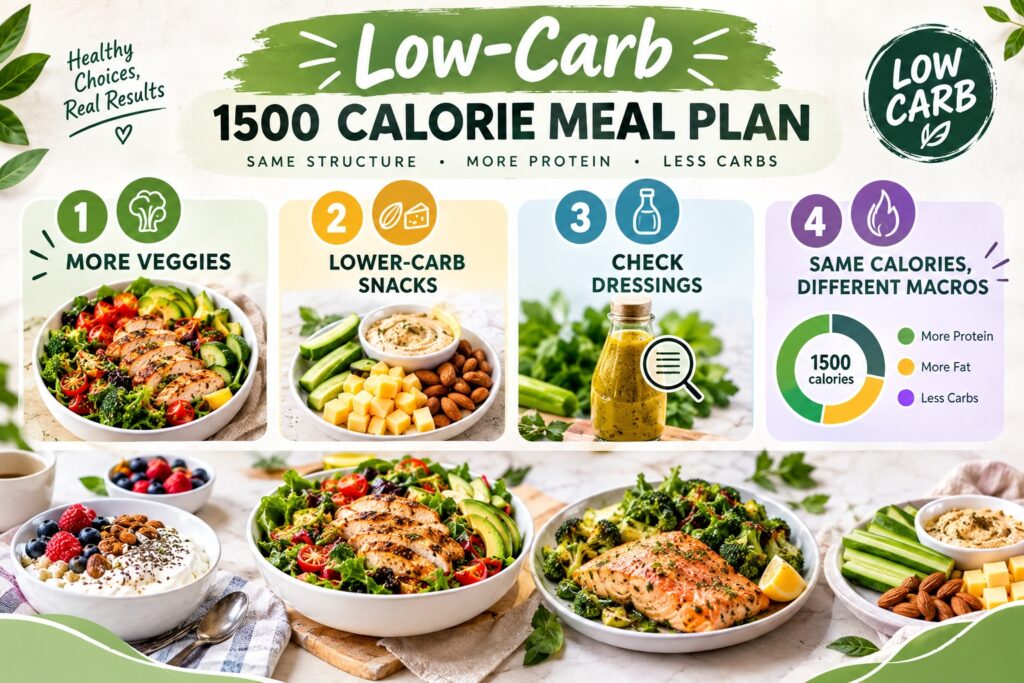
A 1500 calorie low carb diet meal plan version follows the same daily structure, with carbs shifted out in favor of extra protein and vegetables.
1. Swap Grains for Extra Vegetables
Replacing the rice or quinoa pouch with a larger portion of steamed or roasted vegetables turns this into a 1500 calorie low carb diet meal plan without changing the protein or overall structure.
2. Choose Lower-Carb Snacks
Cheese, nuts, and vegetables with hummus keep carbs lower than fruit-based snacks in a 1500 calorie low carb diet meal plan, if that’s your specific goal.
3. Watch Dressings and Sauces
Some bottled dressings carry more sugar than expected. Checking labels helps keep a 1500 calorie low carb diet meal plan closer to its intended carb target.
4. Expect a Similar Calorie Total, Different Macros
A low-carb adjustment to this 1500 calorie meal plan keeps the same overall calorie count , it simply shifts where those calories come from, toward more protein and fat and less carbohydrate.
9. Also Searched As: 1500 Calorie Meal Plan Terms
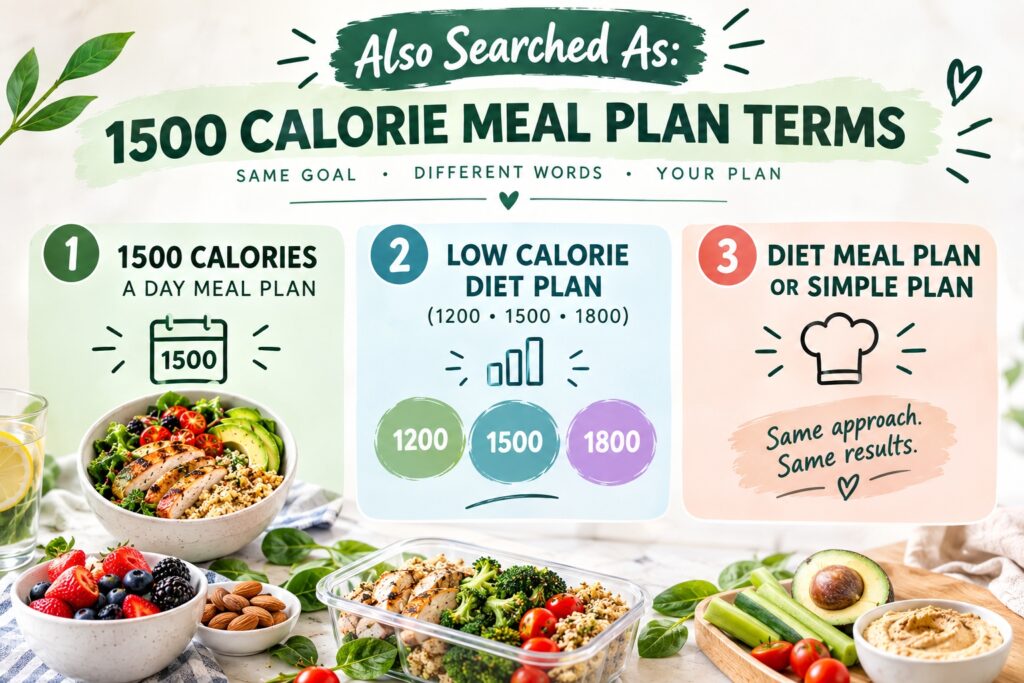
People land on this guide through a few different phrasings, so it’s worth addressing them directly.
1. 1500 Calories a Day Meal Plan
If you searched 1500 calories a day meal plan rather than 1500 calorie meal plan, you’re looking for the same thing , Section 4’s table and Section 5’s detailed breakdown both apply either way.
2. Low Calorie Diet Plan vs. This Specific Plan
A low calorie diet plan is the broader category; a 1500 calorie meal plan is one specific version of it. Other common low calorie diet plan targets include 1200 and 1800 calories, which follow a similar structure with different portion sizes.
3. 1500 Calorie Diet Meal Plan vs. Simple 1500 Calorie Meal Plan
These phrases describe the same approach. Whether you call it a 1500 calorie diet meal plan or a simple 1500 calorie meal plan, the no-cook, assembly-based format in this guide applies either way.
10. Common Mistakes to Avoid
1. Skipping Meals to “Save” Calories
Skipping breakfast or lunch to have a bigger dinner often backfires, since it tends to increase hunger and make overeating later in the day more likely.
2. Forgetting to Measure Portions at First
Eyeballing a “cup of rice” or a “4-ounce chicken breast” can be off by a wide margin. Measuring for the first week or two helps calibrate what an actual portion looks like.
3. Relying Too Heavily on Sauces and Dressings
A tablespoon of olive oil vinaigrette is around 120 calories. Doubling it without accounting for the extra calories can undo a chunk of the day’s deficit.
4. Treating 1500 Calories as a Fixed Number for Everyone
This meal plan is a starting template, not a universal number , individual calorie needs vary based on height, weight, age, and activity level.
5. Not Adjusting for Very Active Days
On days with more physical activity, this simple 1500 calorie meal plan may not provide enough fuel. Adding a bit more food on those days, rather than sticking to an identical total daily, keeps energy levels more stable.
11. Key Takeaways
1. No Cooking Skills Needed
Every meal in this 1500 calorie meal plan is built around pre-cooked, canned, or microwave-ready ingredients.
2. Three Main Meals Plus One Snack
Roughly 350–400 calories for breakfast, 450–500 for lunch and dinner, and 150–200 for a snack adds up to about 1500 calories a day.
3. Protein Is the Priority
Keeping protein around 90–110 grams daily, spread across meals, supports satiety better than the same calories from carbs or fat alone.
4. Easy to Adjust for High-Protein or Low-Carb Goals
Small swaps , more protein per meal, or vegetables instead of grains , adapt this base plan without starting over.
5. Rotation, Not Reinvention
Repeating three or four proteins across the week keeps grocery shopping and prep simple.
12. FAQ
1. Is 1500 calories enough for weight loss?
For many sedentary to lightly active adults, 1500 calories creates a moderate deficit that supports gradual weight loss. Needs vary by individual, so a registered dietitian can help confirm the right number for you.
2. How much weight can I expect to lose on a 1500 calorie meal plan?
Most people following a 1500 calorie meal plan see roughly 1–2 pounds per week, with faster initial loss in the first week or two often reflecting water weight rather than fat loss specifically.
3. Can I follow this plan if I don’t like to cook?
Yes , that’s the specific design of this plan. Every meal relies on pre-cooked, canned, or microwave-ready ingredients, so there’s no stovetop cooking required at any point in the week.
4. Is this 1500 calorie meal plan safe for everyone?
Not necessarily. People who are pregnant, breastfeeding, managing a health condition, or taking certain medications should talk to a doctor before starting any calorie-restricted eating plan, since individual needs vary significantly.
5. Can I make this plan vegetarian?
Yes. Swapping rotisserie chicken, canned salmon, tuna, and shrimp for eggs, Greek yogurt, tofu, and canned beans keeps the same calorie and protein targets while removing meat and fish entirely.
6. What’s the difference between a low calorie diet plan and a 1500 calorie meal plan specifically?
A low calorie diet plan is the general category, covering any reduced-calorie approach. A 1500 calorie meal plan is one specific calorie target within that category, chosen here because it fits a moderate deficit for many sedentary to lightly active adults.
7. Do I need to track macros on a simple 1500 calorie meal plan like this one?
Not necessarily. The meal structure in Section 4 already keeps protein, carbs, and fat in a reasonable range without manual tracking, though logging meals for a week or two can help you learn portion sizes more accurately.
8. Is this 1500 calories a day meal plan the same every week?
No , treat it as a rotating template rather than a fixed script. Once you’re comfortable with the structure, swapping in different proteins, grains, or vegetables from the grocery list in Section 3 keeps a 1500 calorie diet meal plan from feeling repetitive over multiple weeks.
Conclusion: Start Simple, Adjust as You Go
A 1500 calorie meal plan doesn’t need to involve elaborate cooking or complicated recipes to work. Pick a few days from the plan above, keep the grocery list on hand, and adjust portions or swap proteins as you learn what keeps you satisfied through the day.
For a broader look at how different eating approaches match different goals, see our diet plans for every goal guide, and browse our meal plan category and diet plans category on The Daily Crave for more.