Table of Contents
The 5 & 2 diet has become one of the most popular approaches to intermittent fasting , and it’s easy to understand why. Instead of restricting food every single day, you eat normally five days a week and significantly reduce calories on just two non-consecutive days. For many people, that trade-off feels genuinely manageable. Five days of freedom in exchange for two days of mindful eating is a structure that tends to stick.
But most beginners hit the same wall: they understand the concept, they’re willing to try it, and then they stare at their fasting days completely unsure what to actually eat. Five hundred calories sounds both small and oddly specific. What foods work best? How do you spread them across the day? And how do you get through a fasting day without feeling miserable?
That’s exactly what this guide answers. You’ll find a complete 5 and 2 diet plan for the week , including practical meal ideas for your fasting days, tips for non-fasting days, and the mindset shifts that make fasting days feel less daunting over time.
1. . How the 5 & 2 Diet Actually Works
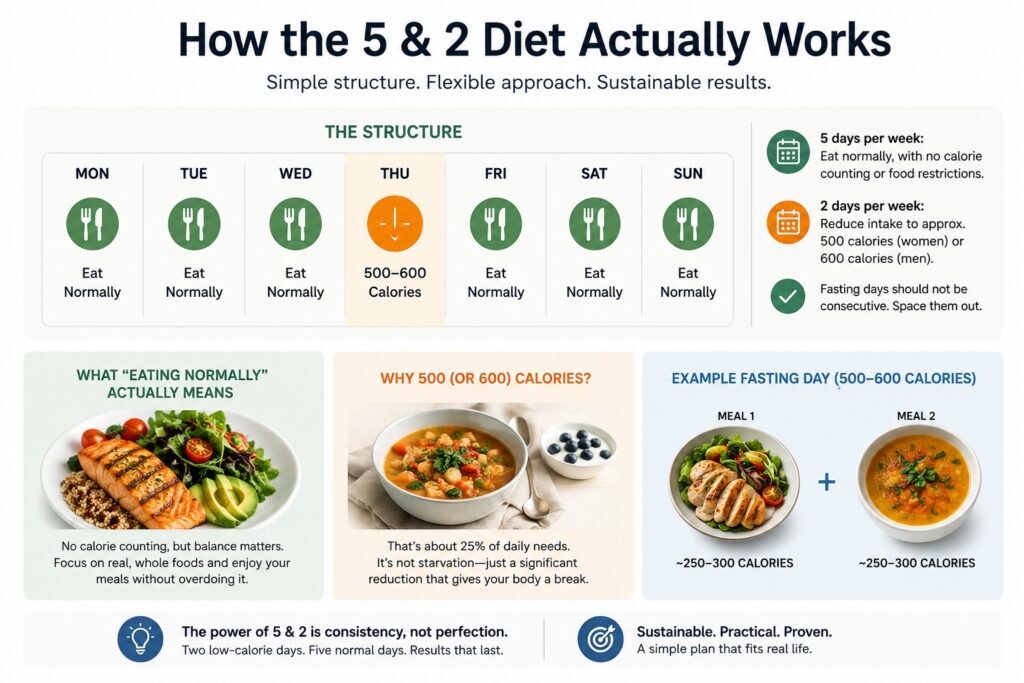
The 5 & 2 diet , also written as the 5:2 diet , was popularized by Dr. Michael Mosley in his book The Fast Diet. The structure is simple:
- 5 days per week: Eat normally, with no calorie counting or food restrictions
- 2 days per week: Reduce intake to approximately 500 calories (women) or 600 calories (men)
The two fasting days should not be consecutive. Monday and Thursday is a common pairing. Tuesday and Friday work well for others. The key is spacing them so you always have a normal eating day between them.
What “Eating Normally” Actually Means
Why 500 (or 600) Calories?
That number represents roughly 25% of an average person’s daily energy needs. The goal isn’t starvation , it’s a significant reduction. At 500 calories, you can still eat two small, satisfying meals that include protein, fiber, and real food. What you’re cutting is everything else: snacks, high-calorie additions, and the incidental calories that most of us don’t register during a normal day.
2. The Best Foods for Fasting Days
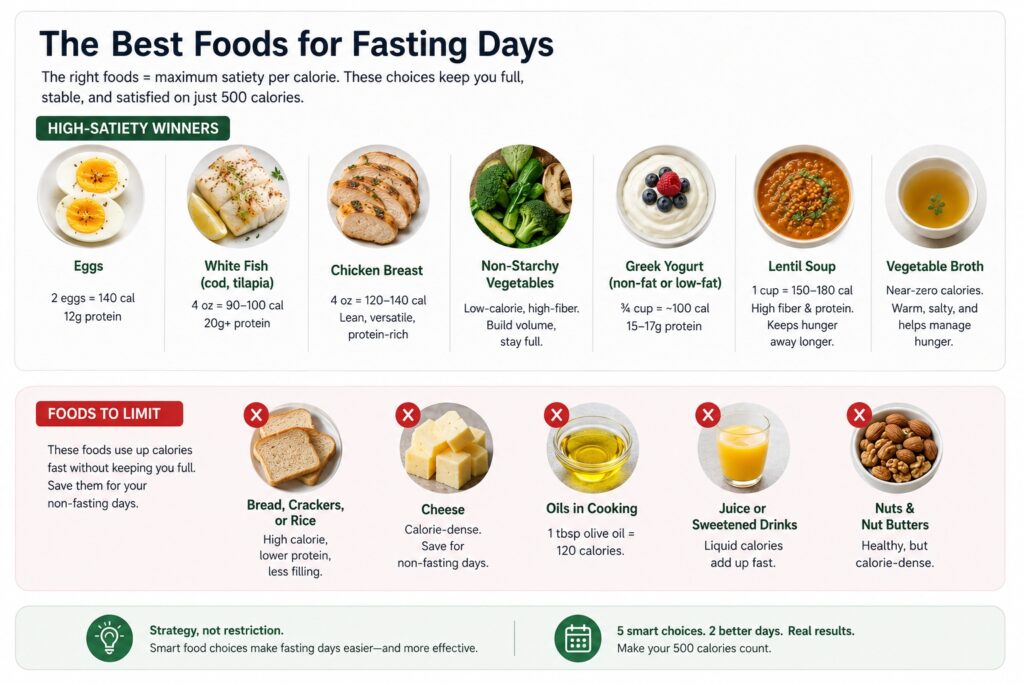
Choosing the right foods on fasting days makes an enormous difference in how the day feels. The goal is maximum satiety per calorie , foods that fill you up and keep blood sugar stable without using up your 500-calorie budget too quickly.
High-Satiety Fasting Day Winners
Eggs: One of the most filling foods per calorie. Two eggs provide approximately 140 calories and 12g of protein. Scrambled, poached, or hard-boiled , all work well on fasting days.
White fish (cod, tilapia, haddock): Very low in calories, high in protein. A 4 oz portion of baked cod is approximately 90–100 calories with 20g+ of protein. Filling and quick to prepare.
Chicken breast: Lean, protein-dense, and versatile. Around 120–140 calories per 4 oz serving. Works well grilled, baked, or poached.
Non-starchy vegetables: The biggest volume play on fasting days. Broccoli, cauliflower, zucchini, spinach, kale, mushrooms, cucumber, asparagus , all extremely low in calories and high in fiber. Use these to build volume into your meals without spending calorie budget.
Greek yogurt (non-fat or low-fat): Approximately 100 calories per ¾ cup with 15–17g of protein. One of the best single fasting day foods because it handles breakfast or a snack role effectively.
Lentil soup: Slightly higher in calories than the proteins above, but very high in fiber and protein. A 1-cup serving is approximately 150–180 calories and keeps hunger at bay for hours. Good for the one larger meal of a fasting day.
Vegetable broth: Near-zero calories. Warm, slightly salty, and genuinely helpful for managing hunger during the fasting window. Many people find a cup of broth in the late afternoon is the difference between getting through a fasting day and abandoning it.
Foods to Limit on Fasting Days
On a 5 & 2 diet meal plan fasting day, these foods eat up calorie budget too quickly for the satiety they provide:
- Bread, crackers, or rice (high calorie, lower protein, less filling)
- Cheese (calorie-dense , save for non-fasting days)
- Oils in cooking (1 tbsp olive oil = 120 calories)
- Fruit juice or sweetened drinks
- Nuts and nut butters (healthy, but calorie-dense)
This doesn’t mean these foods are bad , they’re perfectly fine on your five regular days. On fasting days, they’re simply not the most strategic use of 500 calories.
3. How to Structure a Fasting Day
One of the most common questions about the 5 & 2 diet is how to spread 500 calories across the day. There are two main approaches, and different people find different ones easier.
Option A: Two Small Meals
Most popular. Eat one small meal mid-morning (around 150–200 calories) and one larger meal in the evening (around 300–350 calories). No snacking between them , just water, black coffee, or herbal tea.
Why it works: The gap between the two meals creates an extended period of low insulin and mild fat-burning. The evening meal gives you something to look forward to throughout the day.
Option B: One Larger Meal
Some people find it easier to eat nothing until dinner and then have one 500-calorie meal. This is essentially a 24-hour fast with a single meal at the end. It’s harder psychologically for most beginners but suits people who aren’t hungry in the morning and find grazing harder than abstaining.
Option C: Spread Across Three Small Portions
Three portions of approximately 165 calories each , breakfast, lunch, dinner. Works well for people who find long gaps between eating difficult. The trade-off is that no single portion feels very substantial at 165 calories.
For most beginners, Option A (two small meals) is the most manageable starting point.
4. The 5 & 2 Diet Meal Plan: Full Week Breakdown
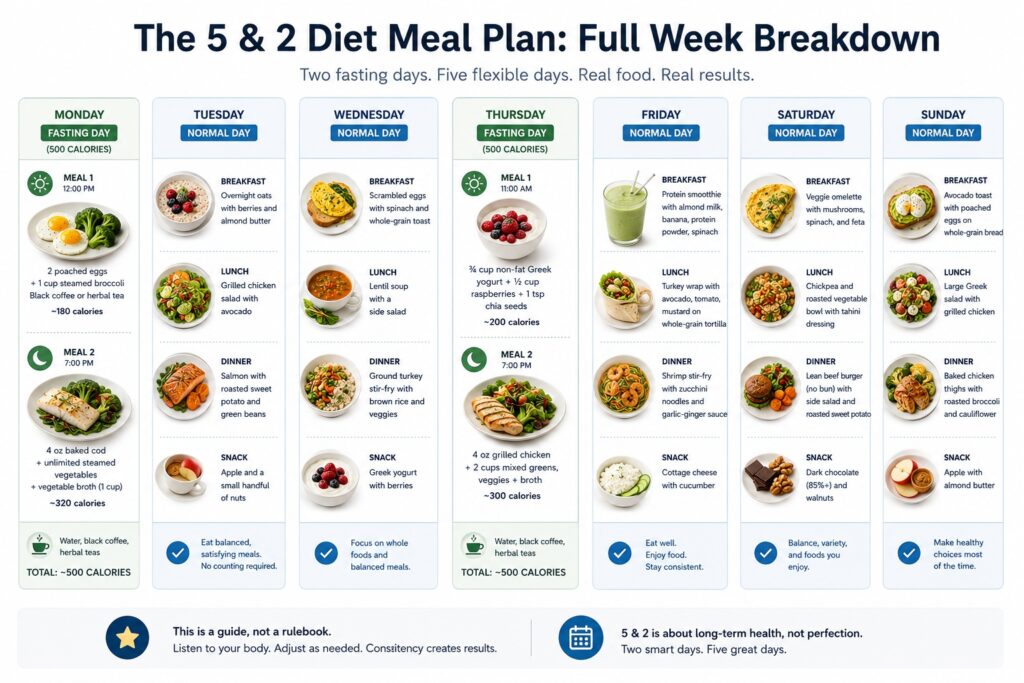
Here’s a practical 5 2 diet meal plan for a full week , fasting days are Monday and Thursday. All other days are normal eating days with no calorie restriction.
Monday , Fasting Day (500 calories)
Meal 1 (12:00 PM , ~180 calories) 2 poached eggs + 1 cup steamed broccoli + black coffee or herbal tea
Meal 2 (7:00 PM , ~320 calories) 4 oz baked cod + unlimited steamed vegetables (zucchini, spinach, asparagus) + lemon juice + fresh herbs + vegetable broth (1 cup)
Throughout the day: Water, black coffee, herbal teas as needed
Total: ~500 calories
Tuesday , Normal Day
Eat balanced, satisfying meals. No counting required. Focus on whole foods:
- Breakfast: Overnight oats with berries and a tbsp of almond butter
- Lunch: Grilled chicken salad with avocado and olive oil dressing
- Dinner: Salmon fillet with roasted sweet potato and green beans
- Snack: Apple and a small handful of nuts
Wednesday , Normal Day
- Breakfast: Scrambled eggs with spinach and whole-grain toast
- Lunch: Lentil soup with a side salad
- Dinner: Ground turkey stir-fry with brown rice and mixed vegetables
- Snack: Greek yogurt with berries
Thursday , Fasting Day (500 calories)
Meal 1 (11:00 AM , ~200 calories) ¾ cup non-fat Greek yogurt + ½ cup raspberries + 1 tsp chia seeds
Meal 2 (7:00 PM , ~300 calories) 4 oz grilled chicken breast + 2 cups mixed greens + cucumber + cherry tomatoes + 1 tbsp balsamic vinegar (no oil) + vegetable broth
Throughout the day: Water, black coffee, herbal teas
Total: ~500 calories
Friday , Normal Day
- Breakfast: Protein smoothie with almond milk, banana, protein powder, and spinach
- Lunch: Turkey wrap with avocado, tomato, and mustard on whole-grain tortilla
- Dinner: Shrimp stir-fry with zucchini noodles and garlic-ginger sauce
- Snack: Cottage cheese with cucumber
Saturday , Normal Day
- Breakfast: Veggie omelette with mushrooms, spinach, and feta
- Lunch: Chickpea and roasted vegetable bowl with tahini dressing
- Dinner: Lean beef burger (no bun) with side salad and roasted sweet potato
- Snack: Dark chocolate (85%+) and walnuts
Sunday , Normal Day
- Breakfast: Avocado toast with poached eggs on whole-grain bread
- Lunch: Large Greek salad with grilled chicken
- Dinner: Baked chicken thighs with roasted broccoli and cauliflower
- Snack: Apple with almond butter
This meal plan for intermittent fasting on the 5:2 structure gives you two genuinely manageable fasting days , with food, not just willpower , surrounded by five days of flexible, balanced eating.
5. Making Fasting Days Easier: Practical Tips
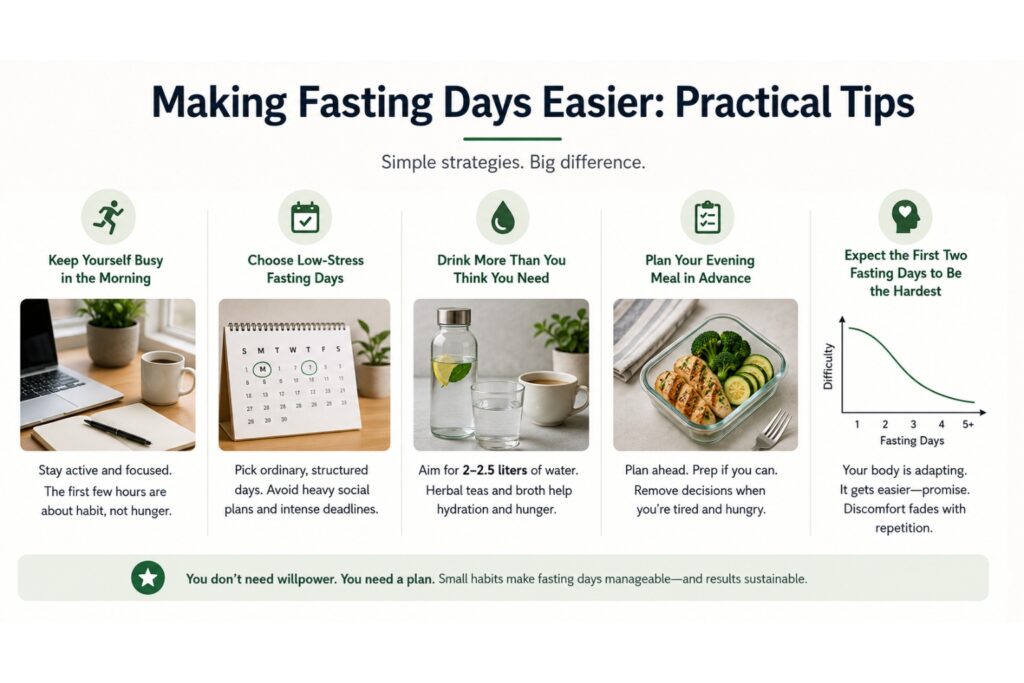
Even with a clear 5 & 2 diet plan in hand, fasting days have their challenges. These strategies help:
Keep Yourself Busy in the Morning
The first few hours of a fasting day are often the hardest , not because you’re genuinely hungry, but because you’re used to eating. Working, exercising lightly, or staying occupied delays the point where food becomes the focus of your attention.
Choose Low-Stress Fasting Days
Don’t put fasting days on days with heavy social obligations, intense work deadlines, or planned physical activity that requires high energy output. Monday and Thursday work for many people precisely because they tend to be ordinary, structured workdays.
Drink More Than You Think You Need
Mild dehydration is easy to confuse with hunger. Aim for at least 2–2.5 liters of water on fasting days. Adding herbal teas and vegetable broth adds variety and warmth without adding meaningful calories.
Plan Your Evening Meal in Advance
Knowing exactly what you’re eating , and having it ready , removes a significant decision burden on fasting days. When you’re hungry and tired at 6pm, you don’t want to be calculating calories. Prep your fasting day dinner the night before or that morning.
Expect the First Two Fasting Days to Be the Hardest
Your body is adapting. The hunger you feel on your first fasting day is partly physiological and partly habit. By the third or fourth fasting day, most people find it noticeably easier. The discomfort is front-loaded , it diminishes with repetition.
6. Who the 5 & 2 Diet May Suit (and Who Should Be Cautious)
The 5 & 2 diet may work particularly well for people who:
- Dislike daily calorie counting but can handle structured restriction two days per week
- Have variable schedules and prefer flexibility on most days
- Have previously found daily diets unsustainable long-term
- Want a gentler introduction to intermittent fasting before exploring more intensive approaches
Who Should Proceed Carefully or Avoid It
People who may want to consult their doctor before trying any form of fasting include those with type 1 or type 2 diabetes (particularly those on insulin or blood sugar medication), a history of eating disorders, pregnancy or breastfeeding, very low body weight, or conditions requiring consistent medication with food.
Research on the 5 & 2 Diet plan is generally positive for weight loss, blood sugar management, and cholesterol in healthy adults , but most studies are relatively short-term, and individual responses vary. It isn’t a guaranteed solution, and it doesn’t suit everyone.
Key Takeaways
- The 5 & 2 diet involves eating normally five days per week and limiting intake to approximately 500 calories on two non-consecutive fasting days
- Fasting days work best when built around high-protein, high-fiber, low-calorie foods: eggs, white fish, chicken, Greek yogurt, non-starchy vegetables, and broth
- A two-meal structure (one mid-morning, one evening) is the most manageable approach for most beginners
- The full 5 & 2 diet meal plan in this guide gives you a practical, complete week of eating , fasting days and normal days included
- Normal eating days don’t require calorie counting, but consistently balanced whole-food meals improve overall results
- Fasting days become progressively easier with repetition , the first two are typically the hardest
- This approach to intermittent fasting meal plan structure may suit people who find daily restriction difficult but can commit to two structured days per week
- Always consult a healthcare provider before starting any fasting protocol if you have underlying health conditions
Conclusion: The 5 & 2 Diet Works When You Plan the Fasting Days
The 5 & 2 diet is one of the more flexible and psychologically manageable approaches to intermittent fasting , and the research on its effectiveness for weight loss and metabolic health in healthy adults is genuinely encouraging. But like any structured eating approach, it works best when you go in with a plan rather than improvising.
Use the 5 & 2 diet meal plan in this guide as your starting template. Adjust the proteins and vegetables to your preferences. Keep your fasting day structure consistent. And give it at least four fasting days before evaluating whether it’s working for you.
For a broader look at every intermittent fasting approach , including 16:8, OMAD, alternate day fasting, and more , visit the full guide: Intermittent Fasting Meal Plan: The Complete Beginner’s Guide
Explore more free meal plans, diet guides, and beginner-friendly nutrition content at thedailycrave.online , practical, honest advice for real people.
Frequently Asked Questions (FAQ)
Q1: What can I eat on fasting days of the 5 & 2 diet?
On fasting days of the 5 & 2 diet, focus on high-protein, low-calorie foods that provide the most satiety within a 500-calorie budget: poached or boiled eggs, grilled chicken breast, white fish like cod or tilapia, non-fat Greek yogurt, and unlimited non-starchy vegetables (broccoli, spinach, zucchini, asparagus). Water, black coffee, and herbal teas are encouraged throughout the day.
Q2: Can I eat normally on non-fasting days of the 5 and 2 diet plan?
Yes , the five regular days of the 5 & 2 Diet plan don’t require calorie counting. That said, consistently overeating on regular days can limit or offset the results from fasting days. Aiming for balanced, whole-food meals most of the time tends to produce better outcomes than treating the five regular days as unlimited indulgence days.
Q3: How quickly might I see results on a 5 & 2 diet meal plan?
Results vary significantly between individuals and depend on starting point, how normal eating days are managed, activity level, and individual metabolism. Some people notice weight loss within the first 2–3 weeks of a 5 2 diet meal plan; others take longer. Research suggests that the 5:2 approach may produce results comparable to daily calorie restriction over longer time periods, though it isn’t a guaranteed outcome for everyone.
Q4: Does the 5 & 2 diet work for long-term weight loss?
The 5 & 2 diet has shown promising results in studies for medium-term weight loss and metabolic improvements. Whether it works long-term depends largely on whether the approach is sustainable for the individual. For people who find it easier to follow than daily restriction, it may support long-term maintenance. As with any diet, individual results and adherence vary considerably.
Q5: Is the 5 & 2 diet the same as a meal plan for intermittent fasting like 16:8?
They’re both forms of intermittent fasting, but structured differently. A meal plan for intermittent fasting using 16:8 restricts eating to an 8-hour window every single day. The 5 & 2 diet uses full fasting days twice a week rather than daily time restrictions. Both can support weight loss; the right choice depends on which structure fits your lifestyle and preferences better.