Table of Contents
If you’ve been searching for the best intermittent fasting meal plan , one that explains every method clearly, tells you exactly what to eat, and actually fits real life , this is the only guide you need. Intermittent fasting is not a diet in the traditional sense. It doesn’t tell you what to eat. It tells you when to eat. And that single shift has helped millions of people lose weight, improve metabolic health, reduce hunger, and simplify their relationship with food.
But here’s the problem most beginners face: there are at least 6–8 popular methods of intermittent fasting, each with different windows, different rules, and different ideal intermittent fasting meal plans. Without a clear guide that covers all of them in one place, it’s easy to pick the wrong method, follow it incorrectly, and give up before the results arrive.
This pillar guide solves that. You’ll find every major intermittent fasting meal plan method explained clearly, a complete beginner intermittent fasting meal plan for the most popular approach, free intermittent fasting plans for multiple methods, and honest information about results, side effects, and who each method suits best. Everything you need to start , and succeed , is right here.
1. What Is Intermittent Fasting , And Why Does It Work?
Intermittent fasting (IF) is a structured eating pattern that alternates between periods of eating and periods of fasting. Unlike traditional diets that focus on food restriction, an intermittent fasting meal plan focuses on time restriction , compressing your eating into specific windows and fasting for the remaining hours.
The core mechanism is straightforward: when you don’t eat, insulin levels drop, glycogen stores eventually deplete, and your body shifts to burning stored fat for energy. This fat-burning window , combined with the natural calorie reduction that comes from eating fewer hours , is what produces the weight loss results IF is known for.
Why Intermittent Fasting Works Better Than Simple Calorie Restriction
Traditional diets require you to count, measure, and restrict constantly. An intermittent fasting meal plan simplifies the entire approach to one question: Is it my eating window right now? This binary structure removes decision fatigue, reduces snacking opportunities, and for most people, naturally produces a calorie deficit without obsessive tracking.
Beyond weight loss, IF activates several powerful physiological processes:
- Autophagy , cellular “clean-up” that removes damaged cell components (triggered after 14–16+ hours of fasting)
- Human Growth Hormone (HGH) increase , promotes fat burning and muscle preservation
- Improved insulin sensitivity , reduces fat storage and lowers risk of type 2 diabetes
- Reduced inflammation , linked to improved longevity markers in emerging research
- Brain health support , ketones produced during fasting support cognitive function
These benefits accumulate over weeks and months of consistent meal plans for intermittent fasting , making IF one of the most evidence-backed approaches to both weight loss and overall metabolic health.
2. The 6 Main Intermittent Fasting Methods , Which Is Right for You?
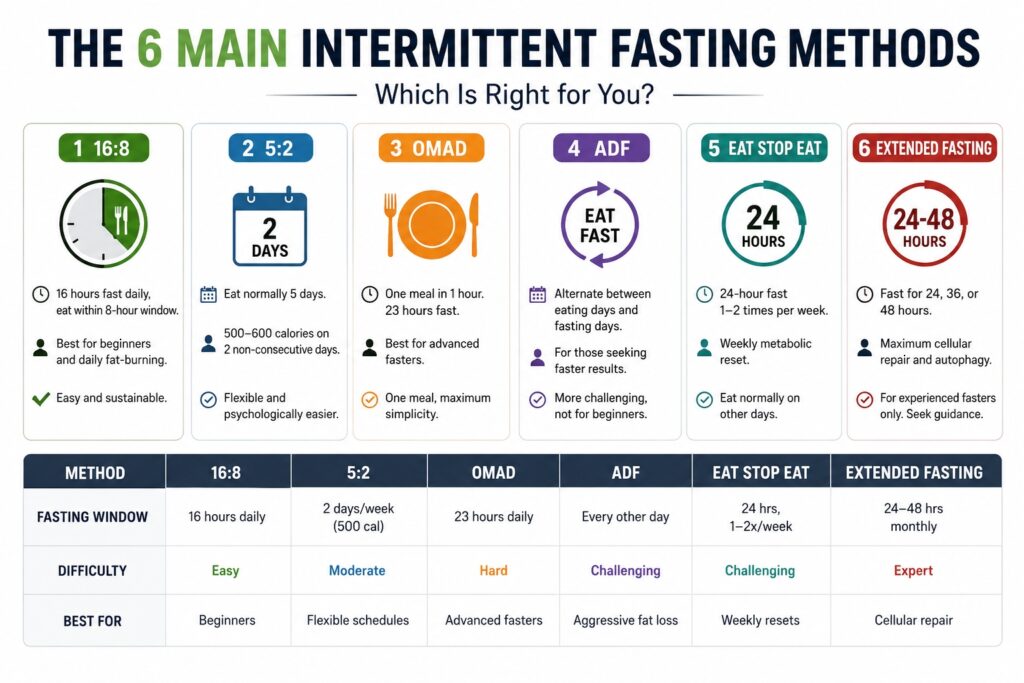
Before choosing your intermittent fasting meal plan, you need to understand the primary methods and what distinguishes each one.
Method 1: 16:8 , The Most Popular Intermittent Fasting Meal Plan
What it is: Fast for 16 hours, eat within an 8-hour window daily.
How it works: Most people fast from 8pm to 12pm (skipping breakfast) and eat from 12pm–8pm. The fasting window includes 7–8 hours of sleep, making the actual “conscious fasting” only 7–8 hours.
Best for: Beginners, people who naturally skip breakfast, those who want daily fat-burning without dramatic restriction.
Results: Steady weight loss of 0.5–1.5 lbs per week, reduced hunger by week 2, improved energy, and better blood sugar stability.
A well-structured 16:8 intermittent fasting meal plan is the single most beginner-friendly entry point to IF , which is why it’s the most popular method worldwide.
Method 2: 5:2 , The Flexible Calorie-Restriction Method
What it is: Eat normally 5 days per week. On 2 non-consecutive days, restrict calories to 500–600.
How it works: Choose any 2 days (e.g., Monday and Thursday) as fasting days. These aren’t full fasts , you eat 500–600 calories of protein-rich, low-calorie foods. The other 5 days are unrestricted.
Best for: People who prefer eating at regular times most days, those who can handle 2 challenging days per week in exchange for 5 fully flexible ones.
Results: Similar weight loss to daily calorie restriction, with many people finding it more psychologically sustainable because of the 5 full eating days.
Method 3: OMAD , One Meal a Day
What it is: A 23:1 fasting ratio , you eat all your daily calories in one single meal within a 1-hour window.
How it works: Choose a time (many people prefer dinner) and eat one large, nutritionally complete meal per day. Fast for the remaining 23 hours.
Best for: Experienced fasters, people who feel most satisfied with one large meal, those seeking dramatic metabolic adaptation.
Important note: OMAD is advanced and should not be the starting point for most beginners. Start with 16:8 and work up if desired.
Method 4: Alternate Day Fasting (ADF)
What it is: Alternate between full eating days and fasting days (either complete fasts or 500-calorie restriction days).
How it works: Day 1 , eat normally. Day 2 , fast or restrict to 500 calories. Repeat throughout the week.
Best for: People who want more dramatic results and can handle significant restrictions every other day. Not recommended as a starting point for beginners.
Method 5: Eat Stop Eat (24-Hour Fasting)
What it is: A 24-hour complete fast, 1–2 times per week.
How it works: From dinner one night to dinner the next night , or breakfast to breakfast. You eat normally on all other days.
Best for: People comfortable with extended fasting who want a weekly metabolic reset without daily eating window restrictions.
Method 6: Extended Fasting (24–48 Hours)
What it is: Fasting for 24, 36, or 48 consecutive hours for maximum autophagy, cellular repair, and metabolic benefits.
How it works: Usually done once per month. Water, electrolytes, and black coffee/tea only. Requires careful preparation and refeeding.
Best for: Experienced fasters with specific health goals. Medical supervision is strongly recommended for 48+ hour fasts.
Quick Method Comparison
| Method | Fasting Window | Difficulty | Best For |
| 16:8 | 16 hours daily | Easy | Beginners |
| 5:2 | 2 days/week (500 cal) | Moderate | Flexible schedules |
| OMAD | 23 hours daily | Hard | Advanced fasters |
| ADF | Every other day | Challenging | Aggressive fat loss |
| Eat Stop Eat | 24 hrs, 1–2x/week | Challenging | Weekly resets |
| Extended | 24–48 hrs monthly | Expert | Cellular repair |
3. Beginner Intermittent Fasting Meal Plan: Start Here
For anyone new to IF, start with 16:8. Here is a complete beginner intermittent fasting meal plan , free, practical, and built for your first two weeks.
The Golden Rules of Any Intermittent Fasting Meal Plan
Before the specific meals, every effective meal plans for fasting follows these principles:intermittent
Rule 1: Break your fast with protein Always open your eating window with a protein-rich meal. Protein anchors blood sugar, reduces hunger, and prevents overeating later in the window.
Rule 2: Eat 2–3 meals within your window. Don’t try to squeeze 5 meals into 8 hours. Two or three satisfying, complete meals work better than constant grazing within the window.
Rule 3: Don’t undereat An intermittent fasting meal plan is not a starvation plan. Eat enough food during your window to meet your calorie needs (minus a moderate 300–500 calorie deficit for weight loss).
Rule 4: Stay hydrated during the fasting window Water, black coffee, and unsweetened tea are allowed and encouraged during fasting. They reduce hunger and support the fasting process without breaking the fast.
Rule 5: Front-load calories Eat your largest meal earlier in the eating window (at 12pm or 1pm) rather than just before closing the window at 8pm. This aligns with natural insulin sensitivity rhythms and supports better sleep.
4. Free Intermittent Fasting Plans: Week 1 (16:8 Beginner)
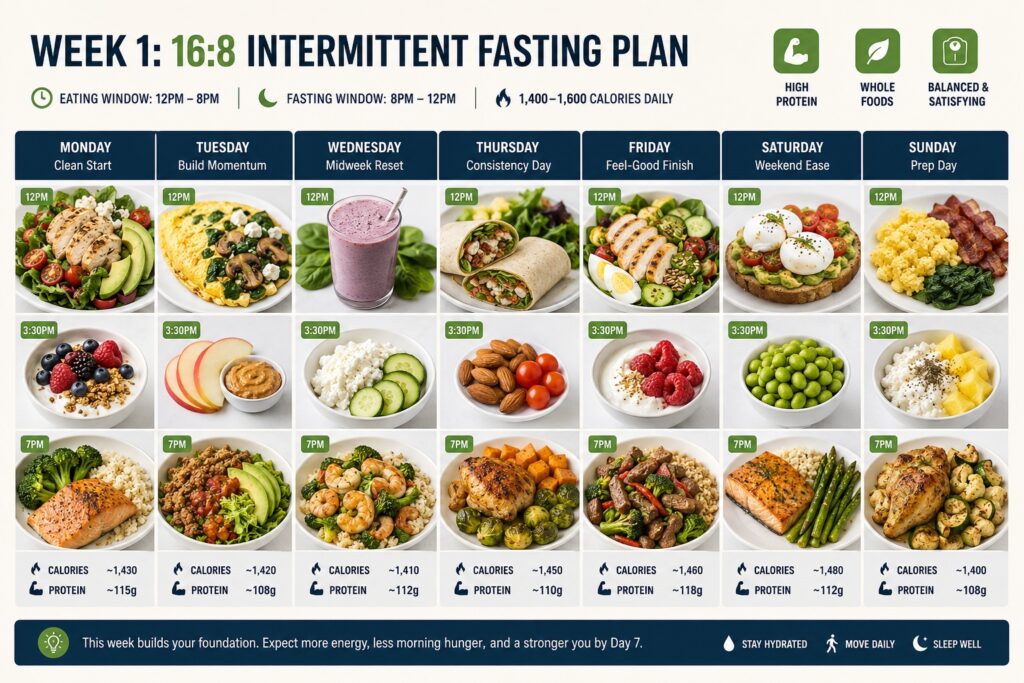
Here is your complete free intermittent fasting plan for week one. Eating window: 12pm–8pm. Fasting window: 8pm–12pm. Targeting approximately 1,400–1,600 calories daily.
Monday , Clean Start
12:00pm , Break Fast (Lunch) Grilled chicken breast (5 oz) + large mixed greens salad + cucumber + avocado (¼) + cherry tomatoes + olive oil-lemon dressing
3:30pm , Afternoon Snack ¾ cup full-fat Greek yogurt + mixed berries + 1 tbsp chia seeds
7:00pm , Dinner (Last Meal) Baked salmon (5 oz) + steamed broccoli + cauliflower rice with garlic butter
Calories: ~1,430 | Protein: ~115g
Tuesday , Build Momentum
12:00pm , Break Fast 3-egg omelette with spinach + mushrooms + feta cheese + 1 tsp olive oil
3:30pm , Snack 1 small apple + 1 tbsp almond butter
7:00pm , Dinner Ground turkey bowl: 5 oz turkey + taco seasoning + romaine + salsa + avocado (¼) , no tortilla
Calories: ~1,420 | Protein: ~108g
Wednesday , Midweek Reset
12:00pm , Break Fast Protein smoothie: 1 scoop whey protein + unsweetened almond milk + ½ banana + spinach + 1 tbsp peanut butter
3:30pm , Snack ½ cup cottage cheese + cucumber slices + sea salt
7:00pm , Dinner Shrimp stir-fry: 5 oz shrimp + broccoli + zucchini + garlic-ginger-soy sauce + cauliflower rice
Calories: ~1,410 | Protein: ~112g
Thursday , Consistency Day
12:00pm , Break Fast Tuna salad (4 oz tuna + Greek yogurt + mustard + celery) + whole-grain wrap + side salad
3:30pm , Snack 10–12 almonds + a few cherry tomatoes
7:00pm , Dinner Baked chicken thighs (5 oz) + roasted Brussels sprouts + sweet potato (small)
Calories: ~1,450 | Protein: ~110g
Friday , Feel-Good Finish
12:00pm , Break Fast Big protein salad: 5 oz grilled chicken + romaine + hard-boiled egg + cucumber + pumpkin seeds + olive oil dressing
3:30pm , Snack Greek yogurt (½ cup) + 1 tbsp ground flaxseed + raspberries
7:00pm , Dinner Lean beef stir-fry with broccoli + snap peas + mushrooms + soy-ginger sauce + brown rice (½ cup)
Calories: ~1,460 | Protein: ~118g
Saturday , Weekend Ease
12:00pm , Break Fast Avocado toast (whole-grain, 1 slice) + 2 poached eggs + cherry tomatoes + black coffee
3:30pm , Snack ½ cup edamame + sea salt
7:00pm , Dinner Grilled salmon (5 oz) + roasted asparagus + brown rice (½ cup) + lemon-herb butter
Calories: ~1,480 | Protein: ~112g
Sunday , Prep Day
12:00pm , Break Fast 3 scrambled eggs + turkey bacon (2 strips) + sautéed spinach + black coffee
3:30pm , Snack Cottage cheese (½ cup) + pineapple chunks + chia seeds (1 tbsp)
7:00pm , Dinner One-pan baked chicken (5 oz) + roasted zucchini + cauliflower + olive oil + Italian herbs
Calories: ~1,400 | Protein: ~108g
This free intermittent fasting plan is your foundation for week one. By the end of day 7, most people feel noticeably less hungry in the mornings, more energized in the afternoons, and ready to continue into week two.
5. Intermittent Fasting Meal Plan: Week 2 and Beyond
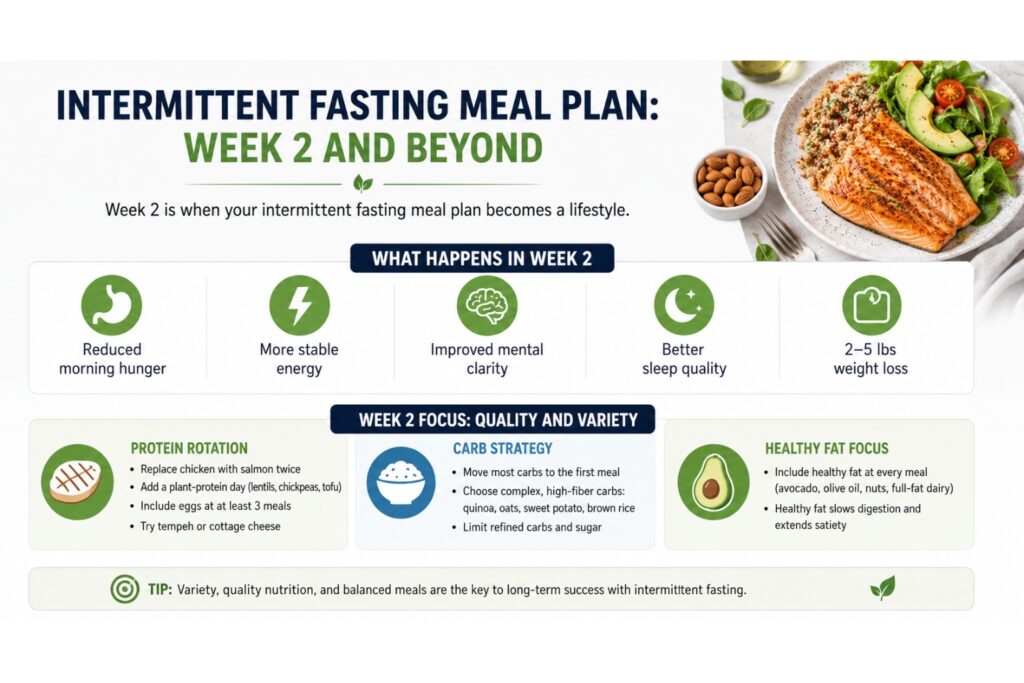
Week 2 is when your intermittent fasting meal plan transitions from “I’m trying this” to “this is my lifestyle.” Here’s what changes , and what to focus on.
What Happens in Week 2
By week 2 of your beginner intermittent fasting meal plan, most people experience:
- Significantly reduced morning hunger (the body adapts to not expecting food)
- More stable energy throughout the eating window
- Improved mental clarity in the fasting window (especially the late morning)
- Better sleep quality as eating moves away from bedtime
- Visible scale progress , typically 2–5 lbs total after 2 weeks
Week 2 Intermittent Fasting Meal Plan Focus: Quality and Variety
Your meal plans for intermittent fasting in week 2 should introduce more variety to prevent boredom, which is the #1 reason people abandon IF by week 3.
Week 2 protein rotation:
- Replace chicken with salmon twice
- Add a plant-protein day (lentils, chickpeas, tofu)
- Include eggs at at least 3 meals
- Try tempeh or cottage cheese as a new protein source
Week 2 carb strategy:
- Move most carbohydrates to the first meal of the eating window
- Choose complex, high-fiber carbs only: quinoa, oats, sweet potato, brown rice
- Limit refined carbs and sugar , these cause blood sugar spikes that increase hunger later in the window
Week 2 fat focus:
- Include healthy fat at every meal: avocado, olive oil, nuts, or full-fat dairy
- Healthy fat slows digestion and extends satiety across the 8-hour window
6. Free Intermittent Fasting Plans: The 5:2 Method
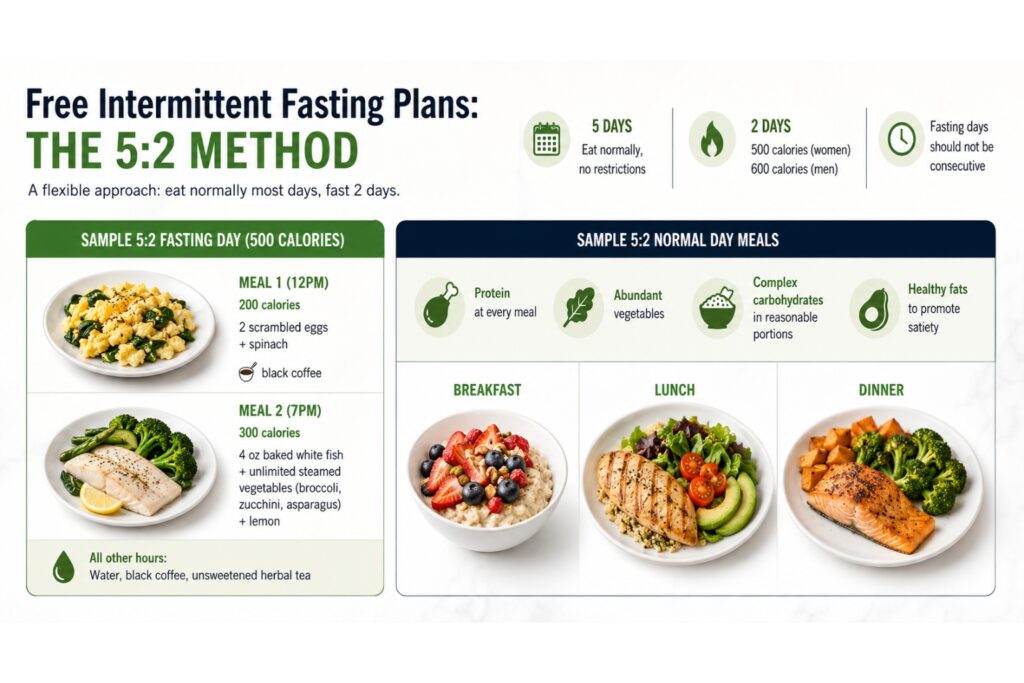
Here’s a complete free intermittent fasting plan for the 5:2 method , a different approach for those who prefer eating at normal times most days.
5:2 Rules
- 5 days: Eat normally , no calorie restriction
- 2 days (Monday and Thursday recommended): Restrict to 500 calories for women, 600 calories for men
- Fasting days should not be consecutive
Sample 5:2 Fasting Day (500 Calories)
Meal 1 (12pm , 200 calories): 2 scrambled eggs + spinach + black coffee
Meal 2 (7pm , 300 calories): 4 oz baked white fish + unlimited steamed vegetables (broccoli, zucchini, asparagus) + lemon
All other hours: Water, black coffee, unsweetened herbal tea
Sample 5:2 Normal Day Meals
Normal days on the 5:2 intermittent fasting meal plan don’t require calorie counting , eat satisfying, whole food meals that include:
- Protein at every meal
- Abundant vegetables
- Complex carbohydrates in reasonable portions
- Healthy fats to promote satiety
7. What to Eat and Drink During Fasting Windows
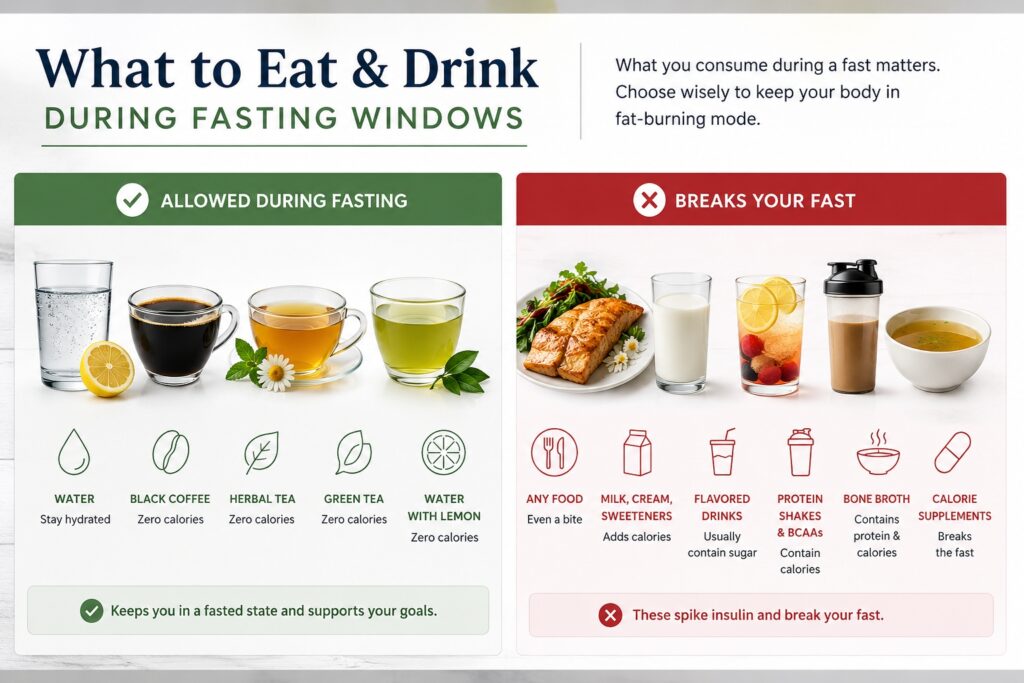
Understanding what breaks a fast is essential for every intermittent fasting meal plan method. Get this wrong, and your fasting window isn’t actually fasting.
Allowed During Fasting (Doesn’t Break the Fast)
- Water , plain, sparkling, or mineral. Drink abundantly. Hunger during fasting is often dehydration in disguise.
- Black coffee , zero calories, may boost fat oxidation, and is a natural appetite suppressant during fasting windows. One of the most common questions beginners ask about their intermittent fasting meal plan is whether coffee breaks fast. The answer: black coffee does not.
- Plain herbal tea , chamomile, peppermint, ginger, rooibos , all zero calories
- Plain green tea , small amount of caffeine + antioxidants, zero calories
- Still or sparkling water with lemon , the lemon juice adds negligible calories and does not meaningfully affect fasting
What Breaks Your Fast
- Any food (regardless of calorie content , even a single bite)
- Milk, cream, or sweeteners in coffee
- Flavored sparkling water with sugar or juice
- Protein shakes or BCAAs
- Bone broth (technically breaks a fast due to protein and calories , better consumed at the start of the eating window)
- Supplements with calories (omega-3 capsules, gummies)
Understanding this distinction is what separates a true intermittent fasting meal plan from a vague “eating less” approach.
8. Intermittent Fasting Meal Plan for Specific Goals
Not everyone follows an intermittent fasting meal plan for the same reason. Here’s how to adjust your approach based on your primary goal.
IF Meal Plan for Weight Loss
Best method: 16:8 daily Key adjustment: Target a 400–500 calorie daily deficit within your eating window. Don’t try to compensate for the fasting by overeating in the window. Protein priority: 0.8–1g per pound of body weight to preserve muscle during fat loss Carb timing: Eat most carbs at your first meal (12pm) when insulin sensitivity is highest
IF Meal Plan for Muscle Building
Best method: 16:8 with a slightly wider protein window Key adjustment: Ensure total protein targets are hit (1–1.2g per pound of body weight) within the eating window. This may require 3 protein-rich meals within 8 hours. Critical: Train during or just before your eating window so protein is available for muscle repair post-workout See also: The dedicated guide for the truth about IF and muscle preservation
IF Meal Plan for Women
Women’s hormonal systems , particularly the hypothalamic-pituitary-adrenal (HPA) axis , respond differently to extended fasting than men’s. Some women experience hormonal disruption, irregular periods, or increased stress hormones from aggressive IF protocols.
Best approach for women: Start with a gentler 14:10 window (14-hour fast, 10-hour eating), and extend gradually to 16:8 over 3–4 weeks. Avoid OMAD or extended fasting without medical guidance.
9. Best Foods to Break a Fast: How to Open Your Eating Window
The first meal after a fast is the most important meal in your intermittent fasting meal plan. Breaking your fast correctly prevents the blood sugar spike that undoes hours of fat-burning, and sets the tone for hunger management throughout the rest of the eating window.
Best Foods to Break a Fast
Priority 1: Protein Start with protein at every fast-break meal , without exception. Eggs, Greek yogurt, cottage cheese, grilled chicken, salmon, or a protein shake are all excellent first choices. Protein stabilizes blood sugar immediately after fasting and prevents the insulin spike that refined carbs would cause.
Priority 2: Healthy Fat Avocado, olive oil, nuts, or full-fat dairy alongside your protein extends satiety further. Fat slows gastric emptying and reduces the glucose response of any carbohydrates eaten alongside it.
Priority 3: Fiber-Rich Vegetables Non-starchy vegetables add volume, fiber, and micronutrients without significantly raising blood sugar. Start with cooked vegetables rather than raw in the first 30 minutes of breaking a fast , they’re easier on the digestive system.
What NOT to Break Your Fast With
- Fruit juice or smoothies (high sugar, rapid blood sugar spike)
- White bread, crackers, or pastries
- Sugary coffee drinks
- Processed breakfast cereals
- Sports drinks
10. Meal Plans for Intermittent Fasting: The OMAD Approach
For experienced fasters looking for the most intense and simplified meal plans for intermittent fasting, OMAD (One Meal a Day) compresses all eating into a single 1-hour window.
OMAD Intermittent Fasting Meal Plan Principles
A proper OMAD intermittent fasting meal plan must pack all nutritional requirements into one meal:
- Total calories: 1,500–2,000 (depending on size and activity)
- Protein: 100–150g in a single meal
- Vegetables: 2–3 cups of varied vegetables
- Healthy fats: Avocado, olive oil, nuts
- Complex carbs: 1 serving of whole grain or starchy vegetable
Sample OMAD Meal (6pm)
The OMAD Plate:
- 7–8 oz grilled salmon or chicken thigh
- 2 cups roasted broccoli and zucchini with garlic butter
- ½ cup brown rice or sweet potato
- Large green salad with olive oil and lemon
- 1 oz mixed nuts on the side
- ¾ cup full-fat Greek yogurt with berries for dessert
This single meal provides approximately 1,600–1,800 calories, 120–140g protein, and all essential micronutrients , making it a nutritionally complete OMAD intermittent fasting meal plan day.
11. Common Mistakes on an Intermittent Fasting Meal Plan
Even well-researched beginners make these errors:
Mistake 1: Overeating in the Eating Window
IF doesn’t give unlimited license to eat within the window. An intermittent fasting meal plan still requires reasonable calorie intake for weight loss. Eating 3,000+ calories in 8 hours will prevent results regardless of the fasting window.
Mistake 2: Breaking the Fast with Carbs and Sugar
Opening your eating window with juice, cereal, or a pastry causes a massive insulin spike that triggers hunger for hours. Always break your fast with protein first , it’s the single most important rule of any beginner intermittent fasting meal plan.
Mistake 3: Not Drinking Enough Water During Fasting
Dehydration mimics hunger. Most morning “hunger” during the fasting window is actually thirst. Drink a large glass of water first thing in the morning and continue hydrating throughout the fast. This single habit makes meal plans for intermittent fasting dramatically easier to follow.
Mistake 4: Choosing the Wrong Method for Your Lifestyle
A night-shift worker starting a 12pm–8pm eating window is going to struggle. Match your intermittent fasting meal plan method to your actual schedule , not to what works best for someone else. 16:8 is most popular, but 5:2 works better for people with unpredictable daily schedules.
Mistake 5: Expecting Results in 3 Days
The beginner intermittent fasting meal plan results take 2–4 weeks to become clearly visible. The first week is adaptation , hunger signals adjusting, insulin patterns shifting, eating habits reorganizing. Push through the first week and evaluate at the 30-day mark.
Mistake 6: Ignoring Sleep Quality
Sleep is a major fasting period , 7–9 hours of sleep means you’ve already completed most of your 16-hour fast before you wake up. Poor sleep raises hunger hormones (ghrelin) and undermines every meal plans for intermittent fasting effort. Prioritizing sleep is non-negotiable for IF success.
12. How Long Until You See Results on an Intermittent Fasting Meal Plan?
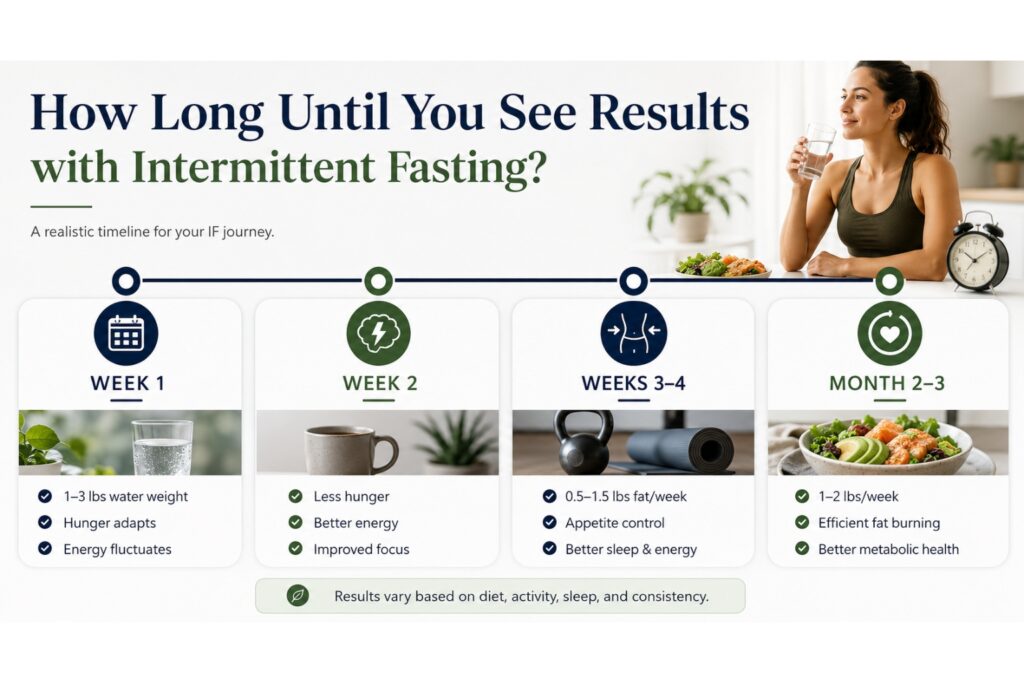
Honest timeline expectations are essential for any intermittent fasting meal plan guide.
Week 1
- Initial water weight loss (1–3 lbs as glycogen and water are reduced)
- Hunger peaks on days 2–4 then begins to normalize
- Some people experience mild headaches or fatigue as insulin patterns adjust
- Energy may be inconsistent
Week 2
- Hunger in the morning fasting window significantly reduced for most people
- Energy begins stabilizing
- Mental clarity during fasting improves
- Scale may show 2–4 lbs total loss (mostly water + initial fat)
Weeks 3–4
- True fat loss becomes measurable , typically 0.5–1.5 lbs per week of real fat loss
- Appetite suppression becomes natural and sustainable
- The intermittent fasting meal plan starts to feel effortless rather than disciplined
- Most people report improved energy, better sleep, and noticeably reduced hunger
Month 2–3
- Continued fat loss of 1–2 lbs per week
- Metabolic adaptation means fat burning is increasingly efficient
- Many people see improvements in blood sugar, cholesterol, and inflammatory markers
- Social eating becomes easier as you learn to navigate IF around events
13. Intermittent Fasting Meal Plan: Frequently Asked Questions Summary
Before the formal FAQ section, here are the most commonly searched questions about meal plans for intermittent fasting:
“Can I drink coffee during my fast?” , Yes. Black coffee doesn’t break a fast and may enhance fat burning during the fasting window.
“What if I’m hungry during the fasting window?” , Drink water first. Most “hunger” is thirst or habit. If genuine hunger persists beyond week 1, ensure your eating window meals are high enough in protein and fat.
“Will I lose muscle on an intermittent fasting meal plan?” , Not with adequate protein intake. A beginner intermittent fasting meal plan with 0.8–1g protein per pound of body weight protects muscle effectively.
“Can women do IF?” , Yes, with modifications. See the dedicated guide for women-specific IF guidance.
“What’s the best eating window for weight loss?” , For most people, 12pm–8pm (the most common 16:8 window) aligns well with social eating, work schedules, and natural hunger patterns.
Key Takeaways
- An intermittent fasting meal plan focuses on when you eat rather than what you eat , creating a natural calorie deficit through eating window compression
- The 6 main IF methods are: 16:8, 5:2, OMAD, Alternate Day Fasting, Eat Stop Eat, and Extended Fasting , each suited to different lifestyles and goals
- The best beginner intermittent fasting meal plan starts with 16:8 (fast 16 hours, eat within 8 hours) , the most sustainable and beginner-friendly method
- Every intermittent fasting meal plan should open the eating window with protein, include 2–3 full meals (not constant grazing), and close the window at least 2–3 hours before bed
- Free intermittent fasting plans for 16:8 and 5:2 are included in this guide , complete with meals, calories, and protein targets
- Black coffee and plain tea don’t break a fast , milk, sweeteners, and caloric additions do
- Meal plans for intermittent fasting work best when combined with adequate protein (0.8–1g/lb body weight), quality whole foods, and consistent sleep
- Results typically begin appearing in week 2 and become clearly measurable by week 4 , patience through week one is the most important success factor
- Women should start with a gentler 14:10 window before progressing to 16:8; OMAD and extended fasting require additional caution for women
- An intermittent fasting meal plan is one of the most researched, most beginner-friendly, and most sustainable approaches to weight loss and metabolic health available
Conclusion: Your Intermittent Fasting Meal Plan Journey Starts Today
You now have the complete picture. Every intermittent fasting meal plan method explained, free week-one meal plans for 16:8 and 5:2, guidance on breaking fasts correctly, what to drink during fasting windows, results timelines, and honest advice for beginners, women, and those building muscle.
The best intermittent fasting meal plan is the one you’ll actually follow consistently. Start with 16:8. Give it 4 full weeks before evaluating. Break every fast with protein. Stay hydrated. And trust the process , because the science behind IF is real, the results are achievable, and the lifestyle simplicity it offers is something most people wish they’d discovered sooner.
Ready to explore every corner of intermittent fasting? The Daily Crave has a complete library of in-depth guides covering every IF method, special populations, muscle-building with IF, and more. Visit thedailycrave.online for everything you need to make intermittent fasting meal plan success a reality.
Frequently Asked Questions (FAQ)
Q1: What is the best intermittent fasting meal plan for beginners?
The best beginner intermittent fasting meal plan is the 16:8 method , fasting for 16 hours and eating within an 8-hour window (typically 12pm–8pm). It’s the most research-backed, most beginner-friendly, and most sustainable IF approach available. The free intermittent fasting plan for week one in this guide gives you a complete day-by-day structure to follow from day one.
Q2: Can I eat whatever I want on an intermittent fasting meal plan?
Technically, IF doesn’t restrict what you eat , only when. But what you eat significantly affects your results. A meal plans for intermittent fasting approach built around lean protein, vegetables, whole grains, and healthy fats produces far better fat loss, hunger management, and energy than eating processed food within the same window. IF amplifies the effects of good nutrition , it doesn’t replace it.
Q3: Are there free intermittent fasting plans available for beginners?
Yes , this article contains complete free intermittent fasting plans for both 16:8 (a full 7-day meal plan) and 5:2 (fasting day + normal day examples). Both plans include calorie estimates, protein targets, and specific meal ideas. Everything you need to start your intermittent fasting meal plan is free and available right here.
Q4: How many calories should I eat on an intermittent fasting meal plan?
Your calorie target on an intermittent fasting meal plan depends on your TDEE (Total Daily Energy Expenditure) minus a moderate deficit of 300–500 calories for weight loss. For most women, this means 1,300–1,600 calories within the eating window. For most men, 1,600–2,000 calories. The beginner intermittent fasting meal plan in this guide targets approximately 1,400–1,600 calories as a starting framework.
Q5: What happens if I eat outside my intermittent fasting meal plan window?
Eating outside your planned eating window temporarily interrupts the fasting process , raising insulin and pausing fat-burning. One slip doesn’t ruin your progress. Simply close the window and resume your normal intermittent fasting meal plan schedule at the next day’s eating window. Consistency over time matters far more than perfection on any single day.