Table of Contents
Mason jar salad meal prep makes it easier to prepare fresh lunches ahead of time without ending up with wilted greens or soggy vegetables. The trick is not simply putting salad ingredients into a jar. The order of the layers matters because it helps keep dressing away from delicate ingredients until you are ready to eat.
In this guide, you will learn how mason jar salad meal prep works, how to layer ingredients correctly, which foods hold up best in the refrigerator, and seven combinations you can make for weekday lunches. You will also get practical storage advice, ingredient swaps, common mistakes, and simple ways to customize your jars.
What Is Mason Jar Salad Meal Prep?
Mason jar salad meal prep is a method of preparing individual salads in jars ahead of time, usually for several lunches during the week. Instead of mixing all the ingredients together immediately, you place the dressing and sturdier ingredients at the bottom and keep leafy greens near the top.
This arrangement can help reduce direct contact between dressing and lettuce. That matters because lettuce can soften when it sits in moisture for an extended period.
The method is especially useful when you want a portable lunch that requires little preparation during a busy weekday. You can assemble several jars at once, refrigerate them, and take one when you need it.
For beginners, mason jar salad meal prep is best viewed as a simple layering system rather than a strict recipe. Once you understand the basic order, you can create many combinations using the ingredients you already have.
Why Layering Matters in Mason Jar Salad Meal prep
The biggest challenge with preparing a salad several days before eating it is moisture.
When dressing sits directly against lettuce, the leaves can become soft. Some vegetables can also release water while they sit in the refrigerator.
The solution is to create separation.
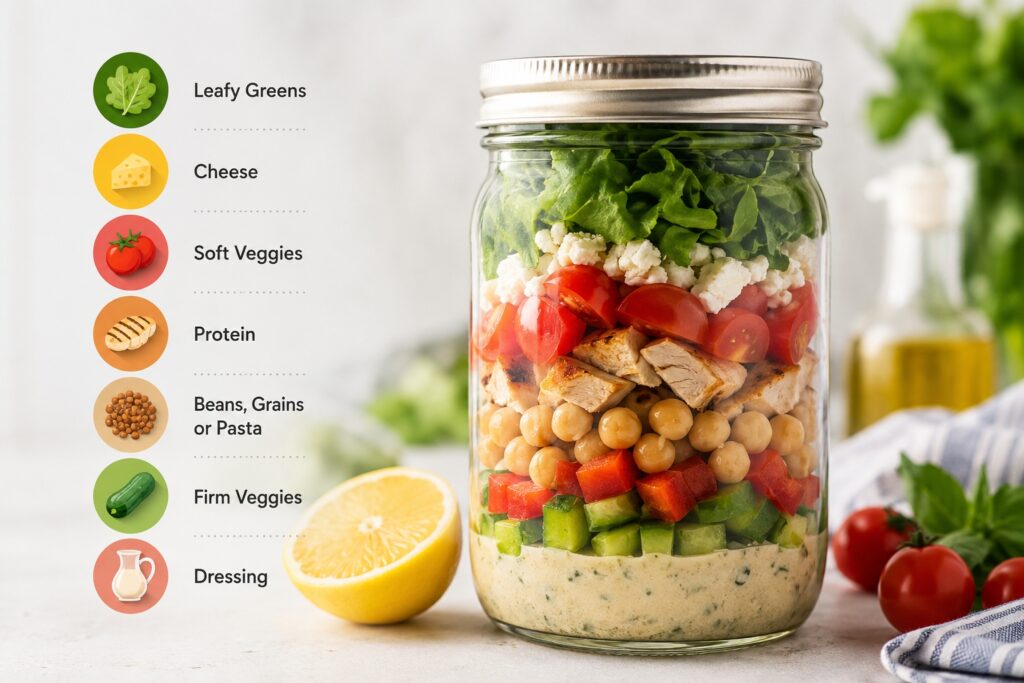
A useful general layering order is:
- Dressing
- Firm vegetables
- Beans, grains, or pasta
- Protein
- Softer vegetables or fruit
- Cheese
- Leafy greens
This order can vary depending on the recipe, but the basic principle stays the same: keep wet ingredients toward the bottom and delicate greens toward the top.
For example, if you are making mason jar salad meal prep with chicken, tomatoes, cucumber, lettuce, and dressing, placing the lettuce directly in the dressing is likely to make the greens softer. Adding sturdier ingredients between those layers gives the greens more protection.
Another benefit is convenience. Each jar can be portioned in advance, so you do not have to measure or assemble your lunch every morning.
How to Layer a Salad in a Mason Jar
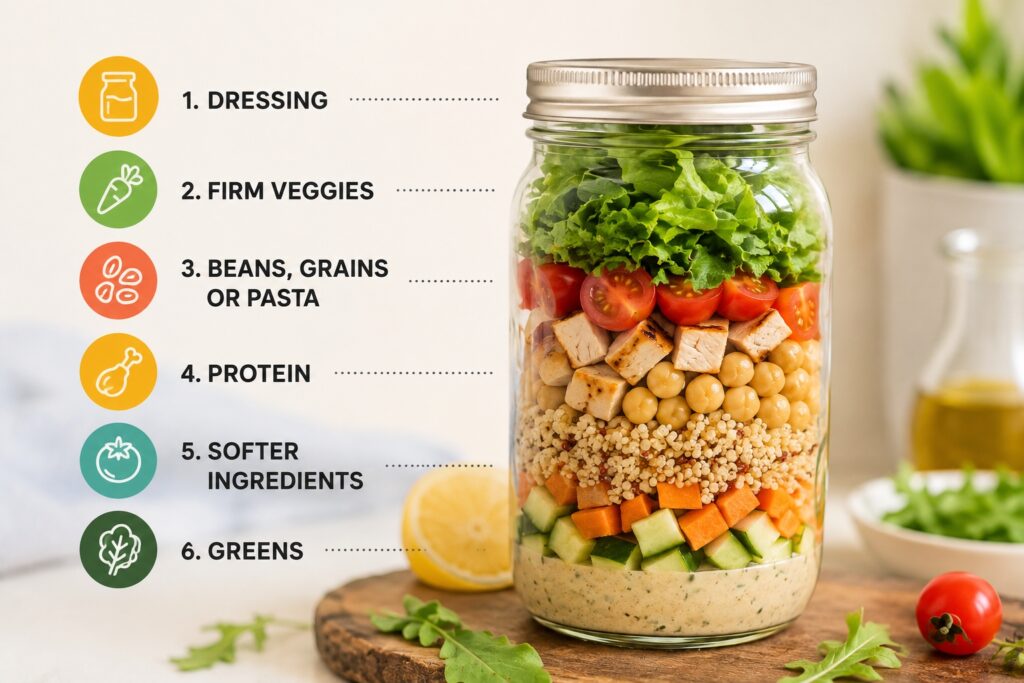
Before starting your mason jar salad meal prep, gather clean jars with secure lids. Wide-mouth jars are convenient because ingredients are easier to add and the finished salad is easier to remove.
Step 1: Add the Dressing
Start with roughly 2 to 3 tablespoons of dressing, depending on the size of your jar and your preference.
Some simple choices include:
- Lemon vinaigrette
- Balsamic vinaigrette
- Greek dressing
- Honey mustard
- Tahini lemon dressing
- Yogurt-based dressing
Putting the dressing at the bottom is one of the most important parts of the method.
Step 2: Add Firm Vegetables
Next, add vegetables that can tolerate some moisture.
Good options include:
- Carrots
- Bell peppers
- Broccoli
- Radishes
- Celery
- Red onion
These foods can form a useful barrier between the dressing and more delicate ingredients.
Step 3: Add Beans, Grains, or Pasta
This layer can make mason jar meal prep more substantial.
Try:
- Chickpeas
- Black beans
- Lentils
- Quinoa
- Brown rice
- Whole-grain pasta
If you are using cooked grains or pasta, allow them to cool completely before adding them to the jars.
Step 4: Add Protein
Protein can turn a basic vegetable salad into a more satisfying lunch.
Options include:
- Grilled chicken
- Turkey
- Tuna
- Hard-boiled eggs
- Chickpeas
- Lentils
- Tofu
The best option depends on your preferences, dietary pattern, and storage needs.
Step 5: Add Softer Ingredients
Add softer ingredients above the sturdier layers.
Examples include:
- Cherry tomatoes
- Corn
- Cooked vegetables
- Apple pieces
- Berries
Avocado is generally better added closer to serving because it can brown and change texture after being cut.
Step 6: Finish With Greens
Leafy greens should usually be near the top.
Good choices include:
- Romaine
- Spinach
- Kale
- Arugula
- Mixed salad greens
Pack greens loosely instead of pressing them tightly into the jar.
7 Mason jar salad meal prep Layer Combinations
The following mason jar salad meal prep combinations give you different flavors without requiring seven completely different cooking sessions.
1. Chicken Caesar Mason Jar Salad
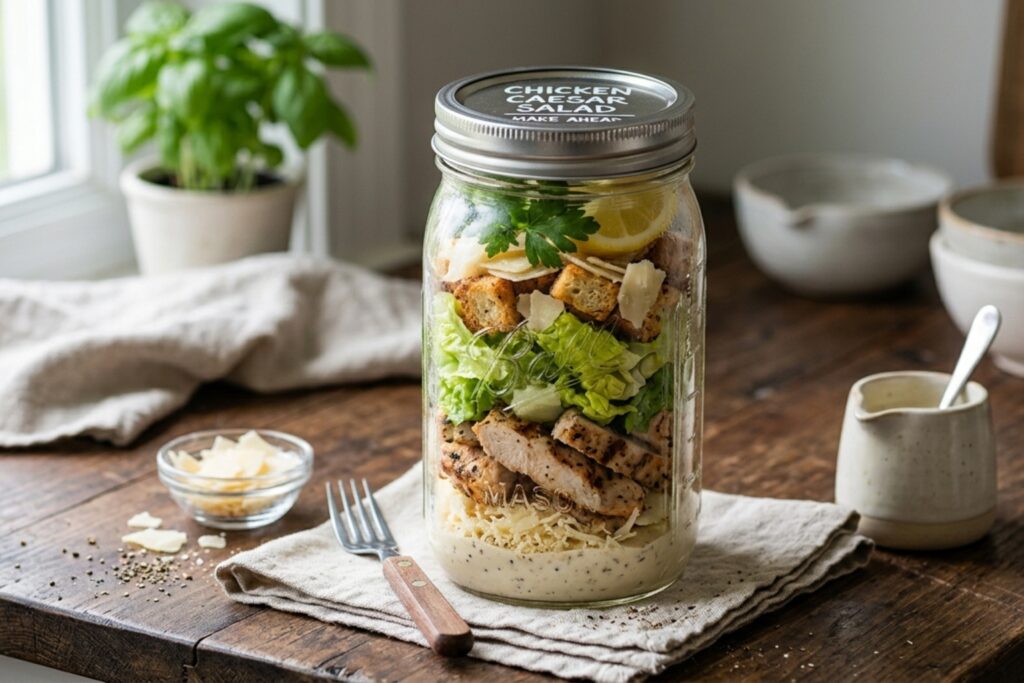
Chicken Caesar is a familiar combination that works well when you want a classic lunch.
Layers:
- Caesar dressing
- Diced cucumber
- Cooked chicken
- Cherry tomatoes
- Parmesan cheese
- Romaine lettuce
- Croutons packed separately
Chicken provides protein, while romaine adds crunch. Keeping the croutons separate is important because they can become soft when exposed to moisture.
For a different dressing option, you can use a yogurt-based Caesar dressing. If you want more vegetables, add shredded carrots or bell peppers.
This is one of the easiest mason jar salad ideas for someone who wants a familiar lunch with minimal weekday preparation.
2. Mediterranean Chickpea Salad Jar
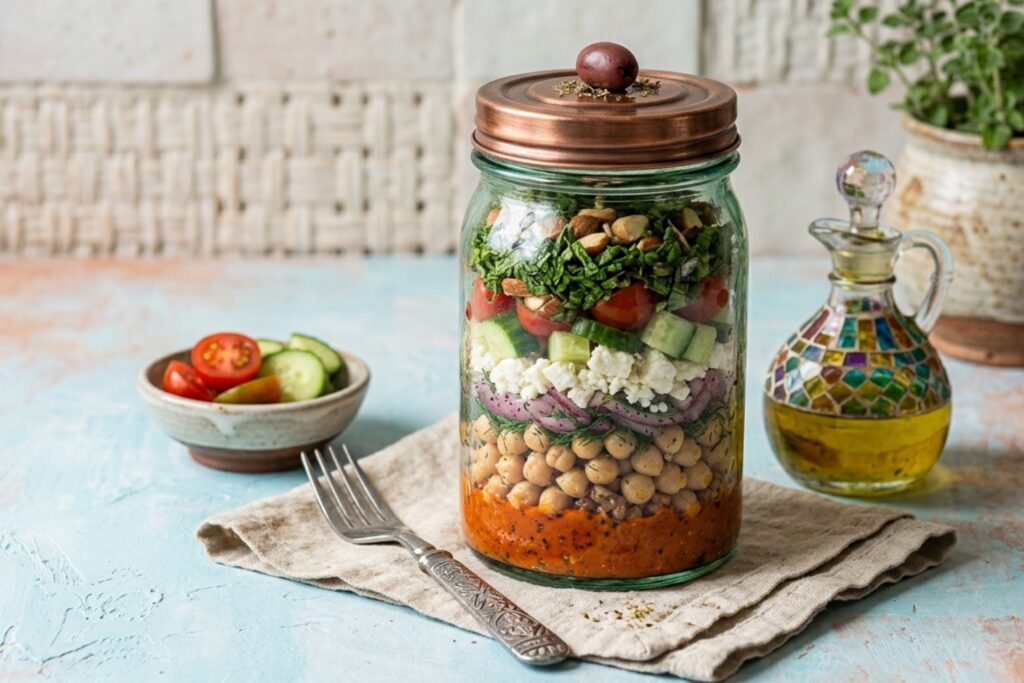
Mediterranean-style mason jar salad meal prep can combine beans, vegetables, greens, cheese, and a bright dressing.
Layers:
- Lemon herb dressing
- Red onion
- Cucumber
- Chickpeas
- Bell peppers
- Feta cheese
- Spinach or mixed greens
You can add olives for extra flavor or replace chickpeas with white beans.
Chickpeas are useful for meal prep because they are sturdy and can add both protein and carbohydrates to the meal. If you prefer, add grilled chicken or tofu.
This combination can also work well for a budget-conscious routine. Beans and lentils can provide economical ingredients for several meals.
For more ideas, see the related article High Protein Meal Prep on a Budget.
3. Southwest Black Bean Salad
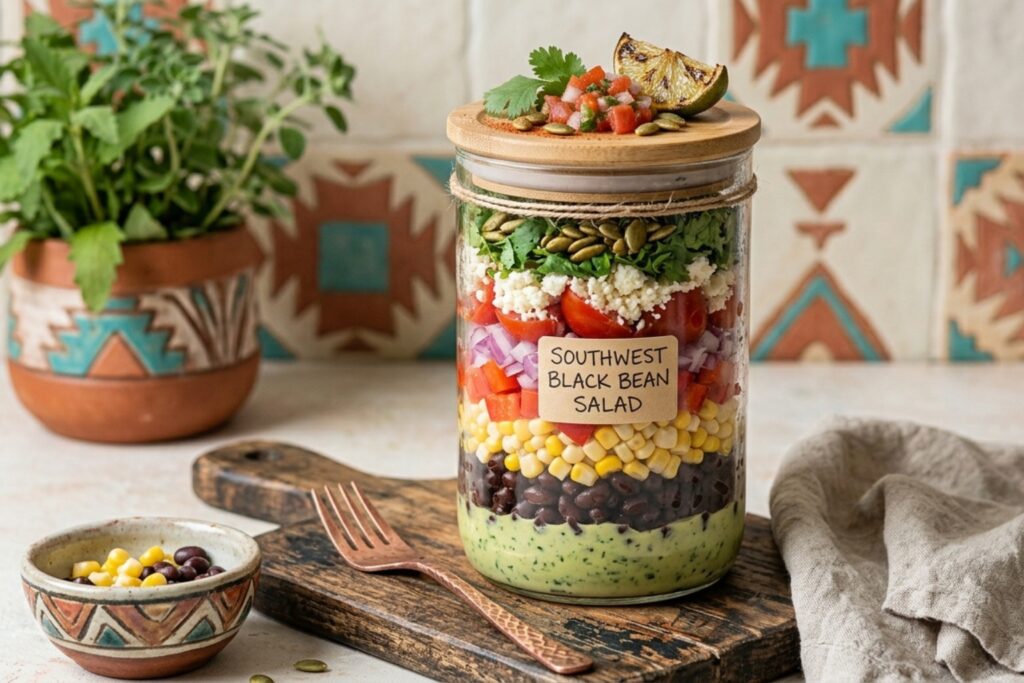
A Southwest-inspired jar gives you a different flavor from a traditional green salad.
Layers:
- Lime dressing
- Red onion
- Black beans
- Corn
- Bell pepper
- Cherry tomatoes
- Romaine lettuce
You can add cooked chicken if you want a higher-protein version.
For extra flavor, consider cilantro, jalapeño, or a small amount of shredded cheese.
If you use avocado, prepare it shortly before serving rather than storing it in the jar for several days. This can help preserve its appearance and texture.
This combination shows why mason jar salad meal prep does not have to mean eating the same plain salad every day.
4. Greek Chicken Salad Jar
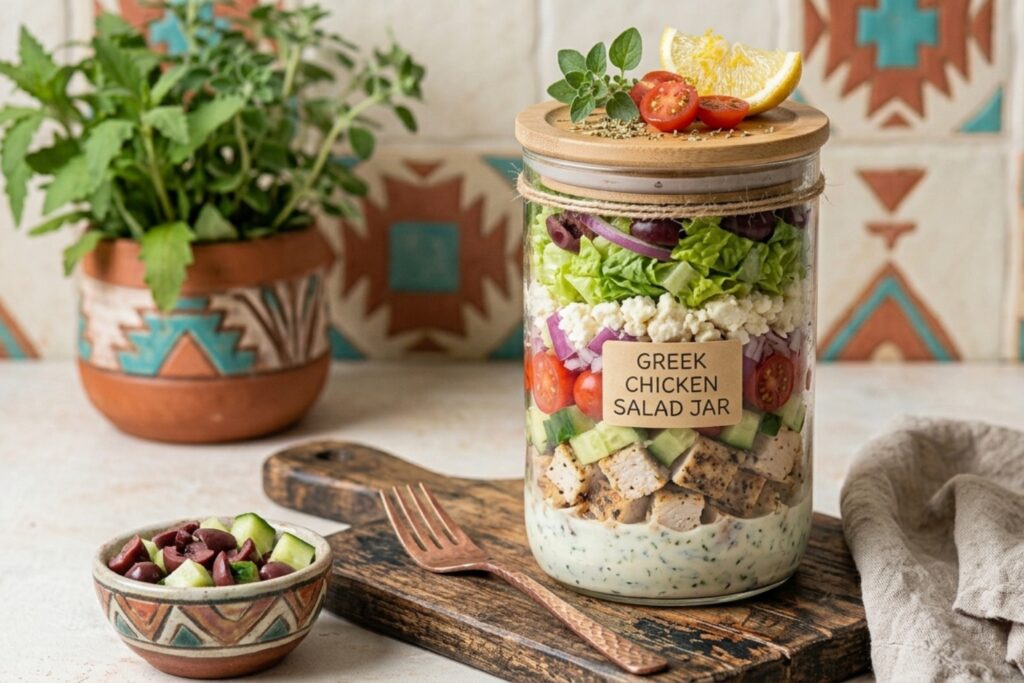
Greek-inspired ingredients are another practical choice for mason jar salads for lunch.
Layers:
- Greek vinaigrette
- Red onion
- Cucumber
- Chickpeas or quinoa
- Grilled chicken
- Cherry tomatoes
- Feta
- Spinach or romaine
You can add olives if you enjoy them.
The cucumber and tomatoes provide freshness, while chicken and chickpeas make the salad more substantial. For a vegetarian version, leave out the chicken and increase the chickpeas or another plant-based protein.
If you are preparing several jars, use ingredients that overlap between recipes. For example, cucumber, tomatoes, chicken, and greens can appear in multiple combinations.
That approach makes Mason Jar Salad Meal Prep easier because you do not need to buy a completely different grocery list for every jar.
5. Apple Walnut Chicken Salad
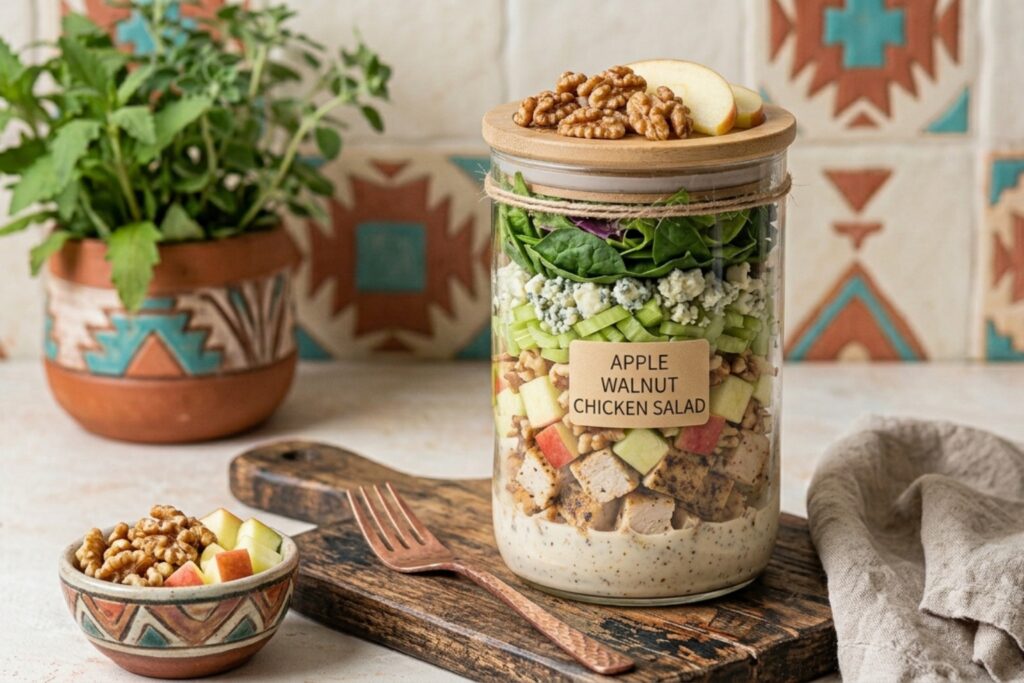
If you prefer sweet and savory flavors, try combining chicken with apple and dried fruit.
Layers:
- Honey mustard dressing
- Carrot
- Chicken
- Apple pieces
- Dried cranberries
- Walnuts
- Mixed greens
Keep walnuts separate if you want them especially crunchy.
Apple pieces may brown after being cut. A small amount of lemon juice can slow browning, although the best approach is still to prepare only what you expect to eat within a reasonable storage period.
This combination can be useful when traditional vegetable-heavy salads become repetitive.
It also demonstrates how mason jar salad ideas can include fruit, nuts, protein, and greens without requiring a complicated recipe.
6. Tuna and White Bean Salad Jar
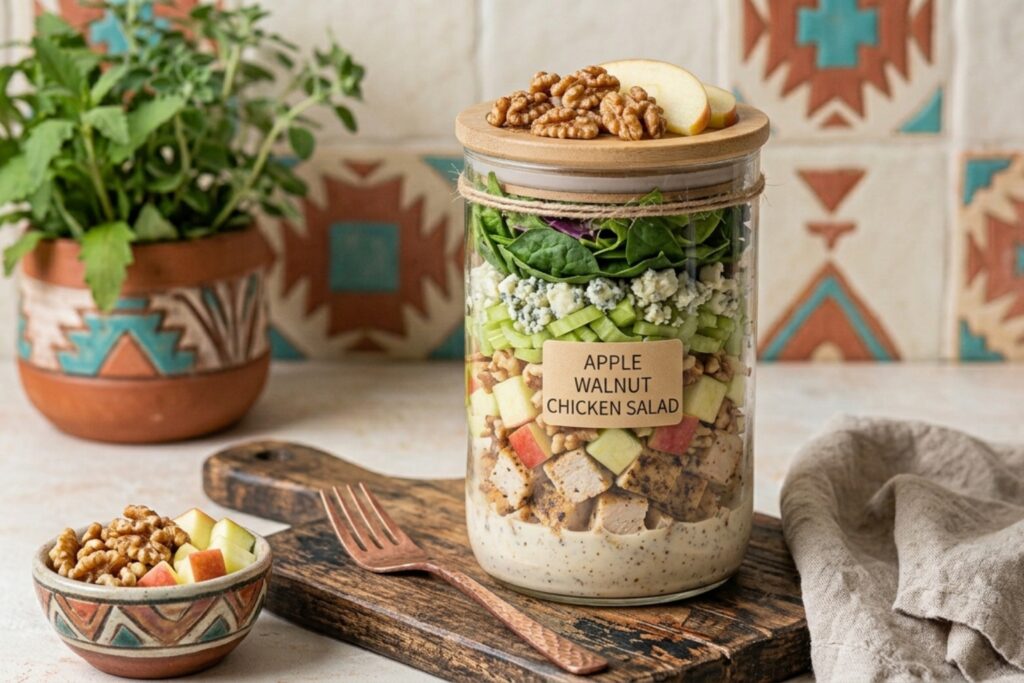
Tuna and white beans create a simple pantry-friendly lunch.
Layers:
- Lemon vinaigrette
- Red onion
- White beans
- Tuna
- Bell peppers
- Cucumber
- Greens
Use tuna according to your preferred variety and follow the storage directions for the specific product.
Fresh lemon, herbs, and crunchy vegetables can balance the stronger flavor of tuna.
If you want additional carbohydrates, add cooked quinoa or whole-grain pasta. If you prefer a lighter combination, increase the vegetables.
This is another practical option for mason jar salad meal prep because several ingredients can be kept on hand without requiring a large number of fresh items.
7. Quinoa Garden Salad Jar
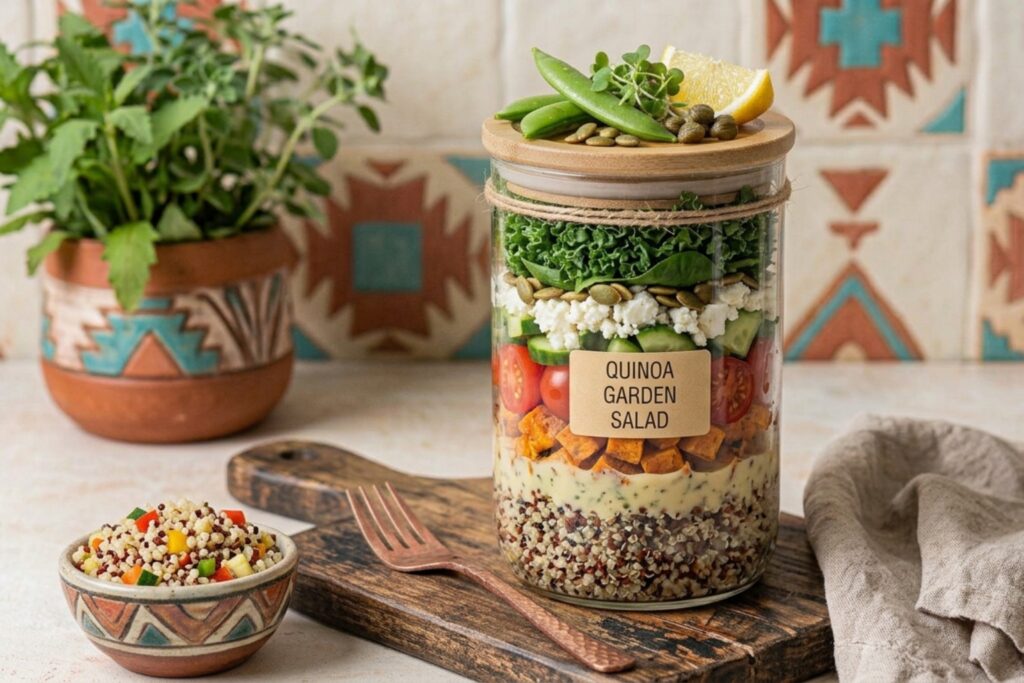
A quinoa garden salad works well when you want grains, vegetables, and greens in one container.
Layers:
- Lemon tahini dressing
- Carrots
- Cooked quinoa
- Bell peppers
- Broccoli
- Feta
- Spinach
Quinoa adds texture and can make the salad more substantial than one containing only vegetables and greens.
You can replace quinoa with brown rice, couscous, or another cooked grain you already have.
This combination is particularly convenient when you are already preparing grains for other meals. Instead of cooking a separate ingredient only for lunch, portion some of the cooked grain into your jars.
How Long Does Mason jar salad meal prep Last?
The storage time for mason jar salads for lunch depends on the ingredients, preparation method, and refrigerator conditions.
For better quality:
- Refrigerate prepared jars promptly.
- Keep the refrigerator at a safe temperature.
- Use clean jars, lids, and utensils.
- Cool cooked ingredients before assembling.
- Keep crunchy toppings separate.
- Check ingredients before eating.
A jar containing sturdy vegetables, beans, and kale may maintain its texture better than one containing avocado, cucumber, and delicate lettuce.
You do not necessarily need to prepare seven jars at once. If some ingredients are especially delicate, preparing a smaller batch can make more sense.
For many people, preparing several jars at the beginning of the week and making another small batch later can provide a better balance between convenience and freshness.
Common mason jar salad meal prep Mistakes
Putting Dressing Next to Lettuce
This is the most common mistake.
The dressing should generally remain at the bottom, with sturdier ingredients separating it from the greens.
Adding Warm Ingredients
Warm chicken, grains, or vegetables can create condensation inside the jar.
Allow cooked ingredients to cool before assembling your mason jar salad meal prep.
Using Too Many Watery Ingredients
Tomatoes and cucumbers are not bad choices, but they can release liquid over time.
Use reasonable portions and keep wetter foods away from the greens when possible.
Adding Crunchy Toppings Too Early
Croutons, nuts, seeds, and tortilla strips can lose their crunch when exposed to moisture.
Store them in a small separate container or add them immediately before eating.
Overpacking the Greens
Do not crush greens into the jar. Loose greens are easier to remove and may maintain a better texture.
Making Every Jar Exactly the Same
Meal prep should make your week easier, not more boring.
Use two or three flavor combinations rather than eating one salad every day.
For example, prepare chicken Caesar, Mediterranean chickpea, and Southwest black bean jars from the same basic grocery ingredients.
How to Make Your Mason Jar Salad Meal Prep More Filling
If you feel hungry soon after eating a salad, adding more lettuce is not always the best solution.
A more balanced lunch can include:
- A protein source
- A carbohydrate-rich food
- Vegetables
- Some fat
- Dressing for flavor
For example, chicken, quinoa, vegetables, feta, and vinaigrette create a different meal experience from lettuce, cucumber, and dressing alone.
Your portion needs depend on your individual appetite, schedule, activity level, and overall eating pattern.
The goal of mason jar salad meal prep is convenience, but convenience should not mean removing the foods that make your lunch satisfying.
If you need ideas that use fewer ingredients, the 5-Ingredient Meal Prep Lunch Ideas article can give you another way to simplify weekday lunches.
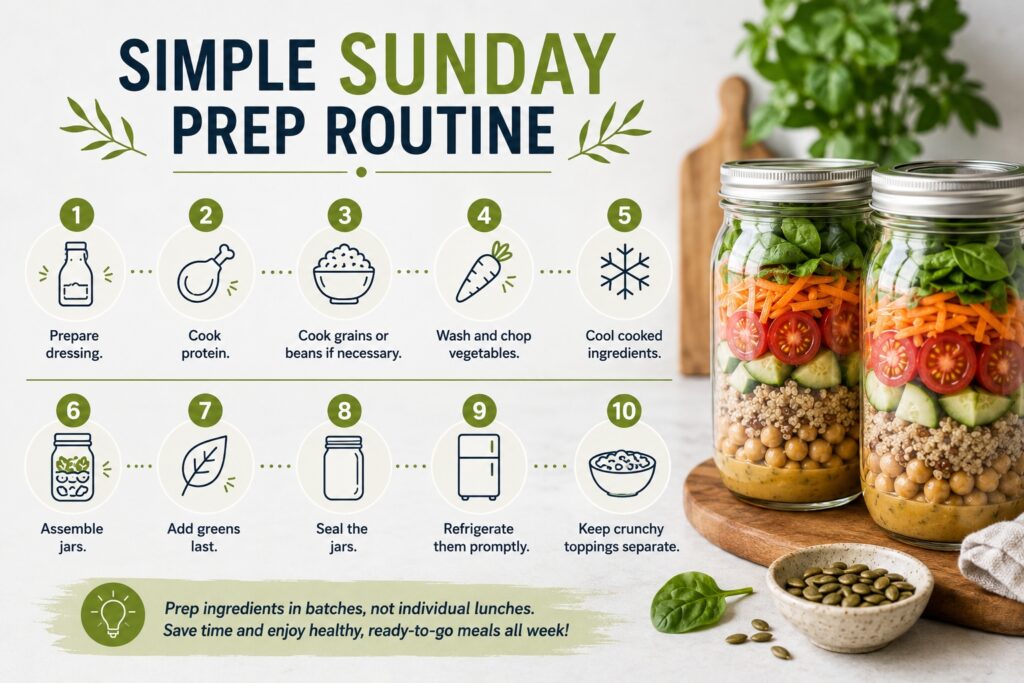
Simple Sunday Prep Routine
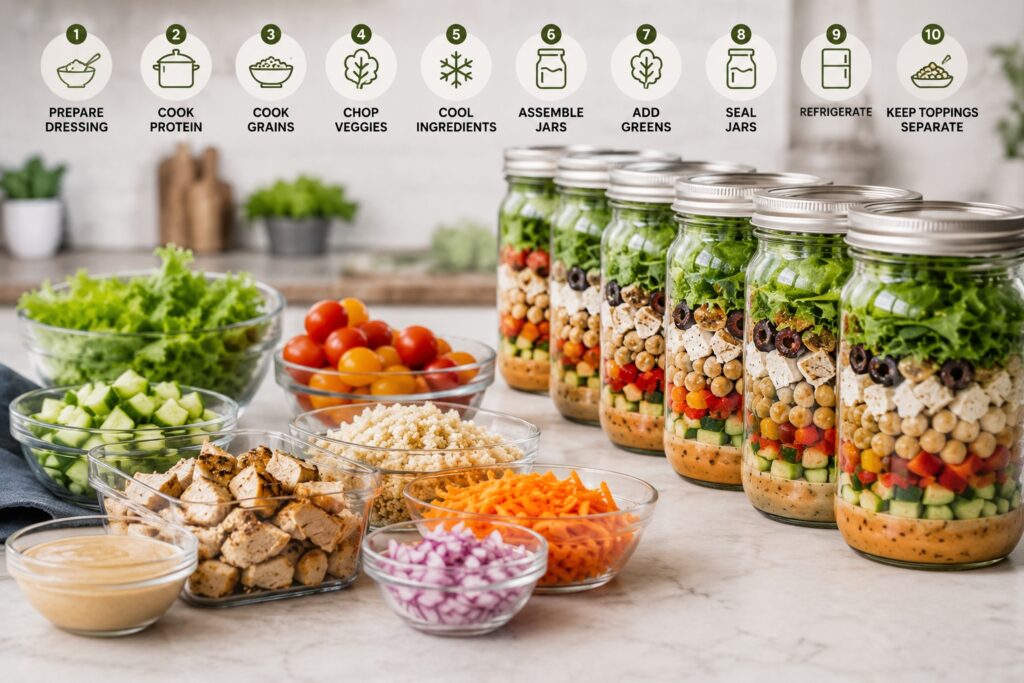
You do not need to spend an entire day preparing your lunches.
Start with the ingredients that require cooking.
Cook your chicken, quinoa, eggs, or other proteins and grains first. While they cool, wash and chop the vegetables.
Then prepare one or two dressings.
Once everything is ready, assemble the jars from bottom to top.
A simple routine looks like this:
- Prepare dressing.
- Cook protein.
- Cook grains or beans if necessary.
- Wash and chop vegetables.
- Cool cooked ingredients.
- Assemble jars.
- Add greens last.
- Seal the jars.
- Refrigerate them promptly.
- Keep crunchy toppings separate.
This approach makes Mason Jar Salad Meal Prep more efficient because you prepare ingredients in batches rather than building each lunch from scratch.
If you are new to meal preparation, the Meal Prep Guide 101: Complete Meal Prep Guide is a useful starting point for learning the broader process of planning, cooking, portioning, and storing meals.
How to Customize Your Mason Jar Salad Meal Prep
Once you understand the basic layering method, you can create your own salad in a jar recipe without following a fixed recipe every time.
Start with one dressing.
Choose a Dressing
Try:
- Lemon vinaigrette
- Balsamic dressing
- Greek dressing
- Honey mustard
- Tahini dressing
Choose a Protein
Pick one:
- Chicken
- Tuna
- Eggs
- Chickpeas
- Lentils
- Tofu
Choose a Filling Base
Options include:
- Quinoa
- Brown rice
- Beans
- Whole-grain pasta
- Lentils
Choose Two or Three Vegetables
Try:
- Carrot + cucumber + bell pepper
- Broccoli + red onion + tomato
- Corn + pepper + tomato
- Radish + cucumber + carrot
Choose Your Greens
Romaine and kale generally provide a sturdier texture, while spinach and mixed greens are softer.
This flexible approach means mason jar salad meal prep can adapt to different grocery lists and preferences.
You can also use leftovers strategically. If you cooked chicken for dinner, reserve some for tomorrow’s salad. If you prepared quinoa for another meal, use the extra portion in a jar.
That is often more sustainable than buying special ingredients only for meal prep.
A Practical Ingredient Shopping List
If you want to make several different Mason Jar Salad Meal Prep in one week, choose ingredients that can appear in multiple combinations.
Vegetables
- Romaine
- Spinach
- Cucumber
- Bell peppers
- Carrots
- Cherry tomatoes
- Red onion
- Broccoli
Protein
- Chicken
- Tuna
- Chickpeas
- Black beans
- Eggs
- Tofu
Grains and Filling Ingredients
- Quinoa
- Brown rice
- Whole-grain pasta
- Lentils
Toppings
- Feta
- Parmesan
- Walnuts
- Dried cranberries
- Olives
Dressings
- Lemon vinaigrette
- Greek dressing
- Honey mustard
- Tahini dressing
Buying overlapping ingredients helps reduce food waste and makes mason jar salad meal prep easier to repeat.
How to Keep Your Weekly Prep Interesting
Variety does not require completely different ingredients.
You can use the same chicken in three different ways.
For example:
- Chicken + Caesar dressing + romaine
- Chicken + Greek dressing + cucumber + feta
- Chicken + lime dressing + black beans + corn
You can also change the grain, dressing, or toppings while keeping the main vegetables the same.
Another strategy is to prepare two dressings at once. One lemon-based dressing and one creamy or tahini-based dressing can make similar ingredients taste noticeably different.
This is one reason mason jar salad meal prep can fit into a regular weekly routine without requiring elaborate cooking.
Key Takeaways
- Layering is the main technique behind successful mason jar salad meal prep.
- Keep dressing at the bottom and leafy greens toward the top.
- Use sturdy ingredients such as carrots, peppers, beans, and grains between wet ingredients and greens.
- Cool cooked ingredients before assembling.
- Keep nuts, croutons, and other crunchy toppings separate.
- Use overlapping ingredients to create several different lunches.
- More delicate salads may need to be prepared in smaller batches.
- The best combination is one that fits your taste, schedule, and storage needs.
Frequently Asked Questions
- What is the best way to layer a Mason Jar Salad Meal Prep?
The best general approach is to put dressing at the bottom, followed by sturdy vegetables, beans or grains, protein, softer ingredients, and greens at the top. This arrangement helps keep dressing away from delicate lettuce.
- How long can mason jar salads stay fresh?
The practical storage period varies by ingredients and handling. Sturdier combinations may maintain quality longer than salads containing delicate greens or high-moisture ingredients. Keep prepared salads refrigerated and follow safe food-storage practices.
- Can you put lettuce in a mason jar overnight?
Yes. Lettuce can be stored in a jar overnight when it is dry and separated from dressing and wetter ingredients. Keeping greens near the top can help protect their texture.
- Are mason jar salads good for meal prep?
Yes. Mason jar salad meal prep can be convenient because individual lunches can be assembled ahead of time and stored in the refrigerator. The layering technique is especially useful for keeping dressing away from greens.
- Can I prepare Mason Jar Salad Meal Prep for five days?
You can prepare several jars in advance, but five-day quality depends on the ingredients and storage conditions. Delicate ingredients may be better prepared in smaller batches, while sturdier combinations can hold their texture better.
- Should I shake a mason jar salad before eating?
You can shake the jar if there is enough room for the ingredients to move. Another easy option is to empty the jar into a bowl and mix everything together immediately before eating.
- Can I use mason jar salads for weight loss?
A salad can be part of a balanced eating pattern, but the jar itself does not cause weight loss. Overall food intake, portions, activity, preferences, and individual circumstances all matter. If you have specific health or dietary needs, a registered dietitian or qualified healthcare professional can help you choose an appropriate approach.
- What size jar is best for salads?
A medium to large wide-mouth jar is generally practical because it provides enough room for multiple layers and makes the salad easier to remove. The best size depends on the amount of food you normally eat for lunch.
Conclusion
Mason jar salad meal prep is less about the container and more about understanding how ingredients behave when they are stored together. Keeping dressing at the bottom, using sturdy foods as barriers, and placing greens near the top can help you prepare convenient salads with better texture.
The seven combinations in this guide give you a starting point for chicken, chickpeas, black beans, tuna, quinoa, vegetables, fruit, and different dressings. You can mix the ingredients between recipes to create your own combinations instead of following one formula every week.
For a broader approach to weekly preparation, start with the Meal Prep Guide 101: Complete Meal Prep Guide on The Daily Crave. You can then explore 5-Ingredient Meal Prep Lunch Ideas for simpler lunches and High Protein Meal Prep on a Budget for ways to build satisfying meals while keeping grocery costs in mind.
The most useful mason jar salad meal prep routine is the one you can repeat consistently. Keep the process simple, use ingredients you actually enjoy, prepare realistic portions, and change the combinations when you need more variety.