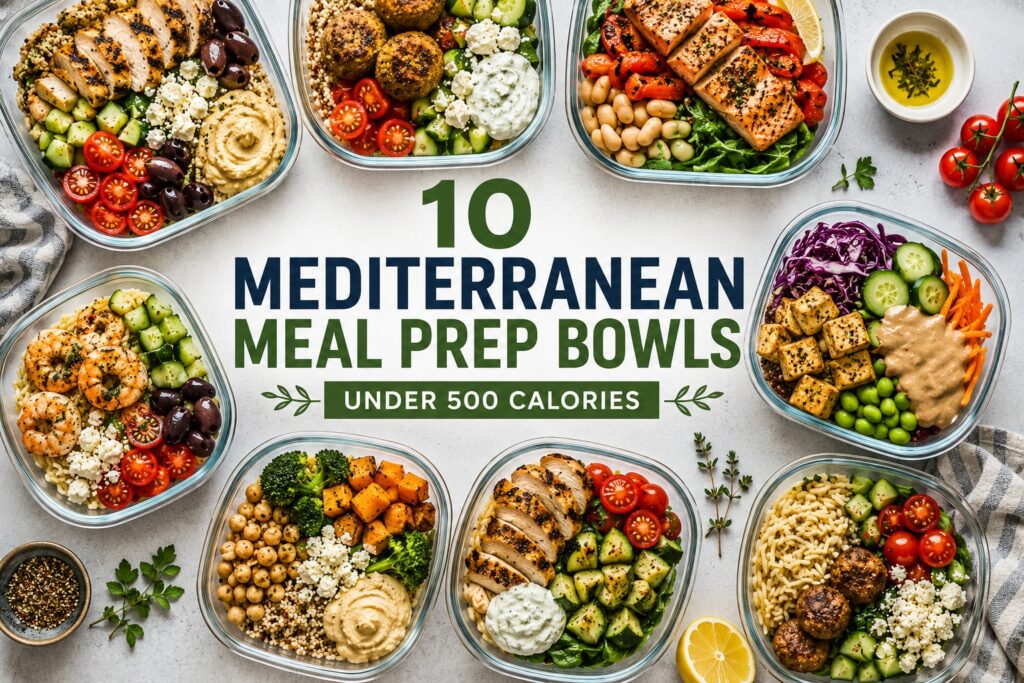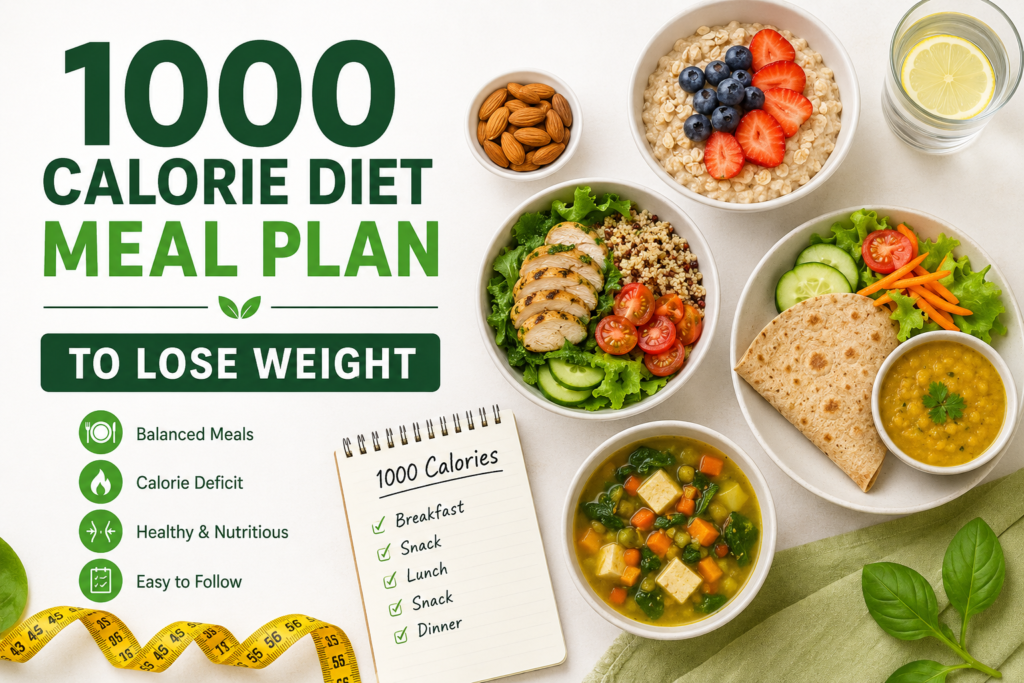
Table of Contents
Introduction
If you’ve ever Googled “how to lose weight” and ended up more confused than when you started , you’re not alone. There are hundreds of diets out there, each one claiming to be the best. The truth is, finding the right weight loss diet plan isn’t about following the most popular trend. It’s about finding an approach that fits your body, your lifestyle, and your goals.
This guide cuts through the noise. Whether you want a structured plan, a flexible approach, or simply need to understand the basics before you begin, we’ve got you covered. From the best diets for beginners to protein-rich meal strategies, calorie tips, and free tools to get you started , this is your one-stop resource for 2026.
Let’s make this the year you finally find what works.
1. What Is a Weight Loss Diet Plan (and Why Most People Get It Wrong)
A weight loss diet plan is simply a structured approach to eating that creates a calorie deficit , meaning you consume fewer calories than your body burns. That deficit forces your body to draw on stored fat for energy, which leads to weight loss over time.
Simple in theory. But here’s where most people go wrong:
They treat dieting as a short-term punishment rather than a long-term lifestyle shift. They go too extreme, too fast , slashing calories drastically, cutting out entire food groups, or following a plan that’s impossible to maintain beyond two weeks. Then when they “fall off,” they feel like they’ve failed.
The most effective weight loss diet plan isn’t necessarily the strictest one. It’s the one you can actually stick to. Let’s break down what that looks like.
2. How Weight Loss Diet Plan Actually Works: The Basics You Need to Know
Before diving into specific diet plans, it helps to understand a few key principles. These apply to every approach , no matter what eating style you choose.
Calories In vs. Calories Out
At its core, weight loss comes down to energy balance. To lose weight, you need to burn more calories than you consume. A deficit of roughly 500 calories per day leads to about 1 pound of weight loss per week, which is considered a safe, sustainable rate.
You don’t need to count every calorie obsessively. But having a general idea of how much you’re eating , and how much your body needs , is a powerful starting point.
The Role of Macronutrients
Your food is made up of three macronutrients: protein, carbohydrates, and fat. Each plays a different role in weight loss:
- Protein builds and preserves muscle, keeps you full longer, and burns more calories during digestion
- Carbohydrates provide energy , but the quality and quantity matter a lot
- Fats support hormone health, brain function, and satiety
Most successful weight loss diet plans adjust the ratio of these macros , some go high-protein, some low-carb, some balanced. We’ll cover the top approaches below.
The Importance of Consistency Over Perfection
One good week won’t transform your body. One bad week won’t ruin your progress. What matters most is what you do consistently over weeks and months. Progress, not perfection, is the goal.
3. The 8 Best Weight Loss Diet Plans for Beginners in 2026
Here’s a breakdown of the most effective, research-backed diet plans , with honest pros and cons for each. Use this section to find the best fit for your personality and lifestyle.
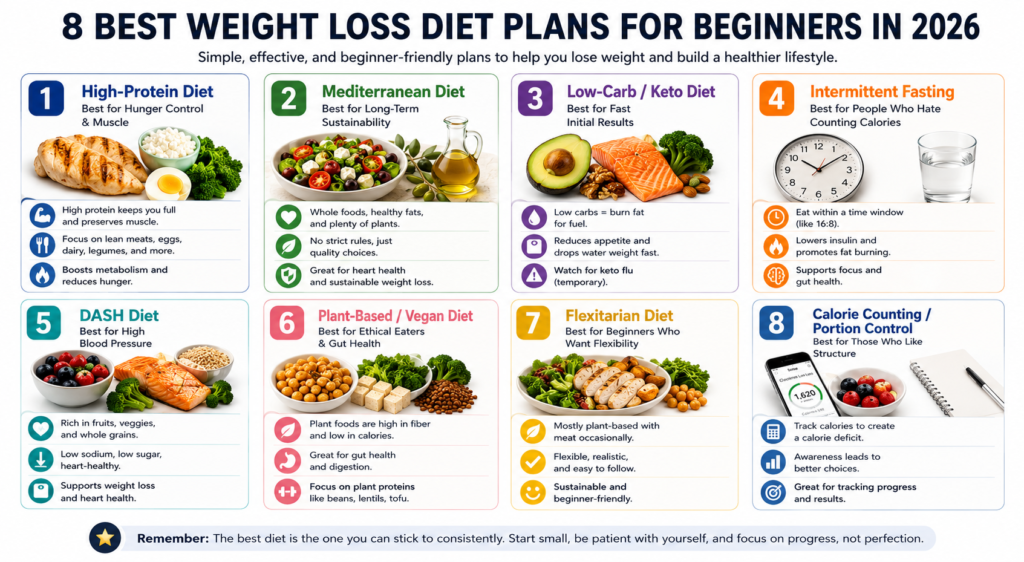
1. The High-Protein weight loss diet plan , Best for Hunger Control and Muscle Preservation
If there’s one dietary strategy that consistently outperforms others in scientific research, it’s increasing protein intake. A protein diet for weight loss works by keeping you full longer, reducing overall calorie intake, and preserving lean muscle mass , which is critical for keeping your metabolism healthy.
How it works: Aim for 25–35% of your daily calories from protein. For most people, that’s roughly 100–150g of protein per day depending on body weight and activity level.
Best protein foods for weight loss:
- Chicken breast and turkey
- Eggs and egg whites
- Greek yogurt and cottage cheese
- Salmon, tuna, and other fatty fish
- Lentils, chickpeas, and black beans
- Tofu and tempeh
- Protein powder (whey or plant-based)
Why it works: Protein has the highest “thermic effect” of any macronutrient , your body burns up to 30% of the calories in protein just through digestion. It also suppresses ghrelin (the hunger hormone) more effectively than carbs or fat.
Who it’s best for: Anyone who struggles with hunger, loves savory meals, or wants to preserve muscle while losing fat.
2. The Mediterranean Diet , Best for Long-Term Sustainability
Consistently ranked as the #1 diet for overall health by nutrition experts, the Mediterranean diet isn’t really a “diet” at all , it’s a way of eating inspired by the traditional food patterns of Southern Europe.
How it works: Focus on whole, minimally processed foods: vegetables, fruits, whole grains, legumes, fish, olive oil, and nuts. Limit red meat, sugar, and ultra-processed foods.
Key features:
- No strict calorie counting
- No off-limits foods , just an emphasis on quality
- Naturally high in fiber, healthy fats, and antioxidants
- Moderate wine consumption is optional (not required!)
Why it works for weight loss: While it’s not designed primarily as a weight loss plan, the Mediterranean diet naturally reduces calorie intake because whole foods are more filling than processed ones. Studies consistently show it leads to gradual, sustainable fat loss.
Who it’s best for: People who hate restrictive weight loss diet plans, love cooking, and want something they can follow for life.
3. Low-Carb / Ketogenic Diet , Best for Fast Initial Results
Low-carb diets , including the popular ketogenic (keto) diet , work by drastically reducing carbohydrate intake, forcing the body to burn fat for fuel instead of glucose.
How it works:
- Standard low-carb: under 100–150g of carbs per day
- Ketogenic: under 20–50g of carbs per day (to enter “ketosis”)
What you eat: Meat, fish, eggs, cheese, nuts, seeds, low-carb vegetables, and healthy fats like avocado and olive oil.
What you avoid: Bread, pasta, rice, potatoes, sugar, most fruit, and alcohol.
Why it works: Cutting carbs causes rapid water weight loss initially, then ongoing fat loss as the body shifts to fat-burning mode. Many people also report reduced appetite naturally.
Who it’s best for: People who love high-fat foods, don’t mind cutting out bread and pasta, and want fast early results for motivation.
Watch out for: The “keto flu” in the first 1–2 weeks (fatigue, headaches). It passes. Staying hydrated and keeping electrolytes up helps.
4. Intermittent Fasting , Best for People Who Hate Counting Calories
Intermittent fasting (IF) isn’t about what you eat , it’s about when you eat. By compressing your eating window, you naturally consume fewer calories without obsessing over every bite.
Popular IF methods:
- 16:8 , Fast for 16 hours, eat within an 8-hour window (e.g., 12pm–8pm). Most popular and beginner-friendly.
- 5:2 , Eat normally 5 days a week; restrict to 500–600 calories on 2 non-consecutive days.
- OMAD , One Meal a Day. More extreme; not recommended for beginners.
Why it works: Fasting lowers insulin levels, which promotes fat burning. It also gives your digestive system a break, supports gut health, and can improve mental clarity for many people.
Who it’s best for: People with busy mornings who don’t mind skipping breakfast, or those who prefer fewer, larger meals over multiple small ones.
5. The DASH Diet , Best for People with High Blood Pressure
The DASH (Dietary Approaches to Stop Hypertension) diet was originally designed to lower blood pressure , but it’s also a highly effective weight loss plan thanks to its emphasis on whole foods and portion control.
How it works:
- High in fruits, vegetables, whole grains, and lean protein
- Low in sodium, saturated fat, and added sugar
- No strict calorie limits, but recommends moderate portions
Why it works for weight loss: By eliminating processed foods and emphasizing nutrient-dense whole foods, the DASH diet naturally reduces calorie intake and supports healthy weight management.
Who it’s best for: People with cardiovascular health concerns, those who prefer a non-restrictive approach, and anyone who wants a plan backed by decades of clinical research.
6. Plant-Based / Vegan Diet , Best for Ethical Eaters and Gut Health
A plant-based diet eliminates all animal products and focuses entirely on foods from plants: vegetables, fruits, grains, legumes, nuts, and seeds.
Why it works for weight loss: Plant foods tend to be high in fiber and water content, which promotes fullness at fewer calories. Studies show that vegans tend to have lower BMIs on average than meat-eaters.
The challenge: Protein can be harder to get on a plant-based diet. Focus on protein diet foods for weight loss from plant sources like:
- Lentils (18g protein per cup)
- Chickpeas (15g per cup)
- Edamame (17g per cup)
- Tempeh (31g per cup)
- Nutritional yeast (8g per 2 tbsp)
- Hemp seeds (10g per 3 tbsp)
Who it’s best for: Ethical or environmentally-conscious eaters, those with gut health goals, and anyone willing to put a little extra thought into protein planning.
7. The Flexitarian Weight Loss Diet Plan , Best for Beginners Who Don’t Want to Commit Fully
The flexitarian diet is exactly what it sounds like: flexible + vegetarian. It’s a mostly plant-based diet that allows meat and animal products occasionally , making it far easier to adopt than a strict vegan or vegetarian plan.
How it works:
- Most meals are built around plants and legumes
- Meat, fish, and dairy are consumed in smaller amounts, less frequently
- No strict rules , just a general shift toward more plant-based eating
Why it works: The flexitarian approach naturally reduces calorie intake while increasing fiber, vitamins, and minerals. It’s one of the most sustainable diets because it doesn’t require you to give anything up permanently.
Who it’s best for: Beginners who want the benefits of a plant-based diet without the rigidity, and anyone who finds all-or-nothing approaches unsustainable.
8. The Calorie-Counting / Portion Control weight loss diet plan , Best for Those Who Like Structure
Sometimes the simplest approach is the most effective. The calorie-counting method involves tracking your daily food intake and staying within a target calorie range to create a deficit.
How it works:
- Calculate your TDEE (Total Daily Energy Expenditure) using an online calculator
- Subtract 300–500 calories to create a moderate deficit
- Track everything you eat using an app like MyFitnessPal or Cronometer
Why it works: Awareness is one of the most powerful tools for behavior change. Research consistently shows that people who track their food intake lose significantly more weight than those who don’t.
Who it’s best for: Analytical thinkers who like data, people who’ve tried intuitive approaches without success, and anyone starting out who wants to understand their baseline eating habits.
4. A Sample 7 Day Protein Diet for Weight Loss Diet Plan (Full Week)
Since protein is the 1 driver of satiety and muscle preservation, here’s a complete protein diet for weight loss meal plan you can follow right away. Approximately 1,400–1,600 calories daily, with 120–140g of protein per day.
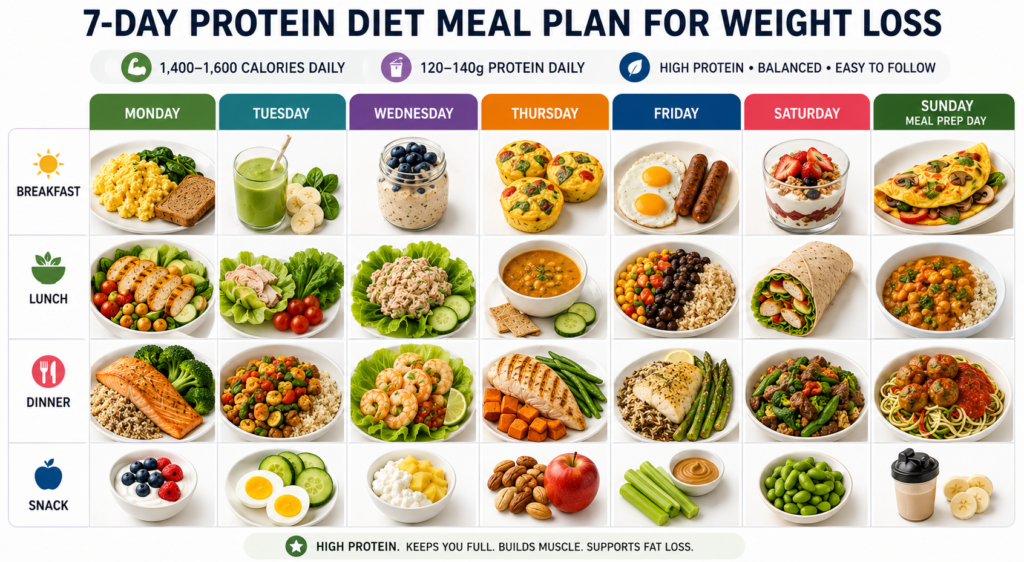
Monday
- Breakfast: 3 scrambled eggs + spinach + 1 slice whole-grain toast
- Lunch: Grilled chicken salad with mixed greens, chickpeas, cucumber, olive oil dressing
- Dinner: Baked salmon + steamed broccoli + ½ cup quinoa
- Snack: ½ cup Greek yogurt + handful of berries
Tuesday
- Breakfast: Protein smoothie (1 scoop protein powder + almond milk + spinach + banana)
- Lunch: Turkey and avocado lettuce wraps + side of cherry tomatoes
- Dinner: Ground turkey stir-fry with zucchini, bell pepper, onion + cauliflower rice
- Snack: 2 hard-boiled eggs + cucumber slices
Wednesday
- Breakfast: Overnight oats with 1 scoop protein powder, chia seeds, and blueberries
- Lunch: Tuna salad (canned tuna + Greek yogurt + mustard) on romaine leaves
- Dinner: Grilled shrimp tacos in lettuce cups with salsa and lime
- Snack: Cottage cheese (½ cup) + pineapple chunks
Thursday
- Breakfast: Veggie egg muffins (4 muffins, baked with spinach, tomato, feta)
- Lunch: Lentil soup + 2 Wasa crackers + cucumber slices
- Dinner: Baked chicken breast + roasted sweet potato + green beans
- Snack: 1 oz mixed nuts + 1 small apple
Friday
- Breakfast: 2 eggs + 2 turkey sausage links + black coffee or herbal tea
- Lunch: Black bean and veggie bowl with ½ cup brown rice + salsa
- Dinner: Cod fillet baked in lemon-herb seasoning + asparagus + ½ cup wild rice
- Snack: 1 tbsp peanut butter + celery sticks
Saturday
- Breakfast: Greek yogurt parfait: ¾ cup yogurt + granola (2 tbsp) + strawberries
- Lunch: Grilled chicken wrap (whole-grain tortilla, avocado, tomato, romaine)
- Dinner: Lean beef stir-fry with broccoli, snap peas, soy-ginger sauce + brown rice
- Snack: Edamame (½ cup, lightly salted)
Sunday , Meal Prep Day
- Breakfast: 3-egg omelette with mushrooms, peppers, and a sprinkle of cheese
- Lunch: Chickpea and spinach curry (1.5 cups) over ½ cup cauliflower rice
- Dinner: Baked turkey meatballs + zucchini noodles + low-sugar marinara
- Snack: 1 scoop protein powder blended with water + ½ banana
5. Free Weight Loss Diet Plan : Where to Find Them (and What to Look For)
You don’t have to spend money to eat well. There are plenty of excellent free weight loss diet plans available online , but not all of them are created equal.
What to Look for in a Free weight loss diet plan:
- Calorie targets that match your needs , not a one-size-fits-all number
- Adequate protein , at least 0.7–1g per pound of body weight
- Variety , plans with the same meals every day lead to boredom and quitting
- Realistic food choices , uses ingredients you can actually find and afford
- A science-based approach , not extreme or fad-diet territory
Where to Find Quality Free Plans:
- The Daily Crave (thedailycrave.online) , free weekly meal plans, recipes, and diet guides tailored for beginners
- MyFitnessPal , free calorie tracking with customizable macro goals
- Cronometer , great for detailed micronutrient tracking
- CDC and NIH websites , government health sites with evidence-based eating guides
- YouTube , registered dietitians and nutritionists post free full-week meal plans regularly
The best free plan is the one that teaches you why certain foods work , not just what to eat.
6. The Role of Protein Foods in Every Weight Loss Diet Plan
No matter which diet plan you choose, one thing remains consistent across all of them: protein is your most important macronutrient for weight loss.
Here’s a deeper look at the best protein foods for weight loss diet plan and why each one earns its place on your plate:
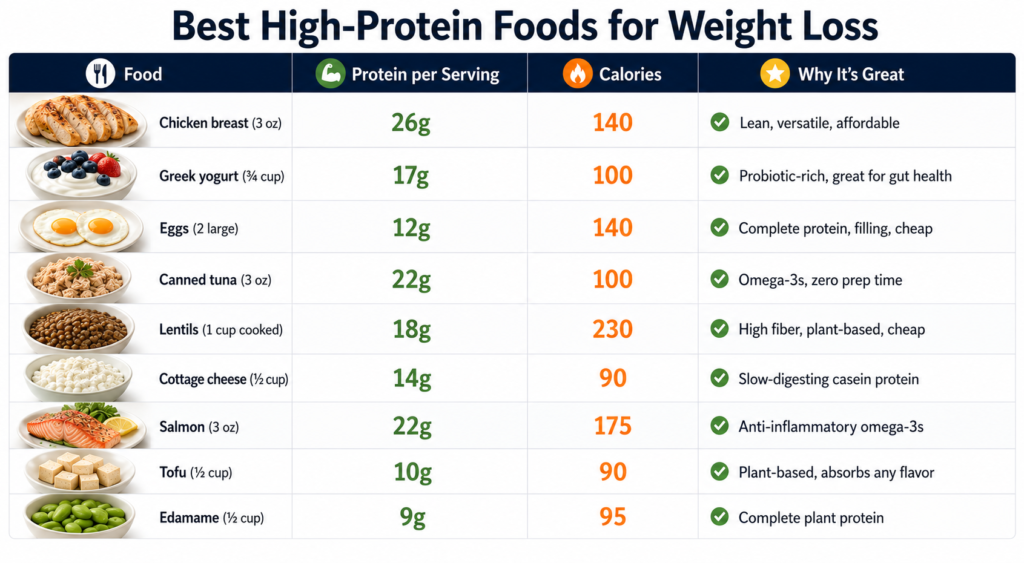
| Food | Protein per Serving | Calories | Why It’s Great |
| Chicken breast (3 oz) | 26g | 140 | Lean, versatile, affordable |
| Greek yogurt (¾ cup) | 17g | 100 | Probiotic-rich, great for gut health |
| Eggs (2 large) | 12g | 140 | Complete protein, filling, cheap |
| Canned tuna (3 oz) | 22g | 100 | Omega-3s, zero prep time |
| Lentils (1 cup cooked) | 18g | 230 | High fiber, plant-based, cheap |
| Cottage cheese (½ cup) | 14g | 90 | Slow-digesting casein protein |
| Salmon (3 oz) | 22g | 175 | Anti-inflammatory omega-3s |
| Tofu (½ cup) | 10g | 90 | Plant-based, absorbs any flavor |
| Edamame (½ cup) | 9g | 95 | Complete plant protein |
Incorporating protein diet foods for weight loss at every meal is one of the simplest and most effective changes you can make , regardless of which specific diet you follow.
7. Common Mistakes Beginners Make on a Weight Loss Diet Plan
Even with the best intentions, these mistakes can slow your progress significantly:
Mistake 1:
Eating Too Little Going too low in calories might seem like it would speed up weight loss , but it often backfires. It can lead to muscle loss, a slower metabolism, constant hunger, and eventual bingeing.
Mistake 2:
Drinking Their Calories A flavored coffee, juice, or sports drink can easily add 200–400 calories to your day without registering as “food.” Stick to water, black coffee, and unsweetened tea as your primary beverages.
Mistake 3:
Skipping Protein Without enough protein, you’ll feel hungry constantly and lose muscle along with fat. This makes weight regain far more likely once you stop dieting.
Mistake 4:
Ignoring Sleep Poor sleep spikes hunger hormones (ghrelin) and cravings for high-calorie foods. Consistently sleeping 7–9 hours per night is one of the most underrated weight loss tools.
Mistake 5:
Expecting Linear Progress The scale will go up and down week to week , especially for women dealing with hormonal fluctuations. Don’t let day-to-day fluctuations derail you. Focus on the trend over 4–6 weeks.
Mistake 6:
All-or-Nothing Thinking: One “bad” meal doesn’t ruin your weight loss diet plan. One missed workout doesn’t erase your progress. The ability to bounce back quickly , without guilt , is what separates people who succeed from those who don’t.
8. How to Choose the Right Weight Loss Diet Plan for You
With so many options, how do you actually choose? Ask yourself these questions:
1. What does my day look like?
If you’re always on the go, a simple high-protein plan with meal prep might suit you better than a complex cooking-heavy approach like the Mediterranean diet.
2. What foods do I actually enjoy?
You won’t stick to a plan that makes you miserable. If you love carbs, a low-carb diet might not be your best long-term option. If you love cooking, the Mediterranean approach might feel less like a diet and more like a lifestyle.
3. Do I have any health conditions?
People with diabetes may need to manage carbohydrates carefully. Those with kidney disease need to watch protein intake. Always check with your doctor before starting a new plan.
4. What’s my track record?’
If you’ve tried restrictive diets and failed, a more flexible approach like flexitarianism or calorie cycling might work better for you.
5. What’s my goal timeline?
If you want fast initial results (for a wedding, vacation, or confidence boost), a stricter plan like low-carb or intermittent fasting may deliver. If you’re playing the long game, Mediterranean or plant-based eating may suit you better.
Key Takeaways
- A weight loss diet plan works by creating a consistent calorie deficit , the specific approach matters less than your ability to stick to it
- Protein is the single most important nutrient for weight loss , prioritize it at every meal
- The 8 best diet plans for 2026 include high-protein, Mediterranean, low-carb, intermittent fasting, DASH, plant-based, flexitarian, and calorie counting
- Free diet plans for weight loss are widely available , look for ones with adequate protein, variety, and realistic food choices
- Common beginner mistakes include eating too little, skipping protein, drinking hidden calories, and expecting linear progress
- Choose your plan based on your lifestyle, food preferences, health conditions, and goals , not just what’s trending
Conclusion: Your Weight Loss Diet Plan Starts Today
There’s no single “perfect” diet. There’s only the diet that works best for you , the one you’ll actually follow, enjoy, and sustain over time. Whether that’s a structured weight loss diet plan built around high-protein meals, a flexible Mediterranean approach, or a simple intermittent fasting routine, the most important step is the first one.
Start simple. Pick one approach from this guide. Give it 4 weeks before judging results. Adjust as you go.
And whenever you need fresh recipes, meal plans, or expert nutrition guidance, you know where to find us. Visit thedailycrave.online for weekly meal prep ideas, diet plans, healthy recipes, and everything you need to build a lifestyle you actually love.
Frequently Asked Questions (FAQ)
Q1: What is the best weight loss diet plan for beginners?
There’s no universal “best” plan , but for beginners, the high-protein diet or flexitarian approach are excellent starting points. Both are flexible, sustainable, and don’t require extreme restriction. Pair either with calorie tracking for the best results in your first 4–6 weeks.
Q2: How much protein do I need on a weight loss diet plan?
A general guideline is 0.7–1 gram of protein per pound of body weight. So if you weigh 160 lbs, aim for 112–160g of protein per day. Prioritize lean protein foods for weight loss like chicken, eggs, Greek yogurt, fish, and legumes at every meal.
Q3: Can I find a good free diet plan for weight loss online?
Yes , there are many quality free diet plans for weight loss available. The Daily Crave (thedailycrave.online) offers free beginner-friendly meal plans and diet guides. Apps like MyFitnessPal and Cronometer also offer free calorie and macro tracking to support any plan you choose.
Q4: How fast can with weight loss diet plan?
A safe, sustainable rate is 0.5–2 pounds per week. Faster loss is possible initially (especially water weight), but aiming for gradual loss preserves muscle mass and is far easier to maintain. Crash dieting often leads to rapid rebound weight gain.
Q5: Do I need to exercise to lose weight on a diet plan?
No , diet alone can create the calorie deficit needed for weight loss. However, combining a healthy diet with even light exercise (walking 30 minutes daily) significantly improves results, supports muscle retention, boosts mood, and makes the weight loss diet plan process much more enjoyable and sustainable.