Table of Contents
Thinking about trying a vegetarian diet for weight loss , but not sure where to start? You’re not alone. Millions of people are discovering that cutting out meat doesn’t just feel good ethically. It actually works incredibly well for shedding pounds, reducing bloating, and building healthier long-term eating habits. And the best part? You don’t have to give up delicious, satisfying food to make it happen.
A well-planned vegetarian diet for weight loss is naturally lower in calories and higher in fiber than a meat-heavy diet. That means you eat more volume, feel fuller longer, and naturally consume fewer calories , without counting every single bite. Plants are powerful. And when you combine them with the right protein sources and smart meal structure, the results speak for themselves.
In this guide, you’ll get everything you need: a complete vegetarian diet plan for weight loss, a free 7-day vegetarian weight loss meal plan, the best foods to eat, what to avoid, and practical tips to stay consistent as a beginner. Let’s make plant-based weight loss simple, enjoyable, and genuinely effective.
1. Why a Vegetarian Diet for Weight Loss Works So Well
A vegetarian diet for weight loss isn’t just a feel-good concept , it’s backed by solid research. Here’s why plant-based eating consistently outperforms standard diets for fat loss:
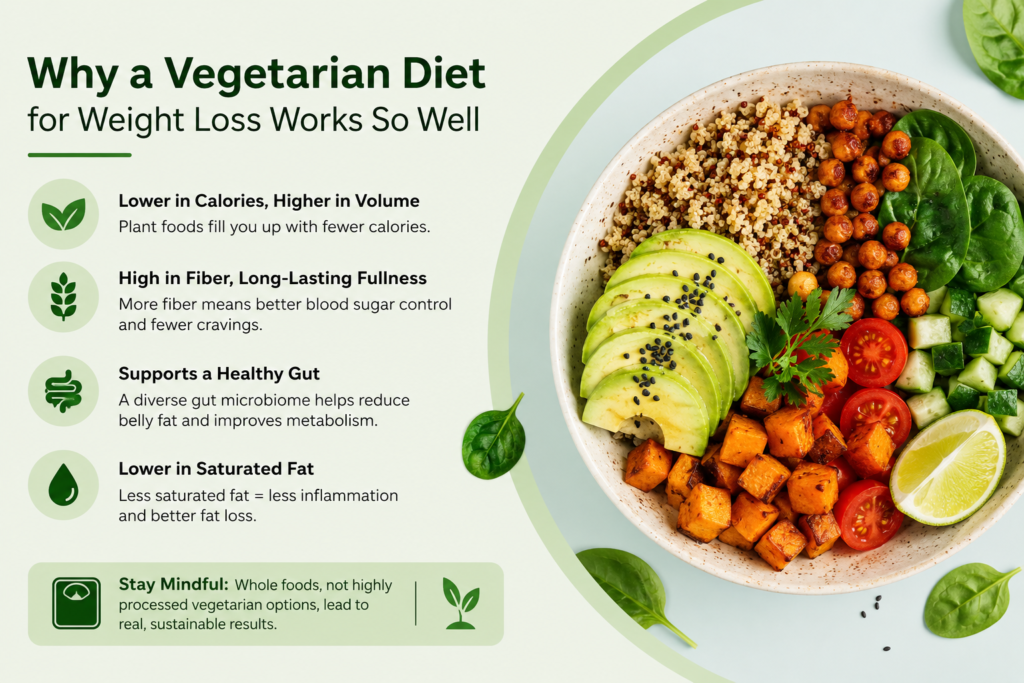
Naturally Lower in Calorie Density
Whole plant foods , vegetables, legumes, whole grains, and fruits , pack far more volume per calorie than meat and processed foods. You physically eat more food while consuming fewer calories. This is the foundation of every effective vegetarian weight loss meal plan.
Higher in Fiber = Longer Satiety
Fiber slows digestion, stabilizes blood sugar, and suppresses appetite hormones. Most vegetarians naturally consume 2–3 times more fiber than meat-eaters , which directly translates to fewer total calories eaten throughout the day.
Supports a Healthier Gut Microbiome
Research shows that plant-rich diets dramatically improve gut microbiome diversity. A healthier gut microbiome is directly linked to lower body weight, reduced belly fat, and better metabolic function , making the vegetarian diet for weight loss even more effective over time.
Lower in Saturated Fat
Eliminating meat (especially red and processed meat) automatically reduces saturated fat intake. Lower saturated fat means lower inflammation, better insulin sensitivity, and fewer obstacles to fat loss.
The one thing to watch: Going vegetarian doesn’t automatically mean eating fewer calories. Cheese, oils, refined carbs, and sugary plant-based snacks can still cause weight gain. A structured vegetarian diet plan for weight loss keeps these in check.
2. Best Foods for a Vegetarian Diet for Weight Loss
Before the meal plan, here’s your complete food guide. These are the building blocks of every meal in your vegetarian meal plan for weight loss.
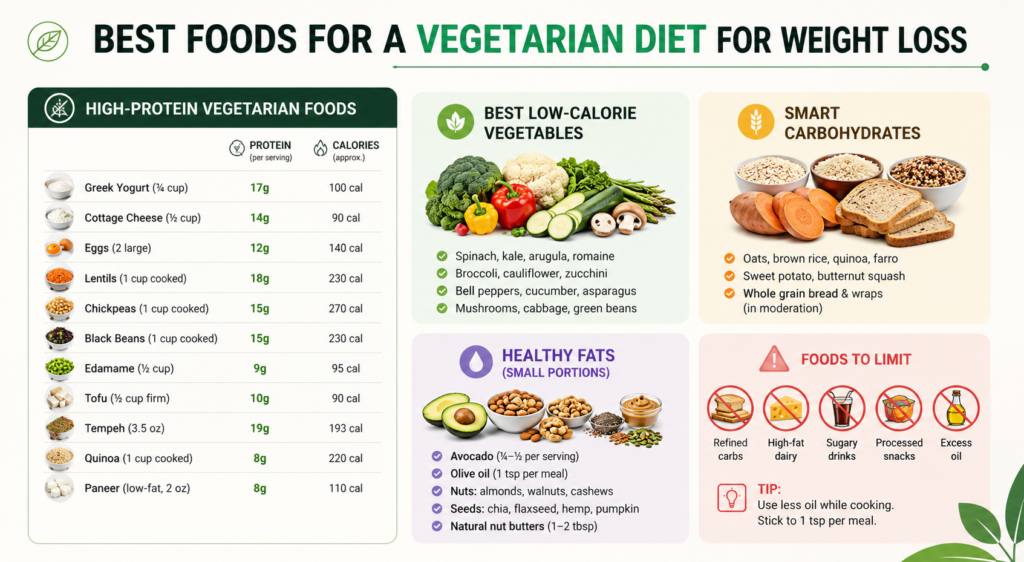
High-Protein Vegetarian Foods (Critical for Satiety)
The biggest concern beginners have with a vegetarian diet for weight loss is protein. Here’s how to get plenty:
| Food | Protein per Serving | Calories |
| Greek yogurt (¾ cup) | 17g | 100 cal |
| Cottage cheese (½ cup) | 14g | 90 cal |
| Eggs (2 large) | 12g | 140 cal |
| Lentils (1 cup cooked) | 18g | 230 cal |
| Chickpeas (1 cup cooked) | 15g | 270 cal |
| Black beans (1 cup cooked) | 15g | 230 cal |
| Edamame (½ cup) | 9g | 95 cal |
| Tofu (½ cup firm) | 10g | 90 cal |
| Tempeh (3.5 oz) | 19g | 193 cal |
| Quinoa (1 cup cooked) | 8g | 220 cal |
| Paneer (low-fat, 2 oz) | 8g | 110 cal |
Best Low-Calorie Vegetables
- Spinach, kale, arugula, romaine
- Broccoli, cauliflower, zucchini
- Bell peppers, cucumber, asparagus
- Mushrooms, cabbage, green beans
Smart Carbohydrates
- Oats, brown rice, quinoa, farro
- Sweet potato, butternut squash
- Whole grain bread and wraps (in moderation)
Healthy Fats (Small Portions)
- Avocado (¼–½ per serving)
- Olive oil (1 tsp per meal)
- Nuts: almonds, walnuts, cashews
- Seeds: chia, flaxseed, hemp, pumpkin
- Natural nut butters (1–2 tbsp)
Foods to Limit on a Vegetarian Diet for Weight Loss
- Refined carbs (white bread, pasta, crackers)
- High-fat dairy (full-fat cheese, cream, butter in large amounts)
- Sugary drinks and fruit juices
- Processed vegetarian snacks (many are high in sugar and oil)
- Excess oil when cooking , stick to 1 tsp per meal
3. The Complete Vegetarian Meal Plan: 7 Days of Weight Loss Eating
Here is your complete vegetarian meal plan , free, beginner-friendly, and built to support steady fat loss. Each day targets approximately 1,400–1,600 calories with at least 80–100g of protein. This is your full vegetarian diet plan for weight loss for the first week.
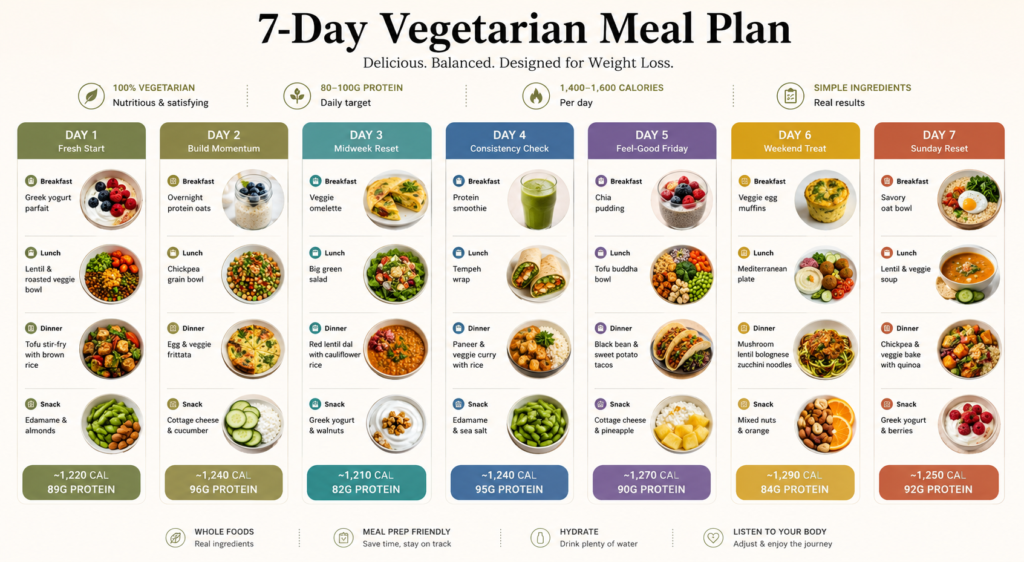
Day 1 , Fresh Start
Breakfast
(280 cal | 22g protein) Greek yogurt parfait: ¾ cup full-fat Greek yogurt + 1 tbsp chia seeds + ½ cup mixed berries + 1 tbsp almond butter
Lunch
(380 cal | 28g protein) Lentil and roasted veggie bowl: ¾ cup cooked green lentils + roasted zucchini, bell pepper, and broccoli + tahini-lemon dressing
Dinner
(420 cal | 30g protein) Tofu stir-fry: baked tofu cubes + broccoli + snap peas + mushrooms + garlic-ginger-soy sauce + ½ cup brown rice
Snack
(140 cal | 9g protein) ½ cup edamame + a small handful of almonds
Daily Total: ~1,220 cal | 89g protein
Day 2 , Build Momentum
Breakfast
(300 cal | 24g protein) Overnight oats: ½ cup oats + 1 scoop plant protein powder + 1 cup almond milk + chia seeds + blueberries (prep the night before)
Lunch
(360 cal | 26g protein) Chickpea grain bowl: ½ cup quinoa + ½ cup roasted chickpeas + cucumber + cherry tomatoes + arugula + olive oil-lemon dressing
Dinner
(430 cal | 32g protein) Egg and veggie frittata: 4 eggs + spinach + mushrooms + bell pepper + feta , baked in oven, serves 2 + side salad
Snack
(150 cal | 14g protein) ½ cup cottage cheese + sliced cucumber + everything bagel seasoning
Daily Total: ~1,240 cal | 96g protein
Day 3 , Midweek Reset
Breakfast
(260 cal | 20g protein) 2-egg veggie omelette: 2 eggs + spinach + mushrooms + bell pepper + 1 tsp olive oil + black coffee or green tea
Lunch
(400 cal | 24g protein) Big green salad: 2 cups kale + ½ cup white beans + roasted sweet potato (small) + shredded carrots + pumpkin seeds + apple cider vinaigrette
Dinner
(420 cal | 28g protein) Red lentil dal: red lentils simmered with tomatoes, onion, garlic, cumin, turmeric, coriander + ½ cup cauliflower rice
Snack
(130 cal | 10g protein) Greek yogurt (½ cup) + a drizzle of honey + walnuts
Daily Total: ~1,210 cal | 82g protein
Day 4 , Consistency Check
Breakfast
(290 cal | 26g protein) Protein smoothie: 1 scoop plant protein + 1 cup almond milk + ½ frozen banana + 1 tbsp peanut butter + handful of spinach
Lunch
(390 cal | 28g protein) Tempeh wrap: sliced marinated tempeh + avocado + romaine + shredded carrots + Dijon mustard in a whole-grain tortilla
Dinner
(440 cal | 32g protein) Paneer and veggie curry: low-fat paneer + spinach + tomato + garlic + ginger + garam masala + ½ cup brown rice
Snack
(120 cal | 9g protein) ½ cup edamame + a pinch of sea salt
Daily Total: ~1,240 cal | 95g protein
Day 5 , Feel-Good Friday
Breakfast
(280 cal | 22g protein) Chia pudding: 3 tbsp chia seeds + 1 cup coconut milk (light) + vanilla + topped with mixed berries + 2 tbsp hemp seeds (prep Thursday night)
Lunch
(410 cal | 26g protein) Buddha bowl: ½ cup quinoa + baked tofu + roasted cauliflower + steamed edamame + shredded cabbage + miso-tahini dressing
Dinner
(430 cal | 30g protein) Black bean and sweet potato tacos: corn tortillas (2) + mashed sweet potato + black beans + salsa + shredded cabbage + lime
Snack
(150 cal | 12g protein) Cottage cheese (½ cup) + pineapple chunks + a sprinkle of cinnamon
Daily Total: ~1,270 cal | 90g protein
Day 6 , Weekend Treat
Breakfast
(320 cal | 20g protein) Veggie egg muffins (3 muffins): eggs + spinach + tomato + feta baked in muffin tin + black coffee
Lunch
(400 cal | 24g protein) Mediterranean plate: falafel (3 pieces, baked) + hummus (3 tbsp) + tabbouleh + cucumber + tomato + whole-grain pita (½)
Dinner
(450 cal | 32g protein) Mushroom and lentil bolognese: brown lentils + mushrooms + crushed tomatoes + garlic + Italian herbs over zucchini noodles + nutritional yeast sprinkle
Snack
(120 cal | 8g protein) 1 oz mixed nuts + a small orange
Daily Total: ~1,290 cal | 84g protein
Day 7 , Sunday Prep + Wind Down
Breakfast
(300 cal | 24g protein) Savory oat bowl: ½ cup steel-cut oats + nutritional yeast + cherry tomatoes + sautéed spinach + 1 poached egg + tahini drizzle
Lunch
(380 cal | 26g protein) Lentil and veggie soup (1.5 cups homemade) + 2 Wasa crackers + side of cucumber and 2 tbsp hummus
Dinner
(440 cal | 30g protein) Sheet pan chickpea and veggie bake: chickpeas + broccoli + sweet potato + zucchini + olive oil + turmeric + smoked paprika , roast 400°F, 30 min + serve over quinoa (½ cup)
Snack
(130 cal | 12g protein) Greek yogurt (½ cup) + 1 tbsp ground flaxseed + raspberries
Daily Total: ~1,250 cal | 92g protein
4. Vegetarian Weight Loss Meal Plan: Key Nutrition Rules
A great vegetarian weight loss meal plan isn’t just about cutting meat , it’s about replacing it smartly. Follow these rules every day:
Rule 1: Include Protein at Every Single Meal
This is the #1 rule for any vegetarian diet for weight loss. Without meat, you must be deliberate about protein. Every meal should include eggs, dairy, legumes, tofu, tempeh, or a plant protein powder. Never eat a meal that’s just vegetables and carbs.
Rule 2: Embrace Legumes Daily
Lentils, chickpeas, black beans, and edamame are the protein workhorses of a vegetarian meal plan for weight loss. They provide both protein AND fiber , the double satiety combination that makes plant-based eating so effective for fat loss.
Rule 3: Eat Carbs , But Choose Quality
Don’t cut carbs entirely. Instead, choose whole-food carbs: oats, quinoa, brown rice, sweet potato, and legumes. These digest slowly, keep blood sugar stable, and fuel your body without spiking insulin or storing fat.
Rule 4: Don’t Over-Rely on Cheese and Eggs
Many beginners go vegetarian and immediately replace all protein with cheese and eggs. While both are nutritious, eating too much full-fat cheese adds significant saturated fat and calories. Use them , but don’t make them the default protein for every meal.
Rule 5: Watch Your Oil Portions
Olive oil is healthy , but it’s also 120 calories per tablespoon. In a vegetarian diet plan for weight loss, stick to 1 teaspoon per meal for cooking or dressings. It adds up quickly if you’re not careful.
5. Vegetarian Diet for Weight Loss: Meal Prep Strategy
The difference between a vegetarian diet for weight loss that works and one that doesn’t often comes down to preparation. Here’s a simple Sunday prep routine:
30-Minute Sunday Prep Checklist
Cook in bulk:
- Cook a large pot of lentils or chickpeas (or use canned and rinse)
- Cook 2 cups of quinoa or brown rice
- Bake or sauté a block of tofu (cube, season, bake 400°F for 25 mins)
- Hard-boil 6–8 eggs
Prep and portion:
- Prep 3–4 overnight oat jars or chia pudding jars
- Pre-portion Greek yogurt with berries
- Wash and chop salad greens and vegetables
- Make a large batch of tahini or miso dressing
Quick assembly meals all week: Every weekday, open your fridge and build: grain + legume/protein + roasted veg + sauce. That’s your vegetarian meal plan done in 5 minutes flat.
6. Common Mistakes on a Vegetarian Diet for Weight Loss
Even with the best vegetarian diet plan for weight loss, these mistakes slow progress:
Mistake 1:
Going Vegetarian But Eating Mostly Refined Carbs Pasta, white bread, chips, and crackers are all vegetarian , but they spike insulin and promote fat storage. A vegetarian diet for weight loss must be built around whole foods, not processed ones.
Mistake 2:
Not Eating Enough Protein This is the most common reason vegetarians feel hungry all the time. Every meal in your vegetarian weight loss meal plan needs a protein anchor , don’t skip it.
Mistake 3:
Relying on Processed “Vegetarian” Products Veggie burgers, plant-based nuggets, and meat substitutes are often high in sodium, refined oils, and additives. Use them occasionally , but don’t build your vegetarian meal plan for weight loss around them.
Mistake 4:
Eating Too Many Healthy Fats Avocado, nuts, seeds, and olive oil are nutritious , but calorie-dense. Keep portions small and consistent. Even on a vegetarian diet for weight loss, it’s easy to overshoot calories with too many “healthy” fats.
Mistake 5:
Giving Up After Week One The first week of any new eating plan is an adjustment. Energy may dip slightly as your body adapts. Push through to week 2 , most people feel significantly better and see real results by then.
Key Takeaways
- A vegetarian diet for weight loss works through natural calorie reduction, high fiber intake, gut health support, and lower saturated fat consumption
- Every meal in your vegetarian meal plan for weight loss must include a quality protein source: eggs, dairy, legumes, tofu, or tempeh
- The vegetarian diet plan for weight loss in this guide delivers 1,200–1,300 calories daily with 80–96g of protein
- A successful vegetarian weight loss meal plan relies on whole foods , not processed vegetarian products, refined carbs, or excess cheese
- Sunday meal prep , batch-cooking grains, legumes, and proteins , makes a vegetarian diet for weight loss effortless throughout the week
- Avoid the biggest beginner mistakes: skipping protein, over-relying on refined carbs, and using too much oil or cheese
- A vegetarian meal plan built around lentils, chickpeas, tofu, eggs, Greek yogurt, and abundant vegetables is one of the most satisfying and sustainable ways to lose weight
Conclusion: Start Your Vegetarian Diet for Weight Loss This Week
You now have everything you need , the food lists, the complete vegetarian weight loss meal plan, the nutrition rules, and the prep strategy. The vegetarian diet for weight loss isn’t about deprivation. It’s about filling your plate with foods that are naturally satisfying, nutritionally dense, and genuinely delicious.
Follow the 7-day vegetarian diet plan for weight loss in this guide. Meal prep on Sunday. Hit your protein target at every meal. And give yourself at least 4 consistent weeks before measuring real results.
For more free diet plans, vegetarian recipes, healthy meal prep guides, and weight loss inspiration, visit thedailycrave.online , your go-to resource for practical, feel-good nutrition that actually works.
Frequently Asked Questions (FAQ)
Q1: Can a vegetarian diet for weight loss actually work without counting calories?
Yes , especially in the early stages. A vegetarian diet for weight loss built around whole plant foods, legumes, and lean dairy naturally creates a calorie deficit through volume and fiber, without strict counting. However, loosely tracking intake for the first 2–3 weeks of your vegetarian weight loss meal plan builds portion awareness that helps long-term.
Q2: How do I get enough protein on a vegetarian diet plan for weight loss?
Focus on combining multiple protein sources throughout the day: Greek yogurt or eggs at breakfast, legumes at lunch, and tofu or tempeh at dinner. Aim for at least 20–25g of protein per meal. A well-designed vegetarian meal plan for weight loss like the one in this guide makes hitting 80–100g of daily protein very achievable.
Q3: What is the best vegetarian meal plan for weight loss for beginners?
The best vegetarian meal plan for weight loss for beginners is simple, repetitive, and built around 4–5 core staples: lentils, chickpeas, eggs, Greek yogurt, and tofu. The 7-day plan in this article rotates these proteins with whole grains and abundant vegetables , giving variety without complexity. Start here, master the basics, then expand your vegetarian diet plan for weight loss as you gain confidence.
Q4: Is a vegetarian diet for weight loss suitable for people with diabetes?
Generally yes , but with careful carbohydrate management. A vegetarian diet for weight loss rich in legumes, non-starchy vegetables, and whole grains (rather than refined carbs) supports blood sugar control and weight management simultaneously. People with diabetes should consult their doctor before making significant dietary changes.
Q5: How is a vegetarian diet different from a vegan diet for weight loss?
A vegetarian diet for weight loss includes eggs and dairy (like Greek yogurt, cottage cheese, and paneer) , making protein targets much easier to hit than on a fully vegan plan. A vegan diet eliminates all animal products including eggs and dairy. Both can support weight loss, but the vegetarian weight loss meal plan in this guide leverages eggs and dairy for simpler, more protein-complete meals , making it more beginner-friendly.