Table of Contents
Meal prep for diabetic eating patterns works a little differently than general meal prep. The goal isn’t just saving time , it’s also making the balanced choice the easy one, so that a busy Tuesday evening doesn’t turn into whatever’s fastest in the pantry.
This guide walks through a full week of meal prep for diabetic eating: how to structure a plate, what to batch-cook on Sunday, a 7-day plan with carb counts per meal, and the mistakes that tend to trip people up early on. Whether you’re new to diabetic friendly meal prep or looking to make an existing routine more consistent, the structure here is designed to be adapted rather than followed exactly.
1. Why Meal Prep for Diabetic Eating Patterns Helps
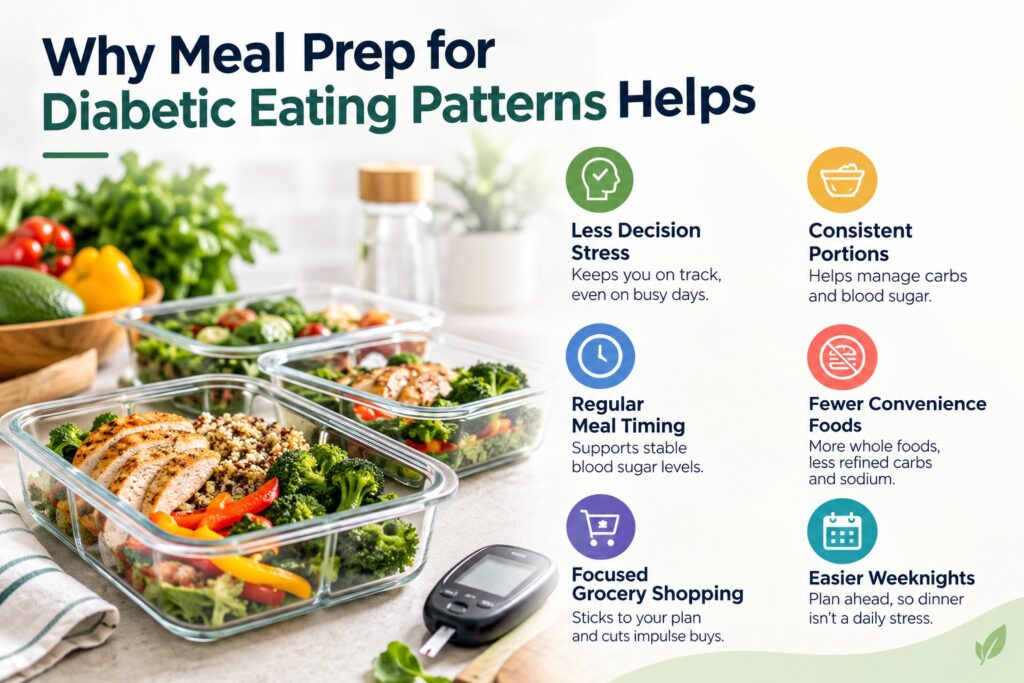
Meal prep for diabetic households serves a purpose beyond convenience, and understanding that difference is what makes the habit stick.
1. It Removes Decision-Making From Busy Moments
Having prepped components on hand means fewer situations where the fastest option is also the one least aligned with a diabetes diet plan.
2. It Makes Portion Consistency Easier
Pre-portioned meals take the guesswork out of carb amounts, which matters more in meal prep for diabetic planning than in general meal prep, since carbohydrate portions directly affect blood sugar.
3. It Supports More Predictable Eating Times
Consistent meal timing is often part of a diabetes diet plan, particularly for people on certain medications, and prepped meals make regular timing more realistic.
4. It Reduces Reliance on Convenience Foods
Packaged and fast food options tend to be higher in refined carbs and sodium, so having alternatives ready is one of the more practical benefits of meal prep for diabetic households.
5. It Makes Grocery Shopping More Focused
Knowing what the week’s meals look like before you shop reduces impulse purchases, which is a quieter but real benefit of any diabetic friendly meal prep routine.
6. It Takes Pressure Off Weeknights
The hardest part of a diabetes diet plan is usually the 6pm decision, not the knowledge of what to eat , diabetic friendly meal prep moves that decision to a calmer moment earlier in the week.
2. How to Structure a Diabetic-Friendly Plate
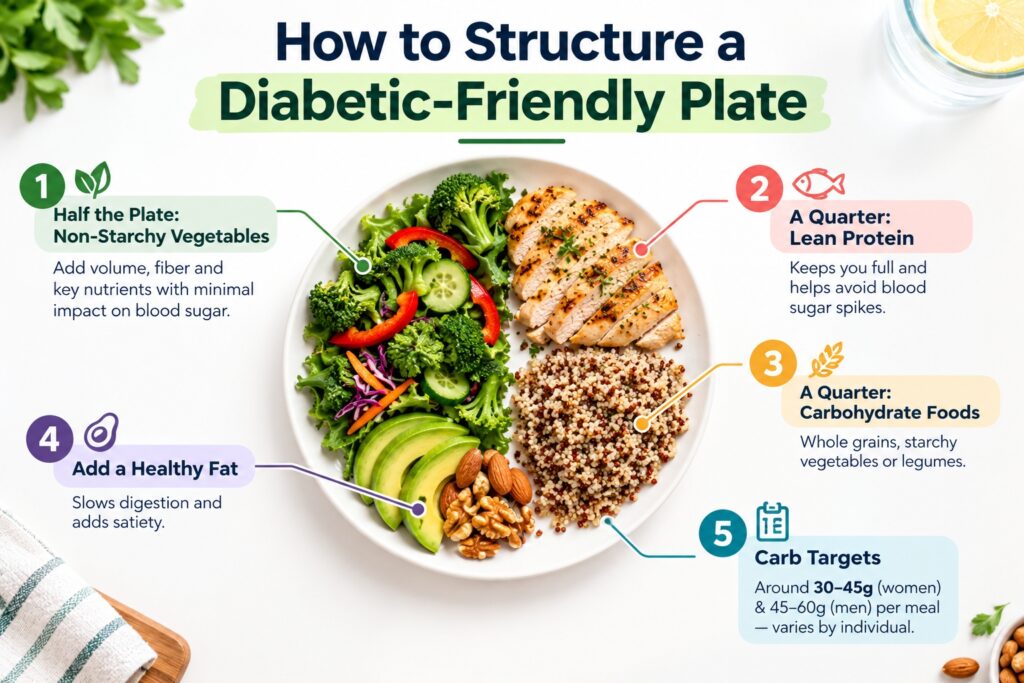
The plate method is the simplest framework for meal prep for diabetic eating, and it removes most of the math from daily decisions.
1. Half the Plate: Non-Starchy Vegetables
Broccoli, spinach, peppers, zucchini, and salad greens add volume and fiber with minimal effect on blood sugar.
2. A Quarter of the Plate: Lean Protein
Chicken, fish, eggs, tofu, or beans help with fullness and don’t raise blood glucose the way carbohydrates do.
3. A Quarter of the Plate: Carbohydrate Foods
Whole grains, starchy vegetables, or legumes go here , this is the portion most worth measuring in any meal prep for diabetic planning.
4. Add a Healthy Fat
Olive oil, avocado, or nuts slow digestion slightly and add satiety without contributing carbohydrates.
5. About Carb Targets
Commonly cited general guidance places carbohydrate intake around 30–45 grams per meal for women and 45–60 grams for men, though individual targets vary widely. Your healthcare team can give you a number specific to your situation.
3. Sunday Prep Session: What to Batch-Cook
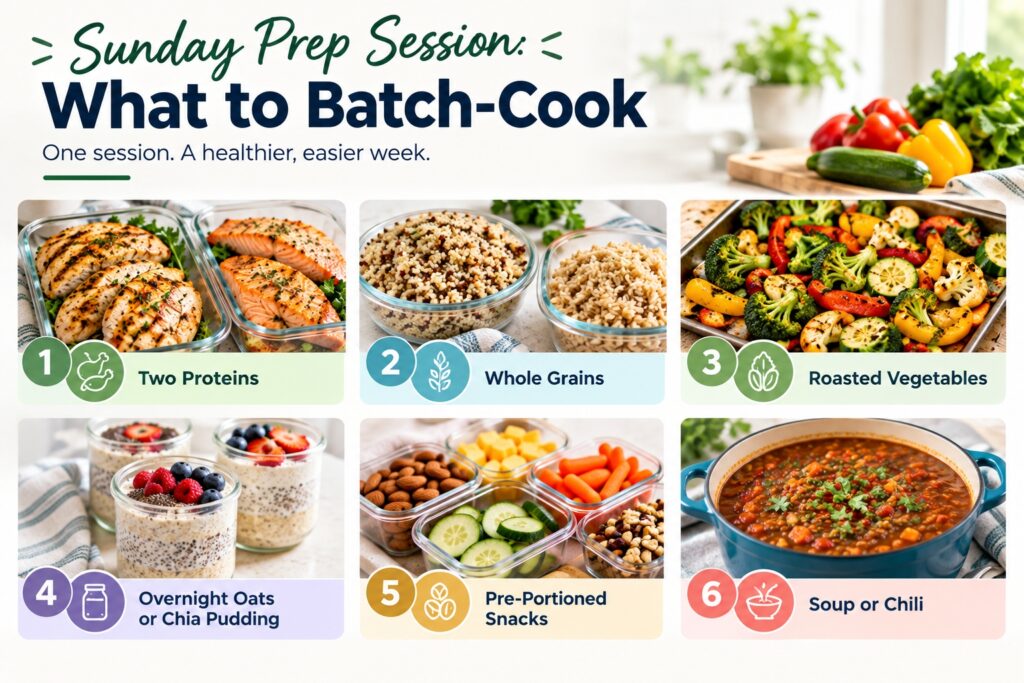
One focused session covers most of a week of meal prep for diabetic eating. Here’s what’s worth cooking ahead.
1. Two Proteins
Grill or bake chicken breast and a batch of salmon or ground turkey , enough for 4–6 servings across the week.
2. One or Two Whole Grains
Cook a pot of quinoa or brown rice and portion it out, since this is the component most worth measuring in diabetic friendly meal prep.
3. A Large Tray of Roasted Vegetables
Broccoli, cauliflower, zucchini, and peppers all roast at the same temperature and cover several meals.
4. Overnight Oats or Chia Pudding
Prepping 3–4 breakfast jars at once covers most mornings without any weekday cooking.
5. Pre-Portioned Snacks
Portioning nuts, cheese, or cut vegetables into small containers makes snacking a planned part of the week rather than an improvised one.
6. A Pot of Soup or Chili
One batch of lentil soup or turkey chili covers two or three meals and freezes well, making it a useful anchor for Meal Prep for Diabetic.
4. The 7-Day Diet Plan for Diabetic Patients
This sample 7-day diet plan for diabetic patients keeps carbohydrates moderate and spread evenly across meals, with a rough target of 30–45 grams of carbs per meal and a snack between. It’s built so that a single meal prep for diabetic session covers most of the week.
| Day | Breakfast | Lunch | Dinner | Snack |
| 1 | Overnight oats with berries and walnuts | Grilled chicken and quinoa bowl with roasted vegetables | Baked salmon, steamed broccoli, ½ cup brown rice | Greek yogurt with almonds |
| 2 | Vegetable egg muffins | Leftover salmon over mixed greens | Turkey and vegetable stir-fry with ½ cup brown rice | Apple with peanut butter |
| 3 | Greek yogurt parfait with chia seeds | Lentil soup with a side salad | Grilled chicken, roasted Brussels sprouts, ½ cup quinoa | Cottage cheese with cherry tomatoes |
| 4 | Overnight oats with cinnamon | Leftover lentil soup | Baked cod, sautéed spinach, ½ cup roasted sweet potato | Handful of almonds |
| 5 | Egg muffins (from Day 2 batch) | Chickpea and vegetable grain bowl | Turkey meatballs with zucchini noodles and marinara | Greek yogurt with berries |
| 6 | Chia pudding with raspberries | Leftover turkey meatballs over greens | Grilled chicken fajita bowl with peppers and ½ cup brown rice | Celery with hummus |
| 7 | Vegetable omelet | Clean-out-the-fridge grain bowl | Baked salmon with roasted vegetables and ½ cup quinoa | String cheese and a small pear |
Why This Structure Works
Repeating a handful of proteins and grains across the week keeps this meal prep for diabetic plan simple to shop for, while doubling several dinners covers next-day lunches with no extra cooking.
5. Sample Days With Carb Counts
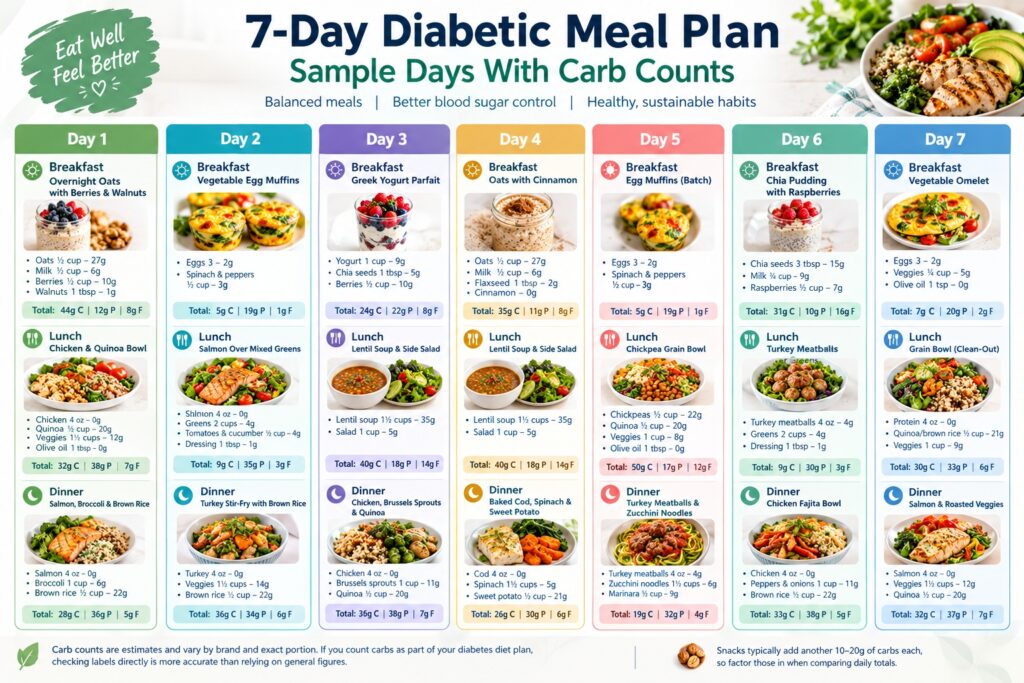
Day 1, In Detail
Breakfast , Overnight Oats with Berries and Walnuts
- Rolled oats, ½ cup , 27g carbs
- Milk or unsweetened plant-based alternative, ½ cup , 6g carbs
- Mixed berries, ½ cup , 10g carbs
- Walnuts, 1 tbsp , 1g carbs
Total: approximately 44g carbs, 12g protein, 8g fiber
Lunch , Grilled Chicken and Quinoa Bowl
- Grilled chicken breast, 4 oz , 0g carbs
- Quinoa, cooked, ½ cup , 20g carbs
- Roasted vegetables, 1½ cups , 12g carbs
- Olive oil, 1 tbsp , 0g carbs
Total: approximately 32g carbs, 38g protein, 7g fiber
Dinner , Baked Salmon, Broccoli, Brown Rice
- Baked salmon, 4 oz , 0g carbs
- Steamed broccoli, 1 cup , 6g carbs
- Brown rice, ½ cup cooked , 22g carbs
Total: approximately 28g carbs, 36g protein, 5g fiber
Day 2, In Detail
Breakfast , Vegetable Egg Muffins
- Eggs, 3 , 2g carbs
- Spinach and bell pepper, ½ cup , 3g carbs
Total: approximately 5g carbs, 19g protein, 1g fiber
Lunch , Leftover Salmon Over Mixed Greens
- Baked salmon, 4 oz , 0g carbs
- Mixed greens, 2 cups , 4g carbs
- Cherry tomatoes and cucumber, ½ cup , 4g carbs
- Olive oil vinaigrette, 1 tbsp , 1g carbs
Total: approximately 9g carbs, 35g protein, 3g fiber
Dinner , Turkey and Vegetable Stir-Fry with Brown Rice
- Ground turkey (93% lean), 4 oz , 0g carbs
- Stir-fry vegetables, 1½ cups , 14g carbs
- Brown rice, ½ cup cooked , 22g carbs
Total: approximately 36g carbs, 34g protein, 6g fiber
Day 3, In Detail
Breakfast , Greek Yogurt Parfait with Chia Seeds
- Greek yogurt, plain, 1 cup , 9g carbs
- Chia seeds, 1 tbsp , 5g carbs
- Mixed berries, ½ cup , 10g carbs
Total: approximately 24g carbs, 22g protein, 8g fiber
Lunch , Lentil Soup with a Side Salad
- Lentil soup, 1½ cups , 35g carbs
- Side salad with olive oil dressing , 5g carbs
Total: approximately 40g carbs, 18g protein, 14g fiber
Dinner , Grilled Chicken, Brussels Sprouts, Quinoa
- Grilled chicken breast, 4 oz , 0g carbs
- Roasted Brussels sprouts, 1 cup , 11g carbs
- Quinoa, ½ cup cooked , 20g carbs
Total: approximately 31g carbs, 38g protein, 7g fiber
Day 4, In Detail
Breakfast , Overnight Oats with Cinnamon
- Rolled oats, ½ cup , 27g carbs
- Milk or unsweetened plant-based alternative, ½ cup , 6g carbs
- Ground flaxseed, 1 tbsp , 2g carbs
- Cinnamon, a pinch , 0g carbs
Total: approximately 35g carbs, 11g protein, 8g fiber
Lunch , Lentil Soup With a Side Salad
- Lentil soup, 1½ cups , 35g carbs
- Side salad with olive oil dressing , 5g carbs
Total: approximately 40g carbs, 18g protein, 14g fiber
Dinner , Baked Cod, Spinach, Sweet Potato
- Baked cod, 4 oz , 0g carbs
- Sautéed spinach, 1½ cups , 5g carbs
- Roasted sweet potato, ½ cup , 21g carbs
Total: approximately 26g carbs, 30g protein, 6g fiber
Day 5, In Detail
Breakfast , Egg Muffins (From the Day 2 Batch)
- Eggs, 3 , 2g carbs
- Spinach and bell pepper, ½ cup , 3g carbs
Total: approximately 5g carbs, 19g protein, 1g fiber
Lunch , Chickpea and Vegetable Grain Bowl
- Chickpeas, ½ cup , 22g carbs
- Quinoa, ½ cup cooked , 20g carbs
- Roasted vegetables, 1 cup , 8g carbs
- Olive oil, 1 tbsp , 0g carbs
Total: approximately 50g carbs, 17g protein, 12g fiber
Dinner , Turkey Meatballs with Zucchini Noodles
- Turkey meatballs, 4 oz , 4g carbs
- Zucchini noodles, 1½ cups , 6g carbs
- Low-sugar marinara, ½ cup , 9g carbs
Total: approximately 19g carbs, 32g protein, 4g fiber
Day 6, In Detail
Breakfast , Chia Pudding with Raspberries
- Chia seeds, 3 tbsp , 15g carbs
- Milk or unsweetened plant-based alternative, ¾ cup , 9g carbs
- Raspberries, ½ cup , 7g carbs
Total: approximately 31g carbs, 10g protein, 16g fiber
Lunch , Leftover Turkey Meatballs Over Greens
- Turkey meatballs, 4 oz , 4g carbs
- Mixed greens, 2 cups , 4g carbs
- Olive oil vinaigrette, 1 tbsp , 1g carbs
Total: approximately 9g carbs, 30g protein, 3g fiber
Dinner , Chicken Fajita Bowl with Brown Rice
- Grilled chicken breast, 4 oz , 0g carbs
- Sautéed peppers and onions, 1 cup , 11g carbs
- Brown rice, ½ cup cooked , 22g carbs
Total: approximately 33g carbs, 38g protein, 5g fiber
Day 7, In Detail
Breakfast , Vegetable Omelet
- Eggs, 3 , 2g carbs
- Spinach, mushrooms, and peppers, ¾ cup , 5g carbs
- Olive oil, 1 tsp , 0g carbs
Total: approximately 7g carbs, 20g protein, 2g fiber
Lunch , Clean-Out-the-Fridge Grain Bowl
- Leftover protein, 4 oz , 0g carbs
- Quinoa or brown rice, ½ cup cooked , 21g carbs
- Leftover vegetables, 1 cup , 9g carbs
Total: approximately 30g carbs, 33g protein, 6g fiber
Dinner , Baked Salmon with Roasted Vegetables and Quinoa
- Baked salmon, 4 oz , 0g carbs
- Roasted vegetables, 1½ cups , 12g carbs
- Quinoa, ½ cup cooked , 20g carbs
Total: approximately 32g carbs, 37g protein, 7g fiber
Carb counts are estimates and vary by brand and exact portion. If you count carbs as part of your Meal Prep for Diabetic, checking labels directly is more accurate than relying on general figures. Snacks listed in the table above typically add another 10–20g of carbs each, so factor those in when comparing daily totals against your target.
6. Grocery List for the Week
A focused list keeps meal prep for diabetic eating from turning into an overwhelming shopping trip.
1. Proteins
Chicken breast, salmon, cod, ground turkey, eggs, Greek yogurt, cottage cheese, lentils, and chickpeas.
2. Non-Starchy Vegetables
Broccoli, spinach, zucchini, bell peppers, Brussels sprouts, cauliflower, celery, cherry tomatoes, and salad greens.
3. Carbohydrate Foods
Quinoa, brown rice, rolled oats, sweet potato, and a small amount of fruit (berries, apple, pear).
4. Healthy Fats
Olive oil, walnuts, almonds, chia seeds, ground flaxseed, and natural peanut butter.
5. Flavor Staples
Garlic, lemon, low-sodium marinara, herbs, and spices , flavor without added sugar or excess sodium.
7. Storage and Food Safety Basics
Safe storage matters as much as the cooking itself in any meal prep for diabetic routine, since prepped food sits in the fridge for days.
1. Refrigerate Within Two Hours
Cooling cooked proteins and grains promptly helps them last the full 4–5 days safely.
2. Keep Dressings Separate
Storing dressings and sauces in small separate containers keeps salads and bowls from getting soggy by midweek.
3. Label With Dates
A simple date label on each container makes it easy to use meals in order and avoid guessing how long something has been in the fridge.
4. Freeze What You Won’t Eat by Day Five
Soups, chili, and cooked grains freeze well for up to three months, which is useful if you batch-cook more than one week at a time.
8. Common Mistakes to Avoid
These are the issues that most often derail a new meal prep for diabetic routine in the first few weeks.
1. Eyeballing Carb Portions
Measuring the grain or starchy vegetable portion , at least for the first week or two , makes a bigger difference in meal prep for diabetic planning than measuring anything else on the plate.
2. Skipping Protein at Breakfast
A carb-only breakfast tends to affect blood sugar differently than one that includes protein. Adding eggs, Greek yogurt, or nuts is a small change that often matters.
3. Assuming “Sugar-Free” Means Carb-Free
Sugar-free packaged foods can still contain significant carbohydrate. Reading the total carbohydrate line on the label is more useful than the sugar line alone.
4. Forgetting About Liquid Calories and Carbs
Juice, sweetened coffee drinks, and regular soda can contribute a substantial share of daily carbs without much fullness in return.
5. Making Changes Without Talking to Your Care Team
This matters more here than with most eating plans: significant dietary changes can affect medication needs, particularly for people on insulin or sulfonylureas. Always loop in your doctor before making a major shift.
6. Trying to Prep Every Meal at Once
Prepping breakfasts and lunches while leaving a couple of dinners flexible tends to be more sustainable than attempting 21 pre-made meals in one meal prep for diabetic session.
9. Free Meal Prep for Diabetic and Where This One Fits
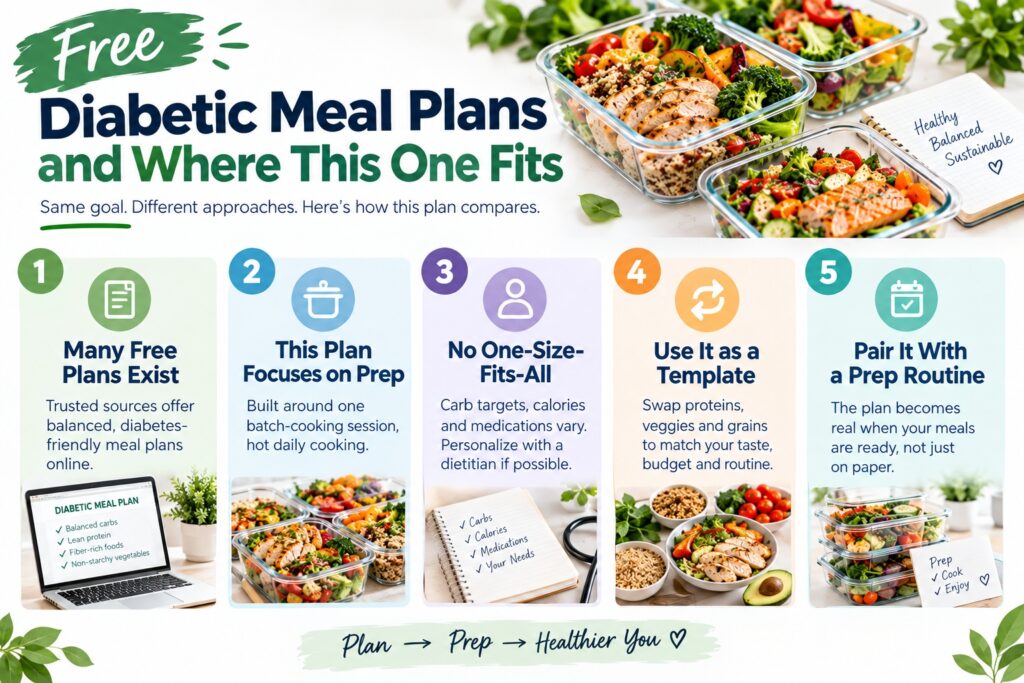
If you’ve been comparing free diabetic meal plans online, here’s how this meal prep for diabetic guide compares.
1. Many Free Diabetic Meal Plans Exist Online
Hospital systems, diabetes organizations, and registered dietitians publish free diabetic meal plans, and most follow similar principles: moderate carbs spread evenly, adequate protein and fiber, and plenty of non-starchy vegetables.
2. This Plan Emphasizes the Prep Angle
What makes this free diabetic meal plan different from a standard menu is the batch-cooking structure , it’s designed around one prep session rather than cooking three times a day.
3. No Single Plan Fits Everyone
A free diabetic meal plan found online can be a useful starting framework, but individual carb targets, calorie needs, and medication schedules differ. Personalizing it with a dietitian is worth the time if you have access.
4. Use It as a Template, Not a Prescription
Swapping proteins, vegetables, and grains based on preference and budget keeps the same structure while making it something you’ll actually repeat.
5. Combine It With a Prep Routine
The advantage of pairing free diabetic meal plans with a batch-cooking session is that the plan stops being theoretical , the meals are physically ready when you need them.
10. Adapting This Meal Prep for Diabetic Eating to Your Week
1. Adjust Carb Portions to Your Target
If your care team has given you a specific carb number, scale the grain and starchy vegetable portions in this meal prep for diabetic plan up or down to match it.
2. Swap Proteins Freely
Chicken, fish, turkey, tofu, and legumes are interchangeable throughout this plan , pick whichever fits your budget and taste that week.
3. Prep Fewer Days if a Full Week Feels Like Too Much
Three or four days of meal prep for diabetic eating is still meaningfully better than none, and it’s easier to sustain long-term than an exhausting full-week session.
4. Build in One Flexible Meal
Leaving one dinner unprepped each week accounts for plans changing, leftovers running long, or simply wanting something different.
11. Key Takeaways
1. Structure Beats Restriction
The plate method , half vegetables, quarter protein, quarter carbs , is the backbone of this meal prep for diabetic approach.
2. Measure the Carb Portion
It’s the component that most directly affects blood sugar, and the one most worth weighing or measuring early on.
3. One Prep Session Covers Most of the Week
Two proteins, a grain, a tray of vegetables, and a few breakfast jars handle the bulk of a week’s meal prep for diabetic eating.
4. Protein and Fiber at Every Meal
Both support fullness and more gradual digestion compared to carb-heavy meals alone.
5. Individual Needs Vary Significantly
Any diabetes diet plan, including this meal prep for diabetic guide, should be adapted with input from your healthcare team.
12. FAQ
1. How many carbs should I eat per meal with diabetes?
Commonly cited general guidance suggests roughly 30–45 grams per meal for women and 45–60 grams for men, but individual targets vary considerably based on medication, activity level, and blood sugar patterns. A registered dietitian or diabetes care specialist can give you a personalized number.
2. Can meal prep actually help with blood sugar management?
Meal prep for diabetic eating may make it easier to stay consistent with portion sizes and meal timing, which are both factors in blood sugar management. It’s a supporting tool rather than a treatment, and it works alongside , not instead of , the plan your healthcare team has recommended.
3. How long do prepped diabetic meals last in the fridge?
Most cooked proteins, grains, and roasted vegetables in a meal prep for diabetic routine hold up well for 4–5 days when refrigerated promptly and stored in sealed containers.
4. Are there free Meal Prep for Diabetic I can follow instead of paying for one?
Yes. Many hospital systems, diabetes organizations, and dietitians publish free diabetic meal plans online, including this one. What matters more than the price is whether the plan matches your specific carb targets and food preferences.
5. Can I follow this 7-day diet plan for diabetic patients if I’m vegetarian?
Yes. Swapping chicken, salmon, and turkey for tofu, tempeh, eggs, and additional legumes keeps the same structure while removing meat and fish. Note that legumes contain carbohydrates, so the carb counts in this 7-day diet plan for diabetic patients shift slightly with those swaps.
6. What makes Meal Prep for Diabetic different from regular meal prep?
The main difference is the attention paid to carbohydrate portions and their distribution across the day. Otherwise, diabetic friendly meal prep uses the same batch-cooking and storage techniques as any other meal prep routine.
7. Does this plan work for type 1 diabetes as well as type 2?
The general principles , balanced plates, consistent portions, adequate protein and fiber , apply broadly. However, carb counting for insulin dosing is more precise and individualized in type 1 diabetes, so working directly with your care team is especially important.
Conclusion: Start With One Prep Session
Meal prep for diabetic eating doesn’t require overhauling your whole kitchen routine. Start with one Sunday session , two proteins, a grain, a tray of roasted vegetables , and let the rest of the week build from there. Consistency over a few weeks tends to matter more than getting any single day exactly right, and a repeatable meal prep for diabetic routine is what makes that consistency possible.
For more structured eating approaches, see our diet plans for every goal guide, our 7-day 1500 calorie meal plan, our high-protein low-carb meal plan, and our anti-inflammatory meal plan, or browse our meal plan category and diet plans category on The Daily Crave.