Table of Contents
Introduction
If you have ever searched for healthy diet plans, you already know the problem: one article says carbs are the enemy, the next says fat is, and a third insists on eating only between noon and 8 p.m. There is no single “best” diet that works for everybody. What matters is finding one of the many healthy diet plans that fits your health history, schedule, and goals closely enough that you can actually stick with it.
This guide compares eight of the most popular diet plans for beginners, walks through how to pick between the best diet plans for your specific goal, and includes a full 7-day diet meal plan, plus notes on which styles, like a short detox diet plan for weight loss or Whole30, are meant as temporary resets rather than long-term lifestyles.
How to Choose the Right Healthy Diet Plans for Your Goals

Before you commit to any of the healthy diet plans you have seen mentioned online, it helps to slow down and think through a few practical questions first. A plan that looks great on paper is not useful if it does not fit your actual life, and this is true across nearly all of the healthy diet plans covered in this guide.
Start With Your Goal, Not the Trend
- People usually turn to diet plans for beginners for weight management, more stable energy, better digestion, or a specific health marker like blood pressure or blood sugar
- Your goal should shape which style you try first
- Someone managing blood pressure will get more out of a DASH-style approach than a carnivore-style one
- Someone focused on simplifying meals might prefer a flexitarian or Mediterranean pattern
Consider Your Current Eating Habits
- A plan that asks you to change everything overnight is harder to sustain than one that builds on habits you already have
- If you already eat a lot of vegetables and lean protein, a low-carb or DASH approach may feel like a small shift
- If most of your meals are packaged or fast food, a gentler starting point, such as a general healthy diet plans framework built around whole foods, is more realistic than jumping straight into something restrictive like keto or carnivore
Factor In Your Schedule and Budget
- Some of the best diet plans on paper require a lot of meal prep, specialty ingredients, or tracking
- If your week is unpredictable, look for an approach with simple swap rules rather than one that depends on precise macros at every meal
- Budget matters too: fresh produce, lean meats, and specialty products like almond flour or MCT oil can add up quickly
Talk to a Professional for Underlying Conditions
- If you have diabetes, thyroid issues, kidney concerns, a history of disordered eating, or are pregnant or nursing, a general online guide is a starting point for education, not a substitute for individualized advice
- A doctor or registered dietitian can help you adapt any of the diet plans for beginners in this guide to your specific needs
Look for Sustainability Over Speed
- Diets that promise dramatic results in days often rely on water loss or very low calories that are hard to maintain
- A detox diet plan for weight loss marketed as a quick fix may produce a fast number on the scale that mostly reflects fluid loss and returns once normal eating resumes
- Research generally supports slower, steadier approaches for keeping weight off long term
Match the Plan to Your Specific Goal
Not every goal calls for the same style among the many healthy diet plans available. It can help to think in terms of what you are actually trying to change:
- Weight management: A moderate-calorie approach built around protein, fiber, and whole foods, such as Mediterranean, DASH, or a low-carb diet meal plan, tends to be easier to sustain than a very restrictive detox diet plan for weight loss.
- Blood pressure or heart health: A dash diet meal plan is specifically designed around this goal, with an emphasis on potassium-rich produce and lower sodium.
- Digestive comfort: Diets higher in fiber and fermented foods, like Mediterranean or a plant-based pattern, tend to support gut health more than very low-fiber styles such as a carnivore diet meal plan.
- Steady energy levels: Balanced meals with protein, fiber, and healthy fat at each sitting, the foundation of most healthy diet plans, tend to prevent the energy crashes that come from very high-sugar or very low-calorie eating.
- Simplicity and fewer decisions: Intermittent fasting or a structured keto diet meal plan can reduce the number of choices you make in a day, which some people find easier to stick to than counting every ingredient.
8 Popular Healthy Diet Plans Compared
Below is a practical comparison of eight of the most searched healthy diet plans, what each one emphasizes, who tends to like it, and where to go for a full guide. Skim through all eight before deciding, since the right fit among these healthy diet plans is rarely the most popular one, but the one that matches your goals and daily routine.
1. Mediterranean Diet
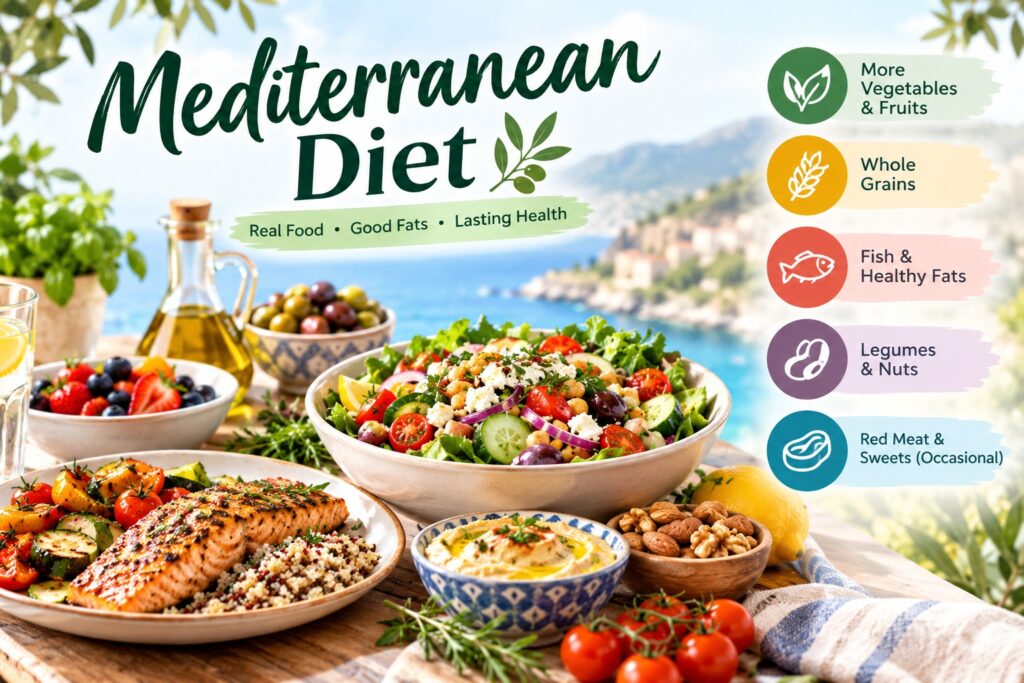
- Built around vegetables, fruit, whole grains, legumes, olive oil, and fish, with red meat and sweets kept occasional
- One of the most well-studied healthy diet plans, less about strict rules and more a general pattern of eating
- Sample day: eggs or yogurt with fruit at breakfast, a big salad with grilled fish or beans at lunch, and a vegetable-forward dinner with whole grains
- No strict calorie counting built in, which makes it one of the more sustainable healthy diet plans for people who dislike rigid rules
- Best for: People who want a flexible, long-term style rather than a strict short-term plan
- Watch out for: Portion creep with olive oil and nuts, which are calorie-dense even though they are healthy fats
- See also: [Mediterranean Diet Meal Plan: A 7-Day Guide for Beginners]
2. Keto Diet Meal Plan
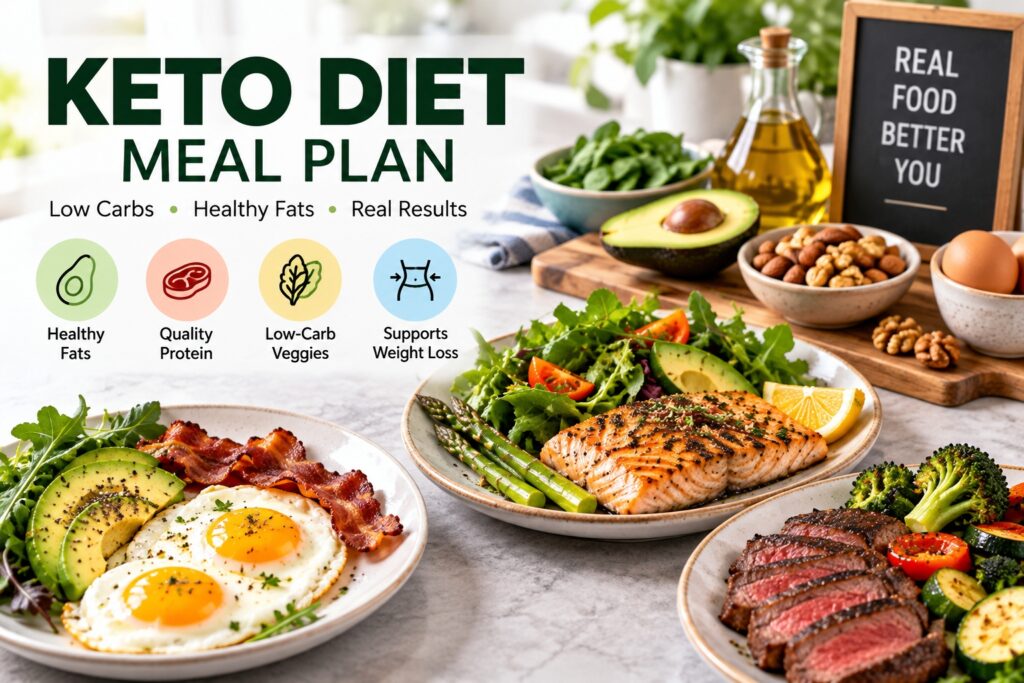
- Very low in carbohydrates, moderate in protein, and high in fat, shifting the body toward using fat for fuel
- Can lead to fast initial weight loss, partly from water loss, and some people find it helps manage appetite
- Sample day on a keto diet meal plan: eggs cooked in butter at breakfast, a salad with salmon and olive oil dressing at lunch, and steak with roasted low-carb vegetables at dinner, with berries used sparingly for fruit
- Best for: People who prefer very structured eating and do not mind giving up most grains, fruit, and starchy vegetables
- Watch out for: The “keto flu” in the first week, and the need to track carbs closely since even small amounts of starch can stall progress
- See also: [Keto Diet Plan for Beginners: What to Eat and What to Avoid]
3. DASH Diet Meal Plan
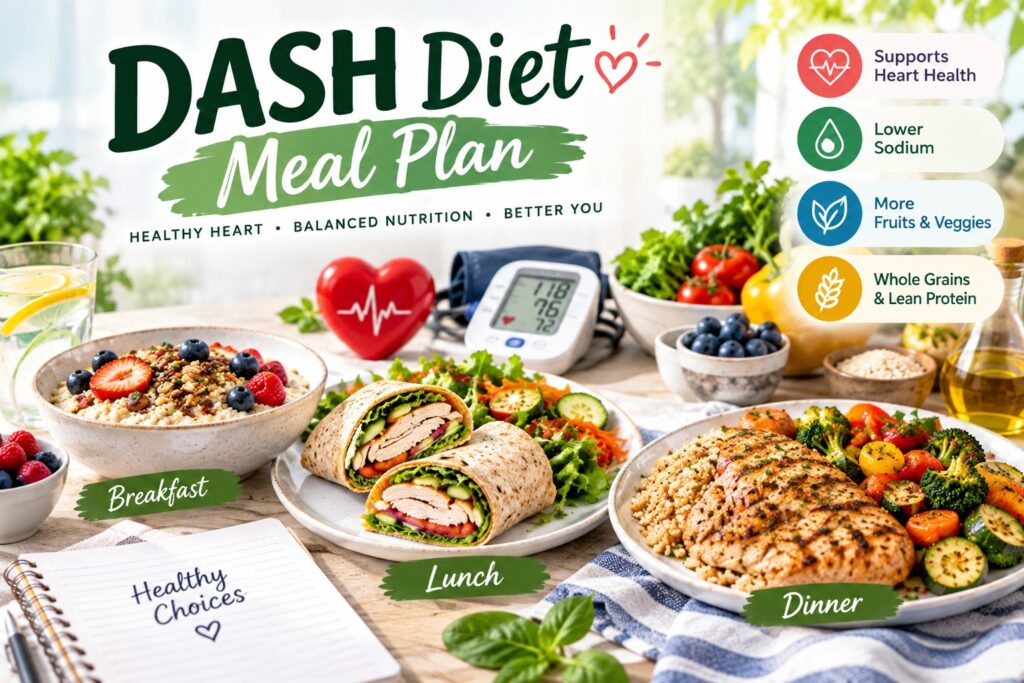
- Originally designed to help lower blood pressure, emphasizing vegetables, fruit, low-fat dairy, whole grains, and lean protein while limiting sodium, red meat, and added sugar
- One of the more evidence-backed healthy diet plans for cardiovascular health
- Sample day on a dash diet meal plan: oatmeal with fruit at breakfast, a turkey and vegetable wrap at lunch, and grilled chicken with a large side of roasted vegetables and brown rice at dinner, all built around minimal added salt
- Best for: People managing blood pressure or looking for a balanced, non-restrictive approach
- Watch out for: Sodium hiding in packaged foods, sauces, and restaurant meals
- See also: [DASH Diet Explained: A 7-Day Meal Plan for Lower Blood Pressure]
4. Low-Carb Diet Meal Plan
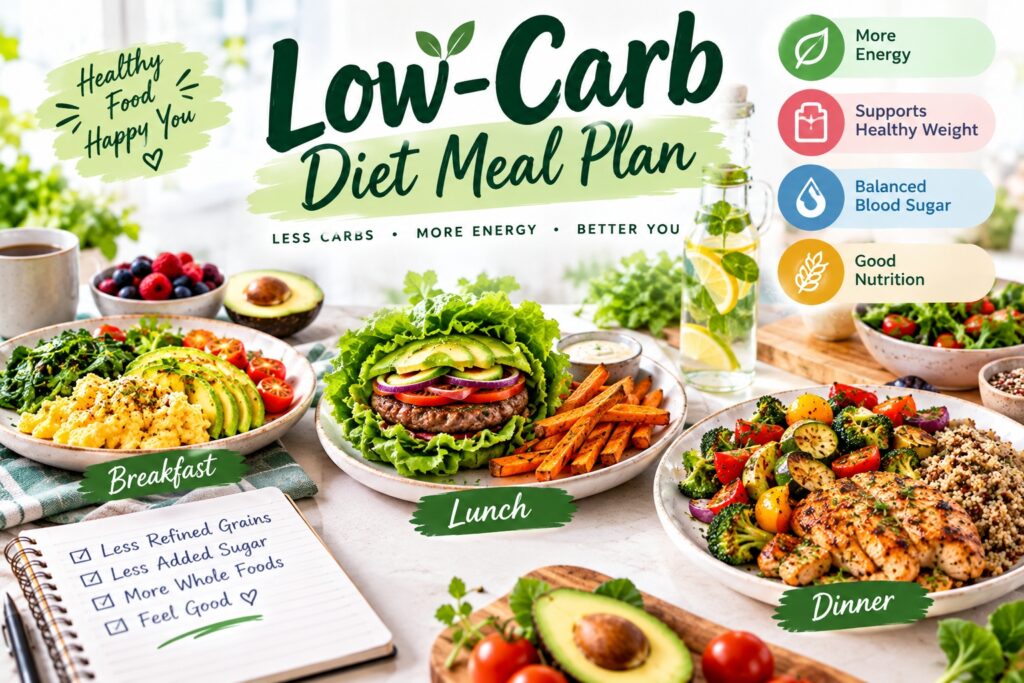
- Less strict than keto, typically limiting refined grains and added sugar while still allowing moderate fruit, whole grains, or starchy vegetables depending on the version
- Many people use carb cycling, eating more carbs around workouts and fewer on rest days
- Sample day on a low-carb diet meal plan: eggs and vegetables at breakfast, a lettuce-wrapped burger with sweet potato fries in moderation at lunch, and grilled chicken with roasted vegetables and a small portion of quinoa at dinner
- Best for: People who want some of the benefits of lower-carb eating without the strict thresholds of keto
- Watch out for: Under-eating fiber if grains and legumes are cut too aggressively
- See also: [Low-Carb Diet Plan: A Beginner’s Guide to Carb Cycling and Portions]
5. Plant-Based and Flexitarian Diets
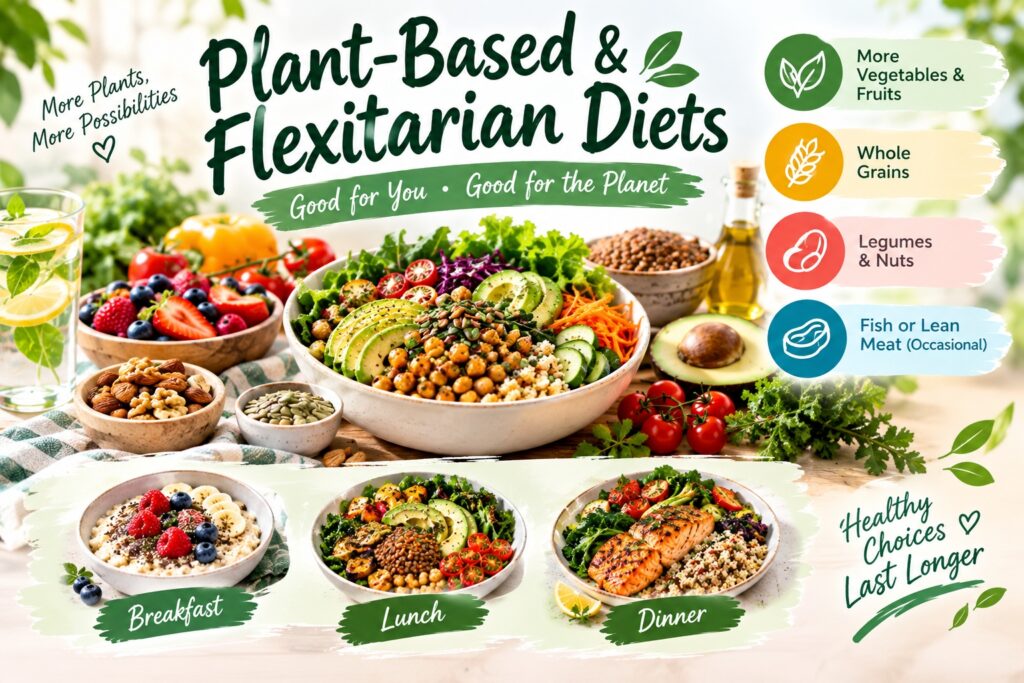
- A fully plant-based approach centers on vegetables, fruit, legumes, whole grains, nuts, and seeds, while a flexitarian version allows occasional meat or dairy
- Among the more sustainable healthy diet plans for people who want to eat less meat without going fully vegetarian overnight
- Sample flexitarian day: oatmeal with fruit at breakfast, a lentil and vegetable bowl at lunch, and a mostly plant-based dinner with fish or chicken once or twice a week rather than daily
- Best for: People motivated by environmental concerns, budget, or general health who do not want an all-or-nothing rule
- Watch out for: Getting enough protein, iron, B12, and omega-3s, which may need more intentional planning or a supplement
- See also: [Plant-Based Diet Plan for Beginners: A 7-Day Vegan Starter Guide] and [Flexitarian Diet Plan: How to Eat Mostly Plant-Based Without Going Full Vegetarian]
6. Whole30
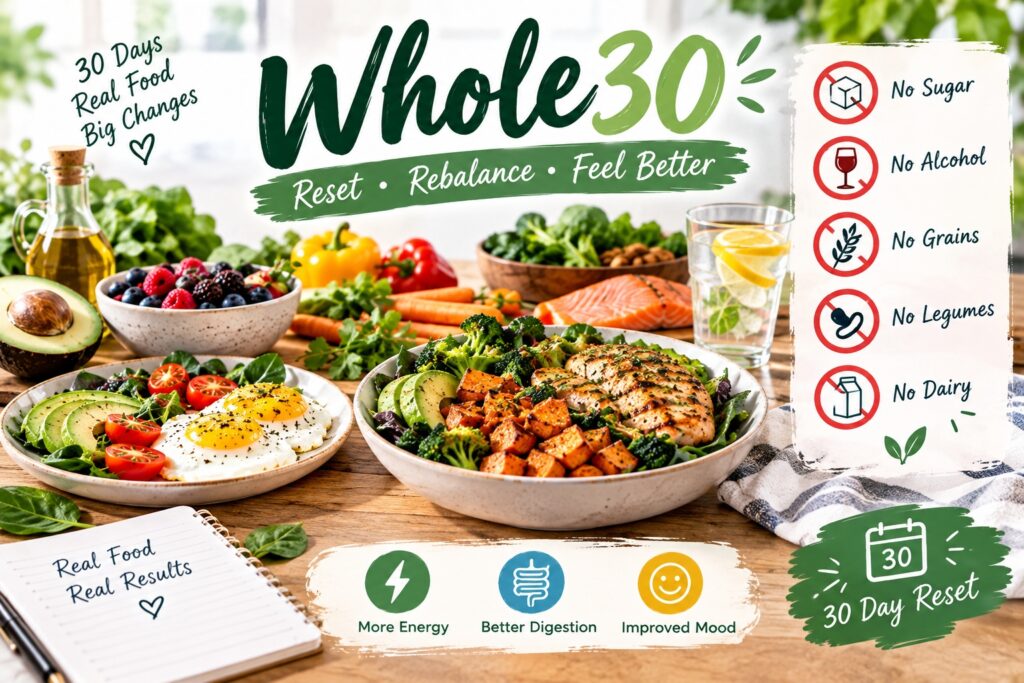
- A strict 30-day reset that removes added sugar, alcohol, grains, legumes, and dairy
- Goal is noticing how certain foods affect energy, digestion, and mood before reintroducing them one at a time
- Best for: People who want a short, structured reset rather than an ongoing lifestyle change
- Watch out for: Treating it as a long-term plan rather than the short elimination-and-reintroduction process it is designed to be
- See also: [Whole30 Diet Plan: What It Is, What to Expect, and Is It Worth It]
7. Intermittent Fasting
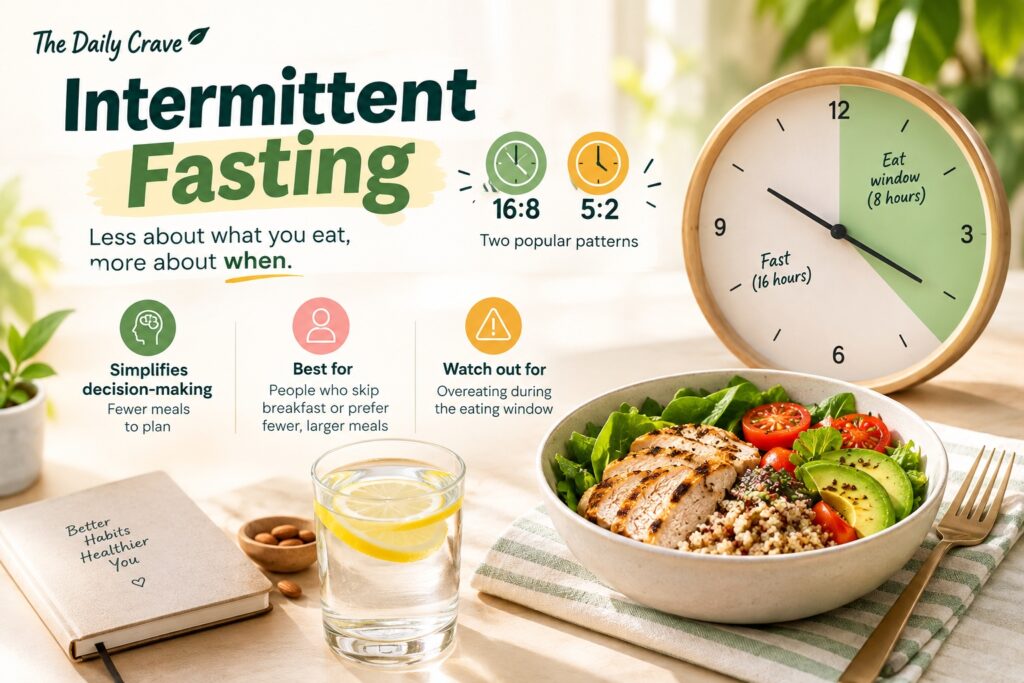
- Less about what you eat and more about when, with 16:8 and 5:2 among the most common patterns
- Some people find it simplifies decision-making because there are fewer meals to plan
- Best for: People who naturally skip breakfast or prefer fewer, larger meals
- Watch out for: Overeating during the eating window, which can cancel out any calorie deficit
- See also: [Intermittent Fasting for Beginners: 16:8, 5:2, and Which One to Try]
8. Carnivore Diet Meal Plan
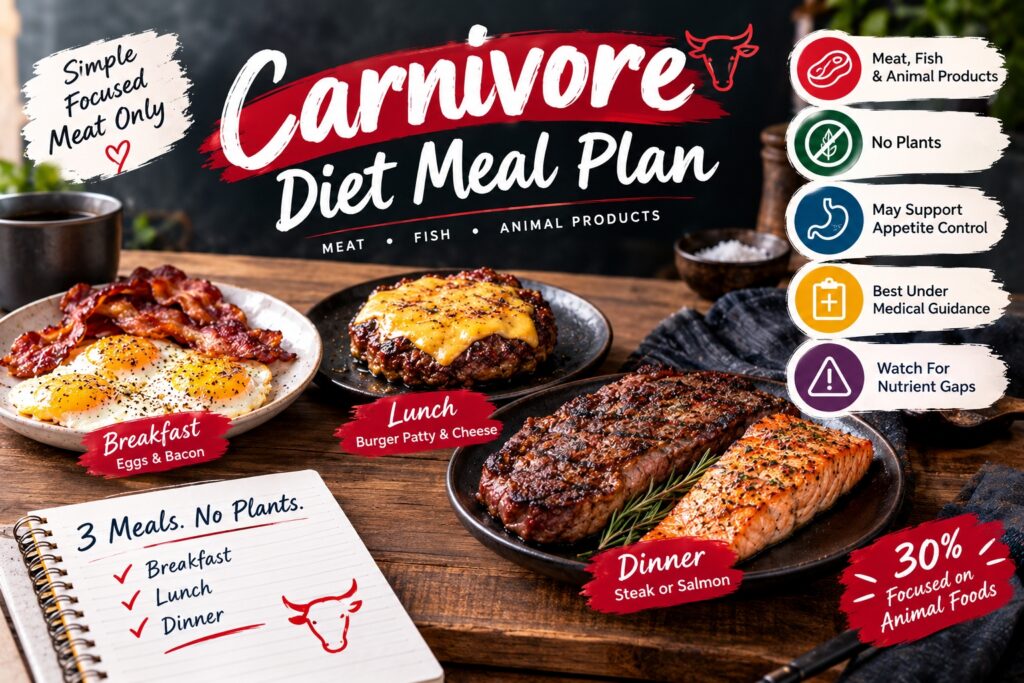
- The most restrictive style on this list, built entirely around meat, fish, and other animal products, with all plant foods removed
- Some people report short-term appetite control and simplicity, but it is also the least studied of the healthy diet plans covered here
- Sample day on a carnivore diet meal plan: eggs and bacon at breakfast, a burger patty with cheese at lunch, and steak or salmon at dinner, with no grains, fruit, or vegetables included at all
- Best for: People under close medical supervision who are using it as a short, structured elimination approach
- Watch out for: Long-term nutrient gaps, particularly fiber and certain plant-based micronutrients, since research on extended use is limited
- Because a carnivore diet meal plan excludes entire food groups, it is one of the healthy diet plans in this guide that most consistently warrants professional guidance before starting
Detox Diet Plans: A Word of Caution
- A detox diet plan for weight loss usually involves juices, teas, or very restrictive short-term eating meant to “cleanse” the body
- The body already has a built-in detox system, the liver and kidneys, that works continuously without special products
- A short detox diet plan for weight loss may lead to quick, mostly temporary weight loss, and very low-calorie versions are not appropriate for everyone
- A gentler option: focus on more vegetables in healthy diet plans, more water, and less processed food for a week, which delivers similar day-to-day benefits without the extreme restriction
7-Day Healthy Diet Plans You Can Actually Follow
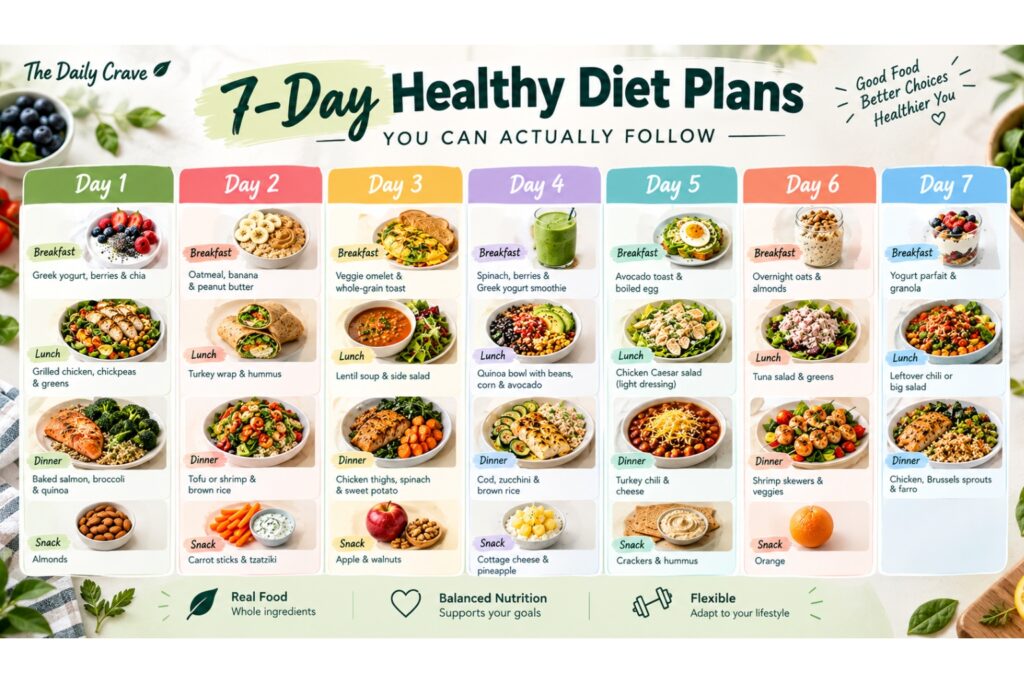
Rather than locking you into one strict style, this is a flexible 7-day healthy diet plans built on general balanced-eating principles that borrow from several of the healthy diet plans above. It leans on the Mediterranean and DASH patterns since both have strong research support, and it is easy to adapt toward low-carb or plant-based depending on your preference.
Day 1
- Breakfast: Greek yogurt with berries and a spoon of chia seeds
- Lunch: Mixed greens with grilled chicken, chickpeas, and olive oil vinaigrette
- Dinner: Baked salmon, roasted broccoli, and quinoa
- Snack: A small handful of almonds
Day 2
- Breakfast: Oatmeal topped with sliced banana and peanut butter
- Lunch: Whole-grain wrap with turkey, spinach, and hummus
- Dinner: Stir-fried tofu or shrimp with mixed vegetables over brown rice
- Snack: Carrot sticks with tzatziki
Day 3
- Breakfast: Veggie omelet with whole-grain toast
- Lunch: Lentil soup with a side salad
- Dinner: Grilled chicken thighs, sautéed spinach, and sweet potato
- Snack: An apple with a small handful of walnuts
Day 4
- Breakfast: Smoothie with spinach, frozen berries, and Greek yogurt
- Lunch: Quinoa bowl with black beans, corn, avocado, and salsa
- Dinner: Baked cod, roasted zucchini, and brown rice
- Snack: Cottage cheese with pineapple
Day 5
- Breakfast: Whole-grain toast with mashed avocado and a boiled egg
- Lunch: Grilled chicken Caesar salad, light on the dressing
- Dinner: Turkey chili with beans, topped with a little shredded cheese
- Snack: A few whole-grain crackers with hummus
Day 6
- Breakfast: Overnight oats with cinnamon and sliced almonds
- Lunch: Tuna salad over mixed greens with olive oil and lemon
- Dinner: Grilled shrimp skewers with a Mediterranean vegetable medley
- Snack: A small orange
Day 7
- Breakfast: Greek yogurt parfait with granola and mixed berries
- Lunch: Leftover turkey chili or a big veggie-packed salad
- Dinner: Baked chicken breast, roasted Brussels sprouts, and farro
- Snack: A handful of grapes
Adapting This Healthy Diet Plans to Your Style
- For a low-carb diet meal plan: Swap grains for extra non-starchy vegetables and keep portions of quinoa, rice, and farro smaller
- For a keto diet meal plan: Remove grains and most fruit, and increase healthy fats like olive oil, avocado, and nuts
- For a DASH diet meal plan: Keep sodium low by choosing unsalted nuts, rinsing canned beans, and going easy on cheese and processed condiments
- For a plant-based version: Replace fish, chicken, and turkey with tofu, tempeh, lentils, or extra beans
5 Common Mistakes People Make When Starting a Healthy Diet Plans
1. Choosing Based on What Worked for Someone Else
The most restrictive of the healthy diet plans online is not automatically the most effective one for you. What worked for a friend or an influencer may not fit your health history, schedule, or preferences, since even among well-studied healthy diet plans, individual response varies.
2. Cutting Calories Too Aggressively
Very low-calorie eating, especially with a short detox diet plan for weight loss, often backfires by triggering intense hunger and making the plan hard to sustain past a week or two.
3. Skipping Protein and Fiber
Many diet plans for beginners fail simply because meals do not keep people full. Protein and fiber are two of the most reliable tools for managing hunger between meals.
4. Not Planning for Real Life
Diet plans that do not account for restaurant meals, travel, or busy weeks tend to fall apart the first time something unexpected comes up. Building in some flexibility from the start makes a diet meal plan easier to maintain.
5. Expecting Overnight Results
Sustainable change from healthy diet plans tends to show up gradually, over weeks and months rather than days. Judging a plan after three days is rarely a fair test.
6. Ignoring How the Plan Fits Your Social Life
Even the best diet plans can fall apart quickly if they make eating out, family dinners, or holidays feel impossible. Building in some room for flexible meals, rather than treating every plan as all-or-nothing, tends to make any of the Healthy Diet Plans in this guide easier to keep up over time.
Signs It Might Be Time to Adjust Your Plan
- Persistent fatigue, irritability, or trouble sleeping that does not improve after the first couple of weeks
- Feeling unable to concentrate at work or during workouts
- Constant preoccupation with food or feeling deprived at every meal
- No changes in how your clothes fit or how you feel after six to eight weeks of consistent effort
If any of these show up, it is worth revisiting your approach, adjusting portions or food choices, or checking in with a doctor or registered dietitian rather than pushing through discomfort.
Key Takeaways
- There is no single best diet. The right choice among healthy diet plans depends on your goals, health history, and daily routine.
- Mediterranean and DASH-style eating have some of the strongest long-term research support among popular diet plans for beginners.
- A keto diet meal plan, low-carb diet meal plan, or carnivore diet meal plan can work for some people but require more planning and, in the case of carnivore, medical guidance.
- A short detox diet plan for weight loss is not necessary for the body to function well and often produces only temporary results.
- The 7-day plan in this guide can flex toward low-carb, keto, DASH, or plant-based depending on your preference.
- Consistency and sustainability matter more than finding a “perfect” or extreme plan.
FAQ
What are healthy diet plans for beginners?
Mediterranean, DASH, and flexitarian eating are generally considered some of the more approachable healthy diet plans for beginners because they are less restrictive and have strong research behind them.
Is a detox diet plan for weight loss actually necessary?
Not for most people. The liver and kidneys already filter and remove waste continuously, so a detox diet plan for weight loss is not required for the body to “cleanse” itself, though eating more whole foods for a short period can still be a helpful reset.
What is the difference between a keto diet meal plan and a low-carb diet meal plan?
A keto diet meal plan restricts carbs very strictly, usually under 50 grams a day, to shift the body into ketosis, while a low-carb diet meal plan allows more flexibility and moderate carb intake without aiming for ketosis.
Which of these are considered the healthy diet plans for heart health specifically?
Among the best diet plans for heart health, a dash diet meal plan and the Mediterranean pattern have the most consistent research support, largely because both emphasize produce, whole grains, and lower sodium over processed foods.
Is a carnivore diet meal plan safe long term?
Research on a carnivore diet meal plan used over the long term is limited, and it removes entire food groups that typically provide fiber and certain nutrients. It is best approached only under medical supervision.
How do I know which diet meal plan is right for me?
Start with your main goal, be honest about how much structure you can realistically maintain, and consider talking to a doctor or registered dietitian, especially if you have an existing health condition.
Conclusion
Choosing among the many healthy diet plans available today does not have to mean picking the most extreme option or the one trending this month. The most effective diet plans for beginners tend to be the ones that fit real life: a schedule you actually have, foods you actually enjoy, and a pace of change you can stick with. Use the comparison above and the 7-day sample plan as a starting point, and adjust as you learn what works for your body.
Whether you land on the Mediterranean, a dash diet meal plan, a low-carb diet meal plan, or something else entirely, the goal is the same: find one of the healthy diet plans that you can realistically keep up long after the first exciting week has passed. That is ultimately what separates the best diet plans from the ones that fizzle out by February.