Table of Contents
If you’ve been researching ways to cut carbs for weight loss, you’ve probably run into two terms that get used almost interchangeably: keto and low carb. But low carb vs keto are not the same thing , and the differences matter a lot when it comes to results, sustainability, and how each one fits into real life.
Both approaches reduce carbohydrate intake to support fat loss, improve blood sugar, and reduce hunger. But the similarities mostly end there. Understanding keto vs low carb helps you choose the approach that actually fits your goals, your lifestyle, and your relationship with food , instead of picking randomly and wondering why it isn’t working.
In this guide, we’ll break down exactly how keto and low carb differ, compare their pros and cons side by side, and help you figure out which one is the smarter starting point for you. No hype, no bias , just a clear, honest comparison.
1. Low Carb vs Keto: The Core Definitions
Before comparing pros and cons, let’s get clear on what each term actually means. This is where most of the confusion around low carb vs keto starts.
What Is Low Carb?
“Low carb” is a broad, flexible term. There’s no single universal definition, but it generally means eating fewer carbohydrates than a standard diet , typically somewhere between 50–150g of net carbs per day. Low carb diets don’t require hitting specific fat or protein targets, and there’s no requirement to enter a particular metabolic state.
What Is Keto?
Keto (ketogenic) is a specific, more restrictive version of low carb eating. The defining feature of keto is the goal of entering ketosis , a metabolic state where your body burns fat for fuel instead of glucose. This requires net carbs to stay under 20–50g per day, along with a high fat intake (70–75% of calories) and moderate protein.
The Simplest Way to Understand Low Carb vs Keto
Think of it this way: all keto is low carb, but not all low carb is keto. Keto is a specific subset of low-carb eating with a stricter carb limit and a defined metabolic goal (ketosis). Low carb is the broader umbrella category.
2. Low Carb vs Keto: Side-by-Side Comparison
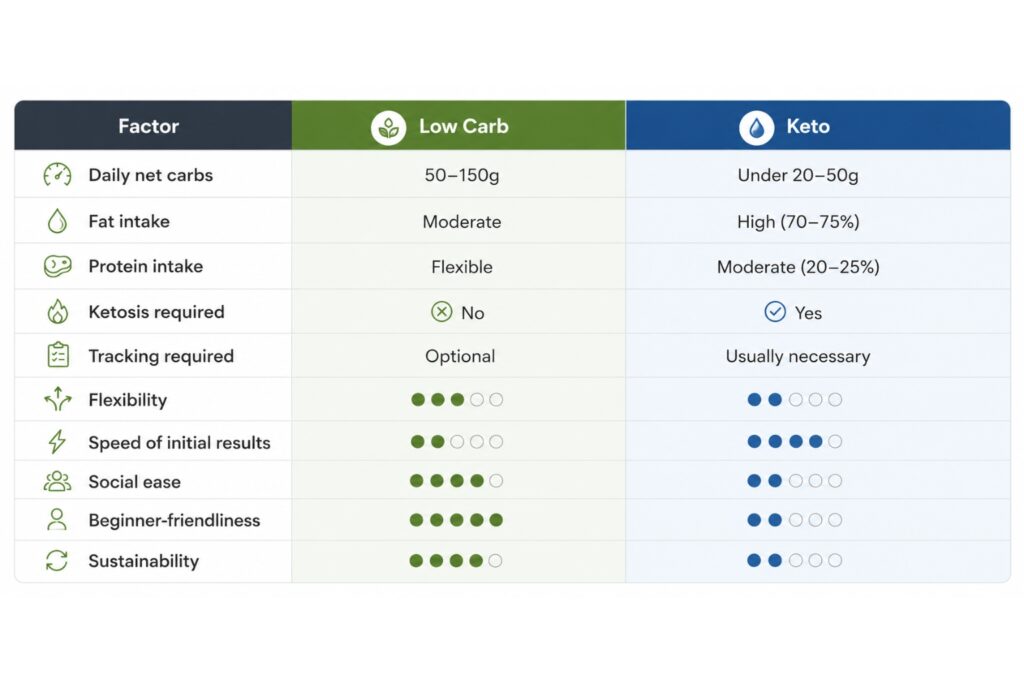
Here’s a direct comparison to make theLow Carb vs Keto differences crystal clear:
| Factor | Low Carb | Keto |
| Daily net carbs | 50–150g | Under 20–50g |
| Fat intake | Moderate | High (70–75% of calories) |
| Protein intake | Flexible, often higher | Moderate (20–25%) |
| Ketosis required | No | Yes |
| Tracking required | Optional | Usually necessary |
| Flexibility | High | Low |
| Speed of initial results | Moderate | Fast |
| Social ease | Easier | More challenging |
| Beginner-friendliness | Very beginner-friendly | Steeper learning curve |
| Sustainability | Generally higher | Can be harder long-term |
This table captures the heart of the low carb vs keto debate , keto trades flexibility for speed and metabolic precision, while low carb trades some speed for sustainability and ease.
3. Low Carb vs Keto: How Each One Affects Your Body
Understanding the biological differences between keto and low carb helps explain why results can vary so much between the two approaches.
How Low Carb Affects Your Body
A low carb diet (50–150g net carbs) reduces insulin spikes compared to a high-carb diet, but doesn’t necessarily push your body into full ketosis. Your body still primarily uses glucose for fuel, supplemented by some fat burning. Blood sugar stability improves, hunger decreases somewhat, and weight loss occurs , generally at a moderate, steady pace.
How Keto Affects Your Body
Keto’s stricter carb limit depletes glycogen stores (stored carbs) within a few days, forcing your liver to produce ketones from fat. This is a complete metabolic shift , not just a reduction in carbs, but a fundamental change in your primary fuel source. The result is typically faster initial weight loss (including significant water weight), stronger appetite suppression, and for many people, improved mental clarity.
The Practical Difference
In the low carb vs keto comparison, keto produces a more dramatic physiological shift. This is why keto often delivers faster results , but it’s also why keto requires more discipline and planning to maintain. Low carb’s gentler approach to carb restriction makes it easier to sustain without triggering the same intensity of adaptation symptoms (keto flu).
4. Low Carb Diet Menu vs Keto Diet Menu: What You Actually Eat
One of the most practical ways to understand Low Carb vs Keto is to compare what a typical day of eating looks like on each.
Sample Low Carb Diet Menu (Day)
Breakfast: 2 eggs + 1 slice whole-grain toast + avocado Lunch: Grilled chicken + quinoa (½ cup) + roasted vegetables Dinner: Salmon + sweet potato (small) + steamed broccoli Snack: Apple + 1 tbsp almond butter
Approximate net carbs: 80–90g
Sample Keto Diet Menu (Day)
Breakfast: 3 eggs scrambled in butter + bacon + sautéed spinach Lunch: Grilled chicken + large salad + avocado + olive oil dressing Dinner: Salmon + cauliflower rice + steamed broccoli with butter Snack: Cheese + a handful of macadamia nuts
Approximate net carbs: 15–18g
The Key Differences in the Food Lists
A low carb diet menu still includes moderate portions of whole grains, legumes, starchy vegetables, and most fruits , just in smaller, more controlled amounts. A keto menu eliminates these almost entirely, replacing carb calories with additional fat (butter, oils, avocado, fatty cuts of meat).
This is the most tangible difference in the low carb vs keto comparison: low carb still feels like “regular food, smaller portions.” Keto feels like a fundamentally different way of eating.
5. Pros and Cons: Low Carb vs Keto
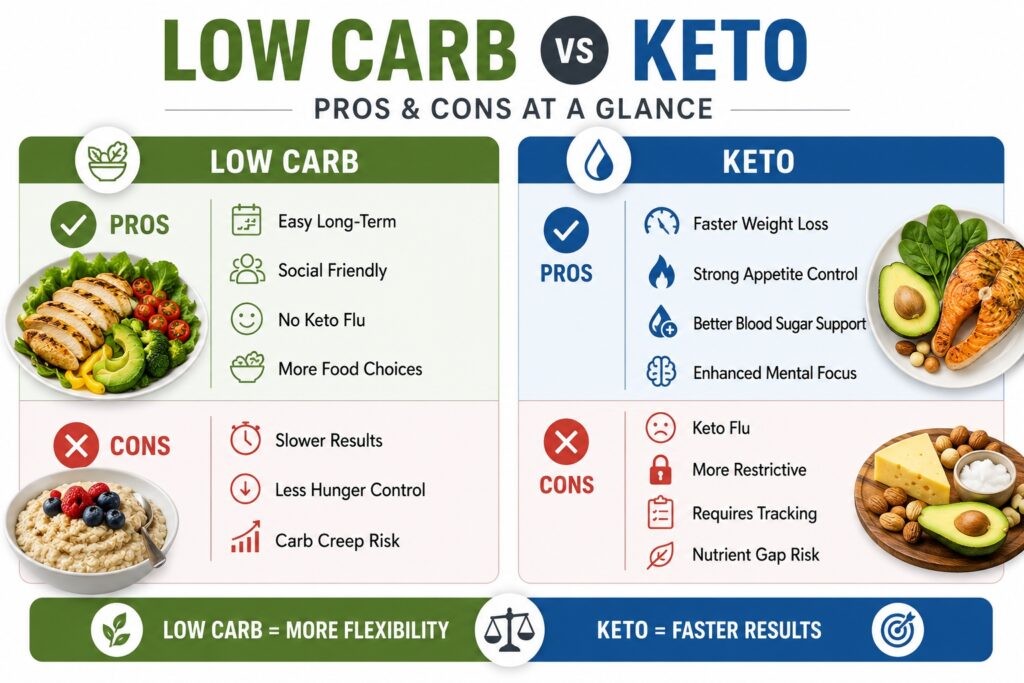
Let’s break down the honest advantages and disadvantages of each approach Low Carb vs Keto.
Low Carb: Pros
Easier to sustain long-term. Without the strict 20g carb ceiling, a low carb diet allows more flexibility , making it easier to maintain for months or years without feeling deprived.
Simpler social eating. Restaurants, family meals, and travel are far easier to navigate. You can eat a normal-looking meal with modest carb adjustments rather than requiring a completely different dish.
No keto flu. Because carb reduction is more gradual and less extreme, low carb dieters rarely experience the headaches, fatigue, and irritability associated with keto adaptation.
More food variety. Whole grains, legumes, and a wider range of fruits remain on the table , creating more variety and making meal planning less restrictive.
Low Carb: Cons
Slower initial results. Without the dramatic insulin and glycogen shift of keto, weight loss tends to be more gradual in the first 2–4 weeks.
Less appetite suppression. Low carb dieters don’t experience the same level of ketone-driven hunger suppression that keto followers often report.
Easier to drift toward “not low carb.” Without a strict ceiling, carb creep can happen , 50g slowly becomes 80g, then 100g, diluting the benefits.
Keto: Pros
Faster, more dramatic initial results. The shift into ketosis produces noticeable weight loss (including water weight) within the first week , a powerful motivator for many beginners.
Stronger appetite suppression. Ketones are a genuinely powerful appetite suppressant for most people , making calorie control feel almost automatic.
More precise metabolic effects. For people managing blood sugar issues or specific metabolic goals, the defined state of ketosis offers more predictable, measurable outcomes.
Often improves mental clarity. Many keto followers report a noticeable cognitive boost once fully fat-adapted , a benefit less commonly reported on standard low carb.
Keto: Cons
Keto flu. The first 3–7 days often include headaches, fatigue, irritability, and brain fog as the body adapts.
More restrictive and harder to sustain socially. Strict carb limits make restaurants, parties, and travel more challenging to navigate without careful planning.
Requires more tracking. To stay under 20–50g net carbs reliably, most people need to track food intake , at least initially.
Higher risk of nutrient gaps. Eliminating fruit, legumes, and whole grains can reduce certain fiber and micronutrient intake if not carefully planned.
6. Low Carb vs Keto: Which Produces Better Weight Loss Results?
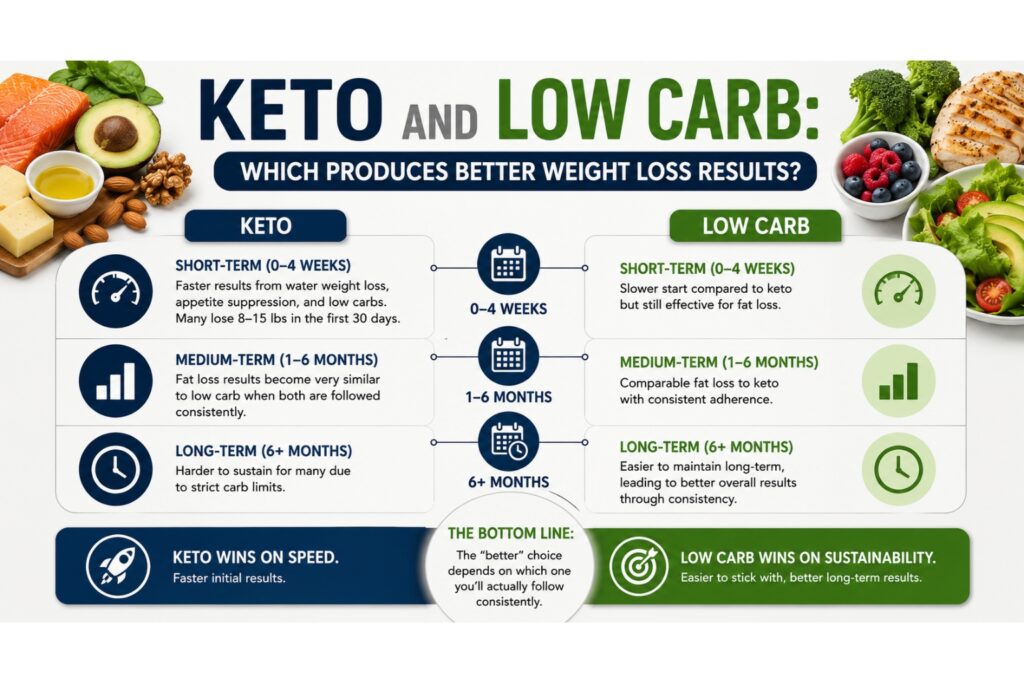
This is the question most people really want answered in the low carb vs keto debate. The honest answer: it depends on the timeframe.
Short-Term (0–4 Weeks)
Keto typically wins for short-term results. The combination of glycogen depletion (water weight), strong appetite suppression, and the dramatic carb reduction produces faster, more visible results in the first month. Many keto beginners see 8–15 lbs of loss in their first 30 days.
Medium-Term (1–6 Months)
Once the initial water weight is accounted for, research comparing keto and low carb for fat loss shows the results become much closer. Both approaches, when followed consistently, produce meaningful and comparable fat loss over months 2–6.
Long-Term (6+ Months to Years)
This is where low carb often pulls ahead , not because it’s metabolically superior, but because of adherence. Studies consistently show that low carb diet vs keto comparisons over a year or more favor whichever approach the person can actually stick to. Since low carb’s flexibility makes it easier to maintain, it often produces better long-term outcomes simply through better consistency.
The bottom line: Keto wins on speed. Low carb often wins on sustainability. The “better” choice depends entirely on which one you’ll actually follow consistently.
7. Who Should Choose Low Carb vs Keto?
Here’s a practical breakdown to help you decide between Low Carb vs Keto based on your specific situation.
Choose Keto If:
- You want the fastest possible initial results for motivation
- You’re managing blood sugar issues and want the more dramatic insulin-lowering effect
- You don’t mind tracking food and meal planning carefully
- You have the time and discipline to navigate social situations strategically
- You’ve struggled with hunger on other diets and want maximum appetite suppression
Choose Low Carb If:
- You want a sustainable, long-term approach without extreme restriction
- You have a busy social calendar and need flexibility for restaurants and events
- You’re a complete beginner to carb reduction and want an easier entry point
- You prefer more food variety, including some fruit, legumes, and whole grains
- You don’t want to deal with keto flu or the adaptation period
A Smart Middle Path
Many people find success by starting with keto for 4–8 weeks to break carb cravings and achieve rapid initial results, then transitioning to a more flexible low carb approach (50–100g net carbs) for long-term maintenance. This combines the best of both: keto’s fast start and low carb’s sustainability.
8. Building Your Own Low Carb Diet Menu vs Keto Plan
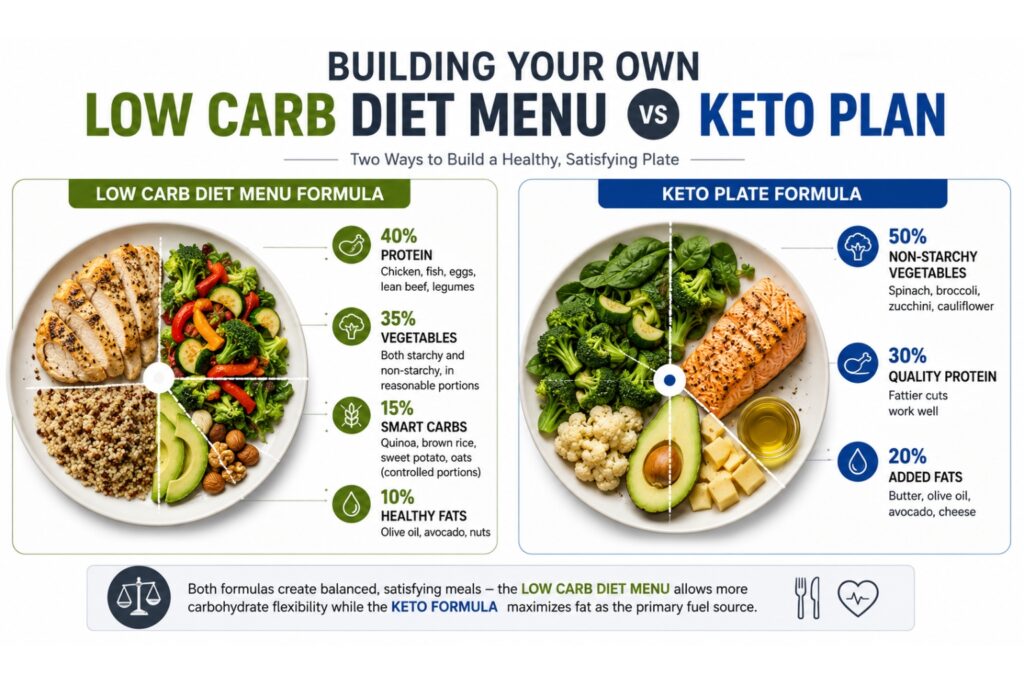
Whichever side of the low carb vs keto decision you land on, here’s how to structure your plate for each approach.
Low Carb Diet Menu Formula
- 40% Protein , chicken, fish, eggs, lean beef, legumes
- 35% Vegetables , both starchy and non-starchy, in reasonable portions
- 15% Smart Carbs , quinoa, brown rice, sweet potato, oats (controlled portions)
- 10% Healthy Fats , olive oil, avocado, nuts
Keto Plate Formula
- 50% Non-starchy vegetables , spinach, broccoli, zucchini, cauliflower
- 30% Quality protein , fattier cuts work well
- 20% Added fats , butter, olive oil, avocado, cheese
Both formulas create balanced, satisfying meals , the low carb diet menu simply allows more carbohydrate flexibility while the keto formula maximizes fat as the primary fuel source.
9. Common Mistakes in the Low Carb vs Keto Decision
Many beginners make these mistakes when navigating keto vs low carb:
Mistake 1: Calling Low Carb “Keto” Without Reaching Ketosis
Many people believe they’re doing keto while eating 60–80g of carbs daily , which is genuinely low carb, but not keto. This mismatch leads to confusion when results don’t match keto-specific expectations like rapid water weight loss or strong appetite suppression.
Mistake 2: Choosing Keto for the Wrong Reasons
Some people choose strict keto purely because it’s trendy , without considering whether the restrictiveness fits their lifestyle. This often leads to short-term enthusiasm followed by burnout and abandonment.
Mistake 3: Underestimating Low Carb’s Effectiveness
Because keto gets more attention, some people assume low carb is a “lesser” approach. In reality, a well-executed low carb diet vs keto comparison over 6–12 months often shows comparable fat loss , low carb simply takes a steadier, less dramatic path to get there.
Mistake 4: Switching Back and Forth Too Often
Jumping between strict keto and looser low carb every few weeks prevents your body from fully adapting to either approach. Choose one, commit for at least 4–6 weeks, then reassess.
Key Takeaways
- In the low carb vs keto comparison, keto is a stricter subset of low carb specifically designed to trigger ketosis (under 20–50g net carbs), while low carb is more flexible (50–150g net carbs)
- Keto vs low carb differ significantly in fat intake , keto requires 70–75% of calories from fat, while low carb has no such requirement
- Keto typically produces faster short-term results (especially in the first 2–4 weeks), while low carb diet vs keto comparisons over 6+ months often show more comparable results due to adherence differences
- Keto and low carb both reduce insulin spikes and support weight loss , keto simply does so more dramatically and quickly
- Choose keto if you want fast results and don’t mind tracking; choose low carb if you prioritize sustainability and flexibility
- A low carb diet menu includes moderate whole grains, legumes, and fruit; a keto menu eliminates these almost entirely in favor of added fats
- Many people succeed by starting with keto for 4–8 weeks, then transitioning to low carb for long-term maintenance
- The “better” choice in low carb vs keto ultimately depends on which approach you can realistically maintain , consistency outperforms intensity every time
Conclusion: Low Carb vs Keto , The Right Choice Is the One You’ll Keep
There’s no universally “better” answer in the low carb vs keto debate , only the better answer for you, your lifestyle, and your goals. Keto offers speed and precision. Low carb offers flexibility and sustainability. Both genuinely work when followed consistently.
If you want fast results and don’t mind structure, start with keto. If you want a gentler, more sustainable entry point, start with low carb. And if you’re not sure, remember: you can always start with one and adjust as you learn what fits your life.
For the complete foundation on how ketosis works and how to start strict keto the right way, visit the full pillar guide: Keto Diet Plan: How to Start, Eat & Succeed on Keto
Explore more free diet plans, meal guides, and nutrition comparisons at thedailycrave.online , your trusted resource for finding what actually works for you.
Frequently Asked Questions (FAQ)
Q1: What is the main difference in low carb vs keto?
The main difference in low carb vs keto is the carb limit and metabolic goal. Low carb means eating fewer carbs than standard (typically 50–150g net carbs daily) without a specific target. Keto requires staying under 20–50g net carbs specifically to trigger ketosis , a metabolic state where your body burns fat as its primary fuel. Keto also requires significantly higher fat intake (70–75% of calories) compared to low carb’s more flexible macros.
Q2: Can I switch between keto and low carb diet vs keto without issues?
Yes, switching between Low Carb vs Keto is generally safe for healthy adults, though it can cause temporary digestive adjustment and minor energy fluctuations as your body shifts fuel sources. Many people successfully cycle between strict keto phases and more flexible low carb maintenance periods. Give your body at least 1–2 weeks to adjust after any significant change in carb intake.
Q3: Is keto more effective than a low carb diet menu for weight loss?
For the first 2–4 weeks, keto typically shows faster results due to water weight loss and stronger appetite suppression. However, over 6 months to a year, research comparing a low carb diet menu against strict keto often shows similar total weight loss , the difference usually comes down to which approach a person sticks with more consistently, not which is inherently more effective.
Q4: Which is better for beginners , Low Carb vs Keto?
For most complete beginners, low carb is the easier and more sustainable starting point. It has a gentler learning curve, no keto flu, and more food flexibility. That said, some beginners do better with keto’s stricter structure because the clear rules (“stay under 20g carbs”) are easier to follow than the more ambiguous “eat less carbs” approach of standard low carb.
Q5: Do I need to track macros differently for low carb vs keto?
Yes. On keto, most people track net carbs, fat, and protein closely to ensure they hit the specific ratios needed for ketosis (especially in the first few weeks). On low carb, tracking is often less strict , many people simply monitor net carbs and don’t worry about exact fat or protein percentages. This is one of the most practical day-to-day differences in keto vs low carb eating.