Table of Contents
If you’ve been thinking about starting a keto diet plan but don’t know where to begin , this is the only guide you need. The ketogenic diet is one of the most powerful, most researched, and most searched approaches to weight loss in the world. And with good reason: a well-executed keto diet plan produces fast, visible results, dramatically reduces hunger, and transforms the way your body uses energy.
But here’s the truth most keto articles won’t tell you: keto only works when you do it right. That means understanding the science, setting up your kitchen correctly, choosing the right keto diet meal plan for your lifestyle, and knowing how to handle the challenges that come in the first week. Without that foundation, most beginners quit before the fat-burning even begins.
This pillar guide is your complete keto headquarters. Whether you’re just hearing about keto for the first time or you’ve tried before and struggled, this keto diet plan guide will walk you through every step , from your first meal to month one and beyond. We’ve also linked every major topic to its own in-depth guide so you can dive deeper into anything that applies to you specifically.
1. What Is a Keto Diet Plan , And Why Does It Work?
A keto diet plan is a structured low-carbohydrate, high-fat eating approach designed to shift your body into a metabolic state called ketosis. In ketosis, your liver converts fat into molecules called ketones, which your body and brain use as their primary fuel source instead of glucose.
This metabolic switch is what makes a keto diet plan uniquely powerful. When you’re burning fat for fuel , 24 hours a day, even at rest , weight loss becomes faster, more predictable, and less dependent on willpower.
The Science in Plain English
When you eat carbohydrates, your body breaks them down into glucose. Glucose raises blood sugar, which triggers insulin , the hormone responsible for fat storage. High insulin = your body stores fat. Low insulin = your body burns fat.
A keto diet plan cuts carbohydrates so drastically (typically under 20–50g of net carbs per day) that blood glucose drops, insulin levels plummet, and your body has no choice but to turn to stored fat for energy. The result is continuous fat burning , including the stubborn belly fat that other diets struggle to touch.
Standard Keto Macros
| Macronutrient | Target | Example (1,700 cal) |
| Fat | 70–75% of calories | 130–140g per day |
| Protein | 20–25% of calories | 85–105g per day |
| Net Carbs | 5–10% of calories | Under 20–50g per day |
2. Types of Keto Diet Plans , Which One Is Right for You?
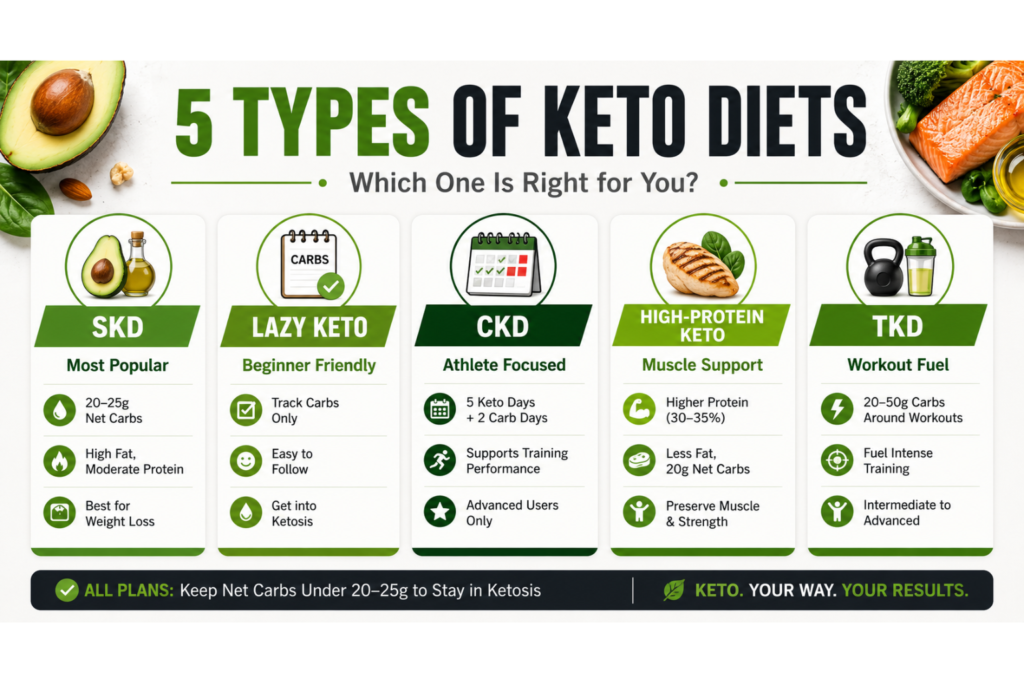
Not all keto diet plans are identical. There are several variations , each with different strictness levels, macros, and target audiences. Here’s a breakdown to help you choose:
Standard Ketogenic Diet (SKD) , Most Popular
The classic keto diet plan: under 20–25g net carbs daily, high fat, moderate protein. This is the approach used in most research studies and the one this guide is primarily based on. Best for beginners and those focused on weight loss.
Lazy Keto , Beginner’s Shortcut
Lazy keto only tracks carbs , not fat or protein. You keep net carbs under 20–25g but don’t stress about hitting specific fat or protein targets. It’s a simpler entry point that still gets most people into ketosis.
Cyclical Keto (CKD) , For Active People
Follows a pattern of 5 strict keto days followed by 2 higher-carb “refeed” days. Popular with athletes who need carbs for training performance. Not recommended for true beginners , establish ketosis first.
High-Protein Keto , Best of Both Worlds
A modified keto diet plan with higher protein (30–35%) and slightly less fat. Keeps net carbs under 20g but prioritizes protein to preserve muscle mass. Especially useful for people over 40 or those doing resistance training.
Targeted Keto (TKD) , For Athletes
Adds 20–50g of fast-digesting carbs around workouts only. Keeps the body in ketosis during rest while fueling intense training sessions. For intermediate to advanced keto followers.
3. Keto Diet Plan Food List: What to Eat and What to Avoid
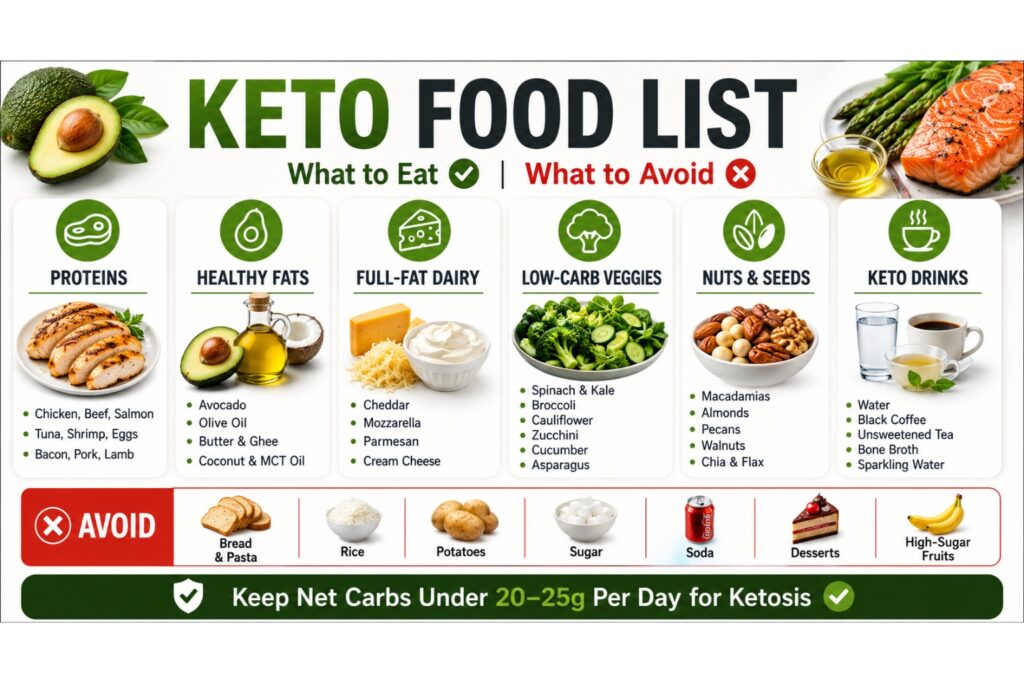
The foundation of any successful keto diet plan is knowing exactly which foods keep you in ketosis and which ones kick you out. Here’s your complete guide.
Foods to Eat Freely on a Keto Diet Plan
Proteins:
- Chicken thighs, drumsticks, and breast
- Ground beef (80/20 for flavor, 93% for leaner options)
- Salmon, tuna, sardines, mackerel, cod, shrimp
- Eggs , the ultimate keto staple (eat as many as you want)
- Bacon and turkey bacon (check for added sugars)
- Pork chops, lamb, duck, venison
Fats and Oils:
- Butter and ghee (clarified butter)
- Extra-virgin olive oil
- Coconut oil and MCT oil
- Avocado oil
- Heavy cream and cream cheese
- Lard (for high-heat cooking)
Dairy:
- Full-fat cheddar, mozzarella, parmesan, brie, gouda
- Full-fat Greek yogurt (small portions , check carbs)
- Cottage cheese (moderate portions)
- Sour cream and cream cheese
Best Keto Vegetables (Low Net Carbs):
- Spinach, kale, arugula, romaine, Swiss chard
- Broccoli (3.6g net carbs/cup), cauliflower (3.2g), zucchini (2.4g)
- Asparagus (2.2g), cucumber (2.2g), mushrooms (1.6g)
- Bell peppers , green (4.4g), red (5.3g)
- Cabbage, Brussels sprouts, celery, green beans
- Avocado (2g net carbs , technically a fruit, but keto’s best friend)
Nuts and Seeds (in moderation):
- Macadamia nuts (lowest carbs: 1.5g/oz)
- Almonds (2.7g/oz), walnuts (2g/oz), pecans (1.2g/oz)
- Chia seeds (1g net/tbsp), flaxseeds (0.2g/tbsp)
- Pumpkin seeds (1.3g/oz), hemp seeds (0.9g/tbsp)
Beverages:
- Water (plain and sparkling , unlimited)
- Black coffee (zero carbs)
- Unsweetened teas
- Bone broth (electrolytes + collagen)
- Sparkling water (no sweeteners or flavoring)
Foods That Break Ketosis
Grains and Starches:
All bread, pasta, rice, oats, quinoa, cornmeal, crackers, and cereals. Even whole grain versions , the carb content is too high for a keto diet plan.
Sugars and Sweets:
Table sugar, honey, maple syrup, candy, chocolate (below 85% cocoa), pastries, cakes, ice cream, and all desserts.
Most Fruits:
Bananas, apples, oranges, grapes, mangoes, pineapple. Small portions of berries (raspberries, blackberries, strawberries) are acceptable , typically ¼ cup per serving.
Starchy Vegetables:
Potatoes, sweet potatoes (in large amounts), corn, peas, carrots (in larger amounts), parsnips.
Legumes:
Beans, lentils, chickpeas, edamame (all too high in carbs for strict keto , save for lazy keto or low-carb approaches).
Sugary Drinks:
Juice, soda, sports drinks, sweetened coffee drinks, flavored almond milks with sugar. These are among the most dangerous foods for a keto diet plan , they spike blood sugar fast with zero satiety.
Alcohol:
Beer is almost always too high in carbs. Sweet cocktails, ciders, and mixers are off-limits. Dry wine in moderation (1 glass) and spirits (vodka, whiskey, gin) are lower-carb options.
4. How to Start a Keto Diet Plan: Step-by-Step for Beginners
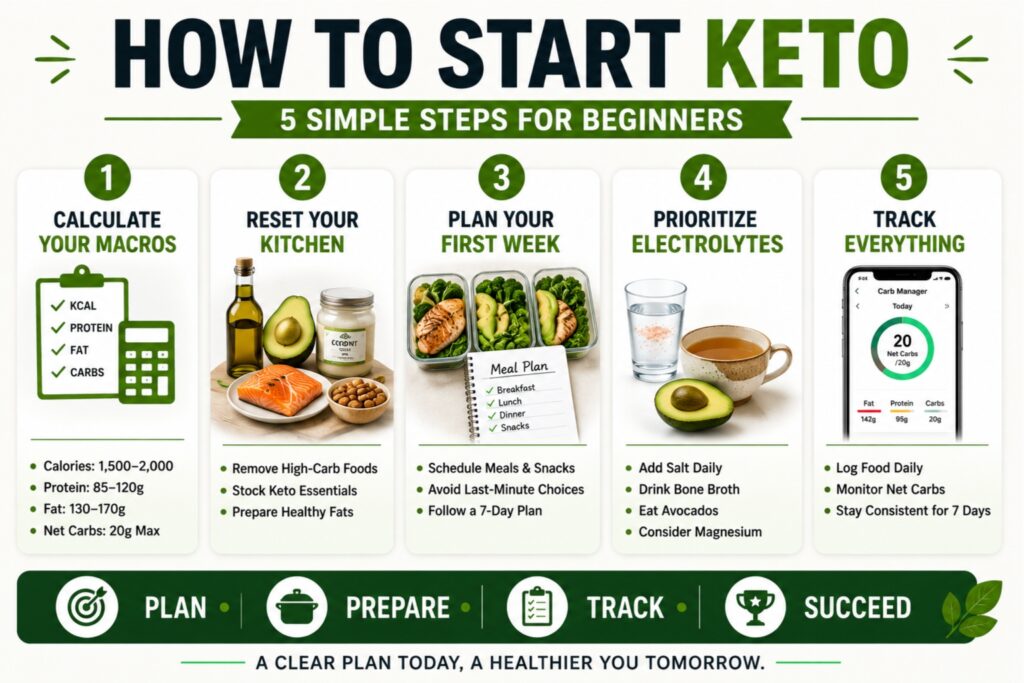
Starting keto with a clear, structured approach is what separates people who thrive from people who quit after 4 days. Here’s the exact process:
Step 1: Calculate Your Keto Macros
Before eating a single keto meal, know your numbers. Use a free keto macro calculator online and input your weight, height, age, activity level, and goal. You’ll get:
- Daily calorie target (usually 1,500–2,000 for weight loss)
- Fat target (130–170g depending on calories)
- Protein target (85–120g for most people)
- Net carb limit (start at 20g for fastest ketosis entry)
Step 2: Clear and Restock Your Kitchen
A keto diet plan only works when your environment supports it. Remove non-keto foods (or at minimum, move them out of sight) and stock up on keto staples before you start.
One-time pantry investment: Almond flour, coconut flour, MCT oil, electrolyte powder, bone broth, unsweetened almond milk, sugar-free sweeteners (stevia, monk fruit, erythritol)
Step 3: Plan Your First Week
Don’t improvise your first keto diet meal plan. Write out exactly what you’ll eat for breakfast, lunch, dinner, and snacks for the first 7 days. Use the 7 day keto diet plan template in this guide or the in-depth meal plan in our dedicated article.
Step 4: Prepare Your Electrolyte Strategy
The first week of a keto diet plan causes significant water and electrolyte loss. Plan this in advance:
- Add ½ tsp of Himalayan pink salt to your morning water
- Drink 2 cups of bone broth daily for the first 7 days
- Eat an avocado daily for potassium
- Consider a magnesium supplement (glycinate or malate , better absorbed)
Step 5: Track Everything in Week One
For the first 7 days, track every single food you eat using Carb Manager or MyFitnessPal. This builds carb awareness fast and prevents the accidental carb creep that keeps most beginners out of ketosis.
5. The 7-Day Keto Diet Plan: Your First Week
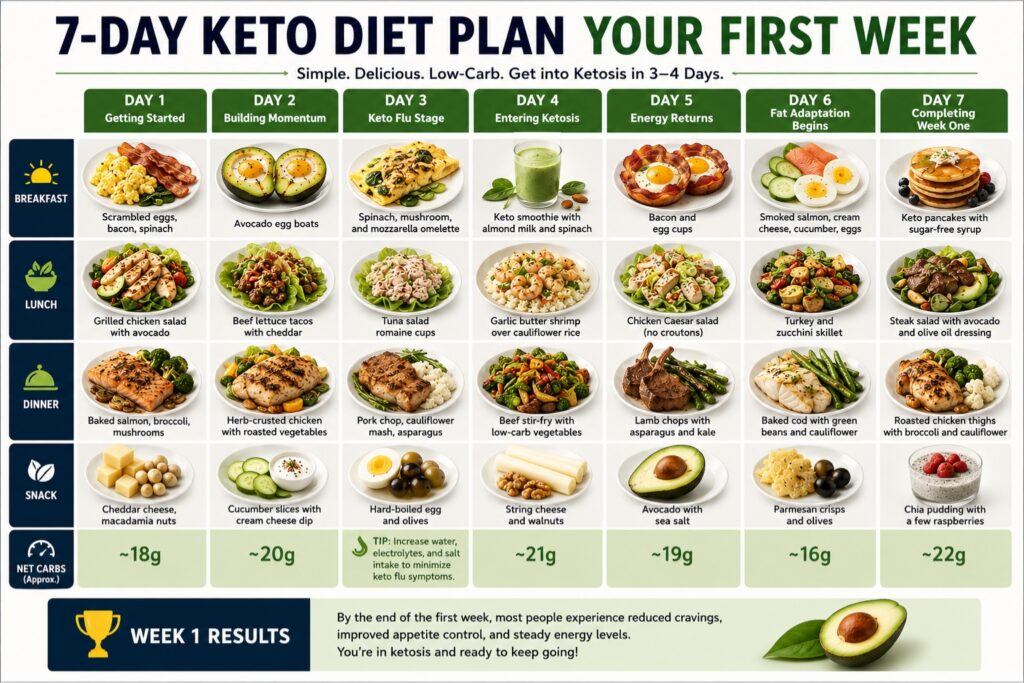
Here is a complete 7 day keto diet plan , the most critical week of your keto journey. Follow this closely and most people enter ketosis by Day 3–4. Each day targets approximately 1,600–1,800 calories with under 25g net carbs.
Day 1 , First Steps
Breakfast: 3 scrambled eggs in butter + 2 strips bacon + sautéed spinach + black coffee Lunch: Grilled chicken thigh + large romaine salad + avocado (½) + cherry tomatoes + full-fat Caesar dressing Dinner: Baked salmon (5 oz) + steamed broccoli with garlic butter + sautéed mushrooms Snack: 1 oz cheddar + 10 macadamia nuts Net Carbs: ~18g
Day 2 , Settling In
Breakfast: Avocado egg boats (egg baked in avocado half) + chili flakes + black coffee Lunch: Ground beef lettuce tacos + shredded cheddar + sour cream + low-sugar salsa Dinner: Chicken thighs with herb crust + roasted zucchini and bell pepper Snack: Cucumber slices + cream cheese dip Net Carbs: ~20g
Day 3 , Keto Flu May Peak
Breakfast: 2-egg omelette with spinach, mushrooms, and mozzarella Lunch: Tuna salad (canned tuna + full-fat mayo + mustard + celery) in romaine cups Dinner: Pork chop + cauliflower mash + steamed asparagus Snack: Hard-boiled egg + 5 olives Net Carbs: ~15g
Tip: Day 3 is often the hardest. Drink bone broth and add extra salt. Ketosis is very close.
Day 4 , Entering Ketosis
Breakfast: Keto smoothie (almond milk + protein powder + almond butter + spinach) Lunch: Shrimp (5 oz) over cauliflower rice with garlic butter Dinner: Beef stir-fry with zucchini + broccoli + cabbage + soy-ginger sauce Snack: String cheese + walnuts Net Carbs: ~21g
Day 5 , Energy Returning
Breakfast: Bacon and egg cups (eggs baked in bacon-lined muffin tin) Lunch: Chicken Caesar salad (no croutons) + parmesan Dinner: Lamb chops + roasted asparagus + sautéed kale with garlic Snack: Half avocado with sea salt and lime Net Carbs: ~19g
Day 6 , Feeling Keto Adapted
Breakfast: Smoked salmon + cream cheese + cucumber rounds + 2 soft-boiled eggs Lunch: Ground turkey skillet + zucchini + tomatoes + Italian seasoning + mozzarella Dinner: Baked cod + lemon-herb butter + steamed green beans + roasted cauliflower Snack: Parmesan crisps + olives Net Carbs: ~16g
Day 7 , End of Week 1
Breakfast: Keto pancakes (2 eggs + 2 oz cream cheese + cinnamon) + sugar-free maple syrup Lunch: Steak salad (sliced sirloin + mixed greens + avocado + olive oil dressing) Dinner: Roasted chicken thighs + cauliflower + broccoli + garlic butter Snack: Chia pudding (almond milk + chia seeds + vanilla + few raspberries) Net Carbs: ~22g
This 7 day keto diet plan is your launchpad. By the end of day 7, you’ll be in ketosis, your hunger will be significantly reduced, and the initial adjustment will be behind you.
6. Keto Side Effects: Understanding and Managing the Keto Flu
Every honest keto diet plan guide must address the keto flu , the temporary adjustment phase that derails so many beginners.
What Is Keto Flu?
When you start a keto diet plan and dramatically cut carbs, your kidneys begin excreting sodium at a much higher rate. As sodium leaves the body, potassium and magnesium follow. This electrolyte drop causes:
- Headache (most common symptom)
- Fatigue and low energy
- Brain fog and difficulty concentrating
- Irritability and mood changes
- Muscle cramps and weakness
- Nausea (in some people)
- Insomnia (in some people)
Keto flu typically peaks on days 2–4 and resolves completely by day 5–7 for most people. It is not dangerous , it’s simply your body adjusting to a fundamentally different fuel source.
How to Prevent and Minimize Keto Flu
Electrolytes are the solution. Most keto flu symptoms disappear when electrolytes are properly managed:
- Sodium: Add ½–1 tsp of Himalayan salt to water daily; salt your food generously
- Potassium: Eat avocados, leafy greens, and salmon daily; consider No Salt (potassium chloride)
- Magnesium: Take 200–400mg magnesium glycinate or malate at night
Additional strategies:
- Drink 2.5–3 liters of water daily
- Drink 2 cups of bone broth daily for the first week
- Don’t restrict calories severely in week one , eating enough fat prevents extreme fatigue
- Get adequate sleep (7–9 hours)
- Keep activity light , walking is ideal; avoid intense training in week one
7. Keto Diet Meal Plan Essentials: Building Every Keto Meal Correctly
Understanding how to construct a proper keto diet meal plan meal is more valuable than any specific recipe. Once you know the formula, you can build hundreds of different keto meals without ever feeling stuck.
The Keto Meal Formula
Every keto meal should have:
1. A Quality Protein Anchor (25–35% of plate) Choose: chicken, beef, salmon, eggs, shrimp, pork, lamb, turkey, tuna, sardines
2. Abundant Low-Carb Vegetables (50% of plate) Choose: spinach, broccoli, cauliflower, zucchini, asparagus, mushrooms, kale, green beans, cabbage
3. Healthy Fat Source (20–25% of plate) Choose: butter for cooking, olive oil drizzle, avocado on the side, cheese, sour cream, nuts
4. A Flavor System Choose: fresh garlic + herbs, lemon-butter, soy-ginger-sesame, Mediterranean herbs, Mexican spices (cumin, chili, lime), Italian seasoning
With this formula, your keto diet plan practically builds itself , no recipe needed.
Keto Meal Plan: 3 Complete Days of Eating
Day A:
- Breakfast: 3-egg veggie scramble + bacon + black coffee (net carbs: 3g)
- Lunch: Big chicken Caesar salad (no croutons) + parmesan + lemon dressing (net carbs: 5g)
- Dinner: Salmon + roasted broccoli + cauliflower rice + garlic butter (net carbs: 8g)
- Snack: Avocado + sea salt (net carbs: 2g)
- Day Total: 18g net carbs
Day B:
- Breakfast: Keto smoothie (almond milk + protein powder + almond butter + spinach) (net carbs: 5g)
- Lunch: Ground beef taco bowl (romaine + beef + cheese + sour cream + salsa) (net carbs: 7g)
- Dinner: Pork chops + roasted asparagus + sautéed mushrooms in butter (net carbs: 6g)
- Snack: 1 oz cheddar + 10 almonds (net carbs: 2g)
- Day Total: 20g net carbs
Day C:
- Breakfast: Smoked salmon + cream cheese + cucumber + 2 eggs (net carbs: 4g)
- Lunch: Shrimp stir-fry + zucchini noodles + soy-ginger sauce (net carbs: 8g)
- Dinner: Roasted chicken thighs + Brussels sprouts + cauliflower mash (net carbs: 9g)
- Snack: Chia pudding with berries (net carbs: 5g)
- Day Total: 26g net carbs
8. Keto Diet Plans for Special Groups: What You Need to Know
A single keto diet plan doesn’t fit every person. Here’s how keto differs for specific groups , with links to in-depth dedicated guides.
Keto for Women Over 50
Women over 50 face unique hormonal challenges , declining estrogen, reduced insulin sensitivity, and slower metabolism , that require a modified approach to keto diet plans. Higher protein intake, strength training, and specific nutrients (magnesium, vitamin D, omega-3s) become even more critical at this life stage.
Keto and Diabetes
A keto diet plan can be remarkably effective for managing blood sugar in type 2 diabetes , often reducing or eliminating medication needs. However, people with type 1 diabetes or those on blood sugar medications face unique risks (particularly hypoglycemia) and should only begin keto diet plans under direct medical supervision.
Budget Keto
One of the most common misconceptions about keto diet plans is that they’re expensive. The reality: eggs, canned tuna, chicken thighs, ground beef, cabbage, frozen broccoli, and butter are some of the most affordable foods available. A well-planned keto diet meal plan can absolutely be executed for under $50 per week.
Keto vs. Low Carb
Many beginners aren’t sure whether they need a full keto diet plan or a more relaxed low-carb approach. Keto (under 25g net carbs) is more strict but produces faster and more dramatic results. Low-carb (50–150g net carbs) is more flexible and easier to maintain socially. Understanding the difference helps you choose the right starting point.
9. Keto Cheat Days: The Truth About What They Do to Your Progress
Almost every beginner following a keto diet plan eventually asks: “What happens if I have one cheat day?”
The honest answer: it depends on how “cheating” is defined , and the impact is greater on keto than on most other diets.
Why Keto Cheat Days Are Different
On most diets, one high-calorie day causes a temporary blip. On a keto diet plan, even a moderate amount of carbs (50–100g) kicks you out of ketosis completely. Your body shifts back to glucose metabolism, blood sugar spikes, insulin rises, and the water weight you lost in week one often returns within 24 hours (2–4 lbs of water weight can reappear quickly).
Getting Back Into Ketosis After a Cheat
Re-entering ketosis after a cheat takes 1–3 days for most people , essentially repeating the discomfort of the initial transition without as much intensity. For this reason, frequent keto diet plan cheat days are genuinely counterproductive , you spend a significant portion of your time in a metabolic no-man’s land.
A Better Alternative: Planned Higher-Carb Days
If you follow keto diet plans long-term, consider a structured cyclical approach (5 keto days + 2 planned higher-carb days of 100–150g) rather than unplanned cheat days. This maintains most keto benefits while adding flexibility.
10. Keto Diet Plan Meal Prep: The Sunday System That Makes Keto Easy
The biggest practical barrier to any keto diet plan is time. Monday through Friday, life is busy , and that’s when bad food choices happen. A Sunday meal prep session eliminates this completely.
The 2-Hour Sunday Keto Prep System
First 60 Minutes , Cook Proteins:
- Bake or grill 5–6 chicken thighs or breasts (375°F, 30 minutes)
- Brown 1 lb ground beef with onion and garlic , season half with taco spice, half with Italian
- Hard-boil 10 eggs (use all week for snacks and salads)
- Bake salmon fillets (375°F, 15 minutes) , use within 3 days
Second 45 Minutes , Vegetables:
- Roast a large sheet pan of broccoli, zucchini, and cauliflower (400°F, 25 minutes)
- Wash and dry salad greens , store with a paper towel to absorb moisture
- Make cauliflower rice: pulse raw cauliflower in food processor, sauté in butter 5 minutes, store in container
Final 15 Minutes , Assembly:
- Prep 3 overnight chia pudding jars (almond milk + chia seeds + vanilla , add berries on the day)
- Portion snacks: 1 oz nuts in small bags, cheese portions, cucumber slices
- Make 1 large batch sauce (tahini-lemon, Caesar dressing, or garlic-herb butter)
Result: You now have 5 days of breakfasts, lunches, and dinners ready to grab in minutes , making your keto diet meal plan completely effortless Monday through Friday.
11. Tracking Your Keto Diet Plan Progress: What to Measure Beyond the Scale
The scale is just one measurement of your keto diet plan results. And it’s often the most misleading one , especially in the first week when water weight changes dramatically.
Track These Metrics Instead (or in Addition)
Body measurements (every 2 weeks): Take measurements of waist, hips, chest, and thighs with a tape measure. Many people lose inches before pounds , especially on a keto diet plan where muscle is being preserved while fat is lost.
Energy levels (daily): Rate your energy on a scale of 1–10 each morning. Most people on a keto diet plan report a significant energy improvement by weeks 2–3.
Hunger levels (daily): One of the most reliable signs that your keto diet plan is working is dramatically reduced hunger. When ketones are elevated, ghrelin (the hunger hormone) drops , sometimes to a degree that feels almost surreal.
Sleep quality: Track sleep duration and quality. Many people experience improved sleep after the first week of a keto diet plan , largely due to more stable blood sugar throughout the night.
Ketone levels (optional):
- Urine strips: cheap, accessible, but less accurate after the first few weeks
- Blood ketone meter: most accurate, prick finger, measure beta-hydroxybutyrate
- Breath analyzer: non-invasive, moderate accuracy, reusable
Nutritional ketosis is typically 0.5–3.0 mmol/L on a blood meter.
Photos (every 2 weeks): Take front, side, and back photos in consistent lighting. Visual progress is often more motivating than numbers , and captures changes the scale misses entirely.
12. Long-Term Success on Keto Diet Plans: Habits That Keep Results Permanent
Reaching your goal weight on a keto diet plan is the beginning , not the end. Here’s what determines whether you keep the results long-term:
Build a Rotation of 8–10 Go-To Meals
Variety is wonderful, but decision fatigue kills consistency. Most successful long-term keto followers have 8–10 meals they love and rotate them weekly. Your keto diet plan meal plan becomes effortless when you know exactly what you’re making without needing to look up a recipe.
Make Keto Socially Easy
The hardest part of long-term keto diet plans isn’t the food , it’s social situations. Learn 2–3 “default orders” at common restaurant types (steakhouse, Italian, Mexican, Asian). These allow you to enjoy social meals without derailing your keto diet plan.
Plan for Travel
Pack keto-friendly snacks when traveling: nuts, jerky, cheese crisps, dark chocolate (85%+), and protein bars (check carbs). Most airports and hotels have keto-compatible options , eggs, salads with protein, and burger patties without the bun.
Adjust Macros as Weight Changes
As you lose weight, your caloric needs change. Recalculate your macros every 10–15 lbs lost using a keto macro calculator. Your keto diet plan meal plan may need slight calorie reduction to maintain the same deficit as you get lighter.
Have an Exit Strategy
Long-term success on keto diet plans means knowing what you’ll do at maintenance. Most people either continue low-carb eating (50–100g net carbs), cycle in and out of strict keto seasonally, or use a Mediterranean-style approach for maintenance. None of these requires returning to old eating patterns , the habits built on keto transfer directly.
Key Takeaways
- A keto diet plan shifts your body into ketosis by restricting net carbs to 20–50g daily , causing continuous fat burning even at rest
- The standard keto diet plan is 70–75% fat, 20–25% protein, and 5–10% carbohydrates
- Multiple keto diet plans exist , standard, lazy, cyclical, high-protein, and targeted , each suited to different lifestyles and goals
- The 7 day keto diet plan in this guide is the critical first week , most people enter ketosis by day 3–4 when following it correctly
- Keto flu is real and temporary , it’s managed almost entirely through aggressive electrolyte replacement (sodium, potassium, magnesium)
- Your keto diet meal plan should follow a simple formula: protein + abundant low-carb vegetables + healthy fat + a flavor system
- Keto cheat days kick you out of ketosis and require 1–3 days to re-enter , planned cyclical approaches are more effective than unplanned cheating
- Sunday meal prep is the single most powerful practical strategy for maintaining your keto diet plan consistently through the week
- Track more than the scale: measurements, energy, hunger, sleep, and photos give a complete picture of your keto diet plan progress
- A keto diet plan is not just for beginners , the habits and metabolic shifts it creates support long-term health well beyond the initial weight loss phase
Conclusion: Start Your Keto Diet Plan the Right Way
You now have the most complete beginner’s keto diet plan guide available , covering the science, the food lists, the full 7 day keto diet plan, the keto flu, meal prep, special considerations, cheat days, and long-term success strategies.
The keto diet plan is one of the most effective tools for weight loss, hunger control, and metabolic health ever documented. But like any powerful tool, it works best when used correctly. Take the time to set up your kitchen, plan your first keto diet meal plan week, prepare your electrolytes, and commit to pushing through that first week. The results on the other side are absolutely worth it.
Ready to go deeper on any specific topic? The Daily Crave has a complete library of keto diet plans guides , covering everything from lazy keto and budget keto to keto for women over 50, keto and diabetes, high-protein keto, and everything in between. Visit thedailycrave.online to explore the complete collection and find the specific keto diet plan that works best for your life.
Frequently Asked Questions (FAQ)
Q1: How do I start a keto diet plan as a complete beginner?
Start by calculating your keto macros (use a free online calculator), clearing non-keto foods from your kitchen, and planning your first 7 day keto diet plan before day one. Stock up on keto staples , eggs, fatty meats, low-carb vegetables, butter, cheese, and electrolytes. Your net carb target should be 20g daily for the first 2 weeks to enter ketosis as quickly as possible. Track everything in an app like Carb Manager. Follow the step-by-step starting guide in Section 4 of this article.
Q2: What is the difference between a keto diet plan and a keto diet meal plan?
A keto diet plan refers to the overall dietary approach , the macros, food rules, and principles of ketogenic eating. A keto diet meal plan is the specific day-by-day schedule of what you’ll actually eat , breakfast, lunch, dinner, and snacks , within the keto diet plan framework. You need both: the plan as your foundation and the meal plan as your daily execution guide.
Q3: How long does it take to see results on a keto diet plan?
Most beginners see 3–7 lbs of loss in week one , primarily water weight as glycogen depletes. Real fat loss of 1–2 lbs per week follows from week two onward. Total results over 4 weeks on a keto diet plan typically range from 8–15 lbs depending on starting weight, calorie intake, and activity level. Non-scale results , reduced hunger, better energy, clearer thinking , often appear even sooner, usually by day 5–7.
Q4: Can I do a keto diet plan without counting calories?
Many people successfully follow keto diet plans without strict calorie counting , especially in the beginning , because the appetite-suppressing effect of ketones naturally reduces calorie intake. However, if weight loss stalls after the first month, tracking calories (in addition to carbs) for 2–3 weeks helps identify whether a calorie surplus is the issue. For beginners, tracking both carbs and calories in week one builds valuable awareness.
Q5: Are keto diet plans safe for everyone?
Keto diet plans are safe for most healthy adults and have strong evidence supporting their effectiveness and safety over both short and long-term periods. However, certain groups should consult a doctor before starting: people with type 1 diabetes (risk of ketoacidosis), those on blood pressure or blood sugar medications (doses may need adjustment), people with kidney disease (high protein considerations), and pregnant or breastfeeding women. For everyone else, a well-formulated keto diet meal plan with adequate electrolytes and whole foods is generally very safe and well-tolerated.