Table of Contents
The relationship between keto diet and diabetes is one of the most researched and discussed topics in modern nutrition , and for good reason. A ketogenic diet dramatically reduces carbohydrate intake, which directly lowers blood sugar and insulin levels. For people with diabetes, that sounds like exactly what the doctor ordered. And in many cases, it genuinely is. But there are critical things every diabetic must understand before starting keto , because the same mechanisms that make it powerful can also make it risky without proper guidance.
Research on keto diet and diabetes is genuinely exciting. Multiple studies have shown that low-carb ketogenic eating can significantly reduce HbA1c levels, decrease fasting blood glucose, improve insulin sensitivity, and in some cases of type 2 diabetes, lead to medication reduction or even remission. These are real, meaningful outcomes that have changed lives for people who’ve struggled with blood sugar management for years.
But keto diet and diabetes is not a simple “just do it” situation , especially for people on insulin or blood sugar medications. The risk of hypoglycemia (dangerously low blood sugar) is real and requires medical supervision. This guide gives you the full, honest picture: the benefits, the risks, the modifications, and what a safe, diabetic-friendly keto approach actually looks like in practice.
1. Understanding Keto Diet and Diabetes: The Basic Connection
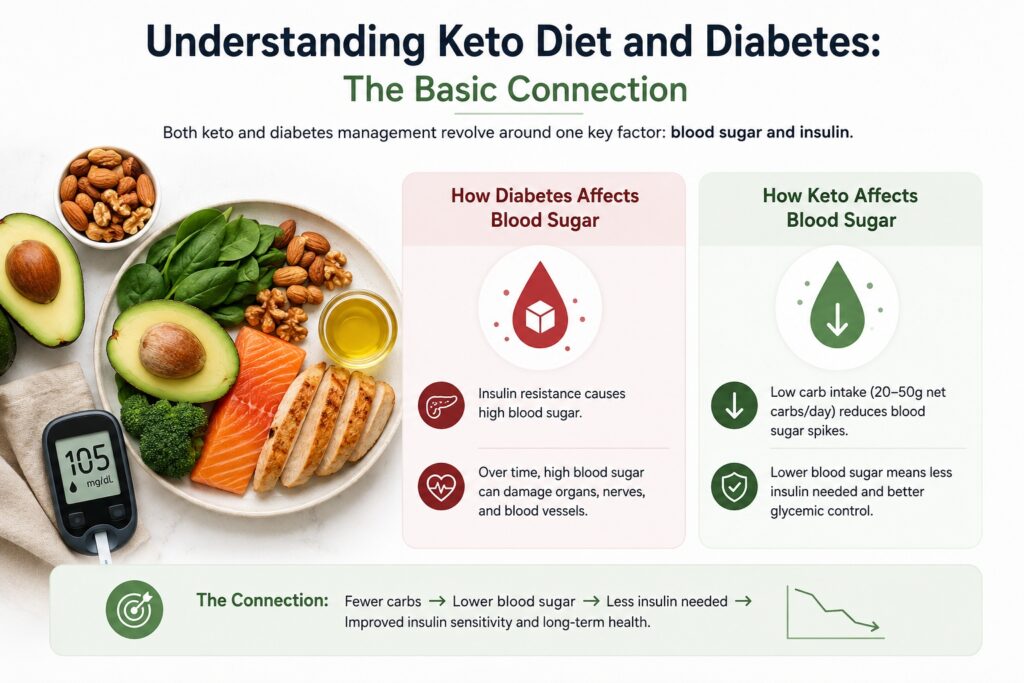
To understand why keto diet and diabetes is such a significant topic, you need to understand what both conditions and approaches have in common: blood sugar and insulin.
How Diabetes Affects Blood Sugar
Type 2 diabetes is characterized by insulin resistance , the body produces insulin, but cells don’t respond to it properly. Blood sugar stays elevated, and over time, the pancreas may struggle to produce enough insulin to compensate. This leads to chronically high blood glucose, which damages blood vessels, nerves, and organs.
Type 1 diabetes is an autoimmune condition where the pancreas produces little or no insulin. People with type 1 require insulin supplementation to survive and must manage blood sugar carefully around everything they eat.
How Keto Affects Blood Sugar
A keto diet and diabetes connection exists because keto directly addresses the primary driver of blood sugar spikes: dietary carbohydrates. When carb intake drops to under 20–50g of net carbs daily, the glucose that would have entered the bloodstream simply isn’t there. Blood sugar stays lower and more stable throughout the day.
This reduction in blood glucose means less insulin is needed , which is why blood sugar keto management can be so dramatic for people with type 2 diabetes. Less insulin circulating means less insulin resistance over time, and better overall glycemic control.
2. Is Keto Diet Good for Diabetics? What the Research Shows

The question “is keto diet good for diabetics?” has been studied extensively over the past decade. Here’s what the evidence actually says:
Type 2 Diabetes Research
The evidence for keto diet with type 2 diabetes is compelling. Key research findings include:
Virta Health Study (2019): One of the largest and longest-running keto diabetes studies found that after one year, 60% of participants achieved remission of type 2 diabetes (HbA1c under 6.5% without diabetes medication). After two years, 54% maintained remission. These are remarkable outcomes.
Systematic Reviews: Multiple systematic reviews comparing low-carb diets to standard diabetes diets consistently show that low-carb approaches produce greater reductions in HbA1c, fasting blood glucose, triglycerides, and body weight , all key markers for diabetes management.
Insulin and Medication Reduction: Studies consistently show that people with type 2 diabetes following a keto diet and diabetes protocol often require significantly less medication within weeks of starting , sometimes reducing or eliminating diabetes medications entirely under medical supervision.
Type 1 Diabetes Research
The picture for type 1 diabetes is more nuanced. Research shows that keto diet and diabetes type 1 can significantly reduce insulin requirements and improve time-in-range (the percentage of time blood glucose stays within target range). However, type 1 diabetics are at risk for diabetic ketoacidosis (DKA) , a dangerous condition distinct from nutritional ketosis , requiring very close medical supervision.
The Bottom Line on “Is Keto Diet Good for Diabetics?”
For type 2 diabetics not on insulin: the evidence strongly supports it, with appropriate medical oversight. For type 1 diabetics: it can work well but requires intensive blood glucose monitoring and medical supervision. The question isn’t really whether keto diet and diabetes works , it clearly does for many people. The question is whether it’s being done safely.
3. Keto Diet Diabetes Risks: What Every Diabetic Must Know
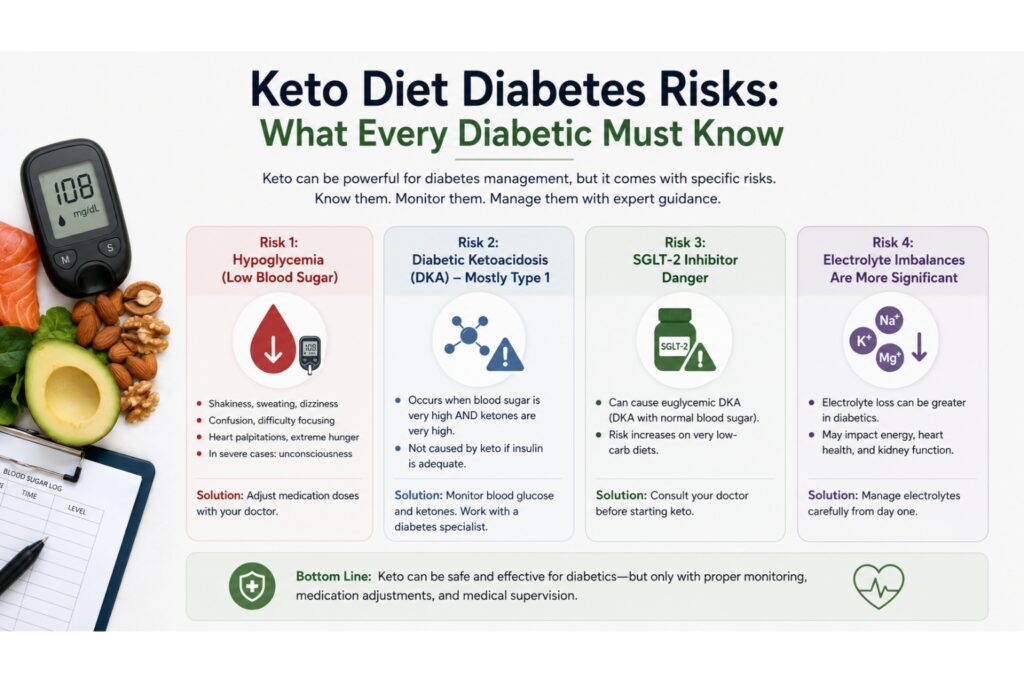
Despite the strong benefits, keto diet diabetes management comes with specific risks that standard keto guides don’t cover. Being aware of these is not a reason to avoid keto , it’s a reason to approach it with appropriate care.
Risk 1: Hypoglycemia (Low Blood Sugar)
This is the most important risk in keto diet and diabetes for people on medication. As carb intake drops and blood sugar falls, medications that were calibrated for higher blood sugar levels can push glucose too low. This is hypoglycemia , and it can be dangerous.
Symptoms of hypoglycemia:
- Shakiness, sweating, and dizziness
- Confusion and difficulty concentrating
- Heart palpitations
- Extreme hunger
- In severe cases: unconsciousness
Solution: Anyone on diabetes medication , especially insulin, sulfonylureas (like glipizide or glyburide), or SGLT-2 inhibitors , must work with their doctor to adjust medication doses before or immediately after starting a keto diet with type 2 diabetes or type 1 protocol.
Risk 2: Diabetic Ketoacidosis (DKA) , Mostly Relevant to Type 1
Nutritional ketosis (the goal of keto) and diabetic ketoacidosis are completely different states. DKA occurs when blood sugar is very high AND ketone levels are very high simultaneously , a dangerous combination that occurs in insulin-deficient states. It is NOT caused by a keto diet and diabetes in people who have adequate insulin.
However, type 1 diabetics must monitor both blood glucose and ketone levels carefully. A blood sugar keto protocol for type 1 should always be managed with a diabetes specialist.
Risk 3: SGLT-2 Inhibitor Danger
SGLT-2 inhibitors (canagliflozin, dapagliflozin, empagliflozin) are a class of diabetes medication that can cause euglycemic DKA , a rare condition where DKA occurs even with normal blood sugar , when combined with a very low-carb diet. Anyone on SGLT-2 inhibitors should discuss keto with their doctor before starting.
Risk 4: Electrolyte Imbalances Are More Significant
Diabetics already have altered kidney function in many cases. The electrolyte loss of the keto flu phase may be more pronounced , and more impactful , than for non-diabetics. Careful electrolyte management from day one is essential.
4. Keto Diet for Diabetes: Who Should and Shouldn’t Try It
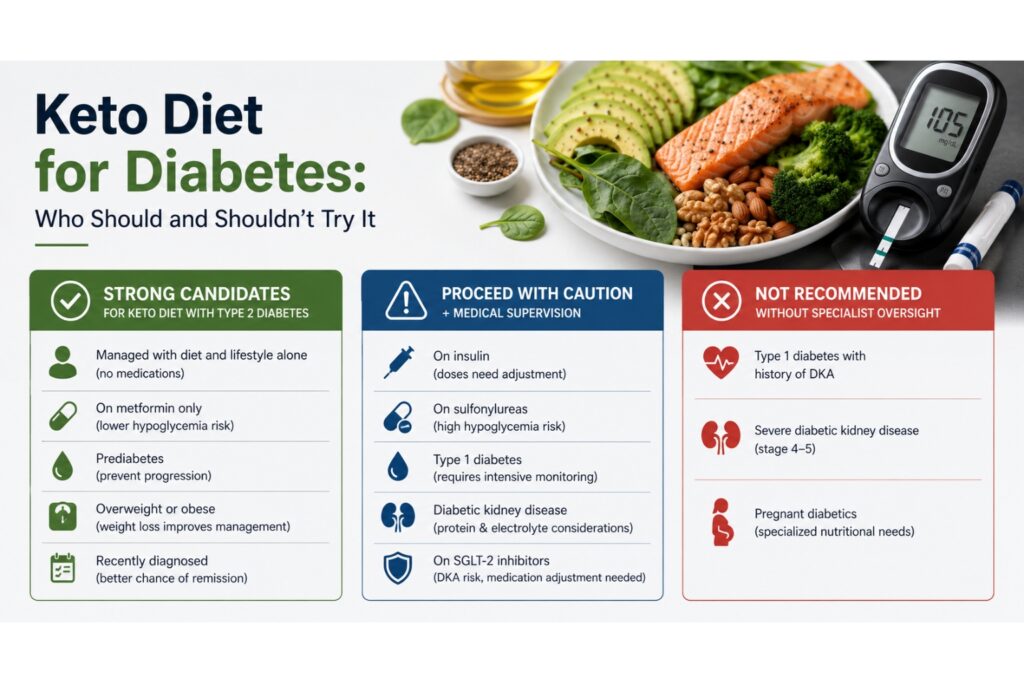
Not every diabetic is an equal candidate for keto diet and diabetes management. Here’s a practical breakdown:
Strong Candidates for Keto Diet With Type 2 Diabetes
- Type 2 diabetics managed with diet and lifestyle alone (no medications)
- Type 2 diabetics on metformin only (lower hypoglycemia risk)
- People with prediabetes looking to prevent progression to type 2
- Overweight or obese type 2 diabetics where weight loss would directly improve diabetes management
- People whose type 2 diabetes is recently diagnosed (better chance of remission)
Proceed With Caution + Medical Supervision
- Type 2 diabetics on insulin (doses will need significant adjustment)
- Type 2 diabetics on sulfonylureas (high hypoglycemia risk)
- Type 1 diabetics (can work well but requires intensive monitoring)
- People with diabetic kidney disease (protein and electrolyte considerations)
- Anyone on SGLT-2 inhibitors (DKA risk , medication adjustment required)
Not Recommended Without Specialist Oversight
- Type 1 diabetics with a history of DKA
- People with severe diabetic kidney disease (stage 4–5)
- Pregnant diabetics (specialized nutritional needs)
- People with a history of eating disorders plus diabetes
5. Blood Sugar Keto Monitoring: How to Track Safely
Effective blood sugar keto management requires more frequent monitoring than standard diabetes management , especially in the first 2–4 weeks as carb intake drops and blood sugar responds.
Recommended Monitoring Frequency for the First Month
Week 1–2 (most critical):
- Check blood glucose before every meal
- Check 2 hours after every meal
- Check before bed and upon waking
- Check if you feel any hypoglycemia symptoms
Week 3–4 (as blood sugar stabilizes):
- Before breakfast (fasting glucose)
- 2 hours after the largest meal of the day
- Before bed
- Any time you feel unwell
Blood Sugar Target Ranges on Keto
For most type 2 diabetics on a keto diet and diabetes protocol, target ranges are:
- Fasting glucose: 70–130 mg/dL
- 2 hours post-meal: Under 140 mg/dL
- Before bed: 100–140 mg/dL
These may change as medications are adjusted by your doctor. Never adjust insulin or diabetes medications yourself based on at-home readings , always work with your healthcare provider.
Ketone Monitoring
For type 1 diabetics especially, monitoring ketone levels is important on a keto diet and diabetes. Use urine strips, blood ketone strips, or a breath analyzer. Nutritional ketosis targets:
- Blood ketones: 0.5–3.0 mmol/L
- Urine ketones: Small to moderate
If blood ketones exceed 3.0 mmol/L AND blood sugar is elevated , seek medical attention immediately. This combination may indicate DKA.
6. Keto Diet and Diabetes: A Safe, Diabetic-Friendly Meal Plan
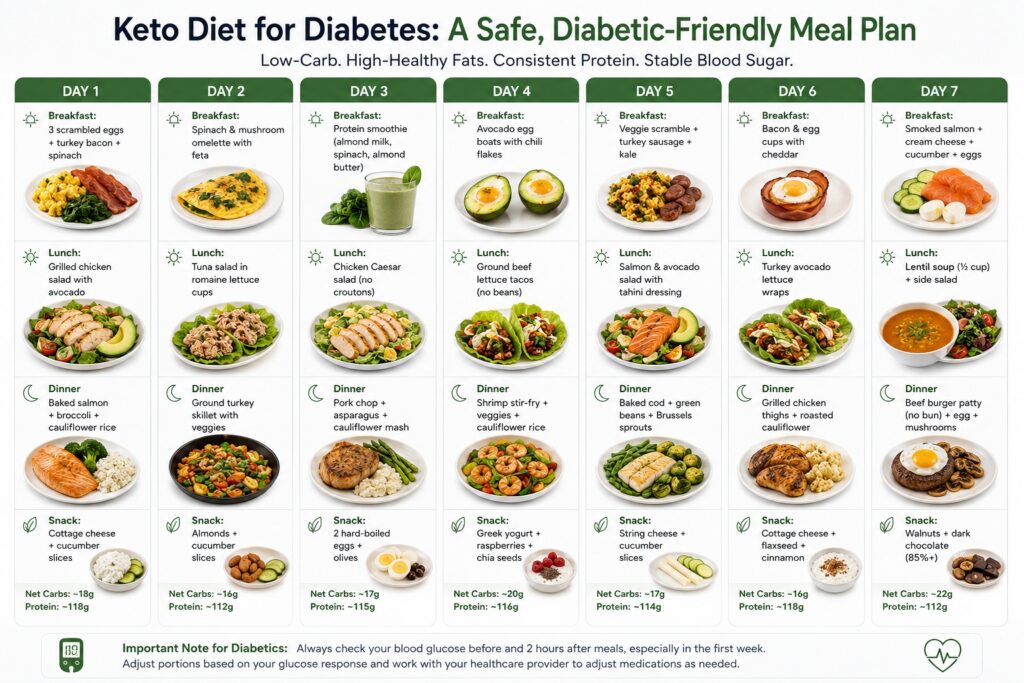
Here is a sample week of keto diet for diabetes eating , designed to minimize blood sugar spikes, provide consistent protein, and support stable energy throughout the day. Each day is approximately 1,500–1,700 calories with under 25g net carbs.
Day 1
Breakfast: 3 scrambled eggs + turkey bacon (2 strips) + sautéed spinach in olive oil + black coffee Lunch: Grilled chicken breast (5 oz) + large romaine salad + cucumber + avocado (¼) + olive oil-lemon dressing Dinner: Baked salmon (5 oz) + roasted broccoli with garlic butter + cauliflower rice Snack: ½ cup cottage cheese + cucumber slices
Net Carbs: ~18g | Protein: ~118g
Day 2
Breakfast: 2-egg omelette with spinach + mushrooms + feta cheese + black coffee or green tea Lunch: Tuna salad (4 oz canned tuna + mayo + mustard + celery) in romaine lettuce cups Dinner: Ground turkey skillet: 5 oz turkey + zucchini + bell pepper + Italian seasoning + mozzarella Snack: 1 oz almonds + a few cucumber slices
Net Carbs: ~16g | Protein: ~112g
Day 3
Breakfast: Protein smoothie: 1 scoop whey protein + almond milk + almond butter + spinach + ice Lunch: Chicken Caesar salad (5 oz chicken + romaine + parmesan + full-fat dressing , no croutons) Dinner: Pork chop (5 oz) + roasted asparagus + cauliflower mash with butter Snack: 2 hard-boiled eggs + 5 olives
Net Carbs: ~17g | Protein: ~115g
Day 4
Breakfast: Avocado egg boats: 1 avocado halved + egg baked in each half + chili flakes + black coffee Lunch: Ground beef lettuce tacos: 5 oz beef + cheese + sour cream (1 tbsp) + salsa (no beans) Dinner: Shrimp stir-fry: 5 oz shrimp + broccoli + zucchini + garlic-ginger-soy sauce + cauliflower rice Snack: Greek yogurt (¾ cup, full-fat) + a few raspberries + chia seeds (1 tbsp)
Net Carbs: ~20g | Protein: ~116g
Day 5
Breakfast: 3-egg veggie scramble + turkey sausage (2 links) + sautéed kale + olive oil Lunch: Salmon and avocado salad: 4 oz salmon + arugula + avocado (¼) + pumpkin seeds + tahini dressing Dinner: Baked cod (5 oz) + steamed green beans + roasted Brussels sprouts + lemon butter Snack: String cheese (1 stick) + cucumber slices
Net Carbs: ~17g | Protein: ~114g
Day 6
Breakfast: Bacon and egg cups (3): eggs baked in bacon-lined muffin tin + cheddar + green tea Lunch: Turkey avocado lettuce wraps: 5 oz turkey + avocado + mustard + romaine Dinner: Grilled chicken thighs (5 oz) + roasted cauliflower + sautéed spinach with garlic Snack: ½ cup cottage cheese + 1 tbsp ground flaxseed + cinnamon
Net Carbs: ~16g | Protein: ~118g
Day 7
Breakfast: Smoked salmon (3 oz) + cream cheese + cucumber rounds + 2 poached eggs Lunch: Lentil soup , small portion only (½ cup , lentils have more carbs; check total stays under daily limit) + side salad Dinner: Lean beef burger patty (no bun) + fried egg on top + sautéed mushrooms + large green salad Snack: 1 oz walnuts + 2 squares dark chocolate (85%+)
Net Carbs: ~22g | Protein: ~112g
Important note for diabetics: Always check your blood glucose before and 2 hours after meals, especially in the first week. Adjust portions based on your glucose response and work with your healthcare provider to adjust medications as needed.
7. Practical Tips for Starting Keto Diet With Type 2 Diabetes Safely
These tips are specifically tailored for keto diet with type 2 diabetes management , going beyond standard keto beginner advice.
Tip 1: Get Medical Clearance First , Always
This is non-negotiable for keto diet and diabetes management. Book an appointment with your doctor or endocrinologist before starting. Discuss your intention to significantly reduce carbohydrates, ask for a baseline HbA1c and fasting glucose test, and get a plan for how your medications will be monitored and adjusted as your blood sugar improves.
Tip 2: Reduce Carbs Gradually if on Insulin
If you’re on insulin, dropping from a standard diet to 20g net carbs overnight is too fast. A 2–3 week gradual reduction (from your current intake → 100g → 50g → 20g) gives your medical team time to safely adjust insulin doses alongside your carb reduction.
Tip 3: Keep Fast-Acting Glucose on Hand
Even on keto, hypoglycemia is possible , especially early on with medication adjustments. Keep glucose tablets, regular soda (small amount), or fruit juice within reach for emergency hypoglycemia treatment. Know your symptoms and have a plan.
Tip 4: Monitor HbA1c Every 3 Months
The keto diet for diabetes effects on HbA1c can be significant and fast. Schedule an HbA1c test 3 months after starting your keto diet and diabetes protocol to assess progress and guide medication adjustments.
Tip 5: Focus on Anti-Inflammatory Keto Foods
Diabetes increases cardiovascular risk. Prioritize heart-healthy proteins (salmon, sardines, mackerel for omega-3s), use olive oil as your primary fat, and include cruciferous vegetables daily. This makes your keto diet and diabetes plan work for total health , not just blood sugar.
Key Takeaways
- Keto diet and diabetes research is compelling , particularly for type 2 diabetes, where studies show significant HbA1c reduction, improved insulin sensitivity, and in some cases, medication reduction or remission
- The answer to “is keto diet good for diabetics?” is yes for most type 2 diabetics , with appropriate medical supervision and monitoring
- Keto diet with type 2 diabetes works by eliminating the primary driver of blood sugar spikes (dietary carbohydrates), lowering insulin requirements and improving glycemic control
- The primary risk of keto diet diabetes management is hypoglycemia , blood sugar medications must be adjusted as blood glucose improves
- Type 1 diabetics can follow a keto diet for diabetes but require intensive monitoring to distinguish nutritional ketosis from dangerous DKA
- Blood sugar keto monitoring should be more frequent in the first 2–4 weeks , before every meal, 2 hours after, before bed, and upon waking
- People on SGLT-2 inhibitors face a specific risk (euglycemic DKA) and must consult their doctor before starting keto diet and diabetes protocols
- The diabetic-friendly keto diet and diabetes meal plan in this guide keeps net carbs under 22g daily and provides 112–118g of protein per day
Conclusion: Keto Diet and Diabetes Can Be Life-Changing , With the Right Support
The potential of keto diet and diabetes management is real, well-researched, and genuinely life-changing for many people. Reduced blood sugar, less medication, more energy, weight loss, and in some cases full remission of type 2 diabetes , these outcomes are possible and documented.
But the key phrase is with the right support. Keto diet for diabetes is not a self-experiment without medical oversight , it’s a powerful tool that works best when combined with regular monitoring, medication management, and a knowledgeable healthcare team.
Take this guide to your doctor. Start the conversation. Get your baseline numbers. And approach keto diet and diabetes management as the collaborative, informed, medically guided process it deserves to be.
For the complete keto foundation , including how ketosis works, food lists, and week-by-week meal plans , visit: Keto Diet Plan: How to Start, Eat & Succeed on Keto
Explore more free guides, diabetic-friendly recipes, and nutrition resources at thedailycrave.online , your trusted daily companion for evidence-based healthy living.
Frequently Asked Questions (FAQ)
Q1: Is keto diet good for diabetics with type 2 diabetes?
Yes , the evidence strongly supports keto diet and diabetes type 2 management. Multiple studies show significant reductions in HbA1c, fasting blood glucose, and insulin requirements. Some participants in major trials achieved full diabetes remission. However, “is keto diet good for diabetics?” depends heavily on individual circumstances , medication use, kidney function, and overall health all factor in. Medical supervision is essential.
Q2: Can keto diet and diabetes management lead to medication reduction?
Yes , and this is one of the most significant benefits of keto diet and diabetes for type 2 diabetics. As blood sugar drops with carb restriction, existing doses of diabetes medications can become too strong and cause hypoglycemia. This is why medications must be proactively adjusted downward as the blood sugar keto diet takes effect. Some people eventually reduce or eliminate diabetes medications entirely , always under medical supervision.
Q3: What is the difference between ketosis and diabetic ketoacidosis (DKA)?
This is critical for anyone considering keto diet and diabetes management. Nutritional ketosis (the goal of keto) involves low-to-moderate blood ketones (0.5–3.0 mmol/L) with normal blood sugar , a safe, controlled metabolic state. DKA involves very high ketones (often over 10 mmol/L) combined with high blood sugar , a dangerous emergency condition. DKA occurs when insulin is severely deficient (primarily in type 1 diabetes), not from following a keto diet for diabetes with adequate insulin present.
Q4: How often should I check blood sugar on a keto diet with type 2 diabetes?
In the first 1–2 weeks of keto diet with type 2 diabetes, check blood glucose before every meal, 2 hours after meals, before bed, and upon waking. As blood sugar stabilizes (typically by week 3–4), you can reduce frequency , but monitoring before and after meals remains important. Blood sugar keto management requires more frequent monitoring than standard diabetes management, especially during the initial adaptation phase.
Q5: Can type 1 diabetics safely follow a keto diet and diabetes protocol?
Yes, but with significantly more caution than type 2 diabetics. People with type 1 diabetes can benefit from keto diet and diabetes management , reduced insulin requirements, better time-in-range, and more predictable blood sugar , but they require intensive monitoring of both blood glucose AND ketone levels. The risk of DKA is real for type 1, and any keto diet for diabetes protocol for type 1 should be developed and monitored in close collaboration with an endocrinologist.