Table of Contents
What if you didn’t have to choose between the fat-burning power of keto and the muscle-preserving, hunger-crushing benefits of a high-protein diet? With keto high protein eating, you don’t have to. This modified approach to ketogenic dieting keeps carbs low enough to maintain fat-burning mode while boosting protein significantly above standard keto recommendations , giving you the best benefits of both strategies in one structured plan.
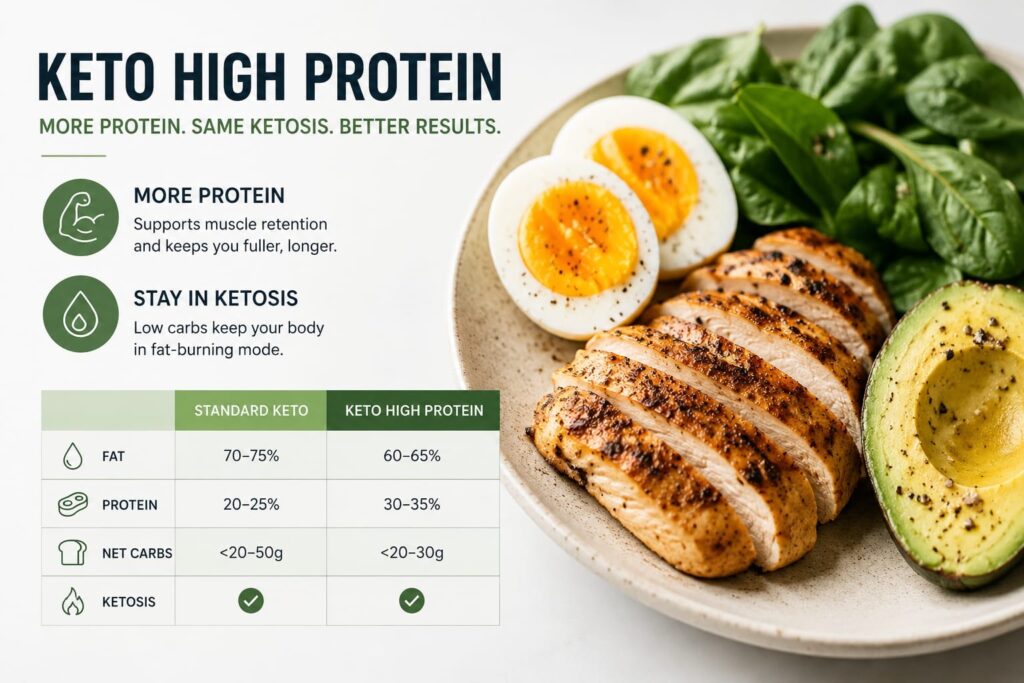
Standard keto is typically 70–75% fat, 20–25% protein, and under 5–10% carbs. A keto high protein approach shifts that slightly: fat drops to 60–65%, protein rises to 30–35%, and carbs stay under 20–30g net. The result is a plan that burns fat efficiently, suppresses appetite strongly, preserves muscle mass aggressively, and is often easier for beginners to follow than traditional high-fat keto.
In this guide, you’ll learn exactly how keto high protein works, who it’s best for, the top foods to build every meal around, a complete 7-day protein keto plan, and practical tips to make it work long-term. Let’s get into it.
1. What Is Keto High Protein , And How Does It Differ from Standard Keto?
Keto high protein is a modified version of the classic ketogenic diet that prioritizes protein intake more aggressively while still maintaining the low-carbohydrate foundation needed for ketosis.
Standard Keto vs Keto High Protein
| Factor | Standard Keto | Keto High Protein |
| Fat | 70–75% of calories | 60–65% of calories |
| Protein | 20–25% of calories | 30–35% of calories |
| Net Carbs | Under 20–50g | Under 20–30g |
| Ketosis | Yes | Yes (usually maintained) |
| Muscle preservation | Moderate | Excellent |
| Hunger suppression | Strong | Very strong |
| Best for | Fast initial fat loss | Fat loss + muscle retention |
Does High Protein Kick You Out of Ketosis?
This is the most common concern about keto high protein eating , and it deserves a straight answer. Yes, excess protein can be converted to glucose through a process called gluconeogenesis. But this is demand-driven, not supply-driven. Your body converts only as much protein to glucose as it needs , not every gram of protein you eat.
Research consistently shows that moderate protein increases (to 30–35% of calories) do not prevent ketosis in most people. The carb limit remains the primary determinant of whether you’re in ketosis , not protein percentage. A well-designed protein keto plan keeps carbs under 20–30g net per day while protein is elevated, and most people maintain healthy ketone levels throughout.
2. Why Keto High Protein Works Better for Many People
A keto high protein approach isn’t just a compromise , for many people, it’s actually the superior strategy. Here’s why:
Stronger Hunger Suppression
Protein is the most satiating macronutrient. Combining keto’s ketone-driven appetite suppression with protein’s satiety hormones (PYY, GLP-1) and ghrelin reduction creates a powerful double effect. Most people on a protein keto diet simply eat less , not because they’re forcing it, but because hunger genuinely diminishes.
Better Muscle Preservation During Fat Loss
This is the biggest practical advantage of keto high protein over standard keto. In a calorie deficit, your body can break down muscle for energy. High protein intake provides the amino acids needed to continuously repair and rebuild muscle tissue , even while fat is being burned. The result is a leaner, more toned physique rather than just a smaller version of the same body.
Higher Thermic Effect = More Calories Burned
Protein has the highest thermic effect of food (TEF) of any macronutrient , your body burns 25–30% of protein calories just through digestion and processing. On a keto protein diet, this metabolic boost can add an extra 50–100 calories burned daily without any additional effort.
More Flexible and Beginner-Friendly
Many beginners find strict keto’s requirement to eat 70–75% of calories from fat uncomfortable or unfamiliar. Butter in coffee, fat bombs, and heavy cream at every meal isn’t everyone’s preference. A keto high protein approach feels more natural , eating generous portions of recognizable protein foods with vegetables and moderate fat is a simpler mental model for most people.
Better Results for People Over 40
After 40, muscle loss accelerates due to declining hormones. A protein keto plan specifically addresses this by providing enough protein to counteract age-related sarcopenia while the low-carb framework handles fat loss and blood sugar management.
3. Keto High Protein Food List: What to Eat
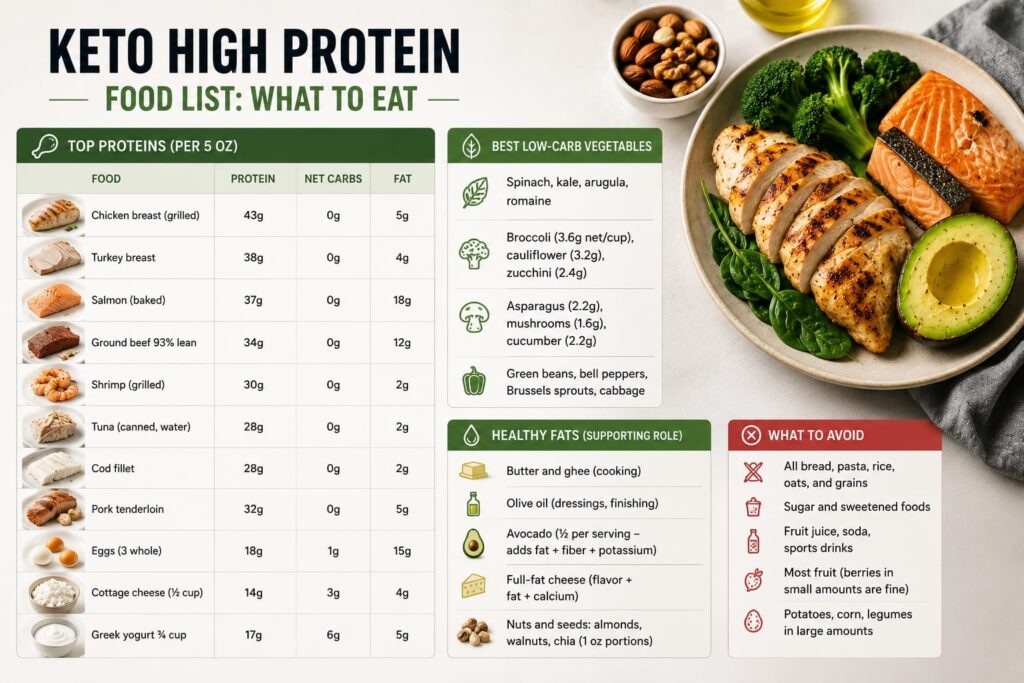
The foundation of any great protein keto diet is a strong protein-first food selection. Here are the best options:
Top Proteins for a Keto High Protein Plan
| Food | Protein (per 5 oz) | Net Carbs | Fat |
| Chicken breast (grilled) | 43g | 0g | 5g |
| Turkey breast | 38g | 0g | 4g |
| Salmon (baked) | 37g | 0g | 18g |
| Ground beef 93% lean | 34g | 0g | 12g |
| Shrimp (grilled) | 30g | 0g | 2g |
| Tuna (canned, water) | 28g | 0g | 2g |
| Cod fillet | 28g | 0g | 2g |
| Pork tenderloin | 32g | 0g | 5g |
| Eggs (3 whole) | 18g | 1g | 15g |
| Cottage cheese (½ cup) | 14g | 3g | 4g |
| Greek yogurt ¾ cup | 17g | 6g | 5g |
Best Low-Carb Vegetables (Load Up)
- Spinach, kale, arugula, romaine
- Broccoli (3.6g net/cup), cauliflower (3.2g), zucchini (2.4g)
- Asparagus (2.2g), mushrooms (1.6g), cucumber (2.2g)
- Green beans, bell peppers, Brussels sprouts, cabbage
Healthy Fats (Supporting Role on Keto High Protein)
On a keto high protein plan, fat remains important , but it’s not the star. Use it to cook, dress, and add flavor:
- Butter and ghee (cooking)
- Olive oil (dressings, finishing)
- Avocado (½ per serving , adds fat + fiber + potassium)
- Full-fat cheese (flavor + fat + calcium)
- Nuts and seeds: almonds, walnuts, chia (1 oz portions)
What to Avoid
The same rules as standard keto apply on a protein keto diet:
- All bread, pasta, rice, oats, and grains
- Sugar and sweetened foods
- Fruit juice, soda, sports drinks
- Most fruit (berries in small amounts are fine)
- Potatoes, corn, legumes in large amounts
4. Keto High Protein Macro Targets: How to Calculate Yours
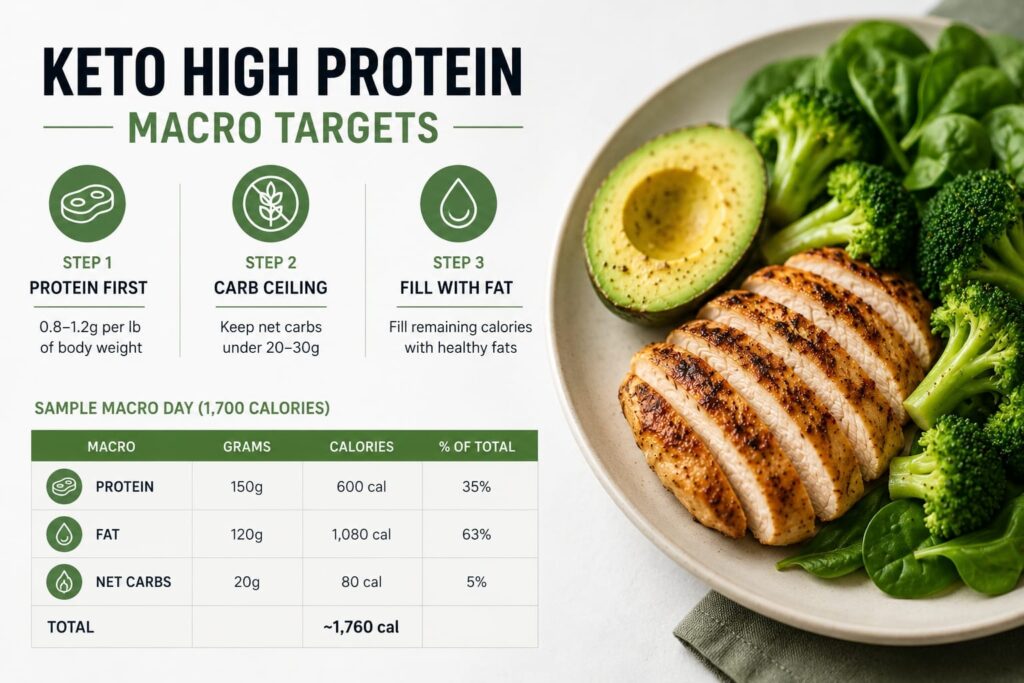
Setting up your keto high protein macros correctly is the foundation of your protein diet plan. Here’s how:
Step 1: Set Your Protein Target First
On a keto high protein plan, protein drives everything else. Target:
- 0.8–1.2g of protein per pound of body weight
- For a 160 lb person: 128–192g protein daily
- For practical purposes, target the midpoint: 150g protein daily for a 160 lb person
Step 2: Set Your Carb Ceiling
Keep net carbs under 20–30g per day , the same as standard keto. This is the non-negotiable rule that keeps your protein keto plan in fat-burning territory.
Step 3: Fill Remaining Calories with Fat
After protein and carb calories are set, fill remaining calories with fat from cooking oils, avocado, cheese, and fatty cuts of meat. Fat is still important , it provides energy, supports hormones, and makes meals satisfying. It’s simply not the dominant focus on a keto high protein plan.
Sample Macro Day (1,700 calories)
| Macro | Grams | Calories | % of Total |
| Protein | 150g | 600 cal | 35% |
| Fat | 120g | 1,080 cal | 63% |
| Net Carbs | 20g | 80 cal | 5% |
| Total | ~1,760 cal |
This protein keto diet macro breakdown supports fat loss, muscle retention, and sustained energy without requiring you to drink butter to hit your fat targets.
5. The Complete 7-Day Keto High Protein Meal Plan
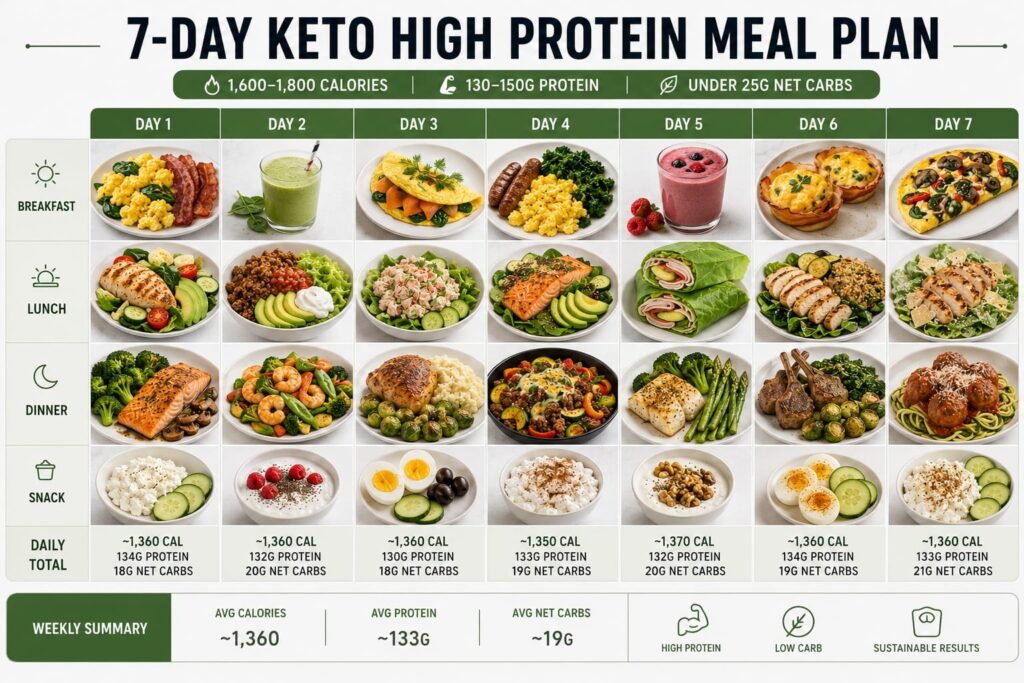
Here is your free, complete protein keto plan for the week , targeting approximately 1,600–1,800 calories, 130–150g protein, and under 25g net carbs daily.
Day 1
Breakfast (330 cal | 34g protein | 2g net carbs) 4-egg scramble cooked in butter + turkey bacon (2 strips) + sautéed spinach + black coffee
Lunch (420 cal | 42g protein | 6g net carbs) Grilled chicken breast (6 oz) + large arugula salad + cucumber + avocado (¼) + cherry tomatoes + olive oil-lemon dressing + 1 tbsp pumpkin seeds
Dinner (460 cal | 44g protein | 7g net carbs) Baked salmon (6 oz) + roasted broccoli (1.5 cups) + garlic butter + sautéed mushrooms
Snack (150 cal | 14g protein | 3g net carbs) ½ cup cottage cheese + cucumber slices + sea salt
Daily Total: ~1,360 cal | 134g protein | 18g net carbs
Day 2
Breakfast (300 cal | 30g protein | 3g net carbs) Protein smoothie: 1.5 scoops whey protein + 1 cup unsweetened almond milk + 1 tbsp almond butter + handful of spinach + ice
Lunch (430 cal | 40g protein | 5g net carbs) Ground turkey bowl: 6 oz lean ground turkey + taco seasoning + romaine + salsa (2 tbsp) + sour cream (1 tbsp) + avocado (¼)
Dinner (470 cal | 46g protein | 8g net carbs) Shrimp stir-fry: 6 oz shrimp + broccoli + zucchini + snap peas + garlic-ginger-soy sauce + cauliflower rice
Snack (160 cal | 16g protein | 4g net carbs) ¾ cup Greek yogurt (full-fat) + a few raspberries + 1 tbsp chia seeds
Daily Total: ~1,360 cal | 132g protein | 20g net carbs
Day 3
Breakfast (340 cal | 34g protein | 3g net carbs) 3-egg omelette with smoked salmon (2 oz) + cream cheese + spinach + dill
Lunch (420 cal | 38g protein | 4g net carbs) Tuna protein bowl: 5 oz canned tuna + full-fat mayo (1 tbsp) + mustard + celery + served over chopped romaine + cucumber
Dinner (460 cal | 44g protein | 8g net carbs) Baked chicken thighs (6 oz) + roasted Brussels sprouts + cauliflower mash (butter + cream + garlic)
Snack (140 cal | 14g protein | 3g net carbs) 2 hard-boiled eggs + 5 olives + a few cucumber slices
Daily Total: ~1,360 cal | 130g protein | 18g net carbs
Day 4
Breakfast (310 cal | 32g protein | 2g net carbs) 4 egg whites + 1 whole egg scrambled + turkey sausage (2 links) + sautéed kale in olive oil
Lunch (440 cal | 42g protein | 6g net carbs) Salmon and avocado salad: 5 oz baked salmon + mixed greens + avocado (¼) + cucumber + pumpkin seeds + tahini-lemon dressing
Dinner (450 cal | 44g protein | 8g net carbs) Lean ground beef skillet: 6 oz beef (93%) + zucchini + bell pepper + onion (¼) + Italian seasoning + mozzarella sprinkle
Snack (150 cal | 15g protein | 3g net carbs) Cottage cheese (½ cup) + 1 tbsp ground flaxseed + cinnamon
Daily Total: ~1,350 cal | 133g protein | 19g net carbs
Day 5
Breakfast (320 cal | 30g protein | 4g net carbs) Keto high protein smoothie: 1.5 scoops protein powder + almond milk + 1 tsp almond butter + spinach + ½ cup frozen raspberries
Lunch (430 cal | 42g protein | 6g net carbs) Turkey avocado wrap: 5 oz sliced turkey breast + avocado (¼) + romaine + mustard in a large collard green leaf (low-carb wrap)
Dinner (480 cal | 46g protein | 7g net carbs) Pan-seared cod (6 oz) + lemon-herb butter + roasted asparagus + steamed broccoli
Snack (140 cal | 14g protein | 3g net carbs) Greek yogurt (½ cup) + 1 tbsp hemp seeds + a few walnuts
Daily Total: ~1,370 cal | 132g protein | 20g net carbs
Day 6
Breakfast (350 cal | 36g protein | 2g net carbs) Bacon and egg cups (3): eggs baked in bacon-lined muffin tin + cheddar on top + black coffee
Lunch (420 cal | 40g protein | 7g net carbs) Big keto protein bowl: 5 oz grilled chicken + ½ cup quinoa (small portion , check carbs) + roasted zucchini + spinach + olive oil
Dinner (460 cal | 44g protein | 8g net carbs) Lamb chops (5 oz) + roasted Brussels sprouts + sautéed kale with garlic and olive oil
Snack (130 cal | 14g protein | 2g net carbs) 2 hard-boiled eggs + a pinch of smoked paprika + cucumber
Daily Total: ~1,360 cal | 134g protein | 19g net carbs
Day 7
Breakfast (310 cal | 30g protein | 4g net carbs) 3-egg veggie omelette: spinach + mushrooms + bell pepper + feta (1 oz) + 1 tsp olive oil + green tea
Lunch (430 cal | 42g protein | 6g net carbs) Chicken Caesar salad: 6 oz grilled chicken + romaine + parmesan (1 tbsp) + full-fat Caesar (2 tbsp) , no croutons + lemon wedge
Dinner (470 cal | 46g protein | 8g net carbs) Turkey meatballs (6 oz ground turkey) + zucchini noodles + low-sugar marinara + parmesan sprinkle
Snack (150 cal | 15g protein | 3g net carbs) Cottage cheese (½ cup) + cucumber + everything bagel seasoning
Daily Total: ~1,360 cal | 133g protein | 21g net carbs
Weekly Summary
| Day | Calories | Protein | Net Carbs |
| Day 1 | ~1,360 | 134g | 18g |
| Day 2 | ~1,360 | 132g | 20g |
| Day 3 | ~1,360 | 130g | 18g |
| Day 4 | ~1,350 | 133g | 19g |
| Day 5 | ~1,370 | 132g | 20g |
| Day 6 | ~1,360 | 134g | 19g |
| Day 7 | ~1,360 | 133g | 21g |
| Average | ~1,360 | ~133g | ~19g |
6. Protein Diet Plan Tips: Making Keto High Protein Sustainable
A protein diet plan is only as good as your ability to maintain it. Here’s what makes keto high protein easy to stick with long-term:
Tip 1: Meal Prep Your Proteins Every Sunday
Batch cooking is the backbone of any successful protein keto plan. Grill or bake 5–6 chicken breasts, brown a pound of ground turkey, hard-boil 10 eggs, and bake salmon fillets. With proteins prepped, assembling any keto high protein meal takes under 5 minutes.
Tip 2: Use a Protein Shake as a Backup Meal
A high-quality whey or plant-based protein shake with almond milk, almond butter, and spinach provides 30–35g of protein in 3 minutes. It’s not a replacement for real food meals , but as a backup when time is short, it keeps your protein keto diet on track without resorting to non-keto convenience food.
Tip 3: Don’t Skip Fat Entirely
Fat is what makes keto high protein feel satisfying rather than punishing. Cooking eggs in butter, dressing salads with olive oil, adding avocado to lunches, and using full-fat dairy keeps meals rich and enjoyable. Protein without fat on keto leads to “rabbit starvation” , a real phenomenon where eating lean protein without fat creates persistent hunger and fatigue.
Tip 4: Track Protein First, Then Carbs
When planning your protein keto plan, think in this order: hit your protein target first, keep net carbs under 25g second, and let fat fill in the remaining calories. This priority hierarchy makes building every meal in your protein diet plan straightforward.
Tip 5: Rotate Your Proteins for Variety
Eating only chicken breast gets old fast. Rotate between salmon, shrimp, ground beef, eggs, turkey, cottage cheese, and tuna throughout the week. Variety in protein sources also ensures you’re getting a broad spectrum of amino acids, omega-3s, and micronutrients from your keto high protein meals.
7. Common Mistakes on a Keto High Protein Plan
Even well-intentioned beginners make these errors on a protein keto diet:
Mistake 1: Going Too High on Protein Targeting 200g+ of protein daily on keto increases the risk of gluconeogenesis disrupting ketosis. Keep protein at 0.8–1.2g per pound of body weight , effective without overshooting.
Mistake 2: Not Eating Enough Fat Dramatically increasing protein while also cutting fat below 50% of calories creates energy deprivation. Fat is still essential on a keto high protein plan , it’s just not the overwhelming majority of calories.
Mistake 3: Ignoring Vegetables Protein gets all the attention on a protein keto plan , but non-starchy vegetables provide fiber, micronutrients, and volume that make meals satisfying and support digestive health. Every meal should include at least one or two servings.
Mistake 4: Relying on Processed Protein Sources Protein bars, protein chips, and packaged “keto” products often contain hidden carbs, artificial sweeteners, and preservatives. Build your protein diet plan around whole food proteins , they’re more effective and more satisfying.
Key Takeaways
- Keto high protein is a modified ketogenic approach with protein at 30–35% of calories and fat at 60–65%, while keeping net carbs under 20–30g daily
- A well-designed protein keto plan maintains ketosis because ketosis is driven by carb restriction , not protein percentage
- The primary advantages of keto high protein over standard keto are stronger hunger suppression, superior muscle preservation, and a higher thermic effect that burns more calories daily
- Your protein keto diet macro target: 0.8–1.2g protein per pound of body weight, under 25g net carbs, fat filling remaining calories
- The 7-day protein diet plan in this guide delivers ~133g protein and ~19g net carbs daily at approximately 1,360 calories
- Keto high protein is especially effective for people over 40, those doing resistance training, and anyone who struggled with hunger on standard high-fat keto
- Meal prep on Sundays is the most powerful practical strategy for maintaining a protein keto plan throughout the week
- Avoid going too high on protein (over 1.2g/lb), cutting fat too low, skipping vegetables, and relying on processed protein products
Conclusion: Keto High Protein , The Smarter Way to Do Keto
Standard keto and high-protein diets both work. Keto high protein combines their best features into a single, practical approach that burns fat efficiently, controls hunger powerfully, and protects your muscle throughout the process.
Whether you’re a beginner looking for a sustainable keto entry point or someone who tried standard keto and found the high-fat emphasis wasn’t for you , a protein keto diet gives you the metabolic benefits of ketosis with the practical ease and hunger control of high-protein eating.
Follow the protein keto plan in this guide. Prioritize protein at every meal. Keep carbs under 25g net. Let fat fill in the rest. And give it four consistent weeks before evaluating results.
For the complete keto foundation , covering how ketosis works, the full food list, and week-by-week plans , visit the pillar guide: Keto Diet Plan: How to Start, Eat & Succeed on Keto
Explore more free keto guides, high-protein meal plans, and nutrition resources at thedailycrave.online , your daily home for practical, feel-good nutrition.
Frequently Asked Questions (FAQ)
Q1: Will eating high protein on keto kick me out of ketosis?
Not for most people. While excess protein can theoretically be converted to glucose, this is demand-driven , your body only converts what it needs. Keeping protein at 0.8–1.2g per pound of body weight on a keto high protein plan does not prevent ketosis for the vast majority of followers. The carb limit (under 20–30g net) remains the primary determinant of ketosis , not protein percentage.
Q2: How is a protein keto plan different from a regular high-protein diet?
A regular protein diet plan doesn’t restrict carbohydrates and doesn’t aim for ketosis. A protein keto plan combines high protein intake with strict carb restriction (under 20–30g net carbs) to maintain ketosis while maximizing protein’s muscle-preserving and hunger-suppressing benefits. The result is the metabolic advantage of keto plus the satiety advantage of high protein , simultaneously.
Q3: How much protein should I eat on a keto high protein diet?
Target 0.8–1.2g of protein per pound of body weight on a keto high protein plan. For a 150 lb person, that’s 120–180g of protein daily , with 140–150g being a practical midpoint. Spread your protein across 3 meals and 1–2 snacks, aiming for at least 30–40g of protein per main meal to maximize muscle protein synthesis.
Q4: What are the best foods for a protein keto diet?
The best foods for a protein keto diet are: chicken breast and thighs, salmon and tuna, shrimp and cod, eggs and egg whites, Greek yogurt (full-fat), cottage cheese, ground turkey and beef, and pork tenderloin. These provide the highest protein per calorie while keeping net carbs at zero or near zero , making them the ideal foundation of any protein keto plan.
Q5: Can I build muscle on a keto high protein diet?
Yes , particularly if you combine your keto high protein eating with resistance training. High protein intake provides the amino acids needed for muscle repair and growth. Ketosis itself doesn’t prevent muscle building; adequate protein and progressive training stimulus are the key variables. Many people successfully build or maintain muscle on a protein keto diet, especially when protein is kept at 1–1.2g per pound of body weight.