Table of Contents
Introduction
vegetables, whole grains, legumes, olive oil, and fish, with red meat and sweets kept occasional. That flexibility is part of why it is one of the easier styles for mediterranean meal plan for beginners to stick with long term, and why it continues to top many “best overall diet” rankings from nutrition experts.
This guide is a cluster piece off the main Healthy Diet Plans guide, focused specifically on the 7 day mediterranean diet. It walks through the core foods, what to limit, why the pattern is worth trying, a full mediterranean diet 7-day meal plan, a few beginner-friendly mediterranean diet food recipes, and practical tips for making the switch stick.
Why Consider This Pattern at All
- Long-running research, including large observational studies, has linked Mediterranean-style eating to lower rates of heart disease and better markers of long-term health
- Unlike more restrictive styles, a mediterranean meal plan does not eliminate entire food groups, which tends to make it easier to sustain
- It also fits well with everyday cooking, since most mediterranean diet foods are available at any regular grocery store
- Because it is a pattern rather than a strict rulebook, it can flex around food allergies, budget, and personal taste more easily than some other healthy diet plans
- Compared to more restrictive styles like keto or carnivore, a mediterranean meal plan allows a wider variety of foods, which many beginners find easier to plan around and enjoy over the long run
- It also tends to work well alongside other goals, such as heart health or blood sugar management, since it naturally limits refined sugar and processed foods without requiring strict counting
Mediterranean Diet Foods to Build Your Plate Around
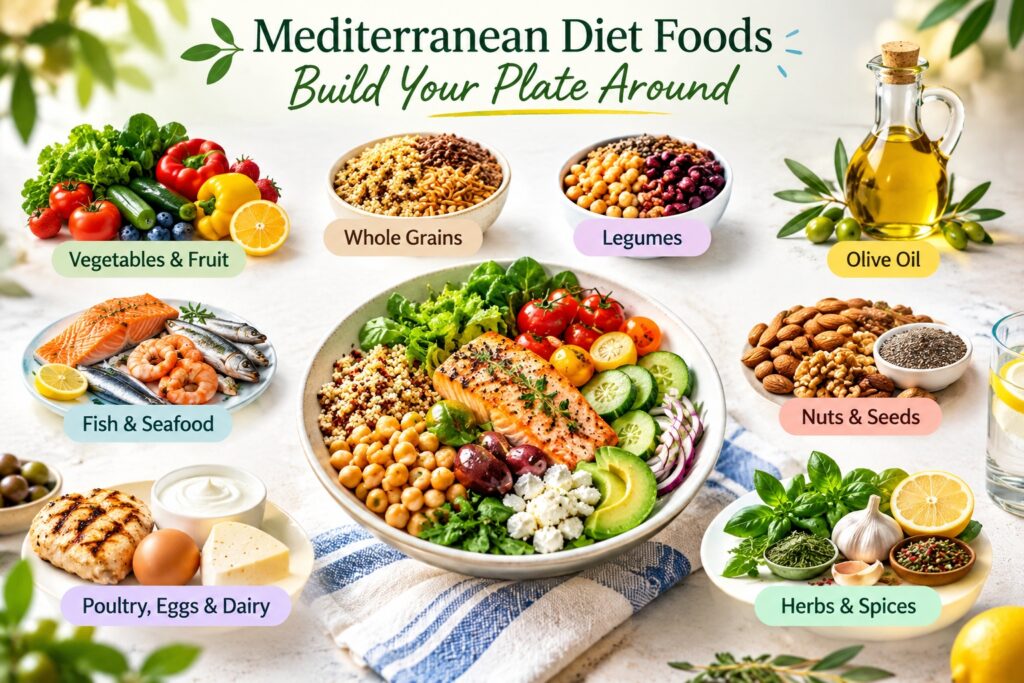
- Vegetables and fruit: Aim for a variety at most meals, tomatoes, leafy greens, cucumbers, peppers, citrus, and berries are all staples among mediterranean meal plan diet foods
- Whole grains: Quinoa, farro, brown rice, and whole-grain bread or pasta, used in place of refined versions
- Legumes: Chickpeas, lentils, and beans are a regular source of plant protein and fiber
- Olive oil: The primary fat used for cooking and dressing, in place of butter or heavily processed oils
- Fish and seafood: Salmon, sardines, and shrimp are typically eaten a couple of times a week
- Nuts and seeds: Almonds, walnuts, and chia seeds work well as snacks or meal toppers
- Poultry, eggs, and dairy: Eaten in moderate amounts, often a few times a week rather than daily
- Herbs and spices: Oregano, basil, garlic, and lemon do a lot of the flavor work instead of salt
Foods to Limit on a Mediterranean meal plan
- Red and processed meat: Beef, pork, deli meats, and sausages are kept occasional rather than a daily feature
- Refined grains: White bread, white pasta, and other heavily processed grain products
- Added sugar: Sodas, pastries, candy, and other sweetened processed foods
- Highly processed oils: Canola, soybean, or vegetable oil used in place of olive oil
- None of these foods need to disappear completely from a mediterranean meal plan. The pattern is about frequency and portion, not permanent elimination
7-Day Mediterranean Diet Meal Plan
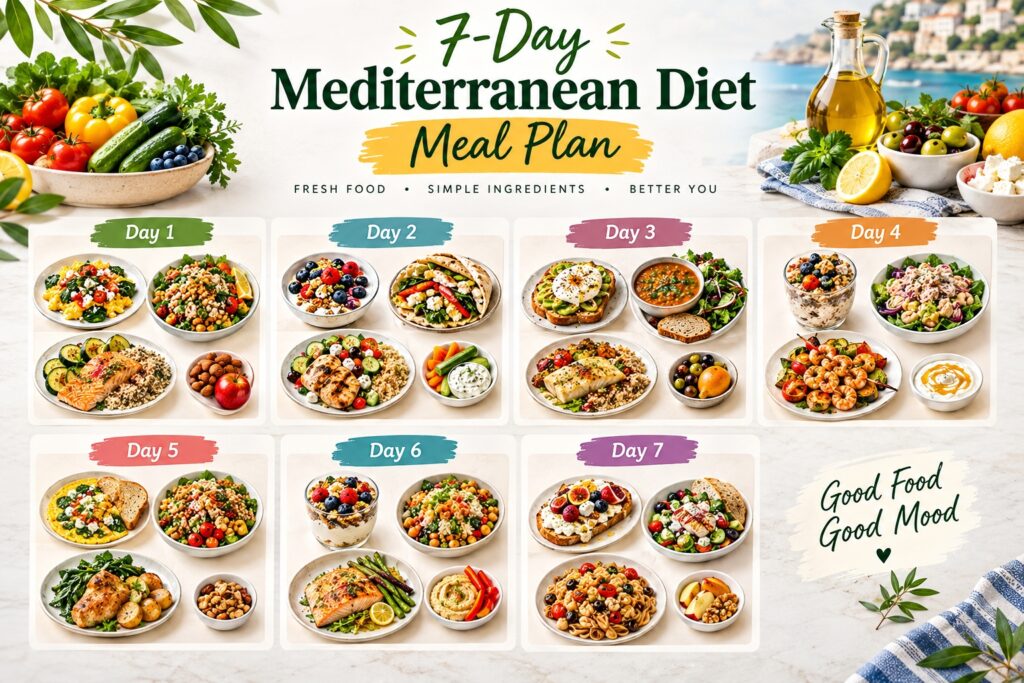
This mediterranean diet 7 day meal plan is built for beginners, with short ingredient lists and minimal specialty items. Portions can be adjusted to your calorie needs.
Day 1
- Breakfast: Greek-style scrambled eggs with spinach, tomato, and a little feta
- Lunch: Arugula salad with farro, chickpeas, walnuts, and lemon-olive oil dressing
- Dinner: Baked salmon with roasted zucchini and a small side of quinoa
- Snack: A handful of almonds and a piece of fruit
Day 2
- Breakfast: Greek yogurt with berries, a drizzle of honey, and chopped almonds
- Lunch: Whole-grain pita with hummus, cucumber, tomato, and feta
- Dinner: Grilled chicken with a Greek salad and a side of brown rice
- Snack: Carrot and cucumber sticks with tzatziki
Day 3
- Breakfast: Whole-grain toast with mashed avocado, tomato, and a poached egg
- Lunch: Lentil soup with a side salad and a slice of whole-grain bread
- Dinner: Baked cod with roasted vegetables and a small portion of farro
- Snack: A handful of olives and a piece of fruit
Day 4
- Breakfast: Overnight oats with chia seeds, chopped dates, and walnuts
- Lunch: Tuna salad with white beans, red onion, and olive oil over greens
- Dinner: Grilled shrimp skewers with a Mediterranean vegetable medley
- Snack: Greek yogurt with a drizzle of honey
Day 5
- Breakfast: Vegetable omelet with feta and a side of whole-grain toast
- Lunch: Chickpea and vegetable grain bowl with tahini dressing
- Dinner: Roast chicken thighs with sautéed greens and a small potato
- Snack: A small handful of mixed nuts
Day 6
- Breakfast: Greek yogurt parfait with granola and mixed berries
- Lunch: Leftover chickpea grain bowl or a big vegetable salad
- Dinner: Baked salmon with a lemon-herb sauce and roasted asparagus
- Snack: Hummus with sliced bell pepper
Day 7
- Breakfast: Whole-grain toast with ricotta, honey, and sliced figs or berries
- Lunch: Greek salad with grilled chicken and a slice of whole-grain bread
- Dinner: Whole-grain pasta with tomatoes, olives, and white beans
- Snack: A piece of fruit with a few walnuts
Notice that this mediterranean diet meal plan repeats several core ingredients, like olive oil, feta, chickpeas, and whole grains, across multiple days. That repetition is intentional. A mediterranean meal plan that reuses the same staples in different combinations is far easier to shop for and prepare than one that requires a completely new ingredient list every single day.
Mediterranean Diet Food Recipes Worth Learning First

A handful of mediterranean diet food recipes show up throughout this mediterranean meal plan, and getting comfortable with them makes the rest of the week easier.
- Greek salad: Cucumber, tomato, red onion, olives, and feta with olive oil and lemon
- Basic lemon-olive oil dressing: A go-to for salads, grain bowls, and roasted vegetables
- Simple lentil soup: Lentils, carrots, celery, garlic, and vegetable broth, simmered until soft
- Roasted vegetable medley: Zucchini, peppers, and tomatoes tossed in olive oil and herbs
- Chickpea and vegetable grain bowl: Quinoa or farro topped with chickpeas, roasted vegetables, and tahini dressing
- Baked salmon with lemon and herbs: A simple sheet-pan dinner that repeats well throughout the week
- Learning these six alone covers most of what a mediterranean diet meal plan asks of you day to day
Mediterranean Diet Grocery List for the Week

- Produce: tomatoes, cucumbers, spinach, bell peppers, zucchini, asparagus, lemons, berries, figs
- Proteins: eggs, salmon, cod, shrimp, chicken thighs, canned tuna
- Legumes and grains: chickpeas, lentils, white beans, quinoa, farro, brown rice, whole-grain bread or pita
- Dairy and extras: feta, Greek yogurt, ricotta, olives, tahini, hummus
- Pantry staples: olive oil, garlic, oregano, basil, honey
- Keeping this list on hand each week is one of the simplest ways to make a mediterranean diet 7-day meal plan repeatable without much extra thought
Budget-Friendly Ways to Follow This Plan
- Buy dried beans and lentils instead of canned when you have time to soak and cook them, since they cost a fraction of canned versions
- Choose canned fish, like sardines or tuna, as an affordable alternative to fresh salmon on tighter weeks, while still fitting a mediterranean diet meal plan
- Buy produce in season, which is typically cheaper and fresher than out-of-season options
- Cook a double batch of grains or legumes so lunches for the following two or three days are already done
- A mediterranean diet 7 day meal plan does not need to be expensive. Most of the cost comes from fresh fish and specialty items, both of which can be scaled back without losing the core pattern
Common Mistakes When Starting a Mediterranean Diet
Most mistakes with a mediterranean meal plan come from overcomplicating it rather than from the pattern itself being difficult.
- Treating olive oil as unlimited. It is a healthy fat, but still calorie-dense, so portion still matters even on a mediterranean meal plan
- Buying too many specialty ingredients at once. Starting with the core pantry staples above is more sustainable than stocking an entire Mediterranean pantry in week one
- Skipping legumes. They are one of the most affordable and filling parts of mediterranean diet foods, and skipping them often makes meals less satisfying
- Assuming red wine is required. It is an optional, moderate addition in some versions of the pattern, not a necessary part of a mediterranean meal plan
- Expecting fast results. Like most healthy diet plans, the benefits of Mediterranean eating tend to build over months of consistent eating rather than a single week
Tips for Sticking With a Mediterranean Diet for Beginners
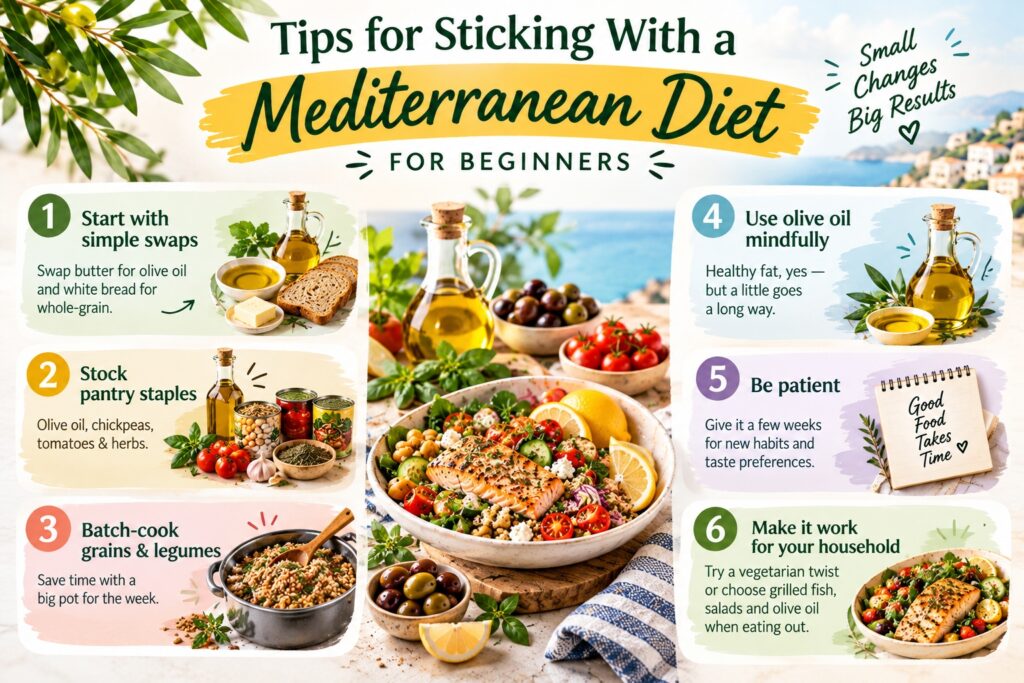
These tips are aimed squarely at mediterranean diet for beginners who want the pattern to stick past the first week rather than fade out.
- Start with swaps, not an overhaul. Replace butter with olive oil and white bread with whole-grain before changing everything else at once
- Keep pantry staples stocked. Olive oil, canned chickpeas, canned tomatoes, and dried herbs make most meals in this mediterranean meal plan come together quickly
- Batch-cook grains and legumes. A big pot of farro or lentils on a Sunday covers several lunches during the week
- Do not skip the olive oil, but watch the portion. It is a healthy fat, but still calorie-dense, so a tablespoon or two per meal is usually enough
- Give it a few weeks. Taste preferences and grocery habits usually take longer than a few days to adjust
- Adapt it to your household. A vegetarian version simply leans more on legumes and eggs in place of fish and poultry, and eating out is manageable by choosing grilled fish, salads, and olive oil–based dishes over fried options
Adjusting Portions for Your Goals
- This mediterranean meal plan is written as a general template rather than a strict calorie count, so portions can flex depending on your goal
- For weight management, keep grain and legume portions moderate (about a cupped handful) and fill the rest of the plate with vegetables
- For muscle maintenance or higher activity levels, add an extra serving of protein, such as an additional egg at breakfast or a larger portion of fish at dinner
- For general maintenance, the meals above as written are a reasonable starting point for most adults, though individual needs vary based on age, activity level, and health history
Eating Out on a Mediterranean Diet
Sticking with a mediterranean meal plan does not mean avoiding restaurants altogether.
- Greek, Lebanese, Turkish, and Italian restaurants often have naturally Mediterranean-friendly options on the menu already
- Look for grilled fish or chicken, salads with olive oil–based dressing, and vegetable-forward mezze plates
- Ask for sauces and dressings on the side, since restaurant portions of oil can be larger than what you would use for a mediterranean meal plan at home
- One meal out does not undo a week of consistent eating, so there is no need to treat it as a strict test
How This 7-Day Plan Fits Into Long-Term Eating
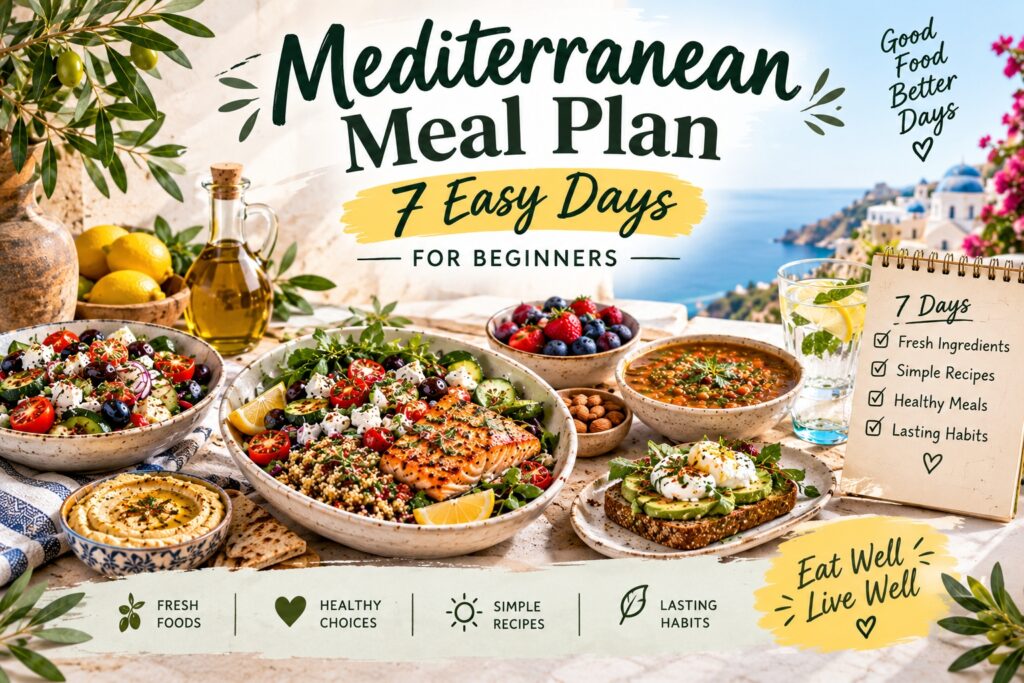
- Think of this mediterranean diet 7 day meal plan as a template rather than a one-time challenge. Once the week is over, the same structure can simply repeat with different vegetables, proteins, or seasonal produce
- Many people use a mediterranean diet 7-day meal plan like this one for a few weeks in a row before it starts to feel automatic rather than like a plan they have to follow
- If a full week feels like a lot at first, starting with just breakfast and lunch from this mediterranean meal plan and keeping dinner as usual is a reasonable way to ease in
- The goal of any 7 day mediterranean diet trial is less about the seven days themselves and more about building habits that carry into the following weeks
Key Takeaways
- A mediterranean meal plan centers on vegetables, whole grains, legumes, olive oil, and fish, with red meat and sweets kept occasional
- The 7 day mediterranean diet above can be adjusted in portion size to fit different calorie needs
- Four or five core mediterranean diet food recipes, like a Greek salad and a lemon-olive oil dressing, cover most of the week
- This is one of the more flexible styles for mediterranean diet for beginners, since nothing is fully off-limits
- Batch-cooking grains and legumes makes this mediterranean meal plan easier to keep up on busy weeks
- A mediterranean meal plan does not require special products or strict tracking to follow well
FAQ
- What foods are eaten most on a mediterranean meal plan?
The core Mediterranean diet foods are vegetables, fruit, whole grains, legumes, olive oil, and fish, with poultry, eggs, and dairy eaten in smaller amounts and red meat kept occasionally.
- Is a 7 day mediterranean diet enough to see a difference?
A 7 day mediterranean diet is a reasonable trial period to get familiar with the foods and routine, though most of the pattern’s research-backed benefits are tied to following it consistently over months, not just one week.
- Do I need special ingredients to follow a Mediterranean meal plan?
No. A mediterranean diet meal plan can be built almost entirely from a regular grocery store using olive oil, canned beans, frozen vegetables, and basic pantry staples.
- Can beginners follow a mediterranean diet 7-day meal plan without cooking every day?
Yes. Batch-cooking grains, legumes, and roasted vegetables ahead of time means a mediterranean diet 7-day meal plan does not require fresh cooking at every single meal.
- What is the easiest mediterranean diet food recipe to start with?
A basic Greek salad with a lemon-olive oil dressing is usually the easiest of the mediterranean diet food recipes to start with, since it needs no cooking and uses ingredients that show up throughout the week.
- Can vegetarians follow this mediterranean meal plan?
Yes. A vegetarian version of this mediterranean meal plan simply relies more heavily on legumes, eggs, and dairy in place of the fish and poultry in the 7-day plan above.
- Is olive oil really necessary for a mediterranean diet meal plan?
Olive oil is the primary fat in a traditional mediterranean diet meal plan and is worth prioritizing where possible, though other unsaturated fats like avocado can fill in occasionally if needed.
Conclusion
A mediterranean meal plan does not require perfection or an all-or-nothing approach. Use the 7 day mediterranean diet above as a starting template, lean on the few core recipes to save time, and adjust portions to fit your goals as you go. Whether you follow this mediterranean meal plan for one week or make it a longer-term habit, the same handful of staples will carry you through most of it.
For more beginner-friendly guides, visit the Healthy Diet Plans pillar guide, the Intermittent Fasting for Beginners guide, or browse the Diet Plans and Meal Plan categories on thedailycrave.online.