Table of Contents
Introduction
If you have looked into intermittent fasting, you have probably run into two names over and over: 16:8 and 5:2. A good intermittent fasting meal plan is not about picking the trendiest option. It is about picking the schedule you can actually follow for more than a week. This guide is written for anyone searching intermittent fasting for beginners, and it breaks down both approaches, compares them side by side, and gives you a full 16/8 intermittent fasting 7 day meal plan you can start this week, plus notes on combining fasting with keto if that is a style you are considering.
This is a main Healthy Diet Plans guide, so if you have not decided whether fasting is the right style for you at all, that guide is a good place to start. If you already know you want to try fasting and just need the intermittent fasting meal plan itself, keep reading.
Who Should Be Careful With Intermittent Fasting
- People with diabetes or blood sugar conditions, since fasting windows can affect medication timing and blood sugar levels
- People who are pregnant, breastfeeding, or trying to conceive
- Anyone with a current or past history of disordered eating, since structured fasting windows can be difficult territory
- People on medications that need to be taken with food
- Anyone feeling persistently dizzy, fatigued, or unwell after starting a fasting schedule should stop and check in with a doctor rather than pushing through
What Happens During Intermittent Fasting
- During the fasting window, insulin levels drop and the body gradually shifts toward using stored fat for energy
- This process is part of why some people use fasting for weight loss, though the underlying mechanism is largely the same calorie deficit that drives weight loss on any eating pattern
- Hunger tends to come in waves rather than building continuously, and many beginners find it eases after the first 30 to 60 minutes
- Energy, focus, and mood responses to fasting vary a lot person to person, which is part of why testing a beginner intermittent fasting meal plan for a full week, rather than a single day, gives a more honest read on how it feels for you
16:8 vs 5:2: Which Beginner Intermittent Fasting Schedule to Try
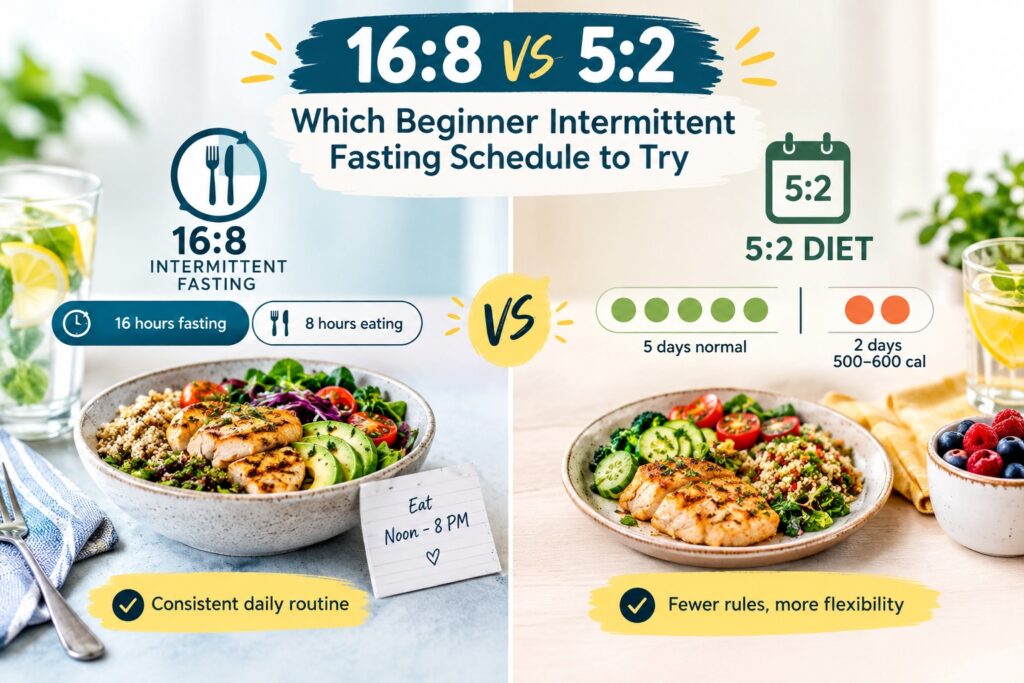
Both styles below are common starting points for intermittent fasting for beginners, and neither requires special products or supplements to follow.
16:8 Intermittent Fasting
- 16:8 intermittent fasting means eating within an 8-hour window and fasting for the remaining 16 hours each day
- A common eating window runs from noon to 8 p.m., though it can shift earlier or later depending on your schedule
- One of the most approachable beginner intermittent fasting meal plan structures, since it repeats daily rather than requiring you to track different rules on different days
- Often cited as the best intermittent fasting schedule for people just starting out, mainly because it is easy to explain in one sentence
- Best for: People who prefer a consistent daily routine and do not mind skipping breakfast
5:2 Diet
- The 5:2 diet involves eating normally five days a week and limiting intake to roughly 500 to 600 calories on two non-consecutive days
- Rather than restricting the clock, it restricts calories on specific days only
- Some people find it easier socially, since most days involve no restriction at all
- For people who dislike the daily discipline of a 16 8 intermittent fasting meal plan, this can be the best intermittent fasting schedule to try instead
- Best for: People who would rather manage two harder days than think about timing every single day
How to Decide Between the Two
- If you struggle more with what you eat than when you eat, 16:8 intermittent fasting may feel more natural
- If you would rather have a couple of tough days and otherwise eat freely, the 5:2 diet may suit you better
- The best intermittent fasting schedule is simply the one you can repeat consistently for weeks, not just days
- Both are considered reasonable starting points for intermittent fasting for beginners, and neither has been shown to be clearly superior to the other for most people
7-Day Intermittent Fasting Meal Plan
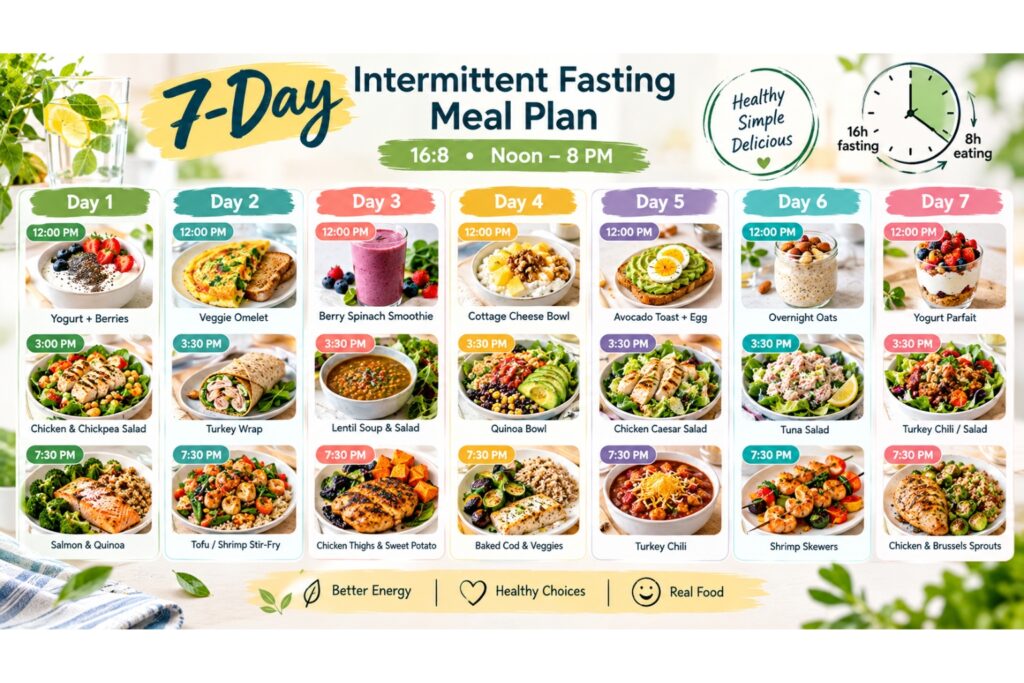
This 7-day intermittent fasting meal plan is built around the 16/8 intermittent fasting 7 day meal plan format, with a noon-to-8 p.m. eating window. Adjust the window earlier or later to fit your day, and see the 5:2 notes below if you would rather follow that schedule instead.
Day 1
- 12:00 p.m. (break fast): Greek yogurt with berries and a spoon of chia seeds
- 3:00 p.m.: Mixed greens with grilled chicken, chickpeas, and olive oil vinaigrette
- 7:30 p.m.: Baked salmon, roasted broccoli, and quinoa
Day 2
- 12:00 p.m.: Veggie omelet with whole-grain toast
- 3:30 p.m.: Whole-grain wrap with turkey, spinach, and hummus
- 7:30 p.m.: Stir-fried tofu or shrimp with mixed vegetables over brown rice
Day 3
- 12:00 p.m.: Smoothie with spinach, frozen berries, and Greek yogurt
- 3:30 p.m.: Lentil soup with a side salad
- 7:30 p.m.: Grilled chicken thighs, sautéed spinach, and sweet potato
Day 4
- 12:00 p.m.: Cottage cheese with pineapple and a handful of walnuts
- 3:30 p.m.: Quinoa bowl with black beans, corn, avocado, and salsa
- 7:30 p.m.: Baked cod, roasted zucchini, and brown rice
Day 5
- 12:00 p.m.: Whole-grain toast with mashed avocado and a boiled egg
- 3:30 p.m.: Grilled chicken Caesar salad, light on the dressing
- 7:30 p.m.: Turkey chili with beans, topped with a little shredded cheese
Day 6
- 12:00 p.m.: Overnight oats with cinnamon and sliced almonds
- 3:30 p.m.: Tuna salad over mixed greens with olive oil and lemon
- 7:30 p.m.: Grilled shrimp skewers with a Mediterranean vegetable medley
Day 7
- 12:00 p.m.: Greek yogurt parfait with granola and mixed berries
- 3:30 p.m.: Leftover turkey chili or a big veggie-packed salad
- 7:30 p.m.: Baked chicken breast, roasted Brussels sprouts, and farro
Adapting This 16 8 Intermittent Fasting Meal Plan to 5:2
- Pick two non-consecutive days, such as Tuesday and Friday
- On those days, keep meals to roughly 500 to 600 calories total, such as a small portion of Day 3’s lentil soup plus a boiled egg
- Eat normally, following the meals above without the fasting window, on the other five days
- During the 16-hour fasting window on 16:8 days, water, black coffee, and plain tea are generally fine, but check with a doctor if you take medication that requires food
What to Drink During Your Fasting Window
- Water is the safest default and helps with hunger that is actually thirst in disguise
- Black coffee and plain tea are generally considered acceptable during a fasting window since they contain minimal to no calories
- Skip cream, sugar, and flavored syrups, which can technically break a fast depending on how strictly you are following your intermittent fasting meal plan
- Electrolyte drinks without added sugar can help on longer fasts or on active days, especially if you are also easing into a keto diet and intermittent fasting meal plan
- If you feel lightheaded, a small amount of food is always a better choice than pushing through discomfort
Combining Keto and Intermittent Fasting

- A keto diet and intermittent fasting meal plan pairs a low-carb, high-fat eating pattern with a 16:8 or similar fasting window
- Some people find the two approaches work well together, since both can help reduce hunger and simplify meal planning
- To adapt the 7-day plan above for a keto diet and intermittent fasting meal plan, swap grains and starchy vegetables for extra non-starchy vegetables, avocado, and healthy fats, and replace quinoa, rice, and farro with cauliflower rice or extra greens
- A sample keto day inside the same noon-to-8 p.m. window might include eggs and avocado to break the fast, a salad with grilled salmon and olive oil dressing, and steak with roasted low-carb vegetables for the evening meal
- This combination is more restrictive than either approach alone, so it is worth starting with one change at a time rather than adopting both on day one
Grocery List for a Basic Intermittent Fasting Meal Plan
- Protein: eggs, Greek yogurt, chicken, turkey, salmon, shrimp, tofu, lentils, black beans
- Produce: spinach, mixed greens, broccoli, zucchini, Brussels sprouts, berries, banana, avocado
- Whole grains: quinoa, brown rice, farro, whole-grain bread or wraps
- Pantry staples: olive oil, chia seeds, nuts, hummus, canned beans, low-sodium broth
- Keeping a few of these on hand at all times makes it much easier to put together meals for any intermittent fasting meal plan without a lot of extra planning each day
Tips to Stick With a Beginner Intermittent Fasting Meal Plan
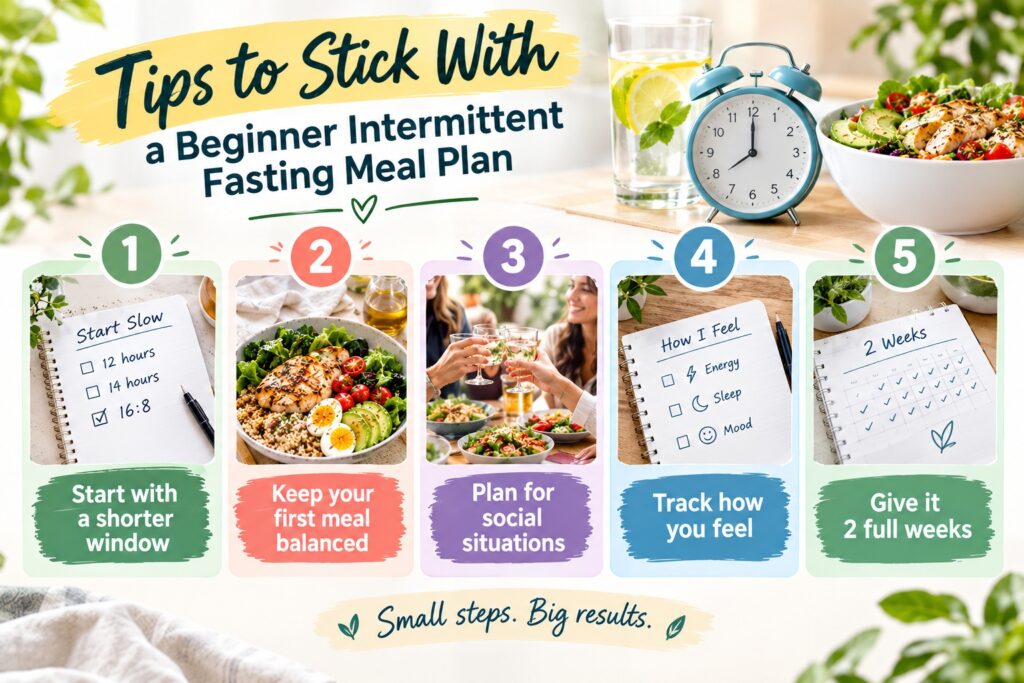
- Start with a shorter window. Easing in with 12 hours for a few days before working up to a full 16:8 schedule tends to feel more manageable than jumping straight in
- Keep your first meal balanced. Protein, fiber, and healthy fat at the meal that breaks your fast help prevent the energy crash that comes from starting the eating window with something sugary
- Plan for social situations. If dinner with friends falls outside your usual window, shift the whole schedule for that day rather than skipping the event
- Track how you feel, not just the scale. Energy, sleep, and mood are often better early indicators than weight for whether a beginner intermittent fasting meal plan is working for you
- Give it two full weeks before deciding whether 16:8, 5:2, or a different intermittent fasting meal plan altogether is the better long-term fit
Common Mistakes With a Beginner Intermittent Fasting Meal Plan
Most mistakes with intermittent fasting for beginners come down to treating the schedule as the whole plan and forgetting that food quality still matters.
- Overeating during the eating window: Treating the eating window as unlimited can cancel out any calorie deficit from fasting
- Skipping protein: A beginner intermittent fasting meal plan without enough protein tends to leave you hungrier and can affect muscle maintenance over time
- Starting with too long a fast: Jumping straight to 16 hours can feel harsh. Easing in with a 12-hour window for the first few days often helps
- Ignoring hydration: Water, and electrolytes if you are active, matter more during a fasting window than most beginners expect
- Fasting through workouts without adjusting: Intense exercise during a fasted state can feel different than expected. Some people prefer to train near the end of their fasting window instead
- Not adjusting on high-stress or poor-sleep days: Fasting on top of a rough night’s sleep or a stressful day can amplify irritability and hunger. Shifting the window later or shortening the fast slightly on those days is a reasonable adjustment, not a failure
Key Takeaways
- 16:8 intermittent fasting restricts the eating window to 8 hours daily, while the 5:2 diet restricts calories on two days a week instead
- There is no single best intermittent fasting schedule. The right one is whichever you can repeat consistently, which is the whole point of this guide for intermittent fasting for beginners
- This 16/8 intermittent fasting 7 day meal plan uses a noon-to-8 p.m. window and can be adapted to 5:2 or paired with keto
- Fasting for weight loss tends to work through an overall calorie deficit rather than any special metabolic effect of the fasting window itself
- Protein, fiber, and hydration matter as much as the fasting schedule itself for feeling good on any beginner intermittent fasting meal plan
- A keto diet and intermittent fasting meal plan is possible but more restrictive, so most beginners do better introducing one change at a time
FAQ
- What is the best intermittent fasting schedule for beginners?
For most beginners, 16:8 intermittent fasting is considered the easiest entry point, since it repeats the same daily pattern rather than requiring different rules on different days like the 5:2 diet does.
- Does intermittent fasting work for fasting for weight loss?
Fasting for weight loss can work for some people mainly because it naturally reduces the window in which they eat, which often lowers total calorie intake. It is not guaranteed to work for everyone, and results vary based on what is eaten during the eating window.
- Can I follow a 16/8 intermittent fasting 7 day meal plan and still lose weight if I don’t count calories?
A 16/8 intermittent fasting 7 day meal plan built around whole foods, protein, and vegetables can support weight management without strict counting, though tracking loosely for a week or two can help you understand your current intake.
- Is it safe to combine keto with intermittent fasting?
A keto diet and intermittent fasting meal plan is generally well tolerated by healthy adults, but combining two restrictive approaches at once can be harder to sustain and is worth discussing with a doctor first, especially if you have any underlying health conditions.
- How long before a beginner intermittent fasting meal plan starts to feel normal?
Most people report the first one to two weeks as the hardest, with hunger and energy levels typically stabilizing after the body adjusts to the new eating pattern.
- What does a 16 8 intermittent fasting meal plan actually look like day to day?
16 8 intermittent fasting meal plan typically includes two to three meals inside an 8-hour window, such as noon to 8 p.m., built around protein, fiber, and vegetables, with water, black coffee, or plain tea during the 16-hour fasting portion of the day. This structure is what makes it a popular 16 8 intermittent fasting meal plan choice for people who want something repeatable rather than a schedule that changes daily.
- Is a 5:2 diet or 16:8 intermittent fasting better for fasting for weight loss?
Both can support fasting for weight loss by helping reduce overall calorie intake, and research has not consistently shown one to outperform the other. The better choice usually comes down to which schedule fits your routine well enough to follow consistently.
Conclusion
Choosing between 16:8 intermittent fasting and the 5:2 diet comes down to which rhythm fits your life, not which one is trending. Use the 16/8 intermittent fasting 7 day meal plan above as a starting template, adjust the eating window to your schedule, and give it a couple of weeks before judging how it feels. If keto is also on your radar, ease into a keto diet and intermittent fasting meal plan gradually rather than switching everything at once, since that combination among all the schedules covered here tends to be the hardest for intermittent fasting for beginners to sustain right away.
For more beginner-friendly guides, visit the Healthy Diet Plans pillar guide, or browse the Diet Plans and Meal Plan categories on thedailycrave.online.