Table of Contents
Introduction
DASH stands for Dietary Approaches to Stop Hypertension. A good meal plan for dash diet does not ask you to eliminate entire food groups. Instead, it shifts the balance toward more potassium, calcium, and magnesium, and less sodium, since that combination is what the original DASH research tied to lower blood pressure readings. This guide is a cluster piece off the main Healthy Diet Plans guide, and it focuses specifically on the sodium numbers, food swaps, and full weekly menu that make this pattern practical for DASH diet for beginners.
The Sodium Numbers Behind This Plan
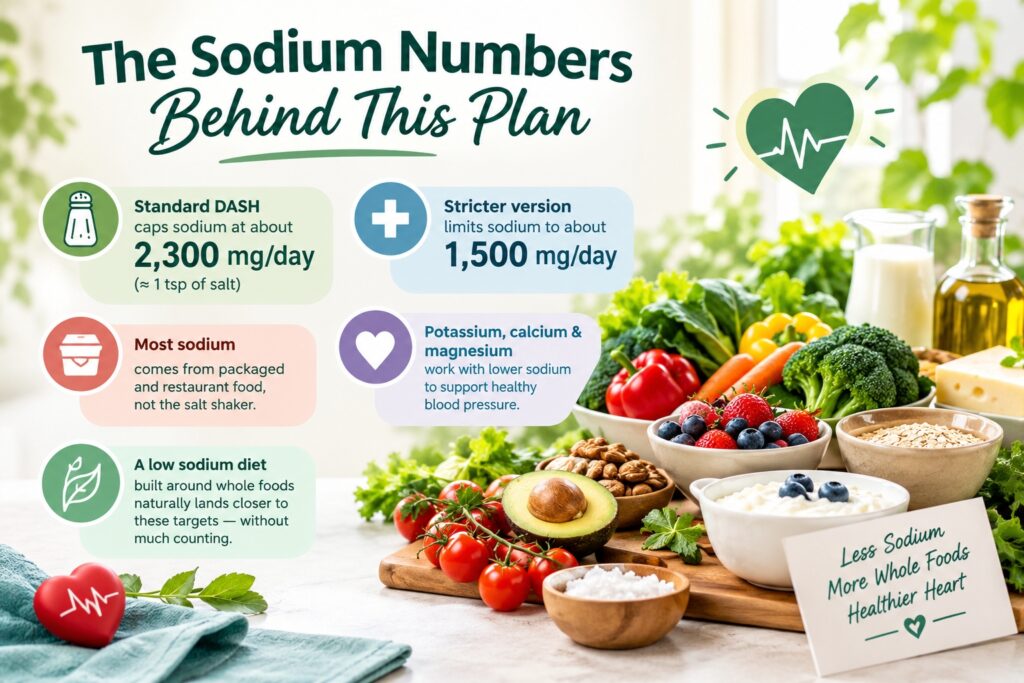
- The standard DASH pattern caps sodium at about 2,300 milligrams a day, which is roughly one teaspoon of table salt
- A stricter version, sometimes used under medical guidance, limits sodium to about 1,500 milligrams a day
- Most of the sodium in a typical diet comes from packaged and restaurant food, not the salt shaker at home
- Potassium, calcium, and magnesium work alongside lower sodium to support healthy blood pressure, which is why this pattern leans so heavily on produce and dairy rather than just cutting salt
- A low sodium diet meal plan built around whole foods naturally lands closer to these targets without much counting
Who Should Consider a DASH Meal Plan
- Anyone with elevated blood pressure readings who wants a food-based approach alongside medical care
- People with a family history of hypertension who want to build habits early
- Anyone managing heart health more broadly, since a meal plan for dash diet overlaps closely with general heart-healthy eating
- People who find very restrictive diets hard to sustain, since DASH does not eliminate entire food groups
- This is not the right fit for everyone. Certain kidney conditions require different potassium guidelines, so a dash meal plan should be reviewed with a doctor first in those cases
Foods for DASH Diet: What to Build Meals Around
These foods for dash diet eating form the base of most meals, organized the way the original research groups them:
| Food Group | Daily/Weekly Servings | Examples |
| Vegetables | 4 to 5 a day | Leafy greens, carrots, tomatoes, broccoli, peppers |
| Fruit | 4 to 5 a day | Berries, apples, oranges, bananas, melon |
| Whole grains | 6 to 8 a day | Brown rice, oats, quinoa, whole-grain bread |
| Low-fat or fat-free dairy | 2 to 3 a day | Milk, yogurt, reduced-sodium cheese |
| Lean protein | 6 or fewer a day | Skinless poultry, fish, eggs |
| Nuts, seeds, and legumes | 4 to 5 a week | Almonds, sunflower seeds, lentils, beans |
| Fats and oils | 2 to 3 a day | Olive oil and other unsaturated fats, in moderation |
| Sweets | 5 or fewer a week | Kept occasional rather than daily |
Adjusting a meal plan for dash diet for Your Calorie Needs
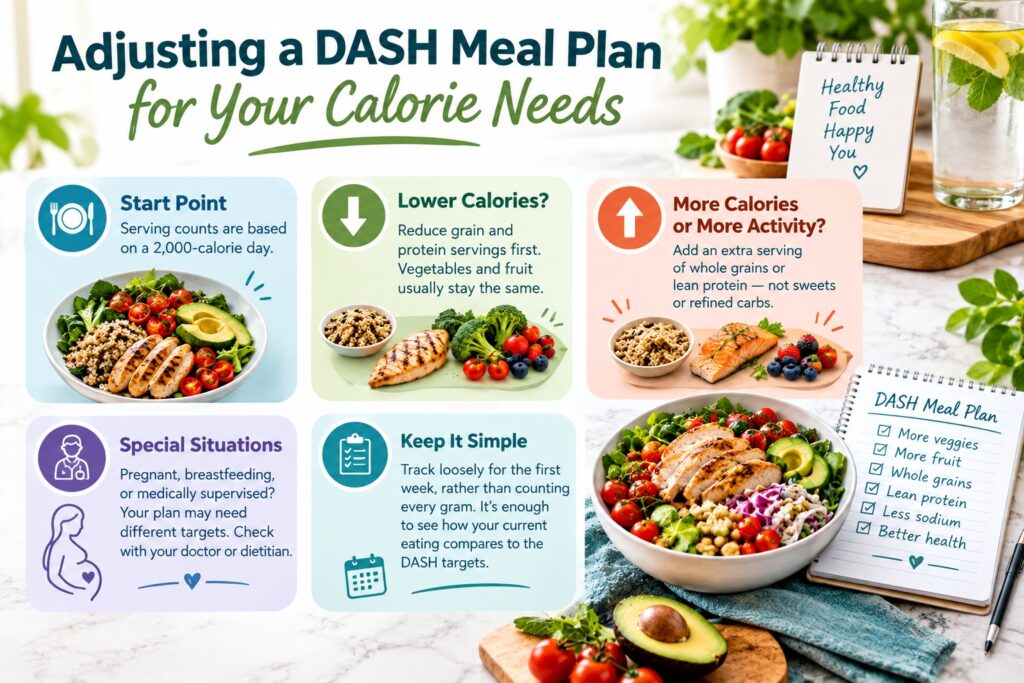
- The serving counts above are based on a roughly 2,000-calorie day, which is a common reference point for DASH diet for beginners
- For lower calorie needs, scale back grain and protein servings first, since vegetables and fruit rarely need much trimming
- For higher calorie needs or more activity, add an extra serving of whole grains or lean protein rather than sweets or refined carbs
- Pregnant, breastfeeding, or medically supervised individuals may have different targets, so this dash meal plan structure should be personalized with a doctor or dietitian when relevant
- Tracking loosely for the first week, rather than counting every gram, is usually enough to see how your current eating compares to the DASH targets
High-Sodium Foods and Hidden Salt Traps
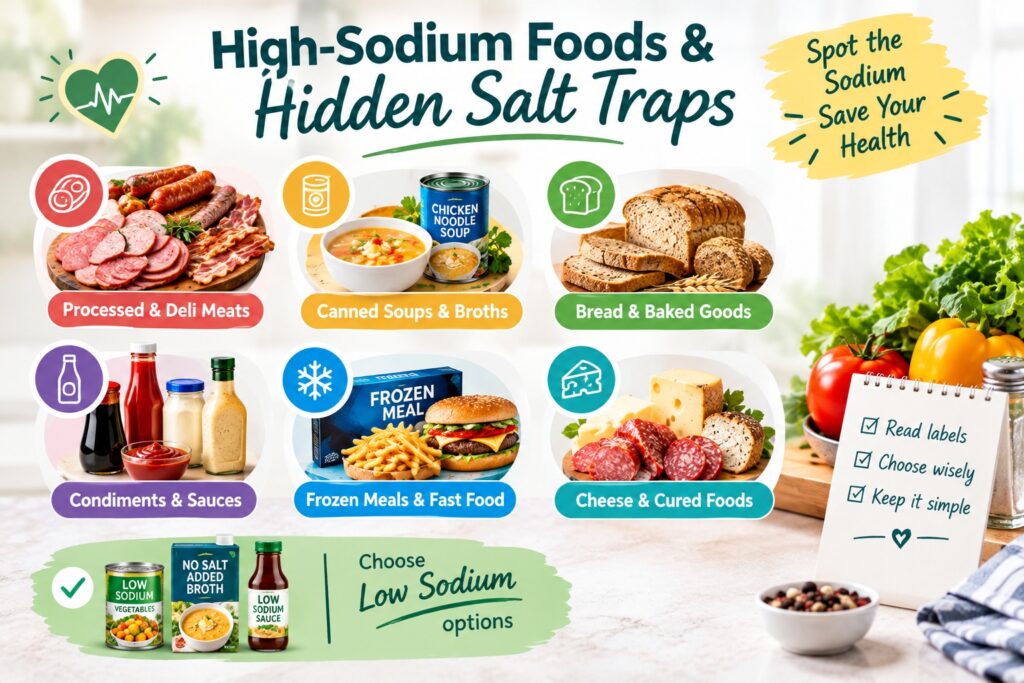
A meal plan for dash diet eating is less about avoiding salt at the table and more about spotting where sodium hides in everyday food, which is exactly why this dash diet meal plan leans so heavily on label awareness.
- Processed and deli meats: Bacon, sausage, ham, and cold cuts are among the biggest contributors
- Canned soups and broths: Regular versions can carry over 800 milligrams of sodium per cup
- Bread and baked goods: Sodium adds up quickly across several slices a day, even when bread does not taste salty
- Condiments and sauces: Soy sauce, salad dressing, ketchup, and marinades are common hidden sources
- Frozen meals and fast food: Often the single largest sodium source in a typical day
- Cheese and cured foods: Flavorful, but often high in sodium per serving
- Choosing “low sodium” or “no salt added” versions of canned vegetables, broth, and sauces is one of the fastest ways to bring a low sodium diet meal plan in line with DASH targets
Grocery List for This Low Sodium Diet Meal Plan
- Produce: spinach, broccoli, carrots, peppers, tomatoes, berries, bananas, oranges, avocado
- Proteins: eggs, chicken thighs, salmon, cod, shrimp, canned low-sodium beans
- Grains: oats, brown rice, quinoa, farro, whole-grain bread and tortillas
- Dairy: plain yogurt, low-fat milk, reduced-sodium cheese
- Pantry: low-sodium broth, no-salt-added canned tomatoes, unsalted nuts and seeds, olive oil
- Flavor boosters: lemons, garlic, fresh or dried herbs, vinegar
- Shopping from this list keeps a low sodium diet meal plan simple without needing to read every label from scratch each week
Eating Out on a DASH Diet
- Ask for sauces, dressings, and marinades on the side, since restaurant portions of sodium are often higher than home cooking
- Choose grilled, baked, or roasted dishes over fried or breaded options
- Request no added salt when possible, and rely on the table’s pepper, lemon, or hot sauce instead
- Balance a higher-sodium meal out with lower-sodium choices for the rest of that day, rather than treating it as a diet failure
- One meal out will not undo a week of consistent DASH diet for beginners habits
7-Day Meal Plan for DASH Diet
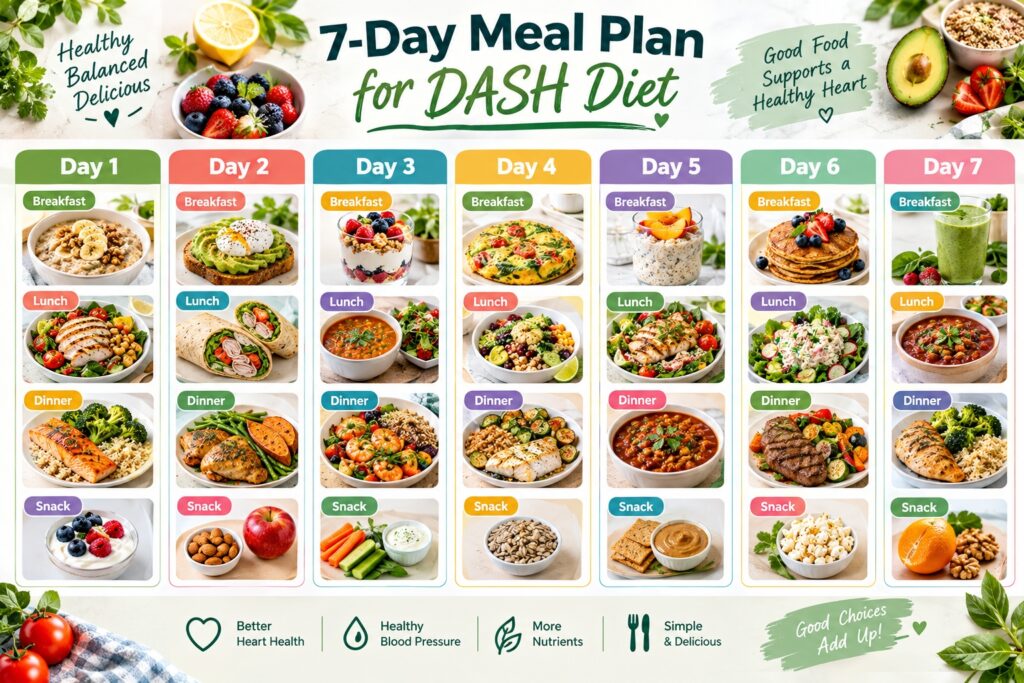
This meal plan for dash diet eating keeps sodium moderate and leans on herbs, citrus, and spices for flavor instead of salt. Portions can be scaled to your calorie needs, and the same meal plan for dash diet structure repeats well from week to week with small ingredient swaps.
Day 1
- Breakfast: Oatmeal with sliced banana, cinnamon, and unsalted walnuts
- Lunch: Spinach salad with grilled chicken, chickpeas, and a lemon-olive oil dressing
- Dinner: Baked salmon with roasted broccoli and brown rice
- Snack: Plain yogurt with berries
Day 2
- Breakfast: Whole-grain toast with mashed avocado and a poached egg
- Lunch: Turkey and vegetable wrap on a whole-grain tortilla with low-sodium hummus
- Dinner: Herb-roasted chicken thighs with green beans and a small baked sweet potato
- Snack: Unsalted almonds and an apple
Day 3
- Breakfast: Greek yogurt parfait with granola and mixed berries
- Lunch: Lentil soup made with low-sodium broth, paired with a side salad
- Dinner: Grilled shrimp with a Mediterranean vegetable medley and quinoa
- Snack: Carrot and cucumber sticks with a yogurt-based dip
Day 4
- Breakfast: Vegetable omelet made with low-sodium cheese
- Lunch: Quinoa bowl with black beans, corn, avocado, and lime
- Dinner: Baked cod with roasted zucchini and farro
- Snack: A small handful of unsalted sunflower seeds
Day 5
- Breakfast: Overnight oats with chia seeds and sliced peaches
- Lunch: Grilled chicken salad with a homemade lemon vinaigrette instead of bottled dressing
- Dinner: Turkey chili made with low-sodium canned tomatoes and beans
- Snack: A few whole-grain crackers with unsalted nut butter
Day 6
- Breakfast: Whole-grain pancakes topped with berries, no syrup needed if fruit is ripe
- Lunch: Tuna salad made with plain yogurt instead of mayonnaise, over greens
- Dinner: Grilled steak with a large side of roasted vegetables
- Snack: Plain popcorn, air-popped with no added salt
Day 7
- Breakfast: Smoothie with spinach, frozen berries, and unsweetened almond milk
- Lunch: Leftover turkey chili or a big vegetable salad
- Dinner: Baked chicken breast with steamed broccoli and brown rice
- Snack: An orange and a small handful of walnuts
Potassium-Rich Foods to Prioritize
- Bananas, oranges, and cantaloupe are easy fruit sources of potassium
- Potatoes and sweet potatoes, eaten with the skin, carry more potassium than most people expect
- Leafy greens, like spinach and Swiss chard, add potassium along with magnesium
- Beans and lentils double as a potassium source and a lower-sodium protein option
- Low-fat dairy, including milk and yogurt, contributes potassium and calcium together
- Building a few of these into each day is just as central to a meal plan for dash diet eating as cutting back on sodium, since the two work together rather than separately
Sample Sodium Math for One Day
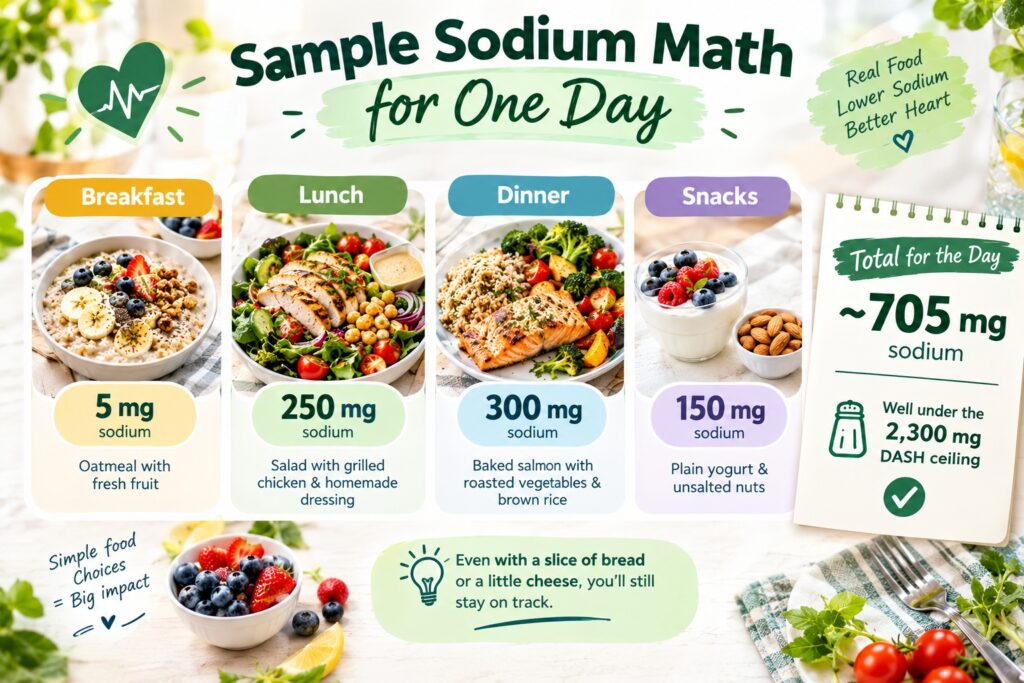
- Breakfast oatmeal with fresh fruit: roughly 5 milligrams of sodium
- Lunch salad with grilled chicken and a homemade dressing: roughly 250 milligrams
- Dinner baked salmon with roasted vegetables and brown rice: roughly 300 milligrams
- Two snacks, like plain yogurt and unsalted nuts: roughly 150 milligrams combined
- A day built this way lands well under the 2,300-milligram DASH ceiling, with room to spare even if one higher-sodium item, like a slice of bread or a small serving of cheese, is added
- Seeing the numbers laid out like this is often what makes a meal plan for dash diet feel manageable rather than abstract
Reading Labels for a Low Sodium Diet Meal Plan
- Check the sodium line first, not just the calorie count, since two similar products can differ by hundreds of milligrams
- Compare per-serving sodium against the day’s target, since a single can of soup can use up half of a 1,500-milligram goal
- Watch for “reduced sodium” versus “no salt added.” Reduced sodium still contains meaningful salt, while no salt added usually means very little
- Look at the ingredient list for salt, sodium, or monosodium glutamate (MSG) appearing near the top, which signals a higher-sodium product
- A few minutes of label reading a week makes a 7-day low-sodium diet meal plan much easier to stick to at the grocery store
Meal Prep Tips for a Busy Week
- Cook a big batch of brown rice or quinoa on Sunday to use across several dinners
- Wash and chop vegetables ahead of time so a quick sauté or salad takes minutes
- Portion unsalted nuts and seeds into small containers for grab-and-go snacks
- Make a double batch of the lentil soup or chili below and freeze half for a busy week later on
- A little prep goes a long way toward keeping any meal plan for dash diet eating realistic on weekdays
DASH Diet Recipes for Beginners
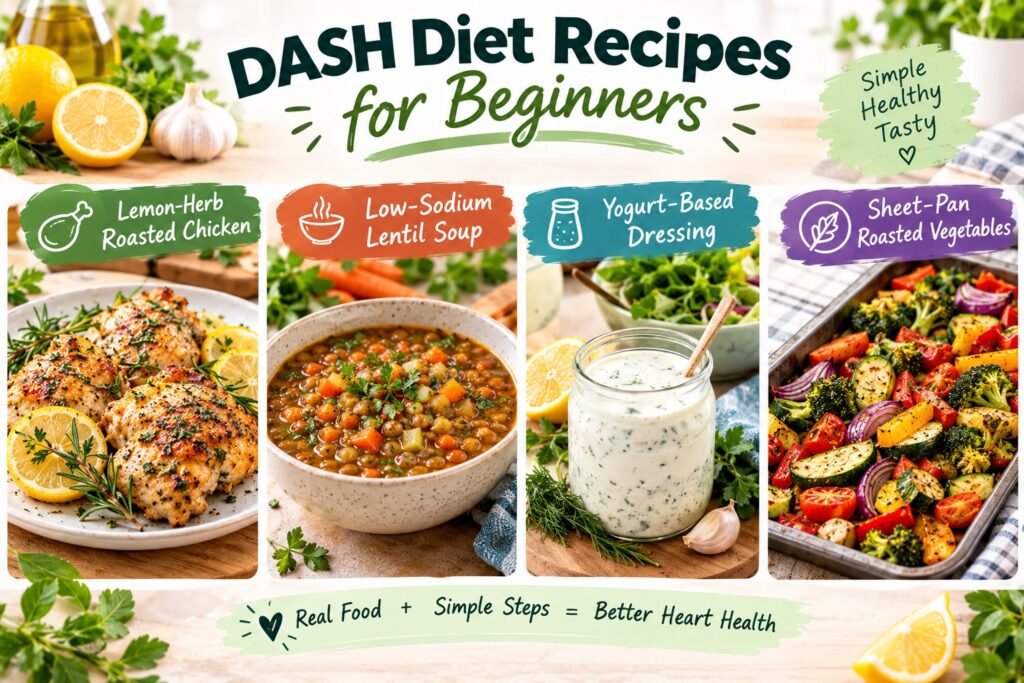
A handful of simple dash diet recipes for beginners cover most of what this plan asks for:
- Lemon-herb roasted chicken: Chicken thighs seasoned with lemon, garlic, and rosemary instead of salt
- Low-sodium lentil soup: Lentils, carrots, celery, and low-sodium broth, simmered until soft
- Yogurt-based dressing: Plain yogurt, lemon juice, garlic, and herbs, used in place of bottled dressing
- Sheet-pan roasted vegetables: Any combination of vegetables tossed in olive oil and herbs, roasted until tender
Common Mistakes on a DASH Diet Meal Plan
- Focusing only on the salt shaker. Most sodium comes from packaged and restaurant food, not what is added at the table
- Cutting sodium without adding potassium-rich foods. Both sides of the equation matter for a meal plan for dash diet to work as intended
- Assuming “healthy” packaged foods are automatically low sodium. Whole-grain crackers and flavored oatmeal can still carry a lot of salt
- Going cold turkey on flavor. Herbs, citrus, garlic, and vinegar can replace most of what salt was doing
- Expecting fast changes. Blood pressure changes from diet tend to build over weeks, not days, and should be tracked alongside a doctor’s guidance
- Not checking in on progress. Tracking blood pressure readings periodically, with a doctor’s involvement, helps confirm whether this dash diet meal plan is making a measurable difference for you specifically
Key Takeaways
- A meal plan for dash diet eating emphasizes vegetables, fruit, whole grains, lean protein, and low-fat dairy while limiting sodium
- Standard DASH sodium targets are about 2,300 milligrams a day, with a stricter 1,500-milligram version used under medical guidance
- Most sodium comes from packaged and restaurant food, so label reading matters as much as cooking from scratch
- This 7-day low-sodium diet meal plan relies on herbs, citrus, and low-sodium swaps rather than a completely different grocery list
- A handful of simple dash diet recipes for beginners cover most meals throughout the week
FAQ
- What is a realistic meal plan for dash diet beginners?
A realistic meal plan for dash diet beginners starts with swapping high-sodium packaged foods for low-sodium or no-salt-added versions, then gradually building meals around vegetables, fruit, whole grains, and lean protein.
- What foods for dash diet eating should I avoid most?
Processed meats, canned soups, fast food, and salty condiments are the biggest sources to watch when choosing foods for dash diet eating, since they typically carry the most hidden sodium.
- How much sodium is allowed on a low sodium diet meal plan?
The standard low sodium diet meal plan under DASH allows about 2,300 milligrams of sodium a day, with a stricter 1,500-milligram version sometimes recommended for higher blood pressure.
- Can a 7-day low-sodium diet meal plan actually lower blood pressure?
Research on the DASH pattern has shown meaningful blood pressure reductions over several weeks of consistent eating. A single 7-day low-sodium diet meal plan is a starting point, not a guaranteed fix, and results vary by individual.
- Are there simple dash diet recipes for beginners that do not require special ingredients?
Yes. Most dash diet recipes for beginners, like roasted chicken with herbs or a yogurt-based dressing, use common grocery store ingredients and swap out salt for herbs, citrus, and spices.
- How is a meal plan for dash diet eating different from a regular low-sodium diet?
A meal plan for dash diet eating is a specific version of a low-sodium approach that also emphasizes potassium, calcium, and magnesium-rich foods, rather than sodium reduction alone.
- Can a DASH diet for beginners work alongside other diets, like Mediterranean eating?
Yes. DASH diet for beginners principles overlap significantly with Mediterranean-style eating, and many people combine elements of both, such as olive oil and fish, with the DASH sodium targets.
Conclusion
A meal plan for dash diet eating does not have to feel restrictive. Start with the sodium numbers above, lean on the foods for DASH diet list to build meals, and use the 7-day plan as a template you can repeat with your own favorite swaps. Whether you are just starting out or refining an existing dash diet meal plan, small consistent choices tend to matter more than any single perfect day. Talk to a doctor about your personal sodium and potassium targets, especially if you are already managing blood pressure.
For more beginner-friendly guides, visit the Healthy Diet Plans pillar guide, the Intermittent Fasting Meal Plan, the Mediterranean Meal Plan, the Keto Meal Plan, or browse the Diet Plans and Meal Plan categories on thedailycrave.online..