Table of Contents
Introduction
The Whole30 diet is a 30-day elimination program: for one month you skip added sugar, alcohol, grains, legumes, and dairy, then bring them back one group at a time to see how you feel. It is built as a short reset, not a forever diet, and its own rules tell you to stay off the scale. This guide is part of the Healthy Diet Plans series on The Daily Crave, and it covers the Whole30 foods, what to expect, and a full Whole30 meal plan with the calories counted, so you can decide whether it is worth your next 30 days.
The Whole30 Roadmap: 3 Phases From Day 1 to Food Freedom
| Phase | Length | What You Do |
| Elimination | 30 days | Eat only compliant foods and skip the foods on the rules list |
| Reintroduction | 10 days or more | Add one food group back at a time and note how you feel |
| Food freedom | Ongoing | Keep what works for you and drop what does not |
- Most people do a few days of prep before Day 1 and write out a Whole30 meal plan first, which is covered below
- The program is not medical treatment, and this guide is for general information only
Whole30 Diet Rules: What You Eat and What You Skip
| Eat During the 30 Days | Skip During the 30 Days |
| Meat, seafood, and eggs | Added sugar, real or artificial |
| Vegetables and fruit, including potatoes and bananas | Alcohol |
| Natural fats such as olive oil, avocado, ghee, nuts, and seeds | Grains such as wheat, oats, rice, corn, and quinoa |
| Herbs, spices, coffee, and tea | Legumes such as beans, lentils, soy, and peanuts |
| Green beans and most peas | Dairy, except ghee |
- The rules add two more: the pancake rule and the scale rule
- The pancake rule means you do not recreate baked goods, pasta, cereal, chips, or fries from allowed ingredients, even if the ingredients are compliant
- The scale rule means no weighing yourself or taking body measurements for the full 30 days
- Details and exceptions get updated, so check the current official Whole30 program rules before you start
Whole30 Foods: 6 Groups to Build Your Cart Around

- Protein: chicken, turkey, beef, pork, eggs, salmon, cod, tuna, and shrimp
- Vegetables: leafy greens, broccoli, Brussels sprouts, asparagus, peppers, mushrooms, sweet potatoes, and white potatoes
- Fruit: apples, bananas, berries, oranges, and pineapple
- Fats: olive oil, avocado, coconut oil, ghee, nuts, and seeds
- Flavor: herbs, spices, garlic, lemon, vinegar, salsa without sugar, and coconut aminos
- Pantry helpers: compliant broth, canned tuna, canned tomatoes, and sugar-free bacon
- These Whole30 foods are the same ones that fill every meal in the 7-day plan below, so one shopping trip covers most of the week
Reading Labels for the Whole30 Diet Rules: 5 Hidden-Sugar Checks
- Added sugar hides under names like dextrose, maltodextrin, cane juice, and syrup, so read the full ingredient list
- Check bacon, sausage, broth, salsa, marinara, and salad dressing first, since they often contain sugar
- Choose coconut aminos in place of soy sauce, because soy counts as a legume
- Look for dairy ingredients in packaged foods, even in items you would not expect
- Shorter ingredient lists are usually easier to check, which makes fresh Whole30 foods the simplest way to follow the its rules
What to Expect Week by Week: A 30-Day Timeline

Whole30 for beginners often feels hardest early on. Experiences vary a lot, and the points below describe what some people report, not what will happen to you.
- Week 1: cravings, tiredness, and headaches are common reports as your body adjusts, and planning meals ahead helps
- Week 2: the novelty fades, and many people say cooking at home every day starts to feel like a chore
- Week 3: some people notice steadier energy and fewer cravings, while others notice little change
- Week 4: meals feel routine, and you may start thinking about reintroduction and what you want to test
- Day 31 onward: the reintroduction phase begins, which is where the program says most of the learning happens
- If you feel unwell in a way that worries you, stop and talk to a doctor instead of pushing through
Whole30 for Beginners: 6 Prep Steps Before Day 1
- Read the rules once, start to finish, so nothing surprises you on Day 3
- Clear out the foods you will skip, or box them up, and stock Whole30 foods in their place
- Pick a start date with few events, since birthdays, trips, and holidays make Whole30 for beginners much harder
- Plan seven days of meals, and use this Whole30 meal plan as your template, shopping for one meal plan for Whole30 diet week at a time
- Cook proteins in batches, such as chicken thighs or hard-boiled eggs, so lunch is already done
- Have two backup meals, like eggs and a baked potato, for the nights when planning falls apart
Meal Plan for Whole30 Diet: 7 Days With Calorie Counts
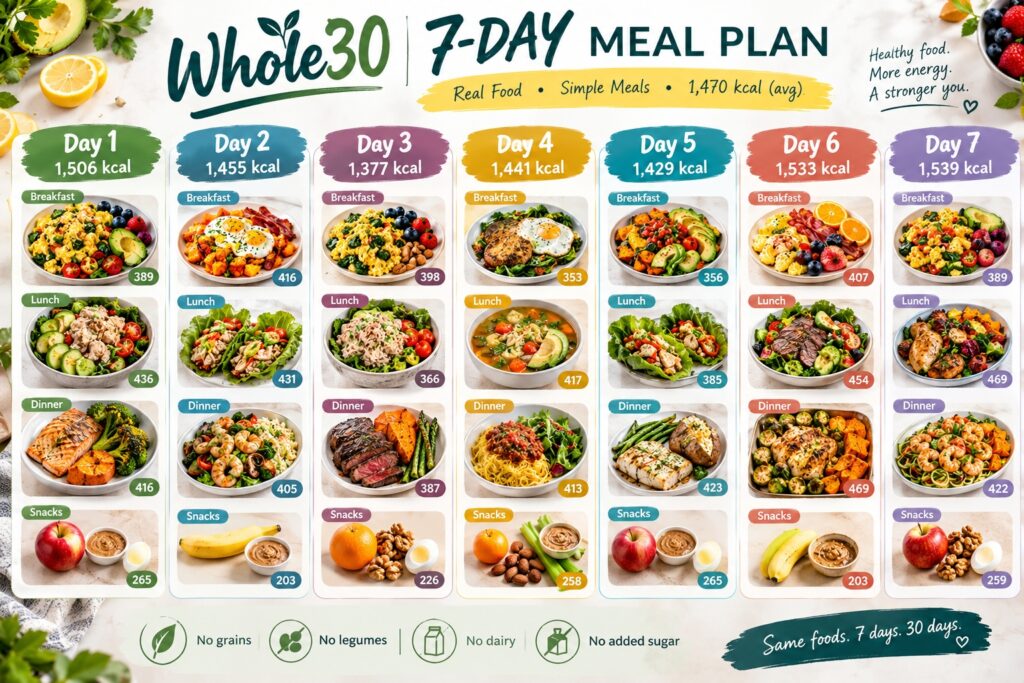
This meal plan for Whole30 diet beginners uses only compliant ingredients, with no grains, legumes, dairy, or added sugar. The official program does not ask you to count calories, so the numbers here are a reference, not a target. You can repeat this Whole30 meal plan for the full 30 days with small swaps. This diet meal plan averages about 1,470 calories a day as written, so adjust portions to your own appetite.
Day 1: Salmon Night (1,506 kcal)
- Breakfast (389): Three-egg veggie scramble with spinach and tomato, plus avocado and berries
- Lunch (436): Chicken salad bowl with greens, cucumber, tomato, avocado, and lemon-olive oil dressing
- Dinner (416): Baked salmon with roasted broccoli and a sweet potato
- Snacks (265): An apple with almond butter and a hard-boiled egg
Day 2: Shrimp Stir-Fry Night (1,455 kcal)
- Breakfast (416): Sweet potato hash with eggs, peppers, onion, and compliant bacon
- Lunch (431): Turkey lettuce wraps with pepper, carrot, coconut aminos, and avocado
- Dinner (405): Shrimp and cashew stir-fry with cauliflower rice, broccoli, and mushrooms
- Snacks (203): A banana with almond butter
Day 3: Steak Night (1,377 kcal)
- Breakfast (398): Three-egg veggie scramble with spinach and pepper, plus berries and 12 almonds
- Lunch (366): Tuna salad with compliant mayo, celery, greens, cherry tomatoes, and avocado
- Dinner (387): Seared sirloin with a sweet potato and roasted asparagus
- Snacks (226): An orange, walnuts, and a hard-boiled egg
Day 4: Spaghetti Squash Night (1,441 kcal)
- Breakfast (353): Turkey-apple breakfast patties with sautéed spinach and a fried egg
- Lunch (417): Chicken and kale soup with carrot, celery, onion, and avocado
- Dinner (413): Spaghetti squash with turkey meat sauce and a side salad
- Snacks (258): An orange, 12 almonds, and celery with almond butter
Day 5: Baked Cod Night (1,429 kcal)
- Breakfast (356): Sweet potato breakfast bowl with eggs, avocado, salsa, and spinach
- Lunch (385): Chicken lettuce wraps with guacamole and tomato
- Dinner (423): Baked cod with a baked potato, green beans, and ghee
- Snacks (265): An apple with almond butter and a hard-boiled egg
Day 6: Sheet-Pan Chicken Night (1,533 kcal)
- Breakfast (407): Compliant bacon and eggs with berries, avocado, and an orange
- Lunch (454): Steak salad with greens, cucumber, tomato, avocado, and lemon-olive oil dressing
- Dinner (469): Sheet-pan chicken thighs with Brussels sprouts and a sweet potato
- Snacks (203): A banana with almond butter
Day 7: Garlic-Lemon Shrimp Night (1,539 kcal)
- Breakfast (389): Three-egg veggie scramble with spinach and tomato, plus avocado and berries
- Lunch (469): Leftover sheet-pan chicken and vegetables
- Dinner (422): Garlic-lemon shrimp over zucchini noodles with cherry tomatoes and a sweet potato
- Snacks (259): An apple with walnuts and a hard-boiled egg
How the Calories in This Whole30 Diet Meal Plan Were Counted
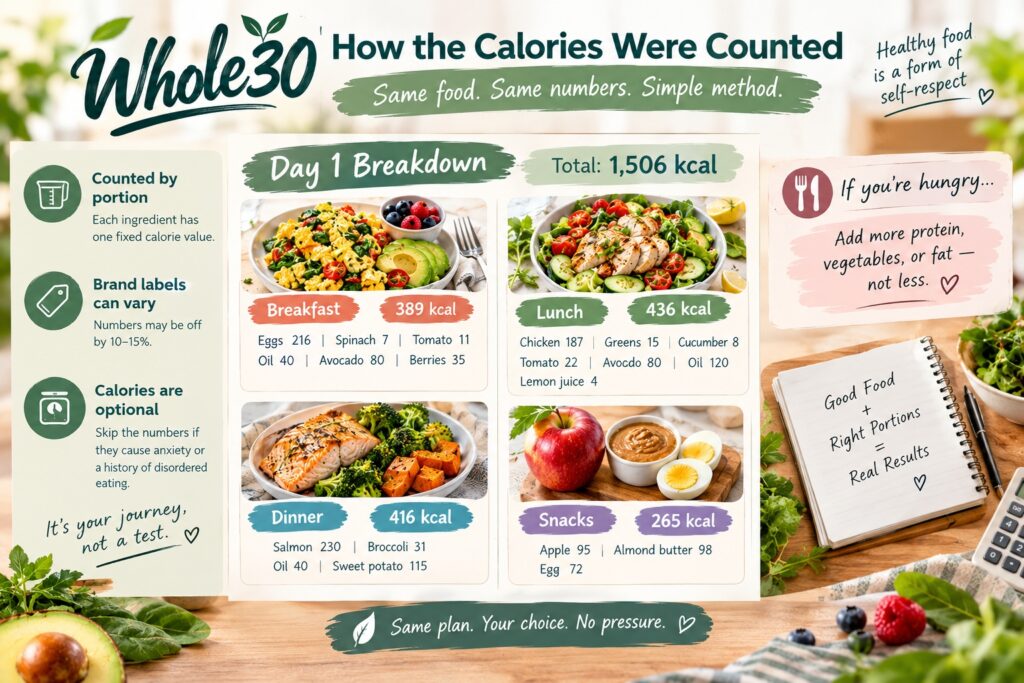
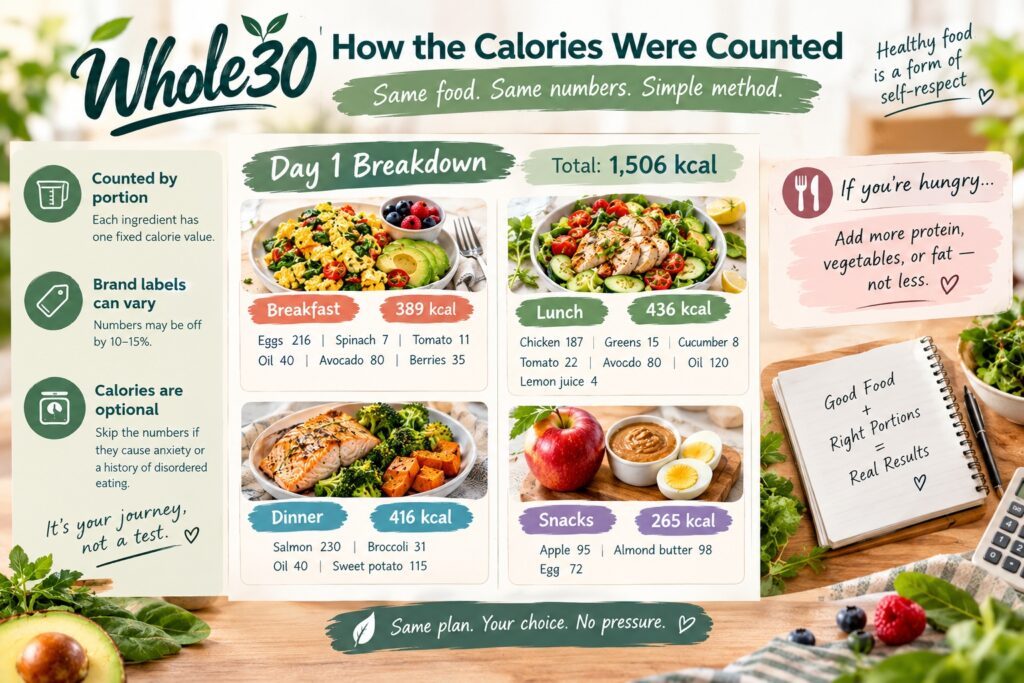
- Every ingredient was counted by portion, using one fixed calorie value per ingredient so the same food always has the same number everywhere in this Whole30 diet plan
- Brand labels differ, so treat each number as an estimate that can be off by 10 to 15 percent
- Here is Day 1 broken down so you can check the method:
- Breakfast: eggs 216 + spinach 7 + tomato 11 + oil 40 + avocado 80 + berries 35 = 389
- Lunch: chicken 187 + greens 15 + cucumber 8 + tomato 22 + avocado 80 + oil 120 + lemon juice 4 = 436
- Dinner: salmon 230 + broccoli 31 + oil 40 + sweet potato 115 = 416
- Snacks: apple 95 + almond butter 98 + egg 72 = 265
- Day 1 total: 1,506
- The scale rule applies to your body, and counting calories is optional, so skip the numbers if tracking makes you anxious or if you have a history of disordered eating
- If you feel hungry on this Whole30 meal plan, add more protein, vegetables, or fat instead of eating less
My Week on This Whole30 Diet Meal Plan
- I followed this Whole30 meal plan as written, and because every meal used only compliant ingredients, checking whether something was allowed took very little time.
- I did the shopping in one trip using the list below, and I read the labels on the bacon, broth, salsa, and marinara in the store, since those are where added sugar shows up most.
- Cooking the sweet potatoes and hard-boiled eggs in batches on the first day made breakfasts and snacks much quicker.
- The sheet-pan chicken thighs on Day 6 doubled as lunch on Day 7, which cut cooking time and food waste.
- Having a written plan made me less likely to reach for convenience food by midweek, which was the biggest change in how the week felt.
- Counting each portion helped me see how my usual plate compares with the plan, and my own daily calories landed close to the plan’s average of about 1,470.
- I stayed off the scale, as the program asks, and paid attention to how the meals felt instead.
- Your numbers will differ with portion sizes and brands, so use this as one example and not a target.
Whole30 Diet Plan Shopping List: Protein, Produce, Fat
- Protein: eggs, chicken breast, chicken thighs, ground turkey, sirloin, salmon, cod, shrimp, canned tuna, and sugar-free bacon
- Produce: spinach, mixed greens, romaine, kale, broccoli, Brussels sprouts, asparagus, zucchini, bell peppers, mushrooms, carrots, celery, cucumbers, tomatoes, sweet potatoes, potatoes, spaghetti squash, apples, bananas, oranges, berries, avocados, and lemons
- Fats and nuts: olive oil, ghee, coconut oil, almonds, walnuts, cashews, and almond butter with no added sugar
- Pantry: compliant broth, marinara and salsa without sugar, coconut aminos, compliant mayo, garlic, ginger, and spices
- Frozen vegetables and canned fish keep this diet plan affordable without changing any of the rules
- This list covers the meal plan for diet days above, with a little left over for snacks
- A simple list like this suits Whole30 diet for beginners who are cooking more often than usual
After Day 30: How Reintroduction Works

- Reintroduction usually takes 10 days or more, and you add back one food group at a time
- Return to the elimination rules for two to three days between each group, so you can tell which one caused any change
- Common groups to test include legumes, non-gluten grains, dairy, and gluten-containing grains
- Keep a simple Whole30 diet meal plan running between tests, so the only thing changing is the food group you are testing
- Eat a meaningful portion of the group you are testing, and note your digestion, energy, mood, and cravings
- Your own results, not the program itself, decide what ends up back on your plate
Is the Whole30 Diet Worth It? Pros and Cons
| Possible Pros | Possible Cons |
| Gives you a clear, structured 30-day reset | Strict rules can feel isolating at social events |
| Encourages home cooking from a simple Whole30 meal plan, plus label reading | Skips whole food groups, including beans and whole grains, that many people tolerate well |
| Reintroduction can show which foods affect you | Research on the program itself is limited |
| No calorie counting required | Can feel expensive and time-consuming |
- It may be worth trying if you want a short, structured reset and can commit to cooking most meals
- It may not be a good fit if you dislike strict rules, eat out often, or tend to get anxious about food
- Many dietitians suggest a less restrictive approach for long-term eating, so think of it as a short experiment
How Whole30 Compares With Other Plans
| Plan | Main Difference From Whole30 |
| Keto | Keto is low carb and allows dairy, while Whole30 is not low carb and skips dairy |
| Mediterranean | Includes whole grains, beans, and dairy, which Whole30 removes |
| Flexitarian | Mostly plants with room for grains and legumes, so it is far less strict |
| Plant-based | Leans on beans, soy, and grains, which are skipped during Whole30 |
- If you like the idea of fewer rules, the Mediterranean meal plan and the flexitarian diet plan are gentler options
- If your main interest is cutting carbs, the keto meal plan covers that style in detail
- If you eat mostly plants, the plant-based diet meal plan shows how to cover protein without meat, though it relies on foods Whole30 skips
5 Mistakes That Derail Whole30 for Beginners
- Skipping the prep week: without a written Whole30 diet plan, convenience foods creep back in by Day 4
- Eating too little: very small meals leave you hungry, so build each plate from Whole30 foods: protein, vegetables, and a natural fat
- Recreating treats: the pancake rule exists because compliant versions of sweets keep the cravings alive
- Ignoring labels: one sauce with added sugar can break the diet rules without you noticing
- Treating Day 31 as a free-for-all: the reintroduction phase is where the information comes from, so follow it step by step
Key Takeaways
- Whole30 is a 30-day elimination program followed by a reintroduction phase, not a permanent diet
- The Whole30 diet rules skip added sugar, alcohol, grains, legumes, and dairy, plus the pancake and scale rules
- Whole30 foods center on meat, seafood, eggs, vegetables, fruit, and natural fats
- This 7-day Whole30 meal plan averages about 1,470 calories a day as written, and the calories are estimates, not targets
- Whole30 for beginners goes best with a prep week, a written meal plan for Whole30 days, and backup meals
- Whether it is worth it depends on your goals, your schedule, and how you feel about strict rules
FAQ
How long is the Whole30 diet plan?
- The elimination phase lasts 30 days, followed by at least 10 days of reintroduction
- Most people count the whole process as roughly six weeks
Can you lose weight on a Whole30 meal plan?
- Some people lose weight because they cook more at home and cut sugar and processed food
- The program itself is not designed as a weight-loss plan, and it asks you to skip the scale during the 30 days
Is the Whole30 diet plan safe for everyone?
- No, it is not right for everyone, especially people who are pregnant, take medication, or have a history of disordered eating
- Talk to a doctor or dietitian before starting a restrictive plan
Is a Whole30 diet meal plan high in protein?
- It can be, since meat, seafood, and eggs are the main protein sources
- If protein is your main goal, the high protein low carb diet guide shows how to portion it
Can I combine Whole30 with intermittent fasting?
- Some people do, though stacking two restrictive approaches can be hard to sustain
- Try one change at a time, and the intermittent fasting meal plan explains how to start fasting gently
Does Whole30 help with blood pressure?
- The program is not designed for blood pressure, and it does not set sodium targets
- If blood pressure is your main concern, the DASH meal plan is built around that goal
Conclusion
Whole30 is best treated as a short, structured experiment. Read the Whole30 diet rules once, prep your week, use the meal plan for Whole30 for beginners above as a template, and treat reintroduction as the part that teaches you something. Whole30 for beginners goes best when you plan ahead and keep the Whole30 foods simple. Whether it is worth it depends on your goals and how you feel about strict rules.
For more beginner-friendly guides, visit the Healthy Diet Plans pillar guide, or browse the Diet Plans and Meal Plan categories on thedailycrave.online.