
Table of Contents
Starting keto is exciting ,until the keto flu symptoms hit. Around day 2 or 3 of cutting carbs, many beginners suddenly feel like they’re coming down with something: headache, fatigue, brain fog, irritability, and muscle cramps that seem to come out of nowhere. If this sounds familiar, you haven’t actually caught the flu. What you’re experiencing is a completely normal part of your body’s transition into fat-burning mode.
Keto flu symptoms are one of the most commonly reported challenges among beginners ,and one of the most common reasons people quit keto before it starts working. That’s the frustrating irony: the symptoms appear right when your body is on the verge of entering ketosis. Quitting at day 3 or 4 means abandoning the diet just before the benefits begin.
The good news? Keto flu symptoms are almost entirely preventable with the right preparation. In this guide, you’ll learn exactly what causes them, what each symptom means, how long they last, and ,most importantly ,the specific strategies that eliminate or dramatically reduce the discomfort so you can get through the first week and start experiencing the results keto is actually known for.
1. What Is Keto Flu ,And Why Does It Happen?
Keto flu is the informal term for a collection of symptoms that many people experience in the first 2–7 days of starting a ketogenic diet. It’s not a real flu ,there’s no virus involved. It’s your body’s physiological response to a sudden, dramatic reduction in carbohydrate intake.
Here’s what’s happening biologically:
Your Body Is Depleting Glycogen
When you cut carbs to under 20–50g per day, your body burns through its glycogen stores (stored carbohydrate energy in your liver and muscles) within 24–72 hours. This is actually what you want ,it’s the first step toward ketosis.
But glycogen holds water. Every gram of glycogen is stored with approximately 3–4 grams of water. As glycogen depletes, that water is excreted through urine. Along with the water go critical electrolytes ,sodium, potassium, and magnesium. This electrolyte loss is the primary driver of keto flu symptoms.
Your Kidneys Are Excreting More Sodium
Carbohydrate restriction lowers insulin levels. Lower insulin signals the kidneys to excrete more sodium. As sodium leaves the body, potassium and magnesium follow. This triple electrolyte drop causes the majority of symptoms of keto flu ,particularly headaches, muscle cramps, and fatigue.
Your Brain Is Switching Fuel Sources
Your brain has been running on glucose for your entire life. Switching to ketones as the primary fuel source takes days to weeks. During this transition, the brain runs less efficiently than normal ,which is why brain fog and difficulty concentrating are classic keto flu symptoms in the early days.
2. Keto Flu Symptoms: The Complete List
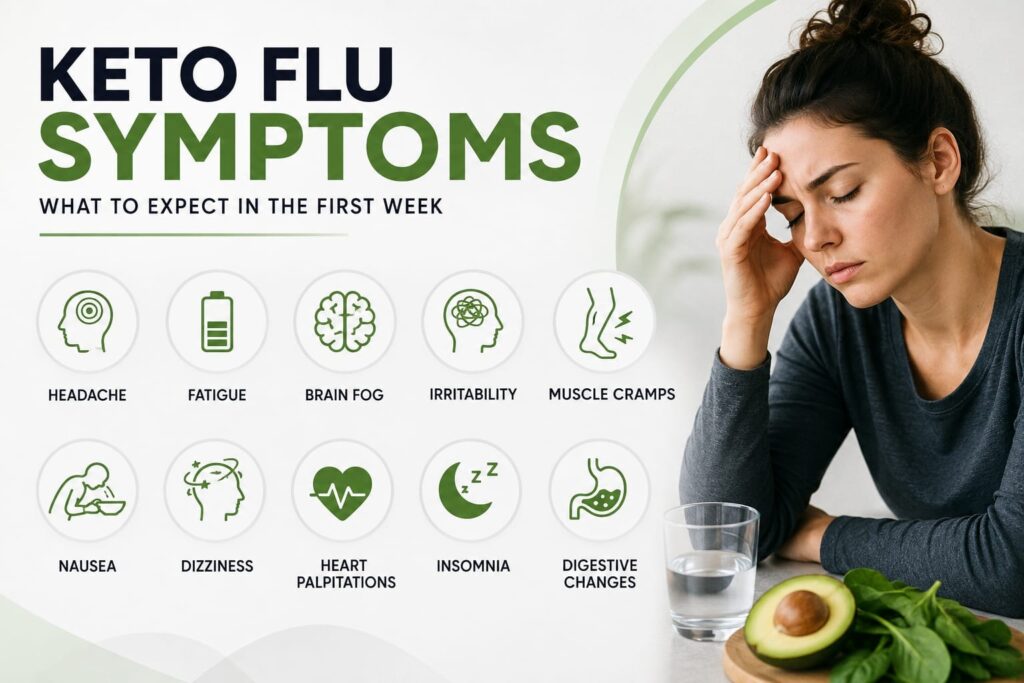
Here are all the keto flu symptoms you may experience, along with the specific mechanism behind each one:
1. Headache
Most common keto flu symptom. Directly caused by sodium loss and dehydration. When electrolytes drop, blood vessels dilate ,creating the characteristic keto headache that typically sits at the temples or back of the head.
2. Fatigue and Low Energy
Your body is simultaneously depleting glycogen and not yet efficiently producing ketones. This energy “gap” creates genuine physical tiredness ,not laziness, but a real metabolic transition period. One of the most reported symptoms of keto.
3. Brain Fog and Difficulty Concentrating
The brain’s preferred fuel (glucose) is being withdrawn before ketones are fully available. This temporary mismatch creates the mental cloudiness, slow thinking, and difficulty focusing that many beginners experience.
4. Irritability and Mood Changes
Blood sugar instability during the transition period, combined with fatigue and discomfort, commonly causes irritability and low mood. This is a true physiological effect ,not just impatience. A well-recognized symptom of keto side effects in week one.
5. Muscle Cramps
Magnesium and potassium depletion cause muscles to contract involuntarily. Leg cramps at night are particularly common keto flu symptoms ,often appearing on days 3–5. They’re uncomfortable but immediately responsive to electrolyte replacement.
6. Nausea
Some beginners experience mild nausea during the first few days of keto, particularly if fat intake increases dramatically all at once. The digestive system needs a short adjustment period to ramp up bile production for higher fat digestion.
7. Dizziness and Lightheadedness
Standing up quickly may cause a brief dizzy spell during the keto flu period ,caused by lower blood pressure from sodium loss and reduced blood volume from water excretion.
8. Heart Palpitations
A rapid or irregular heartbeat is occasionally reported during keto adaptation. This is most often caused by low electrolytes ,particularly potassium and magnesium ,affecting cardiac muscle function. If palpitations are severe or persistent, consult a doctor.
9. Insomnia and Sleep Disruption
Some people experience difficulty falling asleep or staying asleep in the first week of keto. This is caused by changes in cortisol and the stimulatory effect of ketone production beginning. Most people find sleep actually improves significantly by week 2.
10. Digestive Changes
Both constipation and diarrhea are reported as Keto Flu Symptoms side effects in week one. Constipation is more common and is caused by reduced fiber intake (from eliminating grains and legumes) and dehydration. Diarrhea occasionally occurs when fat intake increases sharply.
3. How Long Do Keto Flu Symptoms Last?
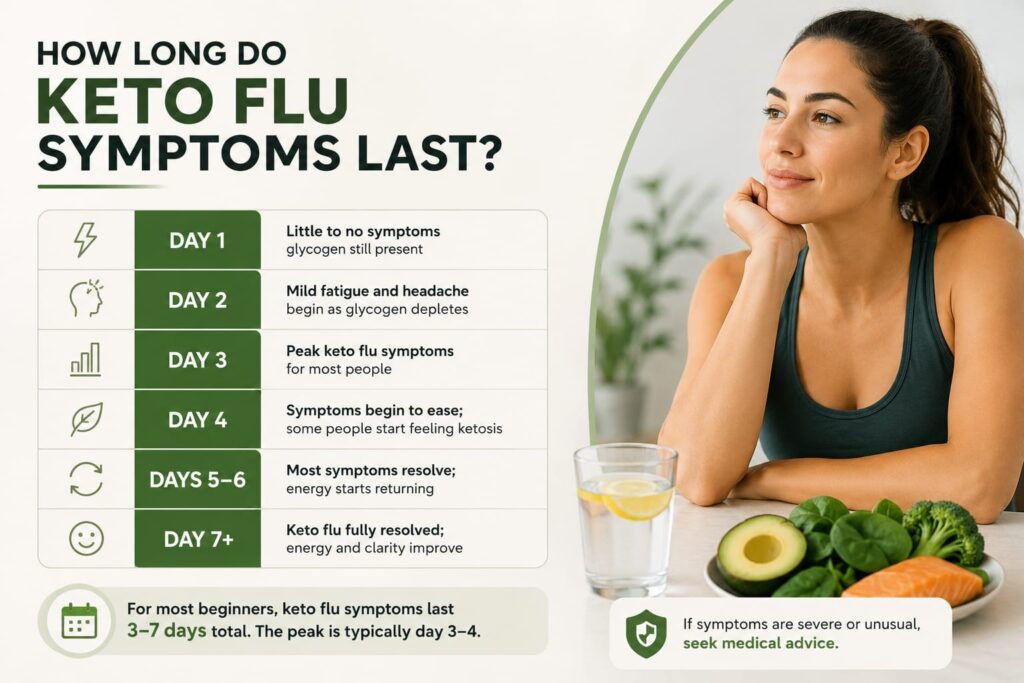
This is the most important question for anyone suffering through symptoms of keto flu ,and the answer is genuinely reassuring.
The Typical Timeline
| Day | What Usually Happens |
| Day 1 | Little to no symptoms ,glycogen still present |
| Day 2 | Mild fatigue and headache begin as glycogen depletes |
| Day 3 | Peak keto flu symptoms for most people |
| Day 4 | Symptoms begin to ease; some people start feeling ketosis |
| Day 5–6 | Most symptoms resolve; energy starts returning |
| Day 7+ | Keto flu fully resolved; energy and clarity improve |
For most beginners, keto flu symptoms last 3–7 days total. The peak is typically day 3–4.
A small number of people ,particularly those with lower baseline electrolyte intake or higher stress levels ,may experience symptoms for up to 10–14 days. For these individuals, the electrolyte and lifestyle strategies in this guide are especially critical.
One important note: If symptoms are severe, include chest pain, heart palpitations that don’t resolve, or extreme weakness, see a doctor. Keto flu is uncomfortable but shouldn’t be dangerous. Severe symptoms may indicate something beyond normal adaptation.
4. How to Prevent and Minimize Keto Flu Symptoms
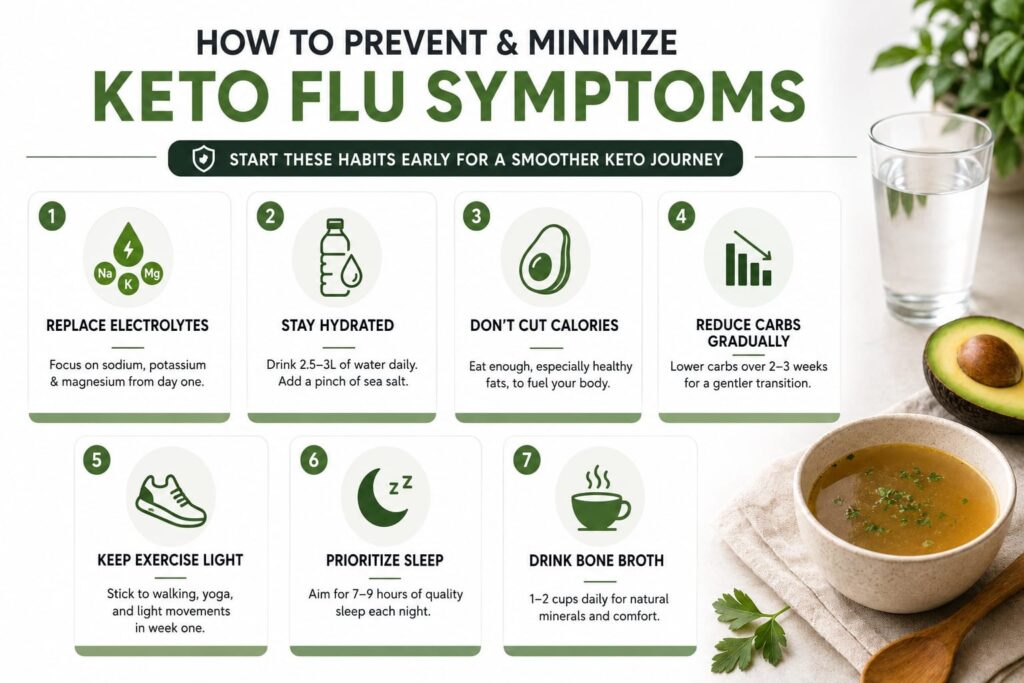
Here’s the part that changes everything: kelu to fsymptoms are largely preventable. The strategies below, implemented before symptoms appear, dramatically reduce or eliminate the keto flu experience for most people.
Strategy 1: Aggressively Replace Electrolytes ,Starting on Day 1
This is the single most important intervention for keto flu prevention. Don’t wait until symptoms appear. Start replacing electrolytes on your first day of keto.
Sodium (target: 3,000–5,000mg daily on keto):
- Add ½–1 tsp of Himalayan pink salt or sea salt to your morning water
- Salt your food generously at every meal
- Drink 1–2 cups of low-sodium bone broth daily (contains natural sodium + other minerals)
Potassium (target: 3,500–4,700mg daily):
- Eat half an avocado daily (approximately 485mg potassium)
- Include leafy greens (spinach, kale) at every meal
- Consider No-Salt (potassium chloride) ,¼ tsp provides approximately 650mg potassium
Magnesium (target: 300–400mg daily):
- Take 200–400mg magnesium glycinate or magnesium malate at bedtime
- Eat pumpkin seeds, almonds, and dark leafy greens regularly
- Avoid magnesium oxide ,poor absorption, most supplements contain it
Strategy 2: Drink More Water Than You Think You Need
Dehydration is a significant driver of keto flu symptoms ,especially headaches and dizziness. Aim for 2.5–3 liters of water per day when starting keto. More if you exercise.
Add a pinch of sea salt to your water for better cellular absorption ,plain water without electrolytes can actually worsen electrolyte imbalance by diluting sodium further.
Strategy 3: Don’t Cut Calories in Week One
Combining a dramatic carb cut with a severe calorie restriction is the fastest way to intensify symptoms of keto flu. In your first week of keto, eat enough ,particularly enough fat ,to feel satisfied.
Fat is now your fuel. Eating too little fat while carbs are restricted leaves your body with no reliable energy source, amplifying fatigue and brain fog dramatically. Once you’re past the adaptation phase (week 2+), calorie adjustment is easier.
Strategy 4: Reduce Carbs Gradually (If Prone to Severe Symptoms)
If you’ve started strict keto before and had very intense keto flu, consider a 2-week gradual reduction:
- Week 1: Reduce to 100g net carbs daily (cut out sugar, processed foods, refined grains)
- Week 2: Reduce to 50g net carbs daily
- Week 3: Reduce to 20–25g net carbs (full keto)
This gentler transition reduces the shock to your system while still moving toward ketosis. The keto flu symptoms with this approach are typically mild.
Strategy 5: Keep Exercise Light in Week One
Intense exercise during keto flu significantly worsens symptoms ,it depletes electrolytes further and demands fuel your body hasn’t learned to efficiently provide yet.
Stick to:
- Walking (30–45 minutes daily ,ideal for keto adaptation)
- Gentle yoga or stretching
- Light bodyweight movements
Avoid intense cardio, heavy lifting, or HIIT until week 2 or 3 when you’re past the keto flu phase and starting to feel your energy return.
Strategy 6: Prioritize Sleep
Sleep is when your body does most of its metabolic adaptation. Poor sleep during the keto transition extends and worsens keto side effects by elevating cortisol and disrupting recovery.
- Aim for 7–9 hours per night
- Take magnesium glycinate at bedtime ,it improves sleep quality and reduces nighttime muscle cramps
- Keep the bedroom cool and dark
- Avoid screens 30–60 minutes before bed
Strategy 7: Drink Bone Broth Daily
Bone broth is one of the most underrated tools for managing symptoms of keto flu. A single cup of bone broth provides:
- Natural sodium (crucial for electrolyte balance)
- Potassium and magnesium
- Collagen and amino acids that support gut and joint health
- Warmth and comfort that makes the first week feel more manageable
Drink 1–2 cups per day during your first week. Heat it like tea, add a pinch of sea salt, and sip slowly. It’s one of the most soothing interventions for keto flu symptoms available.
5. Keto Side Effects Beyond the First Week
The keto flu is a short-term phenomenon. But there are a few keto side effects that can appear beyond the first week if the diet isn’t well-managed.
Bad Breath (Keto Breath)
A sweet, fruity, or slightly metallic breath odor is common as ketone production increases. Specifically, acetone ,one of the three main ketone bodies ,is exhaled through the lungs. This is actually a sign that ketosis is working.
Management: Stay well-hydrated, maintain dental hygiene, and know that keto breath typically diminishes as your body becomes more efficient at using ketones (usually by week 3–4).
Constipation
Reduced fiber intake from eliminating grains and legumes can slow digestion. This keto side effect persists beyond week one for some people.
Management:
- Include abundant non-starchy vegetables at every meal
- Add 1–2 tbsp ground flaxseed to daily meals (adds fiber + phytoestrogens)
- Drink adequate water (2.5–3 liters daily)
- Consider a magnesium supplement (promotes bowel motility)
Hair Thinning (Temporary)
Some people experience temporary hair shedding 2–4 months into keto ,a phenomenon called telogen effluvium. It’s triggered by the stress of rapid dietary change and calorie restriction, not by keto itself specifically.
Management: Ensure adequate calorie and protein intake (not too low on either). Hair typically regrows fully within 3–6 months as the body adapts.
Changes in Cholesterol
Some people see changes in cholesterol levels on keto ,typically HDL (good cholesterol) increases and triglycerides decrease, which are both positive. LDL changes vary between individuals. Annual bloodwork is recommended for long-term keto followers.
Increased Urination
The diuretic effect of carb restriction and lower insulin causes significantly increased urination, especially in weeks 1–3. This is normal and expected ,it’s how water weight is lost and why electrolyte replacement is so critical.
6. Keto Flu Symptoms vs Real Illness: How to Tell the Difference
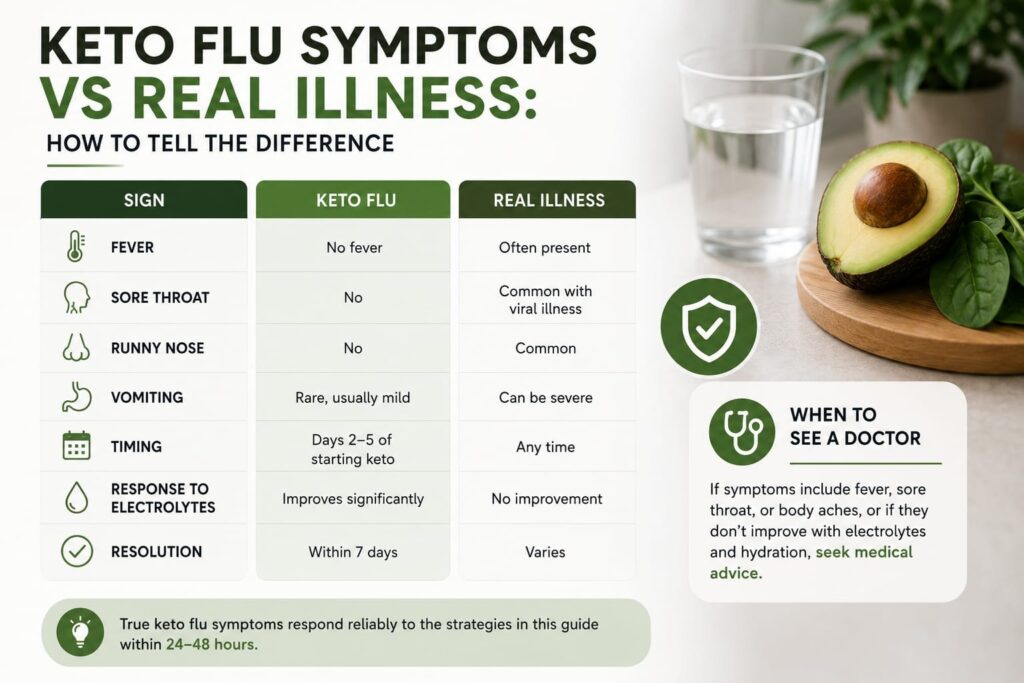
Because symptoms of keto flu genuinely resemble being sick, many beginners aren’t sure whether they have keto flu or an actual illness. Here’s how to tell:
| Sign | Keto Flu | Real Illness |
| Fever | No fever | Often present |
| Sore throat | No | Common with viral illness |
| Runny nose | No | Common |
| Vomiting | Rare, usually mild | Can be severe |
| Timing | Days 2–5 of starting keto | Any time |
| Response to electrolytes | Improves significantly | No improvement |
| Resolution | Within 7 days | Varies |
If symptoms include fever, sore throat, or body aches ,or if they don’t improve with electrolyte replacement and hydration ,see a doctor. True keto flu symptoms respond reliably to the strategies in this guide within 24–48 hours.
Key Takeaways
- Keto flu symptoms are caused primarily by electrolyte loss (sodium, potassium, magnesium) as glycogen is depleted and insulin drops at the start of a ketogenic diet
- The most common symptoms of keto flu include headache, fatigue, brain fog, muscle cramps, irritability, dizziness, nausea, and insomnia
- Keto flu typically peaks on days 3–4 and fully resolves within 5–7 days for most people
- Keto flu symptoms are largely preventable ,aggressive electrolyte replacement starting on day 1 is the single most important intervention
- Drink 2.5–3 liters of water daily, salt your food generously, eat avocados, take magnesium glycinate at bedtime, and drink bone broth during week one
- Don’t cut calories severely in week one ,eating enough fat prevents the energy gap that intensifies symptoms of keto
- Keep exercise light during the keto flu period ,walking and gentle movement are ideal until adaptation is complete
- Beyond the first week, keto side effects like constipation, keto breath, and temporary hair thinning are manageable with targeted strategies
- Quitting during keto flu means abandoning the diet right before ketosis begins ,persistence through days 3–5 is what separates people who experience keto’s benefits from those who never do
Conclusion: Push Through the Keto Flu Symptoms ,The Other Side Is Worth It
Keto flu symptoms are temporary. Ketosis is permanent ,as long as you maintain the diet. The discomfort of days 2–5 is real, but it’s the body doing exactly what it should: depleting glucose stores, dropping insulin, and preparing to become a fat-burning machine.
With proper electrolyte management, adequate hydration, enough dietary fat, and light movement, most people get through keto flu with minimal disruption. Some barely notice it at all. What comes after ,reduced hunger, sustained energy, mental clarity, and real fat loss ,makes those early days completely worthwhile.
For the complete beginner’s foundation on starting keto correctly ,including week-by-week plans, food lists, and what to expect ,visit the full pillar guide: Keto Diet Plan: How to Start, Eat & Succeed on Keto
Explore more free keto guides, meal plans, and nutrition articles at thedailycrave.online ,your go-to resource for everything keto and healthy living.
Frequently Asked Questions (FAQ)
Q1: How long do keto flu symptoms last?
For most people, keto flu symptoms last between 3–7 days, with day 3–4 typically being the peak. A small number of people experience milder symptoms for up to 2 weeks. Symptoms of keto flu almost always resolve completely by the end of week two. Aggressive electrolyte replacement and adequate hydration can shorten the duration significantly ,sometimes to just 1–2 days.
Q2: What are the worst keto flu symptoms?
The most intense keto flu symptoms are typically severe headache, extreme fatigue, and muscle cramps. These are also the symptoms most directly responsive to electrolyte treatment. Adding sodium (salted water, bone broth), potassium (avocado, No-Salt), and magnesium glycinate typically resolves the worst symptoms of keto within 24–48 hours.
Q3: Can I prevent keto flu completely?
Complete prevention is possible for many people. Starting electrolyte supplementation ,especially sodium, potassium, and magnesium ,before keto flu symptoms appear is the most effective prevention strategy. Gradual carb reduction over 2–3 weeks instead of cutting to 20g overnight also dramatically reduces or eliminates keto side effects for most people.
Q4: Should I quit keto if keto flu symptoms are severe?
Only if symptoms are genuinely alarming (chest pain, severe vomiting, extreme weakness that doesn’t improve with electrolytes) should you stop and see a doctor. For typical keto flu discomfort ,headache, fatigue, brain fog, muscle cramps ,the recommendation is to push through with aggressive electrolyte support. Quitting during symptoms of keto flu means stopping right before ketosis begins and the real benefits emerge.
Q5: Is keto flu the same as keto side effects long-term?
No ,keto flu is a short-term adaptation phenomenon specific to the first 1–2 weeks. Long-term keto side effects are different: they can include keto breath, constipation, temporary hair thinning, and changes in cholesterol levels. These are manageable with proper diet planning and hydration. The good news is that many long-term symptoms of keto improve significantly as the body becomes fully fat-adapted, usually by weeks 4–6.