Table of Contents
If you’ve ever started a Monday with great intentions and ended Thursday eating takeout because nothing was planned , you already know the value of weekly meal plans. Not as a form of dietary restriction, but as a practical system. When you know what you’re eating before hunger makes the decision for you, you consistently eat better, spend less money on food, and waste far less time standing in front of the fridge at 6pm.
Weekly meal plans look different depending on your goal. Someone managing blood sugar needs a completely different approach from someone trying to build muscle, lose weight, or simply eat cleaner. That’s what makes a single “here’s what to eat” meal plan unhelpful for most people , the calorie target, macronutrient ratios, and food choices all shift depending on what you’re actually trying to achieve.
This guide is the starting point for all of it. You’ll find a clear explanation of how to choose and structure a weekly meal plans for your specific goal, a practical overview of every major meal plan type we cover at The Daily Crave, a universal meal plan template you can adapt to any approach, and the core habits that make any meal planning system actually stick.
1. Why Weekly Meal Plans Work (and Why Most People Abandon Them)
Before the plans themselves, it’s worth understanding why meal planning succeeds or fails. Because most people who’ve tried it have also quit it , and understanding why helps you avoid the same patterns.
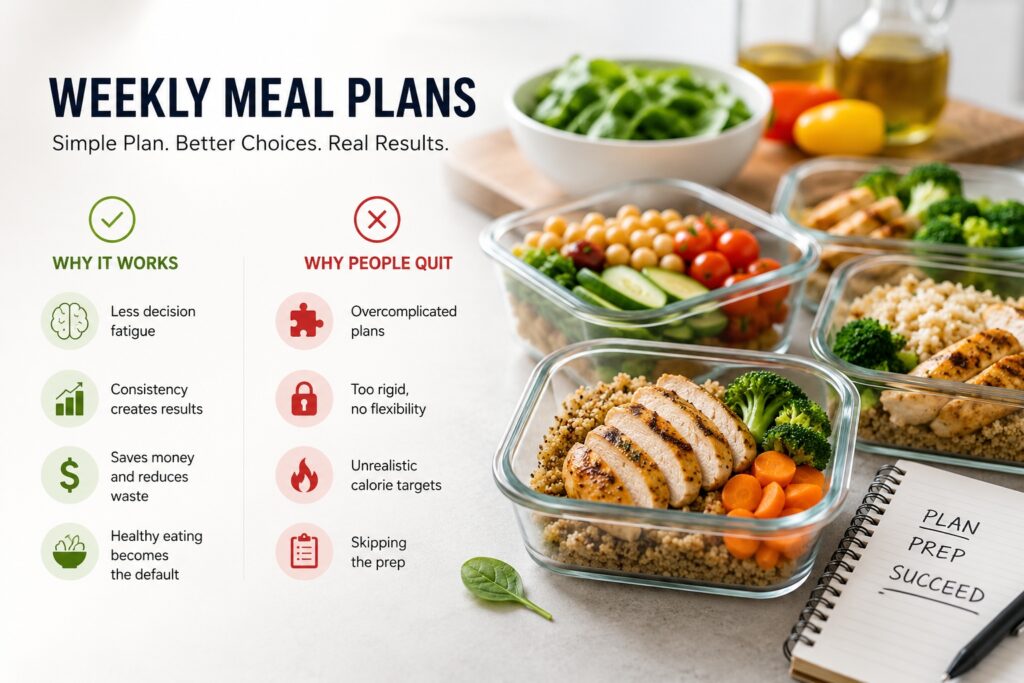
Why Weekly Meal Plans Works
Meal plans for the week reduce decision fatigue. Every food decision you make takes mental energy. By making those decisions once on Sunday rather than six times a day throughout the week, you remove the friction that leads to impulsive choices.
Planning creates a consistent calorie and nutrition structure. Whether you’re following a 1500 calorie meal plan, a high-protein approach, or a clean eating framework, consistency across days and weeks is what produces results , not a perfect Monday followed by an unplanned Thursday.
It reduces food waste and saves money. When you know exactly what you need for the week, you buy exactly that. No random fridge items going bad, no duplicate purchases, no three half-empty bags of spinach.
Weekly meal plans make healthy eating the default. When nutritious food is already prepped and accessible, you don’t need willpower , you just need to open the fridge.
Why People Stop
Overcomplication. Planning 21 different meals for the week with 21 different recipes is exhausting. The most sustainable weekly meal plans use 4–6 base ingredients rotated in different ways rather than a new dish for every single meal.
Rigidity. When a plan requires eating a specific dish at a specific time and life doesn’t cooperate, people feel like they’ve “failed” and abandon the whole approach. Good meal planning builds in flexibility.
Unrealistic calorie targets. A 1,200-calorie plan sounds like it should produce results faster , but if it leaves you hungry and miserable, you’ll quit by day three. Sustainable results come from plans you can actually follow.
Not doing the prep. A written weekly meal plans that hasn’t been shopped for and cooked is just a good intention. The prep step is non-negotiable.
2. How to Choose the Right Weekly Meal Plans for Your Goal
The right weekly meal plan depends on what you’re trying to achieve, your starting point, and how much time you realistically have for cooking. Here’s how to match plan type to goal.
Goal: Lose Weight Steadily
A diet plan for weight loss works by creating a consistent calorie deficit , eating somewhat less than your body burns. The most common starting points:
1,200 calorie meal plan (women): A significant deficit for most women. Produces relatively fast results but requires careful protein prioritization to prevent muscle loss and hunger. Best for shorter-term use or under medical supervision.
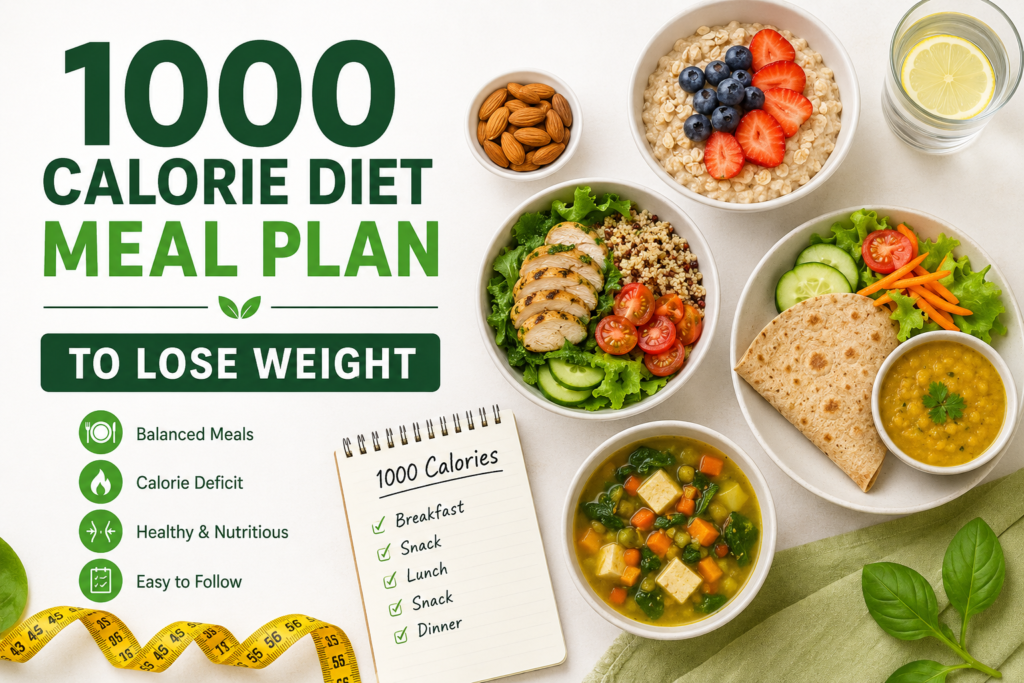
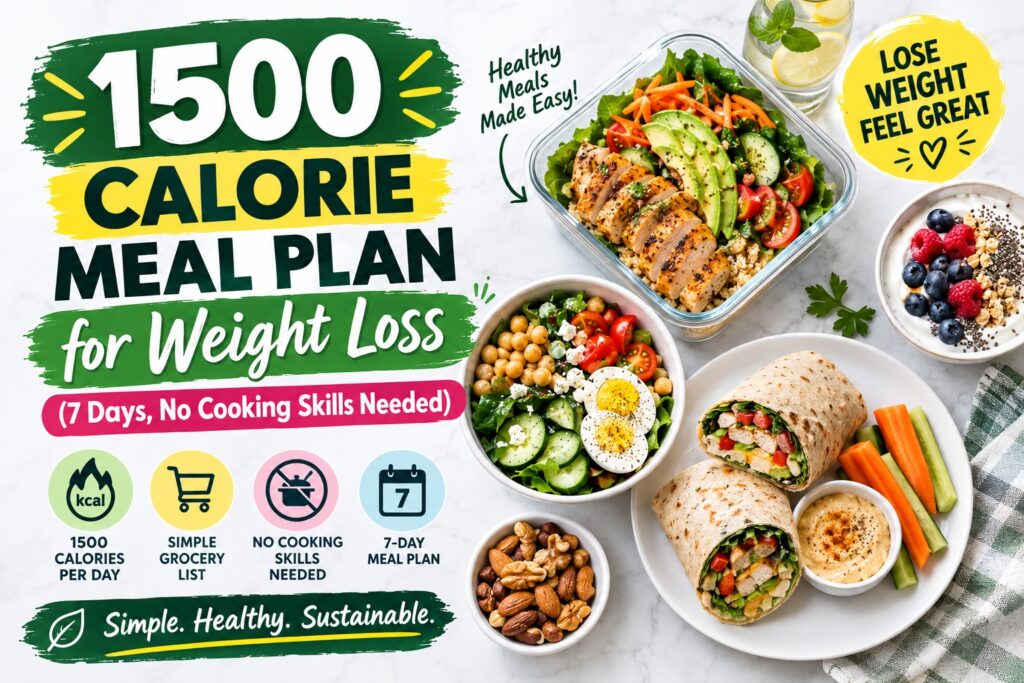
1,500 calorie meal plan: The most commonly recommended starting point for women pursuing moderate, sustainable weight loss. Creates a meaningful deficit for most people without extreme restriction.
1,800–2,000 calories for men: A moderate deficit for most active men. Allows for satisfying meals while supporting steady fat loss.
Goal: Build Muscle or Body Recomposition
Building muscle while managing body fat requires a different approach: adequate protein (typically 1–1.2g per pound of body weight), a moderate calorie surplus or maintenance intake, and timing protein intake around training.
A weekly meal plans for this goal looks nothing like a weight loss plan in terms of food volume, protein priority, and meal timing. Carbohydrates play a much larger role, particularly around training sessions.
Goal: Clean Eating and Whole Foods
A clean eating meal plan isn’t defined by a specific calorie number , it’s defined by food quality. Whole, minimally processed foods replace refined and packaged ones. The focus is on what you add (vegetables, lean protein, whole grains, legumes, healthy fats) rather than what you subtract.
For many people, simply shifting to a clean eating meal plan produces meaningful weight loss without calorie counting , because whole foods are naturally more filling per calorie than processed alternatives.
Goal: Hitting Specific Macros
A macro meal plan is for people who want to track protein, carbohydrate, and fat ratios specifically , either for body composition goals, athletic performance, or metabolic health. This approach requires more planning and tracking but offers the most precise control over nutrition outcomes.
Goal: Managing a Health Condition
Several health conditions benefit from specifically designed weekly meal plans:
- Diabetes: A diabetic-friendly meal plan prioritizes blood sugar stability through low-glycemic carbohydrates, consistent meal timing, and adequate fiber and protein.
- Heart health: A heart-healthy weekly meal plan reduces saturated fat, sodium, and processed foods while increasing omega-3 fatty acids, fiber, and plant-based proteins.
- Anti-inflammatory eating: Focuses on foods with anti-inflammatory properties (fatty fish, berries, leafy greens, olive oil, turmeric) while eliminating common dietary triggers.
3. The Universal Weekly Meal Plans Template
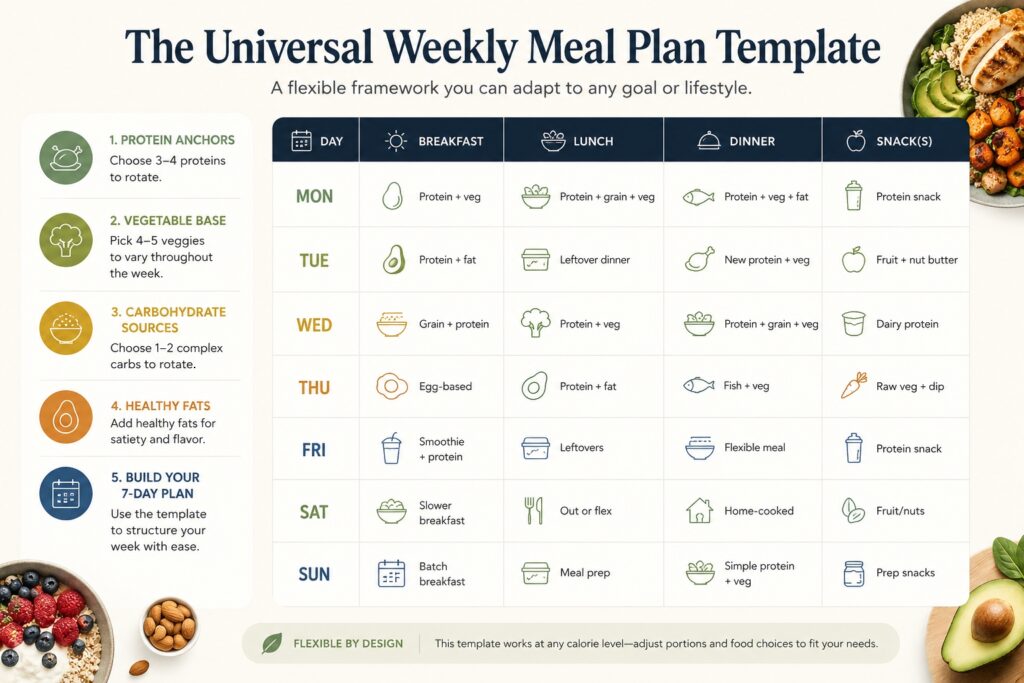
Regardless of your specific goal or calorie target, most effective weekly meal plans share the same underlying structure. Here is a meal plan template you can adapt to any approach.
The Weekly Meal Plans Template Framework
Step 1: Choose Your Protein Anchors for the Week Select 3–4 protein sources that will rotate through your meals. Examples: chicken breast/thighs, salmon, ground turkey, eggs, Greek yogurt, lentils, tofu.
Step 2: Choose Your Vegetable Base Select 4–5 vegetables that will appear throughout the week in different preparations. Examples: spinach, broccoli, zucchini, bell peppers, sweet potato, cauliflower.
Step 3: Choose Your Carbohydrate Sources 1–2 complex carbohydrates to rotate: brown rice, quinoa, oats, sweet potato, whole-grain bread, lentils.
Step 4: Choose Your Healthy Fats Avocado, olive oil, nuts, seeds , these add satiety and flavor without requiring daily decision-making.
Step 5: Build Your 7-Day Structure
| Day | Breakfast | Lunch | Dinner | Snack(s) |
| Monday | Protein + veg | Protein + grain + veg | Protein + veg + fat | Protein snack |
| Tuesday | Protein + fat | Leftover dinner | New protein + veg | Fruit + nut butter |
| Wednesday | Grain + protein | Protein + veg | Protein + grain + veg | Dairy protein |
| Thursday | Egg-based | Protein + fat | Fish + veg | Raw veg + dip |
| Friday | Smoothie + protein | Leftovers | Flexible meal | Protein snack |
| Saturday | Slower breakfast | Out or flex | Home-cooked | Fruit/nuts |
| Sunday | Batch breakfast | Meal prep | Simple protein + veg | Prep snacks |
This meal plan template works at any calorie level , you simply adjust portion sizes and specific food choices to hit your target. The structure stays consistent; the details flex.
4. What a Weekly Meal Plans Looks Like at Different Calorie Levels
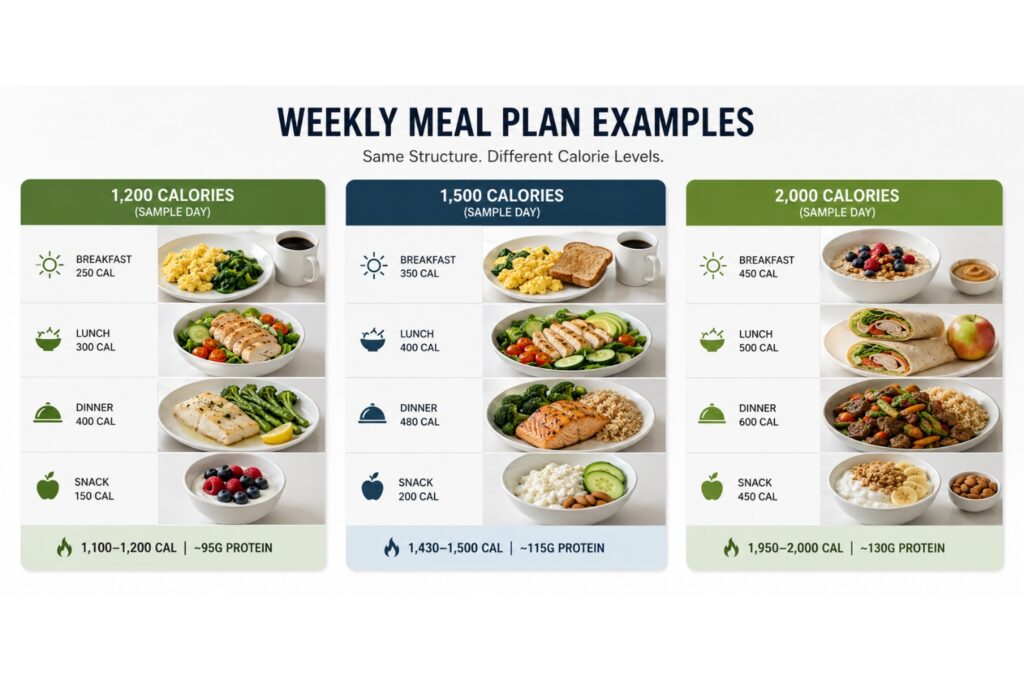
Seeing the same meal planning weekly menu framework applied at different calorie targets makes the concept more concrete.
1,200 Calorie Weekly Meal Plans (Sample Day)
Note: This calorie level is on the lower end and may not suit everyone. Consult a healthcare provider before following a very low-calorie plan.
Breakfast (250 cal): 2 scrambled eggs + 1 cup wilted spinach + black coffee
Lunch (300 cal): 3 oz grilled chicken breast + large mixed salad (romaine, cucumber, cherry tomatoes) + 1 tbsp olive oil dressing
Dinner (400 cal): 4 oz baked cod + 1.5 cups steamed broccoli and asparagus + lemon
Snack (150 cal): ¾ cup plain non-fat Greek yogurt + ½ cup berries
Total: ~1,100–1,200 cal | ~95g protein
1,500 Calorie Weekly Meal Plans (Sample Day)
The 1500 calorie meal plan is the most versatile starting point for moderate weight loss. It allows for satisfying portions while maintaining a meaningful calorie deficit.
Breakfast (350 cal): 3 eggs scrambled with spinach + 1 slice whole-grain toast + black coffee
Lunch (400 cal): Grilled chicken salad , 4 oz chicken, romaine, avocado (¼), cucumber, cherry tomatoes, olive oil-lemon dressing
Dinner (480 cal): Baked salmon (4 oz) + roasted broccoli + ½ cup brown rice + olive oil
Snack (200 cal): ½ cup cottage cheese + sliced cucumber + 10 almonds
Total: ~1,430–1,500 cal | ~115g protein
2,000 Calorie Weekly Meal Plans (Sample Day)
A 2,000 calorie weekly meal plan suits maintenance, moderate muscle building, or active individuals with higher energy needs.
Breakfast (450 cal): Overnight oats (½ cup oats + protein powder + almond milk + berries + almond butter)
Lunch (500 cal): Turkey and avocado wrap (whole-grain tortilla, 4 oz turkey, avocado, tomato, mustard) + apple
Dinner (600 cal): Lean beef stir-fry (5 oz beef + vegetables) + ¾ cup brown rice + sesame oil
Snacks (450 cal): Greek yogurt (¾ cup) + granola + banana + 1 oz nuts
Total: ~1,950–2,000 cal | ~130g protein
5. High-Protein Weekly Meal Plans
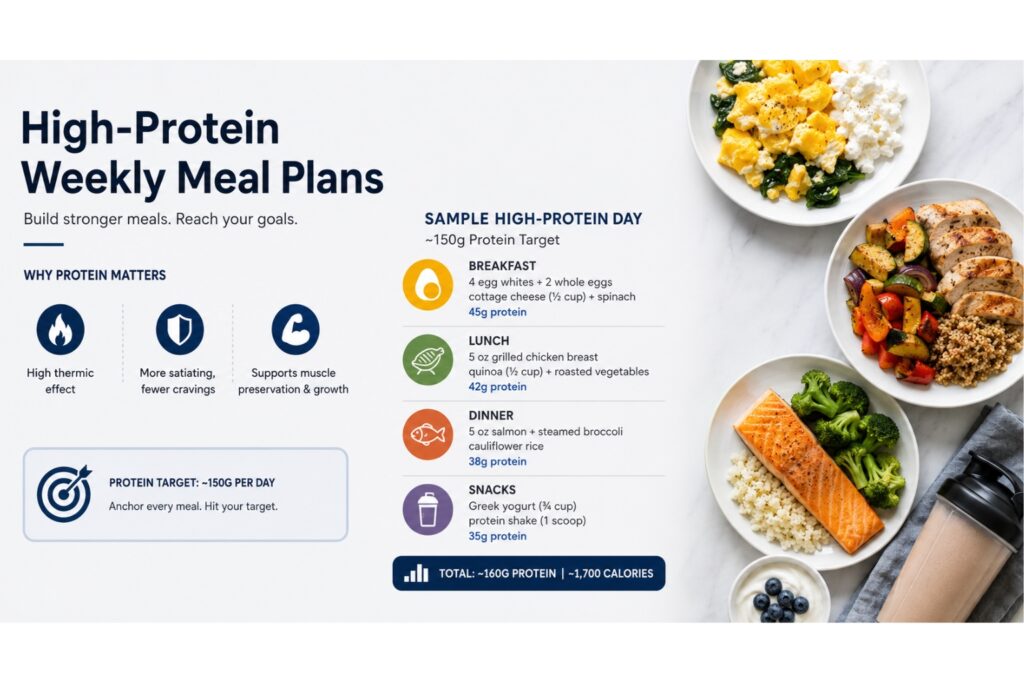
For many goals , weight loss, muscle building, athletic performance, aging well , high protein intake is a shared priority. A weekly meal plan built around 150g of daily protein looks different from a standard calorie-focused plan.
Why Protein Matters in Any Weekly Meal Plan
Protein has the highest thermic effect of any macronutrient , your body burns more calories processing it than it does carbohydrates or fat. It’s the most satiating macronutrient, meaning high-protein meal plans for the week tend to reduce overall calorie intake naturally. And it’s essential for muscle preservation during weight loss and muscle growth during surplus.
A high-protein weekly meal plan doesn’t mean abandoning carbohydrates or fat , it means ensuring protein anchors every meal and that total daily protein targets are consistently met.
Sample High-Protein Day (150g Protein Target)
Breakfast: 4 egg whites + 2 whole eggs scrambled + cottage cheese (½ cup) + spinach , 45g protein
Lunch: 5 oz grilled chicken breast + quinoa (½ cup) + roasted vegetables , 42g protein
Dinner: 5 oz salmon + steamed broccoli + cauliflower rice , 38g protein
Snacks: Greek yogurt (¾ cup) + protein shake (1 scoop) , 35g protein
Total: ~160g protein | ~1,700 calories
6. Clean Eating Weekly Meal Plans
A clean eating meal plan is defined less by specific numbers and more by food philosophy: whole, minimally processed foods in, refined and packaged foods out.
What Clean Eating Actually Means
“Clean eating” means different things to different people, which is why it can feel vague. For practical purposes, a clean eating meal plan typically includes:
In:
- Vegetables and fruits (whole, not juiced)
- Whole grains (oats, brown rice, quinoa, barley)
- Lean proteins (chicken, fish, eggs, legumes)
- Healthy fats (avocado, olive oil, nuts, seeds)
- Minimally processed dairy (Greek yogurt, cottage cheese)
- Herbs, spices, and real food condiments
Out (or significantly reduced):
- Packaged snacks and processed foods
- Refined sugar and sweetened drinks
- White flour and highly refined carbohydrates
- Fast food and fried foods
- Artificial additives, preservatives, and colorings
- Alcohol (or minimal amounts)
A clean eating meal plan doesn’t require calorie counting, though most people naturally eat fewer calories when the food environment shifts to whole foods. The structure stays the same: protein + vegetables + whole grain + healthy fat at most meals.
Sample Clean Eating Day
Breakfast: Steel-cut oats + 1 tbsp almond butter + mixed berries + a few walnuts
Lunch: Grilled chicken with roasted sweet potato and a large green salad with olive oil and lemon
Dinner: Baked salmon with roasted broccoli, asparagus, and quinoa
Snack: Apple with a small handful of almonds; plain Greek yogurt
No calorie counting required. Whole foods naturally.
7. Meal Planning for the Week: The Sunday System
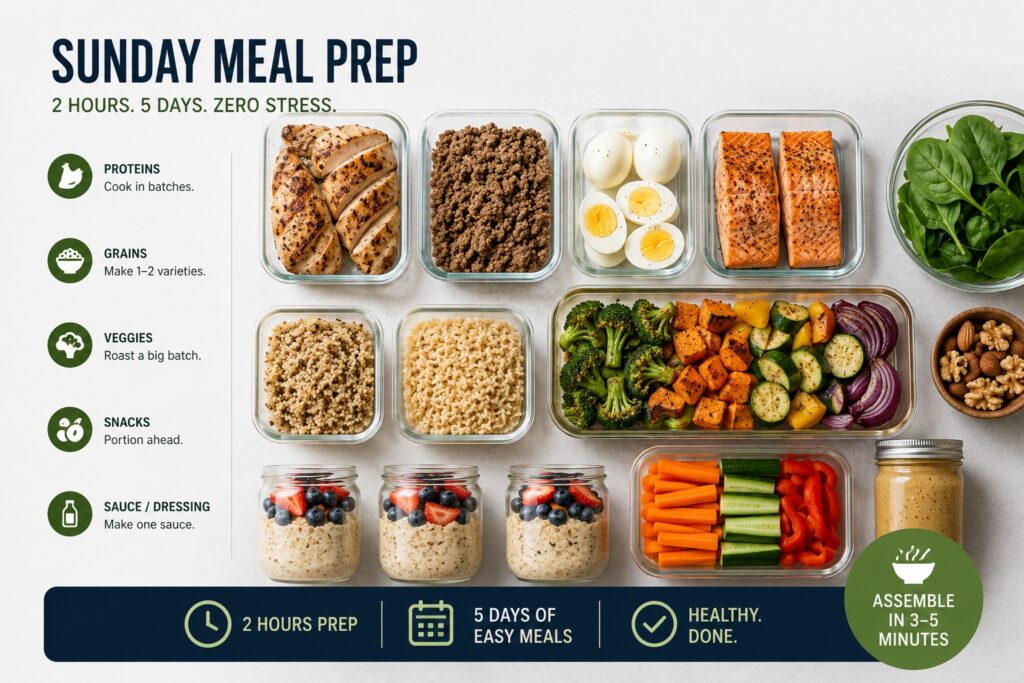
The most effective meal planning weekly system doesn’t require cooking 21 meals. It requires cooking once strategically so that healthy food is accessible every day of the week.
The 2-Hour Sunday Prep System
What to batch cook:
- Proteins (cook 3–4 varieties): Bake or grill 4–5 chicken thighs or breasts. Brown a pound of ground turkey or beef. Hard-boil 8–10 eggs. Optionally bake 2–3 salmon fillets. These become the protein base for 4–5 days of meals.
- Grains (cook 1–2 varieties): Cook 2 cups of quinoa or brown rice. Make a large batch of overnight oats (4–5 jars). These form the carbohydrate base for the week.
- Vegetables (roast a large sheet pan): Broccoli, zucchini, bell pepper, cauliflower, sweet potato , roasted in olive oil at 400°F for 25 minutes. These become sides, bowl components, and stir-fry bases throughout the week.
- Snacks (portion ahead): Pre-portion nuts into 1 oz servings. Fill Greek yogurt containers with berries. Wash and cut raw vegetables for snacking.
- One sauce or dressing: A tahini-lemon, olive oil-balsamic, or miso-ginger dressing made in bulk transforms the same basic ingredients into different-tasting meals across the week.
The result: With 2 hours of Sunday prep, your weekly meal plans practically executes itself. Monday through Friday, you’re assembling rather than cooking , protein + grain + vegetable + dressing, in 3–5 minutes.
8. The Weekly Meal Plans Template: Day-by-Day Structure for Any Goal
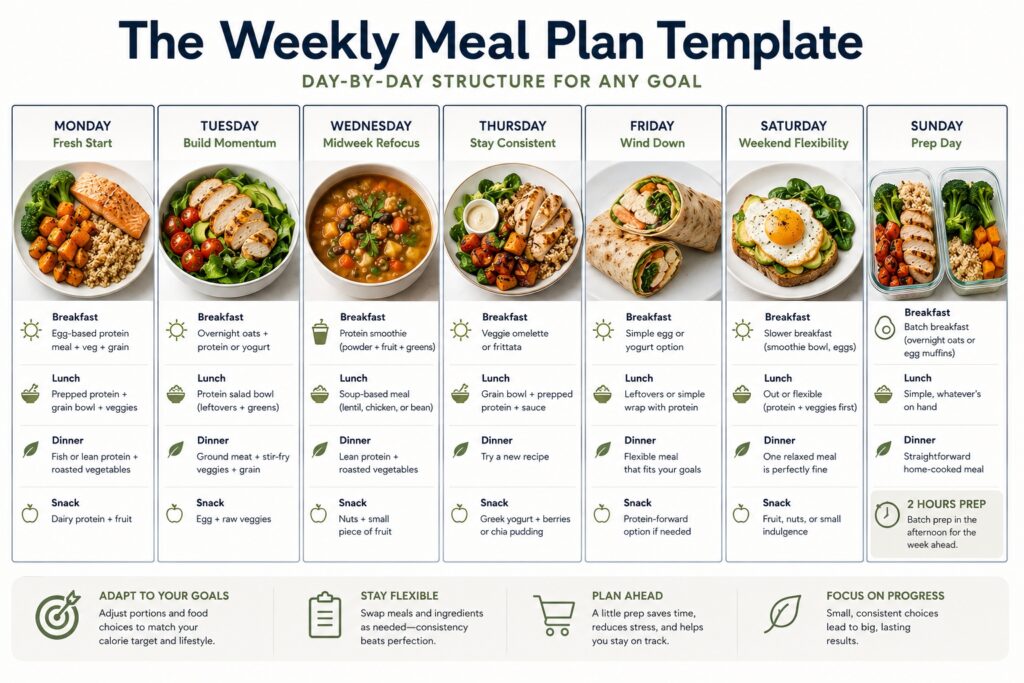
Here is a practical, flexible weekly meal plan template you can adapt to any calorie target or dietary approach. This represents the structure, not the specific foods , fill in with the proteins, vegetables, and grains that suit your plan.
Monday , Fresh Start
- Breakfast: Egg-based protein meal + vegetable + optional grain
- Lunch: Prepped protein + grain bowl + plenty of vegetables
- Dinner: Fish or lean protein + roasted vegetables + optional grain
- Snack: Dairy protein (yogurt or cottage cheese) + fruit
Tuesday , Build Momentum
- Breakfast: Overnight oats + protein powder or Greek yogurt mixed in
- Lunch: Protein salad bowl (leftover protein from Monday + greens + dressing)
- Dinner: Ground meat protein + stir-fried vegetables + cauliflower rice or grain
- Snack: Hard-boiled egg + raw vegetables
Wednesday , Midweek Refocus
- Breakfast: Protein smoothie (protein powder + almond milk + greens + fruit)
- Lunch: Soup-based meal (lentil, chicken vegetable, or bean soup)
- Dinner: Lean protein (chicken or fish) + roasted sheet pan vegetables
- Snack: Nuts + small piece of fruit
Thursday , Stay Consistent
- Breakfast: Veggie omelette or frittata (use remaining eggs from the week)
- Lunch: Grain bowl with prepped protein + roasted vegetables + sauce
- Dinner: Something new , pick a recipe you haven’t tried this week
- Snack: Greek yogurt + berries or chia pudding
Friday , Wind Down Into the Weekend
- Breakfast: Simple egg or yogurt-based option (quick prep)
- Lunch: Leftover Thursday dinner or a simple wrap with prepped protein
- Dinner: Flexible , a slightly more relaxed meal that still fits your overall targets
- Snack: Protein-forward option if needed
Saturday , Weekend Flexibility
- Breakfast: A slower, more enjoyable breakfast (avocado toast with eggs, veggie omelette, smoothie bowl)
- Lunch: Out or flexible , apply the “protein + vegetables first” principle regardless of setting
- Dinner: Home-cooked or a restaurant meal , one meal per week that doesn’t need to be “perfect” is fine
- Snack: Fruit, nuts, or a small indulgence
Sunday , Prep Day
- Breakfast: Batch breakfast (overnight oats or egg muffins made for the week ahead)
- Lunch: Simple, whatever’s on hand
- Dinner: A straightforward home-cooked meal , this is prep day, not cooking day
- 2 hours of batch prep in the afternoon for the week ahead
9. Specialized Weekly Meal Plans: A Summary
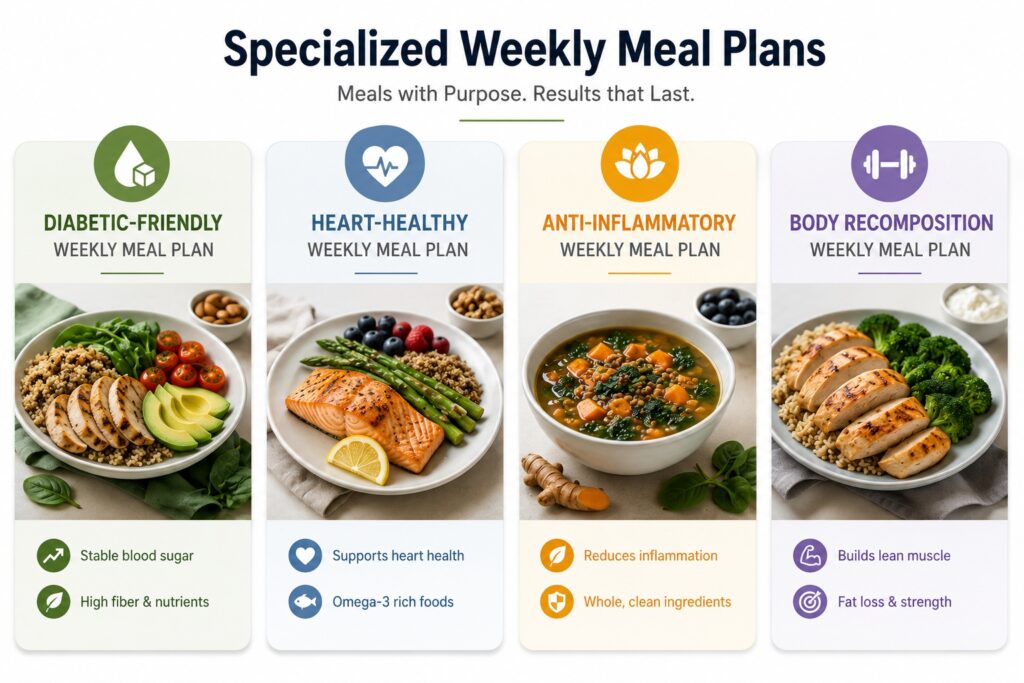
Each of the following meal plans for the week has its own dedicated in-depth guide at The Daily Crave. Here’s a brief overview of each:
Diabetic-Friendly Weekly Meal Plans
A diabetic-friendly weekly meal plan prioritizes blood sugar stability through low-glycemic carbohydrates (legumes, non-starchy vegetables, whole grains over refined grains), consistent meal timing to avoid spikes and crashes, adequate fiber, and protein at every meal to slow glucose absorption. People managing diabetes with medication should work with their healthcare team before changing their eating pattern significantly.
Heart-Healthy Weekly Meal Plans
A heart-healthy diet plan for weight loss and cardiovascular support reduces saturated fat (less red meat and full-fat dairy), increases omega-3 fatty acids (fatty fish, walnuts, flaxseeds), minimizes sodium, and builds meals around vegetables, legumes, whole grains, and lean protein. The Mediterranean and DASH dietary patterns are both strongly heart-health-aligned.
Anti-Inflammatory Weekly Meal Plans
An anti-inflammatory clean eating meal plan emphasizes foods that may help reduce chronic inflammation: fatty fish, berries, leafy greens, olive oil, turmeric, ginger, and nuts. It typically eliminates or reduces gluten, dairy, refined sugar, alcohol, and processed seed oils. This approach is popular for autoimmune conditions, joint health, and general wellness , though individual responses vary.
Body Recomposition Weekly Meal Plans
Simultaneous fat loss and muscle gain , sometimes called “body recomp” , requires precise management of protein (high), carbohydrates (timed around training), and overall calories (at or just below maintenance). It’s a slower process than either pure weight loss or pure muscle building, but produces the most aesthetically satisfying and metabolically healthy outcomes for most people.
10. Common Weekly Meal Planning Mistakes , And How to Avoid Them
Even with the right plan, these patterns derail results:
Mistake 1: Planning Too Many Different Meals
Trying to cook 14 different dishes across 7 days is unsustainable. The most effective weekly meal plans rotate 4–6 base ingredients creatively rather than chasing recipe variety every day.
Mistake 2: Not Shopping Before Monday
A meal plan template that exists only on paper doesn’t feed anyone. Shopping on Sunday , with a specific, complete list , is what turns a plan into a system.
Mistake 3: Skipping Protein at Breakfast
The meal planning weekly pattern that works best for hunger management front-loads protein. Breakfast with little protein sets up mid-morning hunger, which leads to snacking and often overeating at lunch. Start every day with at least 20–30g of protein.
Mistake 4: Making the Plan Too Strict
A diet plan for weight loss that allows zero flexibility becomes a source of stress rather than a tool. Build in one meal per week with no tracking, no rules , this doesn’t undermine the plan, it makes the other six days more manageable.
Mistake 5: Underestimating Prep Time
A weekly meal plans that requires 45 minutes of active cooking every evening isn’t sustainable for most people. Design your plan around 2–3 active cooking sessions per week, not daily from-scratch cooking.
Key Takeaways
- Weekly meal plans are a practical system for consistent healthy eating , not a rigid rulebook. The best plan is one you’ll actually follow.
- Match your plan to your goal: diet plan for weight loss, muscle gain, clean eating, macro precision, or condition-specific nutrition each require different approaches.
- A universal meal plan template , protein + vegetable + grain + healthy fat at most meals , works at any calorie level from 1,200 to 2,500+.
- The 1500 calorie meal plan is the most commonly suitable starting point for moderate weight loss in most women; men typically start at 1,800–2,000 calories.
- A clean eating meal plan focused on whole, minimally processed foods often produces weight loss without calorie counting , because food quality naturally supports satiety.
- The 2-hour Sunday prep system , batch cooking proteins, grains, and vegetables , is the single most effective habit for making meal plans for the week actually executable.
- Meal planning weekly works best when it’s flexible: plan the structure, not every specific meal. Rotate proteins and vegetables so the week stays varied without requiring new recipes daily.
- Every specialized plan , high-protein, diabetic-friendly, heart-healthy, anti-inflammatory, body recomp , has its own in-depth guide at The Daily Crave.
Conclusion: Your Weekly Meal Plans Starts This Sunday
Whatever your goal, the best weekly meal plans is the one that fits your life , your calorie needs, your cooking time, your food preferences, and your health situation. The structure in this guide applies to all of them: lead with protein, include vegetables at every meal, choose whole food carbohydrates, and prep once so you don’t have to decide every day.
Use the meal plan template in this guide as your starting framework. Choose the calorie level and food approach that matches your goal. Spend two hours on Sunday getting the week ready. And then let the plan do its job , making healthy eating the path of least resistance rather than the hard choice.
Explore the complete collection of free weekly meal plans, calorie-specific guides, and specialized nutrition plans at thedailycrave.online , one resource for every goal, every starting point, and every dietary approach.
Frequently Asked Questions (FAQ)
Q1: What is the best weekly meal plans for weight loss?
The best weekly meal plans for weight loss is one that creates a consistent, moderate calorie deficit while keeping protein high enough to preserve muscle. For most women, a 1500 calorie meal plan built around lean protein, vegetables, and whole grains is a practical starting point. For most men, 1,800–2,000 calories creates a meaningful deficit without severe restriction. The specific foods matter less than consistency , a diet plan for weight loss only works if it’s sustainable.
Q2: How do I create a weekly meal plan template for beginners?
Start with the framework: choose 3–4 protein sources, 4–5 vegetables, and 1–2 carbohydrates for the week. Apply the meal plan template structure , protein + vegetable + carbohydrate + healthy fat at most meals. Adjust portion sizes to your calorie target. Do your shopping on Saturday or Sunday and spend 2 hours prepping before the week starts. You don’t need 21 different recipes , 6–8 base combinations rotated throughout meal plans for the week is enough variety for most people.
Q3: Are clean eating meal plans better than calorie-counted plans?
Neither is universally better , they suit different people. A clean eating meal plan is simpler and doesn’t require tracking, making it more sustainable for people who find calorie counting stressful. Calorie-counted weekly meal plans offer more precision, which some people prefer for specific body composition goals. Many people do best combining both: eating whole foods (quality focus) while being broadly aware of their intake (quantity awareness) without obsessive tracking.
Q4: How many calories should my weekly meal plans include?
Your calorie target depends on your TDEE (Total Daily Energy Expenditure) and your goal. Use a TDEE calculator as a starting point, then subtract 300–500 calories for gradual weight loss, add 200–300 for muscle building, or eat at maintenance for body recomposition. Common starting points: 1,200–1,400 for women in a deficit (conservative), 1500 calorie meal plan for moderate female weight loss, 1,800–2,000 for male weight loss or female maintenance, 2,000+ for active individuals or muscle building. Always consult a healthcare provider if you have underlying health conditions.
Q5: How do I stick to a weekly meal plans without getting bored?
The most effective way to maintain variety in meal planning weekly without burnout is to keep the structure consistent but rotate the specific foods. Use the same breakfast framework (eggs + vegetable, or protein + grain) but change which vegetable or grain appears. Rotate your protein between chicken, fish, beef, eggs, and legumes through the week. Change your sauces and spice blends , the same grilled chicken tastes completely different with tahini-lemon versus soy-ginger versus Italian herbs. Variety in flavoring, not variety in cooking technique, is what keeps weekly meal plans interesting long-term.