Table of Contents
A high protein meal plan is one of the simplest changes you can make to feel fuller, curb cravings, and support steady progress toward your goals , whether that’s weight loss, muscle building, or just eating in a way that keeps you satisfied. This guide from The Daily Crave (thedailycrave.online) gives you a full 7-day high protein meal plan built around hitting roughly 150g of protein a day, using everyday ingredients and realistic portions.
Most high protein diet plan content online is either overly technical or vague about actual meals. This one isn’t. You’ll get exact meals for all seven days, a grocery list, common mistakes to avoid, and answers to the questions people ask most before starting a high protein low carb meal plan or any high-protein approach.
1. Who This High Protein Meal Plan Is For
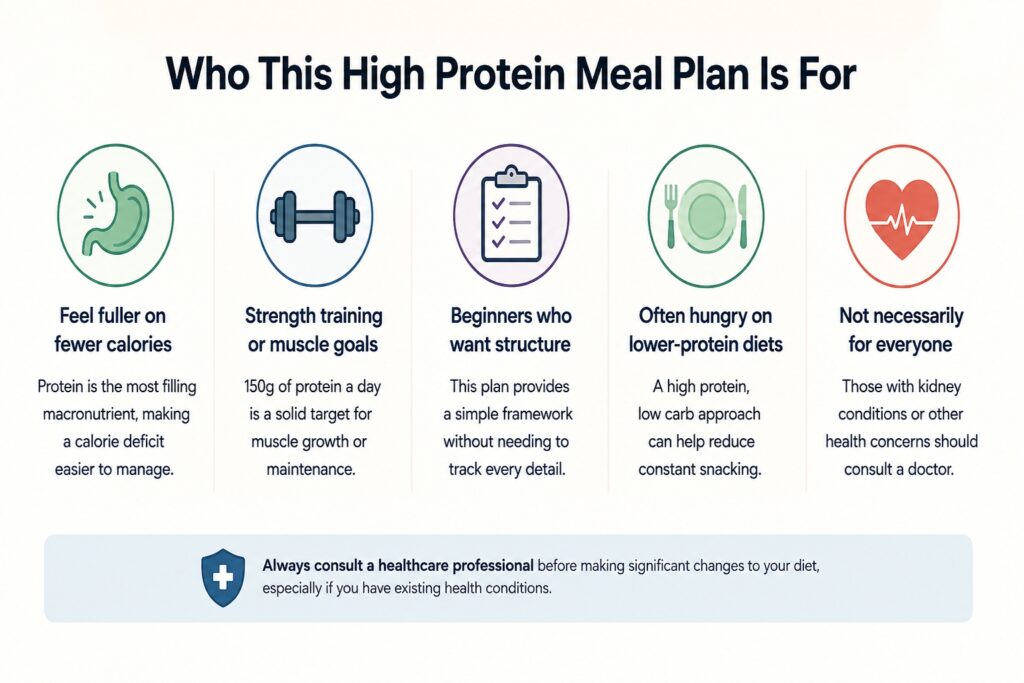
- Anyone trying to feel fuller on fewer calories.
Protein is the most filling macronutrient, so a high protein meal plan often makes a calorie deficit feel less like a struggle.
- People strength training or trying to build muscle.
150g of protein a day is a reasonable target for many moderately active adults working on muscle growth or maintenance.
- Beginners who find calorie counting overwhelming.
This high protein diet plan gives you a structure to follow without needing to track every gram of every macro.
- People who get hungry often on lower-protein diets.
If you’ve tried other plans and found yourself constantly snacking, a high protein low carb meal plan built around this structure may help close that gap.
- Not necessarily for everyone.
People with kidney conditions or other specific health concerns should check with a doctor before significantly increasing protein intake, since individual needs vary.
2. Why 150g of Protein a Day Matters
- It supports fullness.
Protein takes longer to digest than carbs and has a stronger effect on satiety hormones, which is a big reason a high protein meal plan tends to reduce overall hunger.
- It helps preserve muscle.
Whether you’re in a calorie deficit or maintaining, getting close to 150g protein a day gives your body the raw material it needs to hold onto lean muscle mass.
- It has a higher thermic effect.
Your body burns more energy digesting protein than it does carbs or fat, which is a small but real advantage of a high protein diet plan over a lower-protein one at the same calorie total.
- It’s realistic at 150g a day for most adults.
This isn’t an extreme number , spread across three meals and a snack or two, 150g of protein a day works out to roughly 30–40g per meal, which is very achievable with everyday foods.
- It doesn’t require cutting carbs entirely.
While this plan leans toward a high protein low carb meal plan structure, it still includes whole-food carbohydrates like oats, rice, and fruit , just in smaller portions than protein.
3. How This High Protein Meal Plan Is Structured
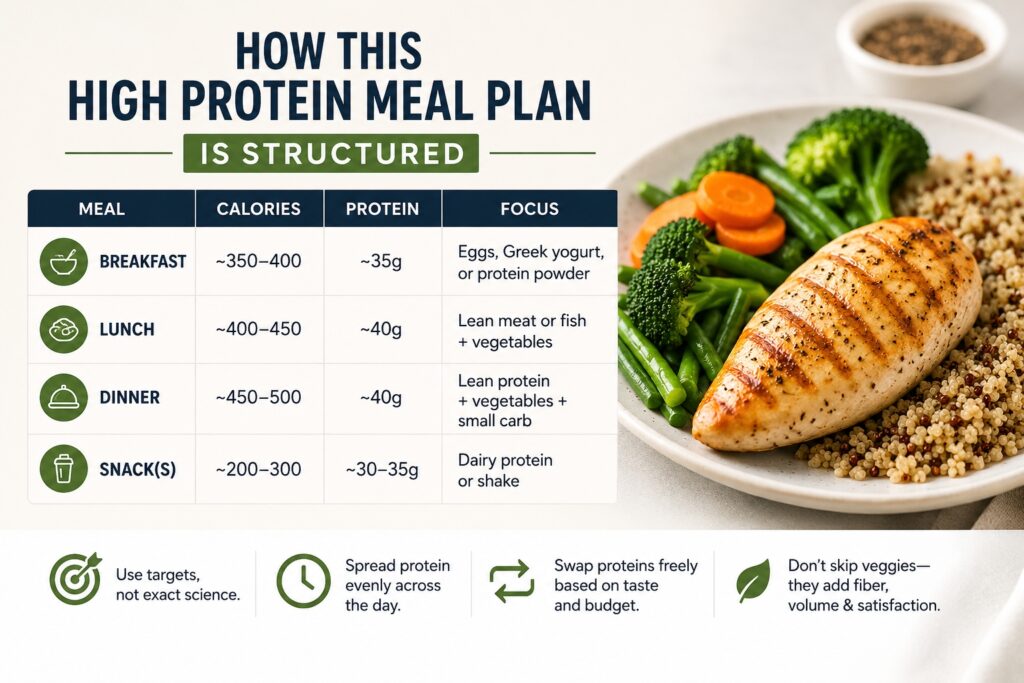
Every day in this high protein meal plan follows the same basic framework, which makes the week easy to plan around and easy to swap meals between if your schedule shifts.
| Meal | Calories | Protein | Focus |
| Breakfast | ~350–400 | ~35g | Eggs, Greek yogurt, or protein powder |
| Lunch | ~400–450 | ~40g | Lean meat or fish + vegetables |
| Dinner | ~450–500 | ~40g | Lean protein + vegetables + small carb |
| Snack(s) | ~200–300 | ~30–35g | Dairy protein or shake |
A few things that make this high protein diet plan easier to actually follow:
- Use the numbers as targets, not exact science. Being a few grams under or over your 150g target on any given day won’t undo your progress.
- Spread protein evenly across the day. Loading most of your protein into one meal is less effective for fullness than spreading it across three or four smaller doses, which is exactly how this weekly meal plan is built.
- Swap proteins freely. Chicken, turkey, fish, eggs, Greek yogurt, cottage cheese, and protein powder are largely interchangeable , use whichever fits your taste and budget.
- Don’t ignore vegetables just because protein is the focus. Non-starchy vegetables still add fiber and volume that make meals more satisfying.
4. The 7-Day High Protein Meal Plan
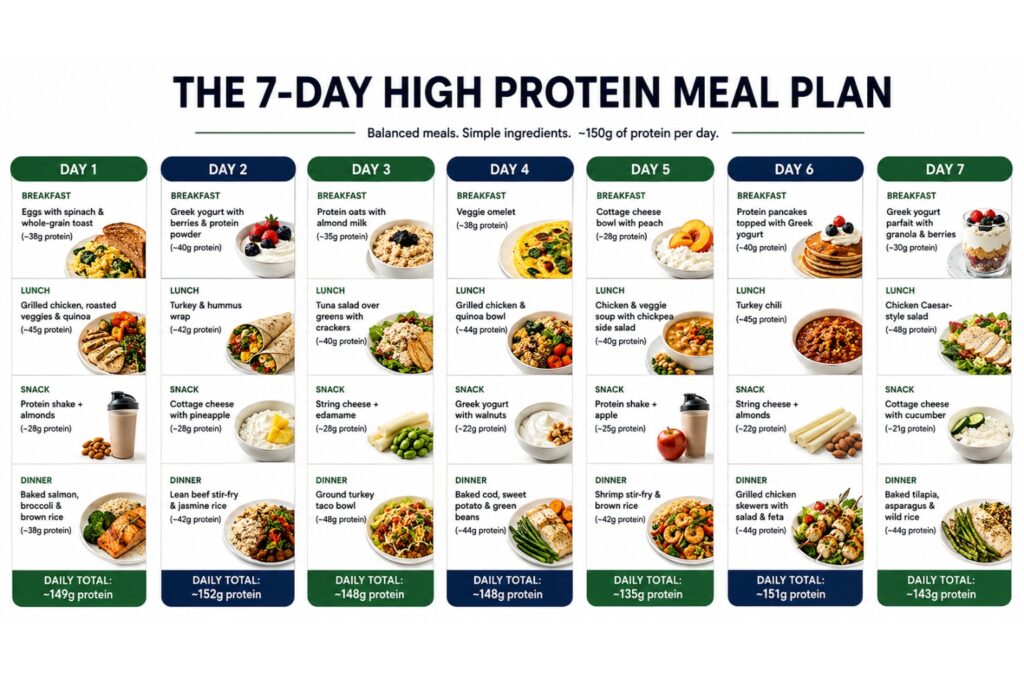
Here’s the complete high protein meal plan, day by day, each landing close to 150g of protein.
Day 1
- Breakfast: 4 egg whites + 2 whole eggs scrambled with spinach, 1 slice whole-grain toast (~38g protein)
- Lunch: Grilled chicken breast (6 oz) with roasted vegetables and ½ cup quinoa (~45g protein)
- Snack: Protein shake (1 scoop) + a small handful of almonds (~28g protein)
- Dinner: Baked salmon (5 oz) with broccoli and ½ cup brown rice (~38g protein)
- Daily total: ~149g protein
Why this day works:
- Eggs and salmon both add healthy fats alongside protein, which helps this day feel satisfying rather than clinical.
- The protein shake snack is quick if you’re short on time between meals.
Day 2
- Breakfast: Greek yogurt (1 cup) with berries and a scoop of protein powder mixed in (~40g protein)
- Lunch: Turkey and hummus wrap (5 oz turkey, whole-grain tortilla, hummus, spinach) (~42g protein)
- Snack: Cottage cheese (1 cup) with pineapple (~28g protein)
- Dinner: Lean beef stir-fry (6 oz sirloin) with mixed vegetables and ½ cup jasmine rice (~42g protein)
- Daily total: ~152g protein
Why this day works:
- Mixing protein powder into yogurt is an easy way to boost breakfast protein without adding a separate shake.
- Beef at dinner adds iron and zinc, which some high protein diet plans overlook by leaning only on chicken and fish.
Day 3
- Breakfast: Protein oats (½ cup oats cooked with a scoop of protein powder, almond milk, cinnamon) (~35g protein)
- Lunch: Tuna salad (canned tuna, Greek yogurt instead of mayo, celery) over greens with whole-grain crackers (~40g protein)
- Snack: String cheese + a handful of edamame (~25g protein)
- Dinner: Ground turkey taco bowl (6 oz turkey, lettuce, black beans, salsa, small amount of cheese) (~48g protein)
- Daily total: ~148g protein
Why this day works:
- Protein oats are a good option if you want something warm and filling without cooking eggs every day.
- The taco bowl at dinner is one of the highest-protein meals in this high protein meal plan while still feeling like a treat.
Day 4
- Breakfast: Veggie omelet (3 whole eggs + 2 egg whites, spinach, mushrooms, bell pepper) (~38g protein)
- Lunch: Grilled chicken and quinoa bowl with roasted zucchini and bell pepper (~44g protein)
- Snack: Greek yogurt (¾ cup) with a few walnuts (~22g protein)
- Dinner: Baked cod (6 oz) with a small sweet potato and steamed green beans (~44g protein)
- Daily total: ~148g protein
Why this day works:
- This is a lighter-tasting day, good for a midweek reset within your high protein low carb meal plan.
- Cod is a lean, mild fish that’s easy to prep quickly on a busy evening.
Day 5
- Breakfast: Cottage cheese bowl (1 cup cottage cheese, sliced peach, cinnamon) (~28g protein)
- Lunch: Chicken and vegetable soup (broth-based, shredded chicken, carrots, celery) with a side salad topped with chickpeas (~40g protein)
- Snack: Protein shake (1 scoop) + apple (~25g protein)
- Dinner: Shrimp stir-fry (6 oz shrimp) with broccoli, snap peas, and ½ cup brown rice (~42g protein)
- Daily total: ~135g protein
Why this day works:
- Soup at lunch is easy to prep ahead and reheat during a busy week.
- Shrimp cooks in minutes, keeping dinner low-effort without sacrificing protein.
Day 6
- Breakfast: Protein pancakes (protein powder, oats, egg, banana) topped with Greek yogurt (~40g protein)
- Lunch: Turkey chili (6 oz lean ground turkey, tomatoes, kidney beans, spices) , about 2 cups (~45g protein)
- Snack: String cheese + a handful of almonds (~22g protein)
- Dinner: Grilled chicken skewers (6 oz) with a large mixed salad and feta (~44g protein)
- Daily total: ~151g protein
Why this day works:
- Chili batches well, so it’s a good day to double the recipe for leftovers.
- Protein pancakes make breakfast feel a little more indulgent while still fitting this high protein meal plan.
Day 7
- Breakfast: Greek yogurt parfait (1 cup Greek yogurt, granola, berries) (~30g protein)
- Lunch: Grilled chicken Caesar-style salad (6 oz chicken, shaved parmesan, romaine, light dressing) (~48g protein)
- Snack: Cottage cheese (¾ cup) with cucumber slices (~21g protein)
- Dinner: Baked tilapia (6 oz) with roasted asparagus and ½ cup wild rice (~44g protein)
- Daily total: ~143g protein
Why this day works:
- Ending the week with a simple baked fish dinner keeps prep light after six days of cooking.
- The Caesar-style salad at lunch is one of the highest-protein, lowest-effort meals in the whole high protein meal plan.
5. Sample Grocery List for the Week
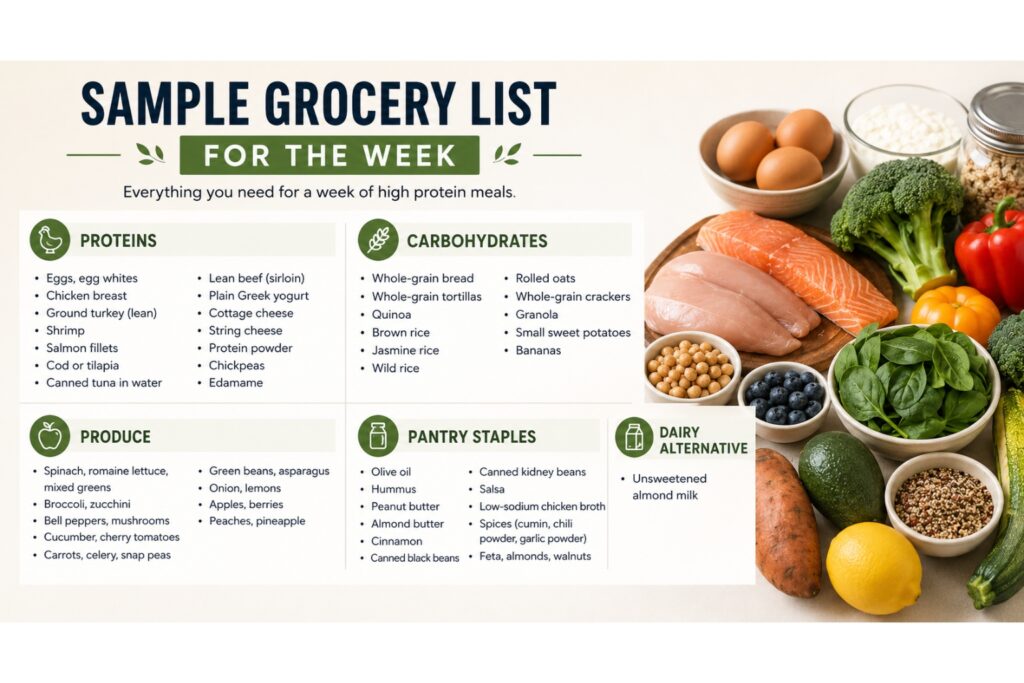
A shopping list makes this high protein meal plan far easier to follow without last-minute substitutions, and having everything on hand is what actually turns a high protein meal plan from a good idea into a week you follow through on. Here’s what covers the full seven days , adjust quantities to your household.
- Proteins:
eggs, egg whites, chicken breast, ground turkey (lean), shrimp, salmon fillets, cod or tilapia, canned tuna in water, lean beef (sirloin), plain Greek yogurt, cottage cheese, string cheese, protein powder, chickpeas, edamame
- Carbohydrates:
whole-grain bread, whole-grain tortillas, quinoa, brown rice, jasmine rice, wild rice, rolled oats, whole-grain crackers, granola, small sweet potatoes, bananas
- Produce:
Spinach, romaine lettuce, mixed greens, broccoli, zucchini, bell peppers, mushrooms, cucumber, cherry tomatoes, carrots, celery, snap peas, green beans, asparagus, onion, lemons, apples, berries, peaches, pineapple
- Pantry staples:
Olive oil, hummus, peanut butter, almond butter, cinnamon, canned black beans, canned kidney beans, salsa, low-sodium chicken broth, spices (cumin, chili powder, garlic powder), feta, almonds, walnuts
- Dairy alternatives: unsweetened almond milk
6. Common Mistakes to Avoid on a High Protein Diet Plan
A high protein meal plan is fairly forgiving, but a few habits can still slow your progress or make the week harder than it needs to be.
- Loading all your protein into one meal. A big dinner with 80g of protein and skimpy meals otherwise isn’t as effective for fullness as spreading protein evenly, which is the whole point of this weekly meal plan.
- Forgetting fiber. A high protein low carb meal plan that’s too light on vegetables can leave you feeling sluggish. Keep non-starchy vegetables in the mix even on lower-carb days.
- Relying too heavily on protein bars and shakes. They’re convenient, but whole-food protein sources tend to be more filling and nutritionally complete than relying on them for every meal.
- Not drinking enough water. Higher protein intake increases your body’s water needs somewhat, so staying hydrated matters more on a high protein diet plan than on a lower-protein one.
- Assuming more protein is always better. 150g a day is a solid, realistic target for most adults , there’s no need to push far beyond it, since additional protein above your needs won’t necessarily add extra benefit.
7. Tips to Stick With a High Protein Low Carb Meal Plan
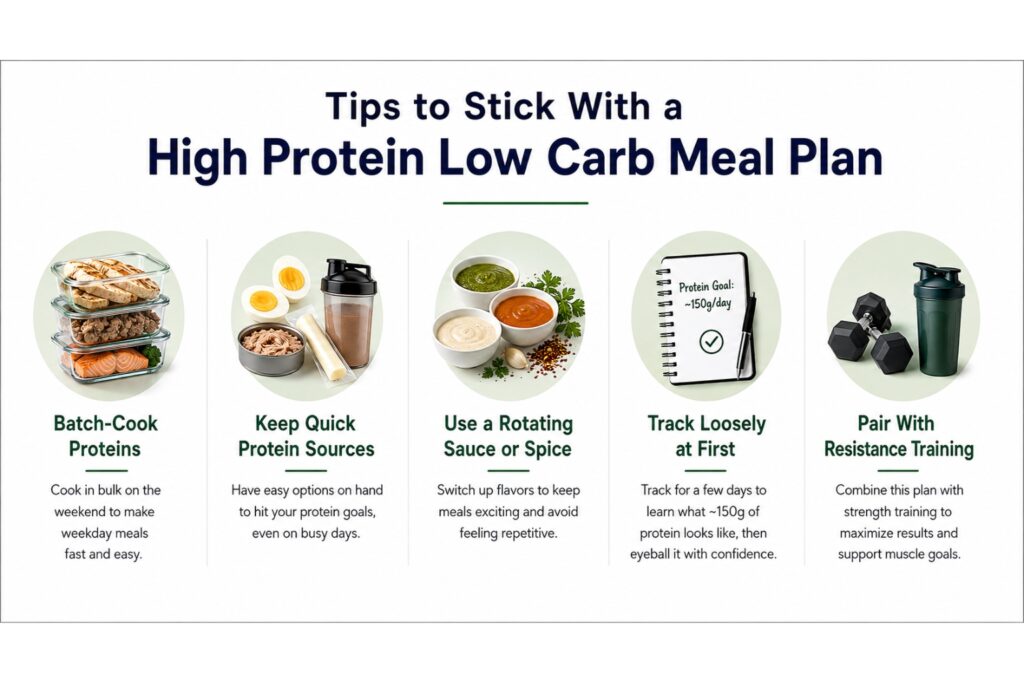
These habits make it much easier to stay consistent with a high protein meal plan past the first week, once the novelty wears off.
- Batch-cook two or three proteins on the weekend. Grilling or baking chicken, turkey, and fish in bulk turns weekday lunches and dinners into a quick assembly job.
- Keep quick protein sources on hand. Hard-boiled eggs, string cheese, canned tuna, and pre-made shakes make it easy to hit your target even on busy days.
- Use a rotating sauce or spice blend. This keeps a high protein meal plan from feeling repetitive, even when the base proteins stay similar day to day.
- Track loosely for the first week. Logging meals for a few days helps you understand roughly what 150g of protein a day looks like on your plate, so you can eyeball it more easily afterward.
- Pair this plan with resistance training if muscle is a goal. The protein alone helps, but combining it with strength training tends to produce better results than diet changes on their own.
8. Adjusting This High Protein Meal Plan for Your Goal
The beauty of a high protein meal plan is that the underlying structure barely needs to change from goal to goal , you’re mostly adjusting portions and carb amounts.
- For weight loss:
Keep the meals as written , this high protein meal plan already supports fullness on a moderate calorie level. If you want a bigger deficit, trim starchy carbs like rice slightly rather than cutting protein.
- For muscle building:
Add an extra 200–300 calories from carbohydrates around your workouts, while keeping protein where it is. 150g of protein a day is already a strong foundation to build muscle on top of.
- For maintenance:
This high protein diet plan works well as-is for many moderately active adults who simply want a more filling, balanced way of eating.
- If 150g feels like too much:
Scale back gradually , even reaching 100–120g a day is a meaningful improvement over a low-protein pattern, and you can build up from there.
- If you want it lower-carb:
Lean further into the high protein low carb meal plan version of this structure by swapping rice or quinoa for extra non-starchy vegetables at dinner.
Key Takeaways
- This high protein meal plan targets roughly 150g of protein a day, spread evenly across meals and snacks for better fullness.
- The structure works for weight loss, muscle building, or maintenance, depending on small portion adjustments.
- All seven days use everyday ingredients , no specialty products required for this high protein diet plan.
- A high protein low carb meal plan doesn’t mean cutting carbs entirely , it means prioritizing protein first and filling in around it.
- Batch-cooking proteins and keeping quick options on hand makes this weekly meal plan realistic for a busy schedule.
Frequently Asked Questions (FAQ)
Q1: Is 150g of protein a day too much?
For most moderately active adults, 150g of protein a day is a reasonable, achievable target rather than an extreme one. Actual needs vary by body size and activity level, so some people may need slightly more or less.
Q2: Can I follow this high protein meal plan if I’m vegetarian?
Yes , replace animal proteins with eggs, Greek yogurt, cottage cheese, tofu, tempeh, and legumes.You may need slightly larger portions of plant proteins to hit the same total, since some plant sources are less protein-dense per serving.
Q3: Will a high protein diet plan help me lose weight?
It can support weight loss indirectly by increasing fullness and helping you naturally eat fewer overall calories.Results still depend on your total calorie intake, activity level, and consistency over time.
Q4: What’s the difference between a high protein meal plan and a high protein low carb meal plan?
A high protein meal plan simply prioritizes protein at every meal, without necessarily limiting carbs.A high protein low carb meal plan does the same but also reduces starchy carbohydrates, replacing some of them with extra vegetables.
Q5: Do I need protein supplements to hit 150g of protein a day?
Not necessarily , whole foods like chicken, eggs, Greek yogurt, and fish can get most people there.Protein powder can make it easier and faster, especially at breakfast or as a snack, but it’s optional rather than required.
Q6: Is this weekly meal plan safe for beginners?
Yes, for most healthy adults , this high protein meal plan uses common ingredients and doesn’t require advanced cooking skills.People with kidney conditions or other specific health concerns should check with a doctor before significantly increasing protein intake.
Conclusion: Start Your High Protein Meal Plan This Week
A high protein meal plan works because it’s built around a simple idea: prioritize protein first, and let everything else fill in around it. Aim for roughly 150g of protein a day, spread it evenly across your meals, and adjust portions based on your goals and how your body responds.
For more free resources like this, visit The Daily Crave at thedailycrave.online. Browse more ideas in our Diet Plans, Meal Plan, and Weight Loss categories, or check out our complete guide to weekly meal plans for the bigger-picture approach to planning meals long-term.