Table of Contents
A macro meal plan takes the guesswork out of “eating healthy” by giving you specific protein, carb, and fat targets to hit each day , and then letting you build meals around whatever fits, rather than following a rigid list of approved foods. This guide from The Daily Crave (thedailycrave.online) walks through a full 7-day macro meal plan with real meals and exact macro breakdowns, built for anyone new to tracking.
If you’ve heard of flexible dieting or IIFYM (If It Fits Your Macros) but never actually tried it, this is a practical starting point. You’ll get a full week of meals, a grocery list, common mistakes to avoid, and answers to the questions people ask most before starting a macro meal plan.
Medical disclaimer: Talk to a doctor or registered dietitian before starting any new diet plan, especially if you’re pregnant or breastfeeding, have a history of disordered eating, take medication, or manage a health condition. Macro needs vary widely by body size, activity level, and goals , use this macro meal plan as a flexible starting framework rather than a fixed rule.
1. What Is a Macro Meal Plan?
- It’s built around three numbers. A macro meal plan sets daily targets for protein, carbohydrates, and fat, rather than just a single calorie number.
- It’s the foundation of flexible dieting. Flexible dieting means you can eat a wide variety of foods as long as they add up to your targets , nothing is strictly off-limits.
- It’s often called IIFYM. IIFYM (If It Fits Your Macros) is essentially another name for the same approach , track your macros for losing weight, maintaining, or building muscle, and choose foods that fit.
- It’s more flexible than most calorie-based diets. Because a macro meal plan focuses on hitting numbers rather than eating specific foods, there’s more room to include treats or convenience meals occasionally.
- It requires a bit more effort upfront. Unlike simply eating “clean,” a macro meal plan does involve some tracking, at least until you get a feel for your typical portions.
2. Who This Macro Meal Plan Is For
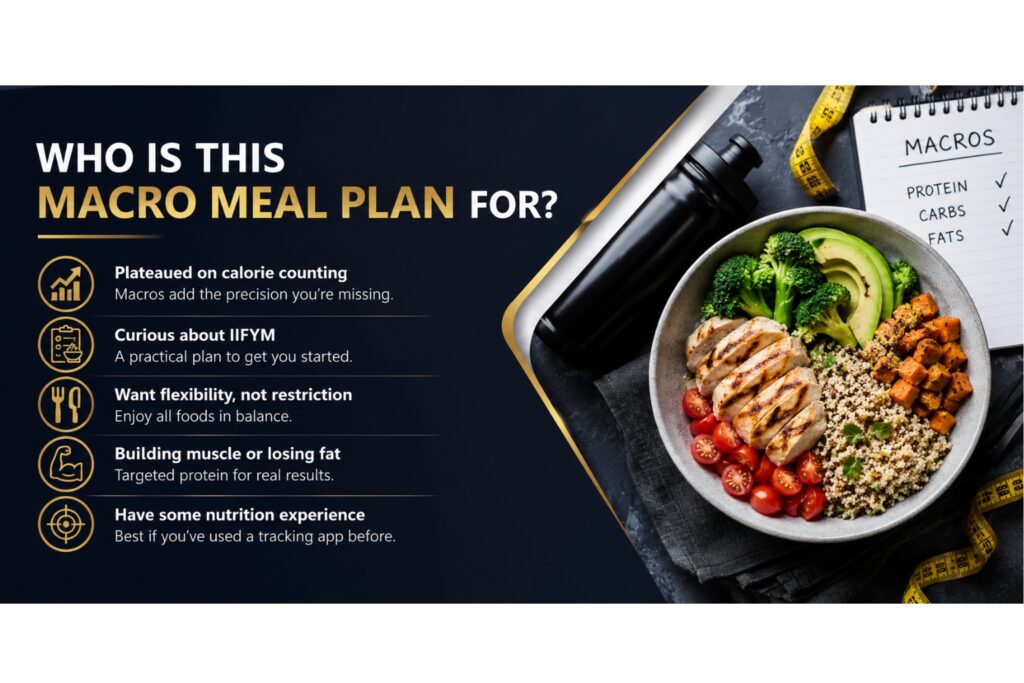
- People who’ve plateaued on calorie counting alone. Tracking macros for losing weight adds precision that calorie counting by itself sometimes misses, particularly around protein intake.
- Anyone interested in IIFYM but unsure how to start. This macro meal plan gives you a working example rather than just theory.
- People who want flexibility, not restriction. If cutting out entire food groups has felt unsustainable in the past, flexible dieting offers a different way to approach the same goals.
- People building muscle or trying to preserve it while losing fat. Precise protein targets, which this plan provides, matter more for these goals than calories alone.
- Not necessarily beginners with no nutrition experience. Tracking macros for losing weight requires a bit more attention to detail than a simple whole-foods approach, so it helps to have used a food-tracking app before.
3. How This Macro Meal Plan Is Structured
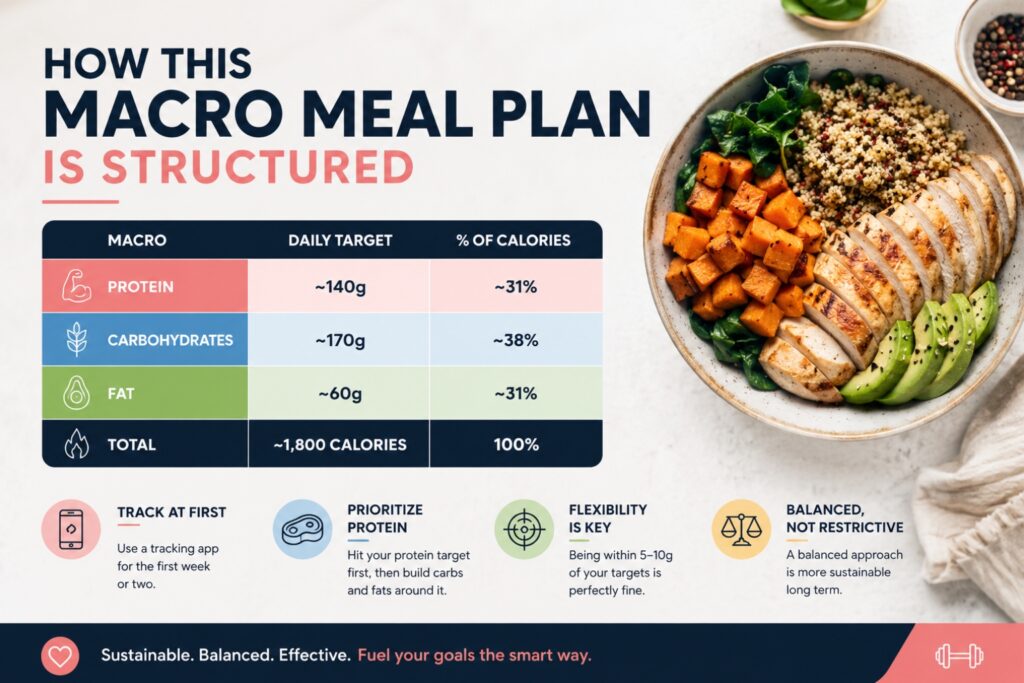
This macro meal plan targets a moderate 1,800-calorie day with a protein-forward split, which works well for many women focused on fat loss while preserving muscle. Adjust the totals up or down based on your own calorie needs , the ratios below (protein, carbs, fat) are what really define this as a macro meal plan.
| Macro | Daily Target | % of Calories |
| Protein | ~140g | ~31% |
| Carbohydrates | ~170g | ~38% |
| Fat | ~60g | ~31% |
| Total | ~1,800 calories | 100% |
A few things that make this macro meal plan easier to follow in practice:
- Use a tracking app for the first week or two. Logging meals is the fastest way to learn what your typical portions actually look like in grams, which makes future tracking faster.
- Protein is the macro to prioritize first. Once your protein target is set, build carbs and fat around it , this is the core principle behind most successful flexible dieting.
- Round numbers are fine. You don’t need to hit 140g of protein exactly , landing within 5–10g in either direction is a normal, acceptable range.
- This isn’t a low-carb or low-fat plan. A macro meal plan built this way keeps a relatively even split, which tends to be more sustainable than eliminating an entire macronutrient.
4. The 7-Day Macro Meal Plan
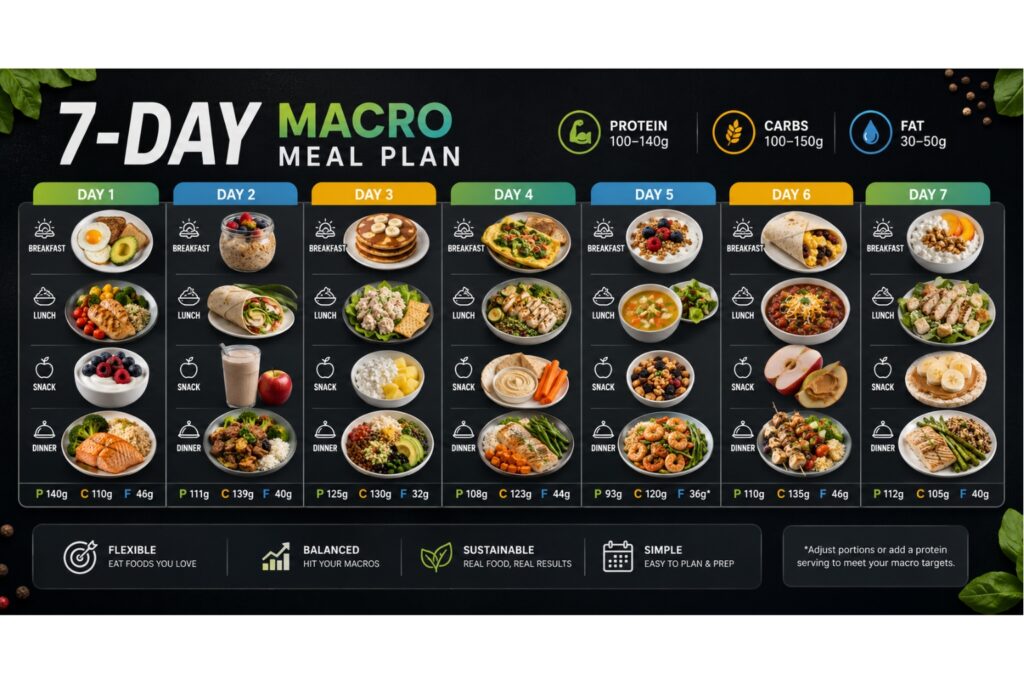
Here’s the full week, with approximate macros for each day.
Day 1
- Breakfast: 3 whole eggs + 1 slice whole-grain toast + ½ avocado , P: 28g, C: 30g, F: 22g
- Lunch: Grilled chicken breast (5 oz) with quinoa (½ cup) and roasted vegetables , P: 42g, C: 35g, F: 8g
- Snack: Greek yogurt (¾ cup) with berries , P: 18g, C: 15g, F: 2g
- Dinner: Baked salmon (4 oz) with broccoli and ½ cup brown rice , P: 32g, C: 30g, F: 14g
- Daily total: ~140g protein, ~110g carbs, ~46g fat (roughly 1,800 cal , additional fat from cooking oils brings totals to target)
Why This Day Works
- Salmon adds healthy fat alongside protein, which helps this macro meal plan feel satisfying rather than clinical.
- Quinoa at lunch is a complete protein itself, giving a small boost on top of the chicken.
Day 2
- Breakfast: Overnight oats (½ cup oats, almond milk, chia seeds, peanut butter) , P: 16g, C: 40g, F: 14g
- Lunch: Turkey wrap (4 oz turkey, whole-grain tortilla, avocado, mustard) , P: 32g, C: 32g, F: 12g
- Snack: Protein shake + apple , P: 25g, C: 25g, F: 2g
- Dinner: Lean beef stir-fry (5 oz sirloin) with vegetables and jasmine rice (¾ cup) , P: 38g, C: 42g, F: 12g
- Daily total: ~111g protein, ~139g carbs, ~40g fat (adjust portions slightly to hit your specific macro meal plan targets)
Why This Day Works
- Overnight oats mean zero morning prep, useful on days when tracking already feels like enough effort.
- The protein shake snack is an easy way to close a protein gap without adding much fat or carbs.
Day 3
- Breakfast: Protein pancakes (protein powder, oats, egg, banana) , P: 30g, C: 45g, F: 8g
- Lunch: Tuna salad (canned tuna, Greek yogurt, celery) over greens with crackers , P: 35g, C: 25g, F: 6g
- Snack: Cottage cheese (¾ cup) with pineapple , P: 20g, C: 15g, F: 2g
- Dinner: Ground turkey taco bowl (5 oz turkey, rice, black beans, salsa, avocado) , P: 40g, C: 45g, F: 16g
- Daily total: ~125g protein, ~130g carbs, ~32g fat
Why This Day Works
- This day leans slightly higher-carb, which works well around a workout day if you’re using this macro meal plan alongside training.
- The taco bowl at dinner is one of the more filling meals in the week relative to its macro cost.
Day 4
- Breakfast: Veggie omelet (3 eggs, spinach, mushrooms, bell pepper) + toast , P: 24g, C: 20g, F: 16g
- Lunch: Grilled chicken and quinoa bowl with roasted zucchini and tahini dressing , P: 40g, C: 38g, F: 14g
- Snack: Hummus with pita and carrot sticks , P: 8g, C: 30g, F: 8g
- Dinner: Baked cod (5 oz) with sweet potato and green beans , P: 36g, C: 35g, F: 6g
- Daily total: ~108g protein, ~123g carbs, ~44g fat
Why This Day Works
- This is a lighter, lower-effort day if tracking macros feels tiring by midweek.
- Cod cooks quickly, keeping dinner simple without sacrificing protein.
Day 5
- Breakfast: Greek yogurt (1 cup) with granola and berries , P: 22g, C: 35g, F: 6g
- Lunch: Chicken and vegetable soup with a side salad , P: 30g, C: 25g, F: 10g
- Snack: Trail mix (small handful) , P: 6g, C: 15g, F: 12g
- Dinner: Shrimp stir-fry (5 oz shrimp) with vegetables and brown rice (¾ cup) , P: 35g, C: 45g, F: 8g
- Daily total: ~93g protein, ~120g carbs, ~36g fat (add an extra protein serving to hit 140g if needed)
Why This Day Works
- Soup at lunch is easy to prep ahead, which helps if tracking every meal from scratch feels like a lot midweek.
- Shrimp cooks fast, so dinner comes together quickly on a busy evening.
Day 6
- Breakfast: Breakfast burrito (2 eggs, black beans, cheese, salsa, tortilla) , P: 26g, C: 35g, F: 16g
- Lunch: Turkey chili (5 oz turkey, beans, tomatoes) , P: 38g, C: 40g, F: 10g
- Snack: Apple with almond butter , P: 6g, C: 25g, F: 10g
- Dinner: Grilled chicken skewers (5 oz) with salad and couscous (½ cup) , P: 40g, C: 35g, F: 10g
- Daily total: ~110g protein, ~135g carbs, ~46g fat
Why This Day Works
- Chili batches well, so it’s worth doubling for a future macro meal plan week.
- The breakfast burrito is filling enough to hold you comfortably until lunch.
Day 7
- Breakfast: Cottage cheese bowl with peach and walnuts , P: 24g, C: 20g, F: 10g
- Lunch: Grilled chicken Caesar-style salad (5 oz chicken) , P: 42g, C: 18g, F: 14g
- Snack: Rice cakes with almond butter and banana , P: 8g, C: 35g, F: 10g
- Dinner: Baked tilapia (5 oz) with asparagus and wild rice (¾ cup) , P: 38g, C: 32g, F: 6g
- Daily total: ~112g protein, ~105g carbs, ~40g fat
Why This Day Works
- Cottage cheese is an easy, low-effort way to hit protein without much prep.
- Ending the week with a simple baked fish dinner keeps this macro meal plan low-effort after six days of tracking.
5. Sample Grocery List for the Week
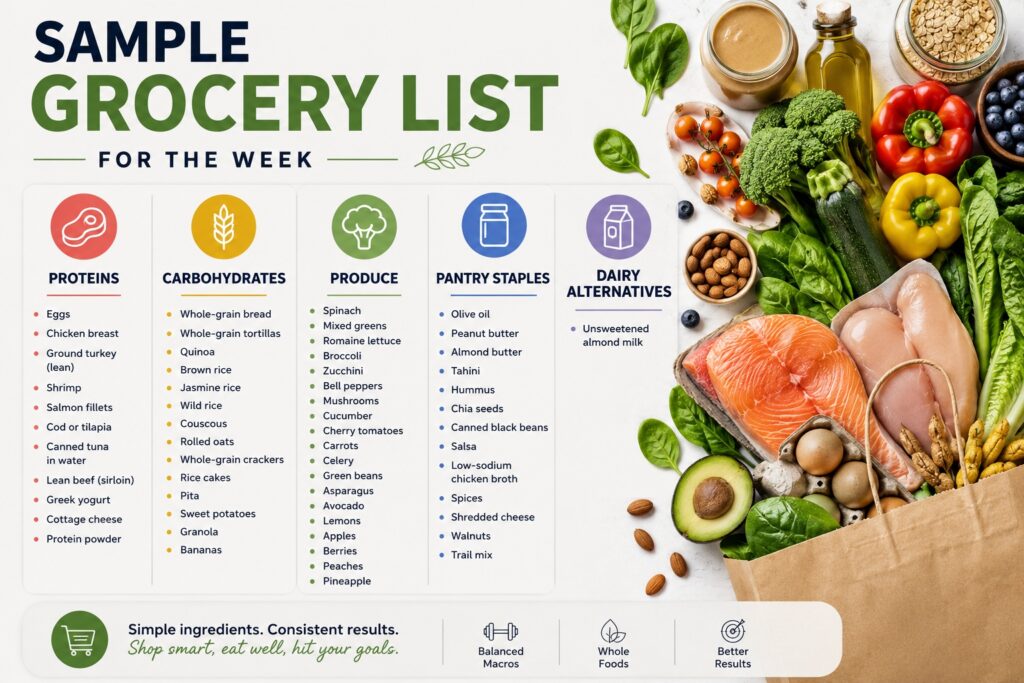
A shopping list makes this macro meal plan far easier to follow accurately, since consistent ingredients make tracking simpler across the week. Here’s what covers the full seven days , adjust quantities to your household.
- Proteins: eggs, chicken breast, ground turkey (lean), shrimp, salmon fillets, cod or tilapia, canned tuna in water, lean beef (sirloin), plain Greek yogurt, cottage cheese, protein powder
- Carbohydrates: whole-grain bread, whole-grain tortillas, quinoa, brown rice, jasmine rice, wild rice, couscous, rolled oats, whole-grain crackers, rice cakes, pita, sweet potatoes, granola, bananas
- Produce: spinach, mixed greens, romaine lettuce, broccoli, zucchini, bell peppers, mushrooms, cucumber, cherry tomatoes, carrots, celery, green beans, asparagus, avocado, lemons, apples, berries, peaches, pineapple
- Pantry staples: olive oil, peanut butter, almond butter, tahini, hummus, chia seeds, canned black beans, salsa, low-sodium chicken broth, spices, shredded cheese, walnuts, trail mix
- Dairy alternatives: unsweetened almond milk
6. Common Mistakes to Avoid on a Macro Meal Plan
- Ignoring fat while chasing protein and carbs. A macro meal plan requires hitting all three numbers, not just protein , under-eating fat can affect hormones and energy over time.
- Estimating instead of measuring, at least at first. Eyeballing portions is fine once you’re experienced, but it tends to throw off macros for losing weight significantly if you skip measuring in the early weeks.
- Treating IIFYM as a free pass for junk food. IIFYM means flexibility within your targets, not that food quality doesn’t matter at all , whole foods still support fullness and overall health better than processed ones at the same macros.
- Not adjusting macros as your weight changes. A macro meal plan calculated for your starting weight may need recalculating every several weeks as you lose weight or your activity level changes.
- Giving up after one inaccurate day. Tracking imperfectly for a day doesn’t undo a week of consistency , a macro meal plan is a pattern over time, not a perfect streak.
7. Tips to Make Flexible Dieting Sustainable
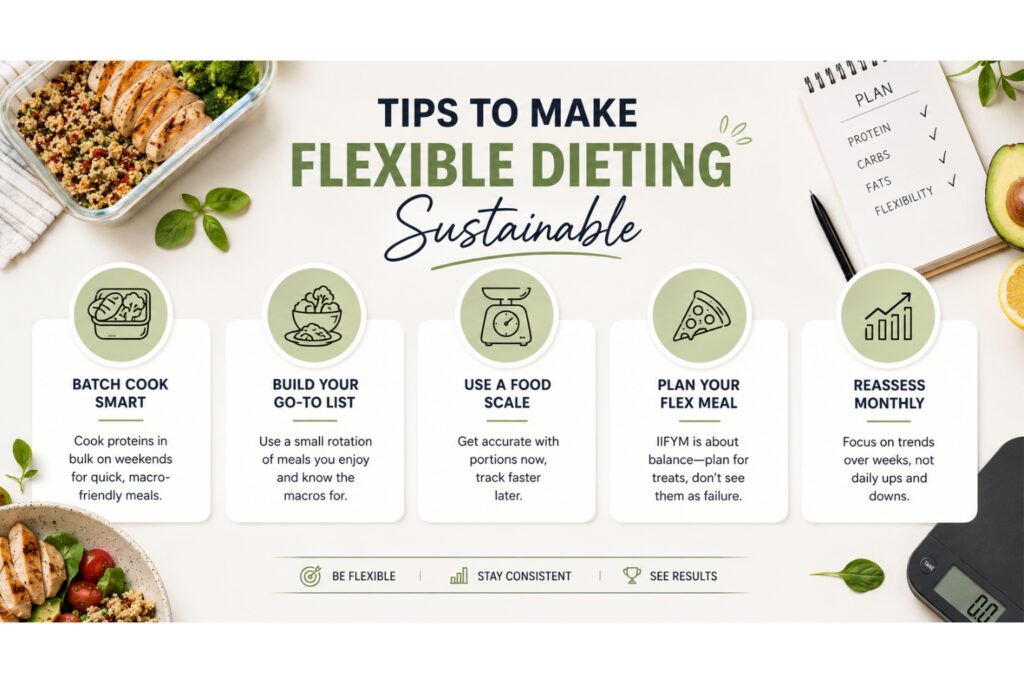
- Batch-cook two or three proteins on the weekend. This turns most lunches and dinners into a quick assembly job, with known macros already calculated.
- Build a small rotation of go-to meals. You don’t need a new recipe every day , six or seven repeatable meals with known macros make flexible dieting far easier to sustain.
- Use a food scale for a couple of weeks. This builds an accurate sense of portion sizes, which speeds up tracking macros for losing weight later on.
- Leave room for one flexible meal. IIFYM is specifically built around this kind of flexibility , plan ahead for a meal out or treat rather than treating it as a failure.
- Reassess monthly, not daily. Weight trends and energy levels over a few weeks are better indicators than daily fluctuations on the scale.
8. Adjusting This Macro Meal Plan for Your Goal
- For weight loss: Keep protein high and trim carbs or fat slightly to create a deficit , this is the standard approach for using macros for losing weight without sacrificing muscle.
- For muscle building: Increase carbohydrates around training sessions while keeping protein steady, adding roughly 200–300 calories overall.
- For maintenance: This macro meal plan works largely as written for many moderately active adults; the goal is consistency rather than further adjustment.
- If tracking feels overwhelming: Start by tracking protein only for the first week, then add carbs and fat once that feels manageable , a gradual approach to flexible dieting tends to stick better than trying to track everything perfectly from day one.
- If your split doesn’t fit your preferences: The specific percentages here are a starting point , some people do better on a higher-carb, lower-fat split or vice versa, as long as protein stays consistent.
Key Takeaways
- A macro meal plan sets specific protein, carb, and fat targets, giving more precision than calorie counting alone.
- This is the same idea behind flexible dieting and IIFYM , hitting your numbers while choosing foods that fit your preferences.
- Protein is the macro to prioritize first; carbs and fat can flex more without derailing your results.
- Tracking macros for losing weight typically requires a food scale and app, at least for the first few weeks.
- A macro meal plan should be reassessed periodically as your weight and activity level change.
Frequently Asked Questions (FAQ)
Q1: What’s the difference between a macro meal plan and calorie counting?
- A macro meal plan tracks protein, carbs, and fat separately, while calorie counting only tracks total calories.
- Macro tracking gives more insight into food quality and composition, which can matter more for muscle preservation and body composition goals.
Q2: Is IIFYM the same as a macro meal plan?
- Yes, essentially , IIFYM (If It Fits Your Macros) is another name for building meals around hitting specific macro targets.
- Both terms describe the same flexible dieting approach.
Q3: How do I calculate my macros for a macro meal plan?
- A common starting point is estimating your daily calorie needs, then splitting them into roughly 30% protein, 35–40% carbs, and 25–30% fat, adjusting based on your goal.
- A registered dietitian or a reliable online calculator can help fine-tune this further based on your specific body size and activity level.
Q4: Can flexible dieting include treats and fast food?
- Yes, in moderation , flexible dieting allows any food as long as it fits your daily macros.
- That said, whole foods tend to be more filling per macro gram, so most meals in a sustainable macro meal plan are still built around them.
Q5: How accurate do I need to be when tracking macros for losing weight?
- Being within 5–10g of your targets on any given macro is generally close enough for most people’s goals.
- Consistency across the week matters more than perfect precision on any single day.
Q6: Do I need a food scale to follow this macro meal plan?
- It’s not strictly required, but a food scale makes tracking significantly more accurate, especially in the first few weeks.
- Many people transition to eyeballing portions once they’ve built a strong sense of what their typical servings look like.
Conclusion: Start Your Macro Meal Plan This Week
A macro meal plan works because it gives you real numbers to aim for, while still leaving room for the foods you actually enjoy. Prioritize protein at every meal, use the 7-day breakdown here as a starting template, and adjust the ratios as you learn more about how your body responds to flexible dieting.
For more free resources like this, visit The Daily Crave at thedailycrave.online. Browse more ideas in our Diet Plans, Meal Plan, and Weight Loss categories, or check out our complete guide to weekly meal plans for the bigger-picture approach to planning meals long-term.